SHARM EL-SHEIKH, EGYPT — The smell of wet paint and the sound of power tools wafted through the heavily air-conditioned conference centre in the Egyptian resort town of Sharm el-Sheikh on Sunday as thousands of people trickled in from the desert heat. The sprawling venue is home to the COP27 climate conference for the next two weeks and even as the program began organizers were putting the finishing touches on the maze-like space of demonstration booths, food stands, meeting rooms and conference halls.
Skip to content


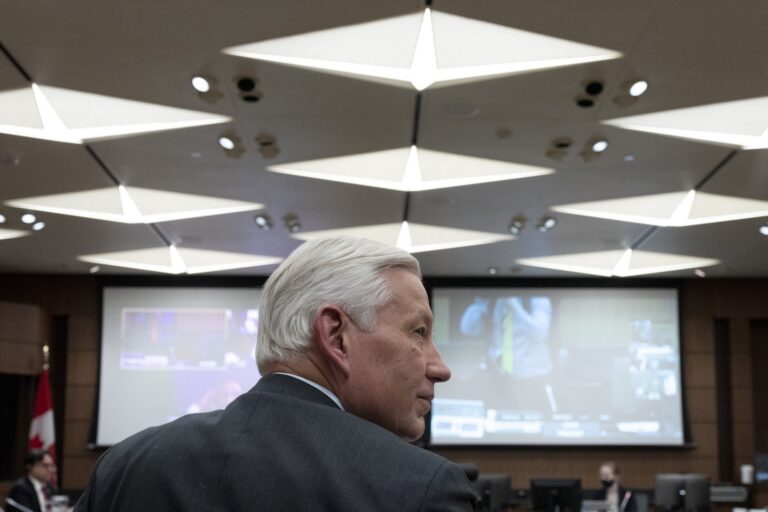
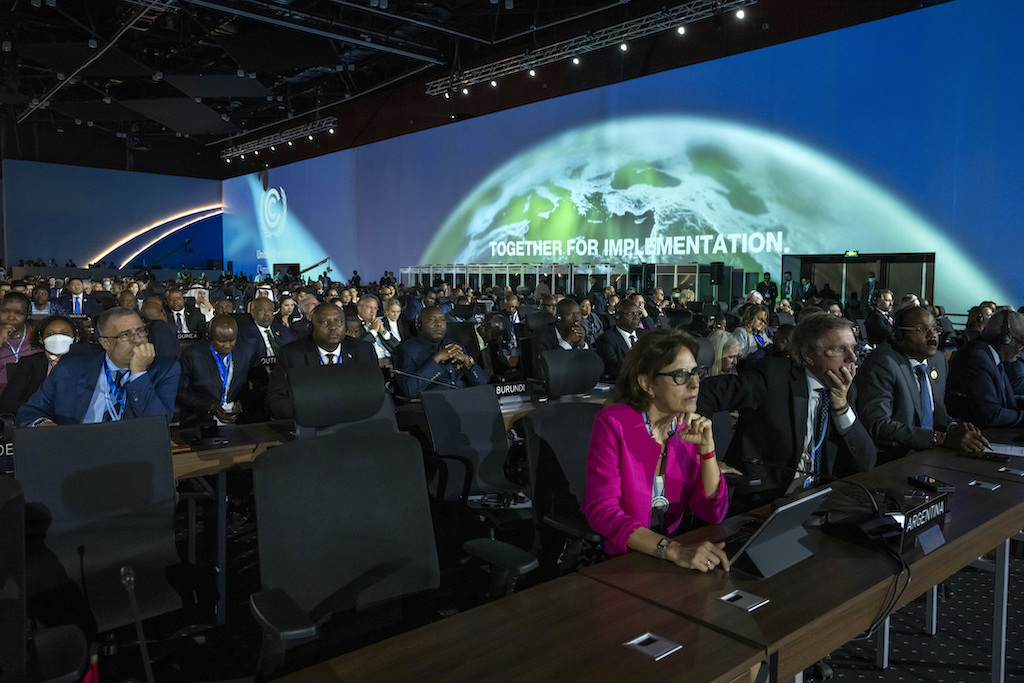 World leaders listen to speeches at the COP27 conference in Sharm el-Sheik, Egypt, on Nov 7. Photo: The Associated Press / Nariman El-Mofty

Special Report
‘Cooperate or perish’: At COP27, a mad scramble to put words into action
Sameh Shoukry, president of COP27, speaks at the conference in Sharm el-Sheikh, Egypt, on Sunday Nov. 6. Photo: The Canadian Press / Peter Dejong
SHARM EL-SHEIKH, EGYPT — The smell of wet paint and the sound of power tools wafted through the heavily air-conditioned conference centre in the Egyptian resort town of Sharm el-Sheikh on Sunday as thousands of people trickled in from the desert heat. The sprawling venue is home to the COP27 climate conference for the next two weeks and even as the program began organizers were putting the finishing touches on the maze-like space of demonstration booths, food stands, meeting rooms and conference halls.
The sense of urgency extends beyond the last-minute construction. Last year’s conference in Glasgow had a higher profile, and produced a lot of bold talk about solutions to the climate crisis. This year’s edition has been billed as the “implementation COP.”
The Logic at COP27
COP27 in Sharm el-Sheikh, Egypt, is being billed as the “implementation COP,” where leaders will be held accountable for their climate commitments. But Russia’s invasion of Ukraine, an energy crisis, rising inflation and a global economic slowdown have transformed the world since nations last met in Glasgow at COP26.
The Logic’s Catherine McIntyre is reporting on the ground in Egypt, speaking to policymakers, climate experts, investors and business leaders to find out how the negotiations will affect Canada’s net-zero ambitions.
Alok Sharma, a British member of parliament who was president of last year’s COP in Glasgow, opened the summit Sunday by scolding world leaders for their lethargy in the face of severe climate disasters—deadly flooding in Pakistan and Nigeria, record heat in Europe, the U.S. and China, to name just a few. Sharma reminded countries that signed the Glasgow Climate Pact last year they were meant to have submitted more ambitious climate targets by now. Just 29 of 197 of them have. (Canada is not one of the countries that strengthened its climate plans ahead of COP27. Prime Minister Justin Trudeau is not attending the conference.)
Sharma acknowledged some reasons for the stasis—Russia’s illegal war in Ukraine, rising inflation and debt, food insecurity—but urged the world to look beyond them. “As challenging as our current moment is, inaction is myopic and can only defer climate catastrophe,” he said. “We must find the ability to focus on more than one thing at once.”
One new focal point at COP27 is loss and damage funding—that is, reparations for climate-vulnerable countries from those that have enriched themselves by exacerbating global warming. Sameh Shoukry, Egypt’s foreign affairs minister and the current COP president announced Sunday that the topic has been added to the summit’s official agenda. While leaders have long paid lip service to the idea that wealthy countries should pay for the problems their resource extraction and consumption have created for poorer countries, this is the first time it will be part of formal negotiations and will factor into the binding document heads of state are expected to sign at the end of the summit.
Related Articles
“I think it’s great that they’re talking about it, but at the end of the day, it’s really about the actions,” Temitope Onifade, a Nigerian-Canadian researcher with the Canada Climate Law Initiative, told The Logic. “Having it on the agenda doesn’t necessarily mean parties are going to agree on the key actions to address loss and damage.” Onifade said one way to actually make progress on the file would be to create a fund to which wealthy countries like Canada would contribute.
The agenda item effectively tasks the conference with an effort to mend relations between upper middle-income and emerging economies. On Monday, United Nations Secretary-General António Guterres pressed this idea by proposing a Climate Solidarity Pact that would see “all countries” work together in the interest of keeping global warming below 1.5 C. (The Glasgow Climate Pact signed last year committed to keeping global warming “well below 2 C” from pre-industrial levels while “pursuing efforts” to stay below 1.5 C. We’re currently on track for 2.5 C warming by 2030, assuming every country meets its every climate commitment).
Guterres’ proposal calls to end fossil fuel dependence; aggressively reduce emissions; for wealthy countries and financial institutions to help with poorer countries’ energy transitions; and to provide universal, affordable and sustainable energy for all. He made a special appeal to the U.S. and China—the world’s two largest economies and emitters—to set aside their differences to enable global progress on climate change.
“Humanity has a choice: cooperate or perish,” said Guterres. “It is either a climate solidarity pact—or a collective suicide pact.”
Elsewhere at COP27:
• The global price on carbon needs to reach at least US$75 per ton by 2030, said the head of the International Monetary Fund, noting that progress is still “way too slow.”
• U.S. climate envoy John Kerry is rallying support from governments, companies and climate experts for a new framework to sell businesses carbon credits that will help pay for the energy transition in developing countries.
• An analysis by Carbon Brief found that Canada, the U.S., Australia and the U.K. are billions of dollars short of paying their “fair share” of the US$100 billion climate fund for developing countries. Canada has contributed about 37 per cent of its share and owes about US$3.3 billion.
• Activists at COP27 are urging governments to end all new oil, gas and coal projects through a “fossil fuel nonproliferation treaty.”
• Prominent African activist Mohamed Adow accused the European Union of “energy colonialism” and using Africa as a “gas station” as the bloc scrambles for alternatives to Russian oil and gas.



Loading...
Thanks for sharing!
You have shared 5 articles this month and reached the maximum amount of shares available.
CloseThis account has reached its share limit.
If you would like to purchase a sharing license please contact The Logic support at [email protected].
CloseGift the full article!
You have gifted 0 article(s) this month and have 5 remaining.
Recipients will be able to read the full text of the article after submitting their email address. They will not have access to other articles or subscriber benefits.
Photo: The Canadian Press / Peter Dejong
World leaders listen to speeches at the COP27 conference in Sharm el-Sheik, Egypt, on Nov 7.
Most Popular This Week


In-depth, agenda-setting reporting
Great journalism delivered straight to your inbox.
News
Canada’s banking regulator weighs new rules for AI risks
Briefing
Mecka raises US$60M to gather data for robot training
Businesses should expect AI to get better, but not necessarily cheaper
Weston family and Fairfax agree to buy drugstore Boots for US$8.9B
Best business newsletter in Canada
Get up to speed in minutes with insights and analysis on the most important stories of the day, every weekday.
Exclusive events
See the bigger picture with reporters and industry experts in subscriber-exclusive events.
Membership in The Logic Council
Membership provides access to our popular Slack channel, participation in subscriber surveys and invitations to exclusive events with our journalists and special guests.