OTTAWA — The U.S. government is encouraging domestic industries to snitch on businesses they suspect of evading tariffs—and dangling a cut of any damages or forfeitures—as part of a trade-fraud crackdown that some lawyers say should put Canadian companies on guard.
Skip to content


News
U.S. ‘trade fraud’ crackdown spells risk for Canadian firms—even if they follow the rules
A new task force is encouraging U.S. businesses to tattle on rivals they think are tariff cheats. For exporters, there’s no margin for error.
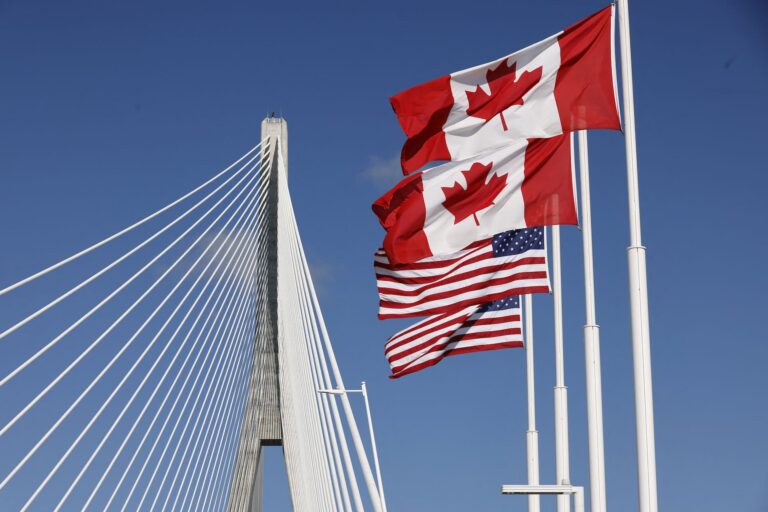
Customs cases in the U.S. are now eligible for a pilot program that awards corporate whistleblowers a portion of any forfeiture. Photo: AFP via Getty Images/Johannes Eisele
OTTAWA — The U.S. government is encouraging domestic industries to snitch on businesses they suspect of evading tariffs—and dangling a cut of any damages or forfeitures—as part of a trade-fraud crackdown that some lawyers say should put Canadian companies on guard.
“If you’re playing the game that you’re not going to get caught, you’re playing with fire right now,” said Dan Ujczo, a trade and customs lawyer in Columbus, Ohio, who specializes in Canada-U.S. issues, and a national director at the American Chamber of Commerce in Canada.
The U.S. Department of Justice, along with the Department of Homeland Security, recently launched a task force to root out “trade fraud.” It gives teeth to the “America First Trade Policy” that underpins President Donald Trump’s tariff policy, which aims to revive domestic manufacturing by slapping tariffs on much of the world. To make it work, though, the U.S. must ensure money from the levies actually comes in.
Talking Points
- A new task force at the U.S. Department of Justice is encouraging businesses “most harmed” by tariff evasion to report allegations of the offence through whistleblower provisions, which sometimes come with financial rewards
- Trade lawyers recommend Canadian exporters prioritize customs compliance amid heightened scrutiny from U.S. law enforcement
The ramp-up in enforcement comes after the criminal division of the Justice Department named trade and customs fraud as one of its top priorities for fighting white-collar crime. It shifted resources from its major fraud unit to trade cases, and made trade and customs cases eligible for a pilot program that awards corporate whistleblowers a portion of any forfeiture.
“Because American manufacturers and American workers are at the heart of this Administration’s trade policy, the Task Force welcomes referrals and co-operation from the domestic industries that are most harmed by unfair trade practices and trade fraud,” the department said in an Aug. 29 release. It encouraged companies to contact the whistleblower program for criminal cases or use the False Claims Act, a civil statute that allows individuals to file lawsuits on behalf of the federal government—and share in any money recovered.
On Sunday, The Wall Street Journal reported that Michigan-based appliance maker Whirlpool had shared its concerns with the U.S. Customs and Border Protection that its competitors in China, Thailand and South Korea have lowered the customs value of their imports without a corresponding reduction in retail prices. The company said it has not filed a formal complaint.
Related Articles

In an interview last week before the allegations by Whirlpool came to light, Jason Manning, a partner at Levy Firestone Muse in Washington, D.C., suggested another motive for U.S. businesses to rat out rule-breaking competitors. “Corporate leaders and corporations in this country [are] feeling incentives, are feeling pressure, to curry favour with the administration, and so that’s certainly a factor here,” said Manning, who used to investigate and prosecute criminal fraud cases when he worked for the U.S. Department of Justice.
The task force announcement highlighted four cases under the False Claims Act settled this year that involved allegations of duty evasion on products from China, including multi-layered wood flooring, plastic resin, aluminum products and quartz used for countertops. Three involved whistleblowers who received a portion of the settlement. In one case, that cut amounted to nearly US$2.2 million, close to 18 per cent of the total.
All those cases involve allegations that predate the current administration. Several trade lawyers told The Logic that while China remains a priority, there are reasons to believe Canadian companies, especially, could come under greater scrutiny in this sweep.
Maurice Bellan, who leads the False Claims Act practice as managing partner in the Washington, D.C., office at Baker & McKenzie, points to the sheer volume of Canada-U.S. trade. The U.S. imported nearly US$412 billion worth of goods from Canada in 2024, representing about 13 per cent of total imports that year. That makes it the third-largest source of goods after Mexico and China. When he was a trial attorney at the Justice Department in the early 2000s, Bellan said, he was drawn to such giant pools of information because they tend to “yield particular fact patterns that could be problematic.”
“Corporations in this country are feeling pressure to curry favour with the administration. So that’s certainly a factor here.”
Gathering evidence against Canadian companies would also be relatively simple. There is a mutual legal assistance treaty between the two countries that could make Canada an attractive target for federal prosecutors looking for early wins, said Manning, adding: “It’s a lot easier to get evidence that way than to try to get evidence out of China.” What’s more, frequent travel by Canadians to the U.S. increases the chances of border searches of their electronic devices, where authorities could discover something amiss.
Separately, the major fraud unit has a history of using data analytics and algorithms to detect unusual or quickly changing patterns that could point to misconduct, such as insider trading, Manning said. If investigators apply those tools to monitor the flow of goods, it would add a layer of scrutiny that does not rely on whistleblowers.
There is also the risk of plain old human error, or sloppiness, not least for Canadian exporters who have been scrambling to prove their products comply with the United States-Mexico-Canada Agreement so they can be exempt from Trump’s 35 per cent tariffs related to fentanyl concerns. The paperwork can be onerous and complicated, especially for manufactured goods when some parts are sourced overseas. That makes it a breeding ground for mistakes. “You do not want to try this at home,” Ujczo said.
Trade lawyers encourage businesses to audit themselves to catch any potential issues early on. Mark Cipolletti, a Washington-based partner at Thompson Hine who used to work in the criminal fraud section at the Department of Justice, urges companies to cast a critical eye over their supply chains, rather than believing that having their own books in order is enough to protect them from an investigation. “A lot of ways that I feel like many companies can get tripped up is: Who are you doing business with?” he said. “Make sure you do the due diligence on them to know that they are following the rules.”
Joy Nott, a Toronto-based partner at KPMG who focuses on trade and customs practice, agreed that Canadian exporters must be ready to defend their moves to reduce their tariff burden. Nott said she used to have about five clients a year who would face audits by U.S. customs. Now, she is dealing with five clients hit with audits over the span of one month.
Despite the Trump administration’s focus on levelling the playing field with other countries, Cipolletti said the Department of Justice will likely target egregious wrongdoing, not honest mistakes, in the early going. And the easiest marks are likely U.S. companies seen to be skirting the rules—especially if their rivals have been frustrated by a previous lack of enforcement. “I imagine this is going to be a lot of American companies that have had a beef with competitors for years,” he said.



Loading...
Thanks for sharing!
You have shared 5 articles this month and reached the maximum amount of shares available.
CloseThis account has reached its share limit.
If you would like to purchase a sharing license please contact The Logic support at [email protected].
CloseGift the full article!
You have gifted 0 article(s) this month and have 5 remaining.
Recipients will be able to read the full text of the article after submitting their email address. They will not have access to other articles or subscriber benefits.
Photo: AFP via Getty Images/Johannes Eisele
Most Popular This Week



In-depth, agenda-setting reporting
Great journalism delivered straight to your inbox.
News
EDC brings its big balance sheet and contact book to the AI business
Briefing
Cohere in talks to raise as much as US$3B: Report
Stellantis agrees to sell Ontario factory to armoured-vehicle maker Roshel
Fullscript ownership changes hands with two new private equity firms taking control
Best business newsletter in Canada
Get up to speed in minutes with insights and analysis on the most important stories of the day, every weekday.
Exclusive events
See the bigger picture with reporters and industry experts in subscriber-exclusive events.
Membership in The Logic Council
Membership provides access to our popular Slack channel, participation in subscriber surveys and invitations to exclusive events with our journalists and special guests.