OTTAWA — About 57 per cent of Canadian goods exported to the United States in April moved through the North American free trade deal—a significant year-over-year increase that suggests businesses are adjusting operations to benefit from a major carve-out from U.S. tariffs.
Skip to content
 The latest trade data shows Canadian exporters are taking greater advantage of the USMCA. Photo: AFP via Getty Images/Geoff Robins

News
Canadian exporters rushed to use North American trade pact after Trump gave carve-out
Share of goods shipped under USMCA climbed nearly 20 percentage points, latest numbers show
The latest trade data shows Canadian exporters are taking greater advantage of the USMCA. Photo: AFP via Getty Images/Geoff Robins
OTTAWA — About 57 per cent of Canadian goods exported to the United States in April moved through the North American free trade deal—a significant year-over-year increase that suggests businesses are adjusting operations to benefit from a major carve-out from U.S. tariffs.
Days after slapping broad-based tariffs on Canadian goods that he linked to concerns about fentanyl, U.S. President Donald Trump granted an exemption to products that comply with the United States-Mexico-Canada Agreement (USMCA) reached during his previous administration.
Talking Points
- About 57 per cent of Canadian goods exported to the U.S. moved through the United States-Mexico-Canada Agreement in April, compared to 38 per cent the same month last year
- The increase suggests businesses are adjusting operations to benefit from a carve-out from broad-based U.S. tariffs on Canadian goods
While only about 38 per cent of Canadian exports to the U.S. moved through the agreement last year, RBC Economics estimated about 94 per cent were eligible.
The paperwork required to certify country of origin can be onerous, especially for manufactured goods with some parts sourced from overseas. Since most crossing the Canada-U.S. border already qualified for low tariffs—usually 2.5 per cent—under the “most-favoured nation” principle at the World Trade Organization, many businesses did not bother filling out those forms.
The calculus changed when Trump granted the carve-out. Trading outside the USMCA now means being hit with a 25 per cent U.S. tariff, or 10 per cent for energy products and potash. Proving USMCA compliance, on the other hand, means duty-free treatment unless the goods are subject to additional levies, such as those on steel, aluminum and autos.
Related Articles

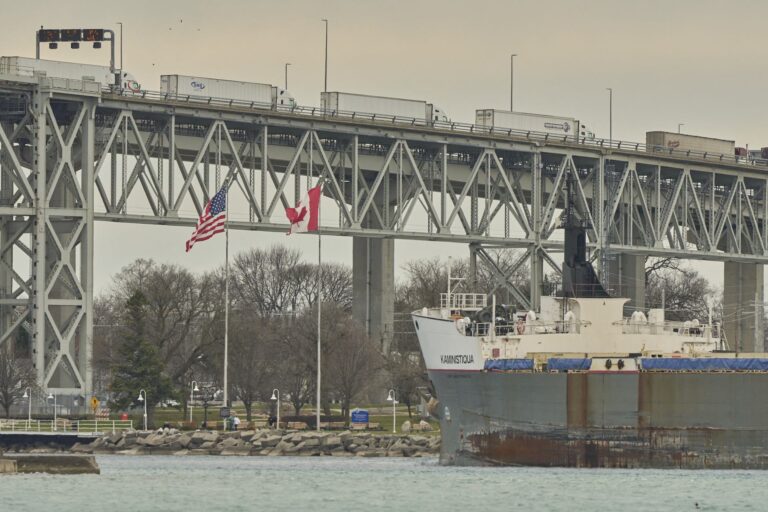
The latest U.S. trade data suggests businesses see the value in compliance. The U.S. imported nearly US$29.5 billion worth of goods from Canada in April. That marks a 15 per cent decline compared to April 2024, likely due to the U.S. tariffs. The proportion of goods that moved through USMCA, however, jumped from 38 per cent in April 2024 to 57 per cent in April 2025.
There was also an increase in March 2025, when 50 per cent of Canadian goods exported to the U.S. were traded through USMCA compared to 40 per cent in the same month last year. The trend had not yet begun in February, which is before the fentanyl-related tariffs took effect. Compliance was at 33 per cent that month—six percentage points lower than the year before.
The Canadian Federation of Independent Business (CFIB) surveyed its members in April about whether they were compliant with the USMA. Forty-four per cent of respondents who export to the U.S. said they were already fully compliant. Six per cent said they planned to be compliant “as soon as possible.” Another four per cent said it would take two or three months.
Corinne Pohlmann, executive vice-president of advocacy at the CFIB, said the trade data suggests they are doing that work. “There’s no greater incentive than to realize that instead of paying 2.5 per cent, you’re going to have to pay 25 per cent if you don’t do a little bit of the paperwork,” she said Tuesday.



Loading...
Thanks for sharing!
You have shared 5 articles this month and reached the maximum amount of shares available.
CloseThis account has reached its share limit.
If you would like to purchase a sharing license please contact The Logic support at [email protected].
CloseGift the full article!
You have gifted 0 article(s) this month and have 5 remaining.
Recipients will be able to read the full text of the article after submitting their email address. They will not have access to other articles or subscriber benefits.
Photo: AFP via Getty Images/Geoff Robins
Most Popular This Week




In-depth, agenda-setting reporting
Great journalism delivered straight to your inbox.
News
Brookfield’s new CEO flexes the firm’s soft power with its $50B Canadian bet
Briefing
AI is pushing insurers to become asset managers, Canadian CEOs say
Trump administration faces lawsuit over 50% tariffs on Canadian goods
Canada-U.S. trade war to reduce real GDP by 1.4% over 2024 levels after five years: PBO
Best business newsletter in Canada
Get up to speed in minutes with insights and analysis on the most important stories of the day, every weekday.
Exclusive events
See the bigger picture with reporters and industry experts in subscriber-exclusive events.
Membership in The Logic Council
Membership provides access to our popular Slack channel, participation in subscriber surveys and invitations to exclusive events with our journalists and special guests.





