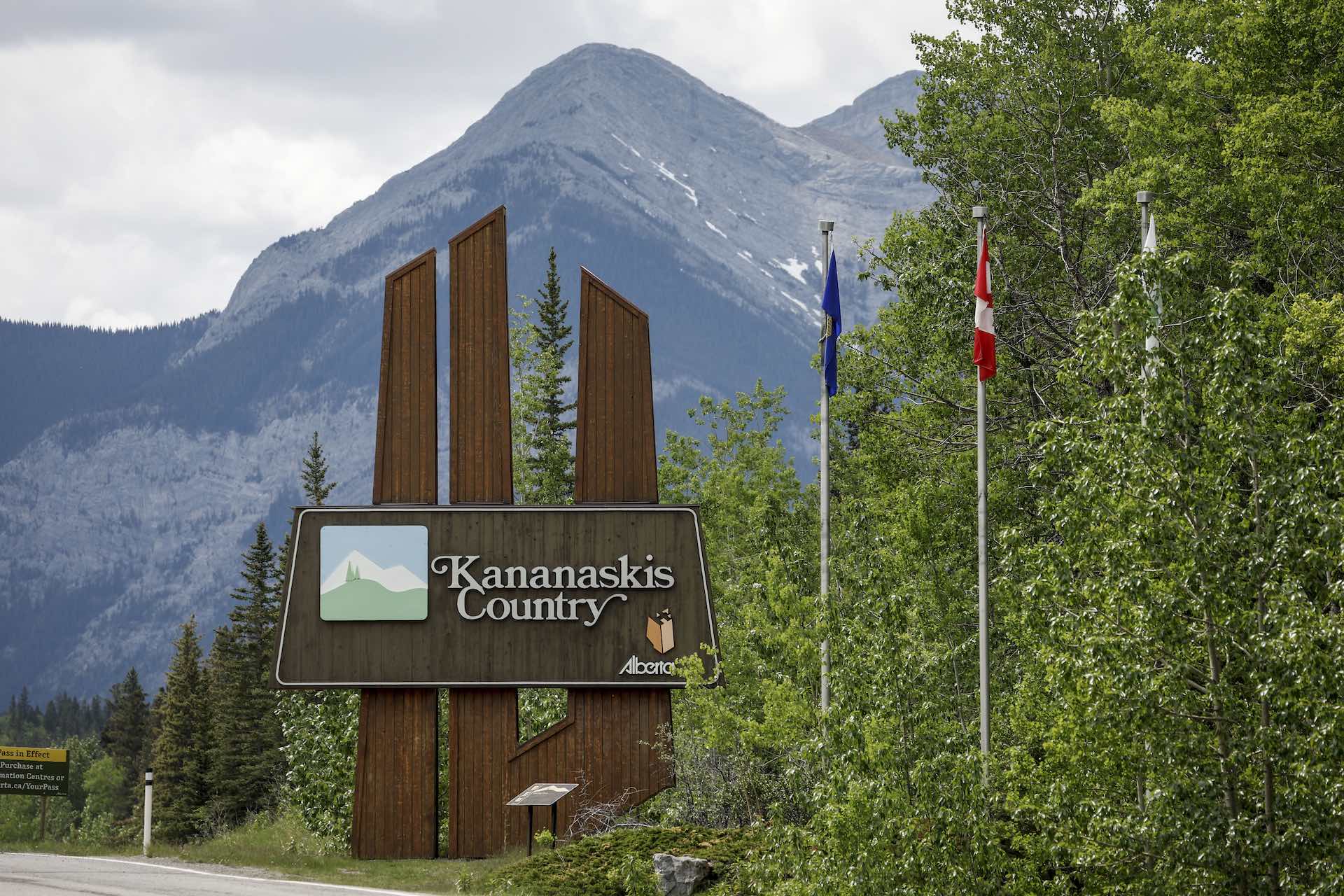
Group of Seven leaders are meeting next week in Kananaskis, Alta., against the backdrop of global trade uncertainty, geopolitical strife and elevated energy security concerns.
Skip to content
News
G7 summit gives Carney a chance to shine—or just survive
Energy security, trade and AI are on the table as the PM hosts Group of Seven leaders in Alberta. Consensus already looks hard to come by
Prime Minister Mark Carney is hosting leaders of some of the wealthiest democracies in Alberta next week. Photo: The Canadian Press/Jeff McIntosh
Group of Seven leaders are meeting next week in Kananaskis, Alta., against the backdrop of global trade uncertainty, geopolitical strife and elevated energy security concerns.
Political insiders, business leaders and analysts say this year’s summit comes at a critical economic juncture, both for Canada and its allies. While the stakes are high, observers also see a window for U.S. President Donald Trump to build a common front against China’s rising economic power, while pulling the U.S. and its trading partners off the destructive trade path his administration has put them on.
“It’s a huge opportunity,” said Christopher Sands, director of the Center for Canadian Studies at Johns Hopkins University. “If he seizes it, great. If he doesn’t, we’re doomed.”
What it’s about
The G7 is made up of some of the wealthiest democracies in the world: Canada, France, Germany, Italy, Japan, the United Kingdom and the United States, with a combined GDP of more than US$58 trillion this year. The European Union also attends the annual meetings, where members co-ordinate responses to global challenges, expanding beyond trade and economics to include security, climate change and human rights.
What it’s also about
Related Articles
It’s a chance for Prime Minister Mark Carney and his new Liberal government to strut its stuff on the world stage. Carney chose to focus the gathering on themes that align with his key domestic priorities. Among them:
- Energy security: How things have changed. While recent G7 summits focused on decarbonization and lowering CO2 emissions—causes Carney championed—next week’s will likely focus on expanding oil and gas capacity to reduce Western nations’ dependence on Middle Eastern supply, Sands said. “That’s something in which the U.S. and Canada could be aligned, rather than competing with each other directly,” he said.
- Critical minerals: Based on a recent conversation with Carney, E3 Lithium CEO Chris Doornbos said the PM intends to raise the issue of critical minerals prices at the summit. Western leaders are seeking ways to reduce China’s dominance of the market, which has let the country’s mining companies flood the world with supply and undercut Western-based private firms. “The price problem is our biggest challenge,” Doornbos said on Tuesday at an event in Calgary.
- Artificial intelligence and quantum computing: Using these technologies “to unleash economic growth” is also on Carney’s list of priorities. A group chaired by the U.S. Treasury Department has called on G7 leaders to highlight cybersecurity and critical infrastructure protections as AI capability rapidly advances.
Hallway conversations
U.S. President Donald Trump, who made Canada an early target in his global trade war, will be there. He and Carney last met at the White House in early May, but Intergovernmental Affairs Minister Dominic LeBlanc, who is also Carney’s point person on Canada-U.S. trade, has been negotiating a new economic and security agreement with U.S. Commerce Secretary Howard Lutnick. Carney hopes to meet Trump on the sidelines, which could accelerate deal-making efforts.
“Some form of minor productive outcome would be great, but survival would be really good.”
Yet being with other world leaders is also a chance for Carney to diversify trade and strengthen partnerships outside the U.S.—even beyond the G7. Mexico’s President Claudia Sheinbaum has RSVP’d yes. Her country, like Canada, is looking ahead to the review of the North American free-trade pact. So has Ukrainian President Volodymyr Zelenskyy, who hopes to get another meeting with Trump.
More controversially, Carney invited India’s Prime Minister Narendra Modi, whose government Canada has accused of orchestrating the 2023 killing of a Canadian Sikh activist in British Columbia. Saudi Arabia’s Crown Prince Mohammed bin Salman has reportedly declined an invitation. So has Indonesian President Prabowo Subianto, who will instead meet President Vladimir Putin in Russia.
Hoping for ‘survival’
Success at a G7 summit is generally in the eye of the beholder. Gerald Butts, who was a senior adviser to former prime minister Justin Trudeau throughout most of Trump’s first term, is setting the bar low. “Some form of minor productive outcome would be great, but survival would be really good,” Butts said last month in Ottawa at the B7, a gathering of business leaders from G7 countries.
On that note, the G7 leaders are not even going to try to reach consensus in one joint communiqué—typically negotiated by governments over a series of months leading up to the main event. Carney has instead asked them to craft a series of short joint statements on specific, negotiated outcomes, senior government officials told reporters Thursday in a briefing provided on the condition that they not be named. They said the multiple-statement approach would allow deeper dives into each issue and outline concrete actions to be taken in areas such as critical minerals.
The elephant in the room
It could also be a way to avoid a repeat of what happened in 2018, when Canada last hosted the G7 summit in Charlevoix, Que. Things ended on a sour note when Trump abruptly announced on social media—while flying on Air Force One—that he was pulling out of the joint communiqué because he did not like what then-prime minister Justin Trudeau had told reporters about U.S. tariffs on Canadian steel and aluminum.



Loading...
Thanks for sharing!
You have shared 5 articles this month and reached the maximum amount of shares available.
CloseThis account has reached its share limit.
If you would like to purchase a sharing license please contact The Logic support at [email protected].
CloseGift the full article!
You have gifted 0 article(s) this month and have 5 remaining.
Recipients will be able to read the full text of the article after submitting their email address. They will not have access to other articles or subscriber benefits.
Photo: The Canadian Press/Jeff McIntosh
Most Popular This Week
In-depth, agenda-setting reporting
Great journalism delivered straight to your inbox.
News
Canada-U.K. digital trade is set to grow under new phase of Pacific Rim trade pact
Briefing
Canada’s finance minister ready to ‘say what needs to be said’ to U.S. counterpart
Magna adds US$35M to its stake in India-based battery startup Yuma Energy
Global bond yields hit highest level since 2008 as inflation fears deepen
Best business newsletter in Canada
Get up to speed in minutes with insights and analysis on the most important stories of the day, every weekday.
Exclusive events
See the bigger picture with reporters and industry experts in subscriber-exclusive events.
Membership in The Logic Council
Membership provides access to our popular Slack channel, participation in subscriber surveys and invitations to exclusive events with our journalists and special guests.