With millions at stake, Ethereum co-founder’s separation battle highlights family law’s crypto challenge
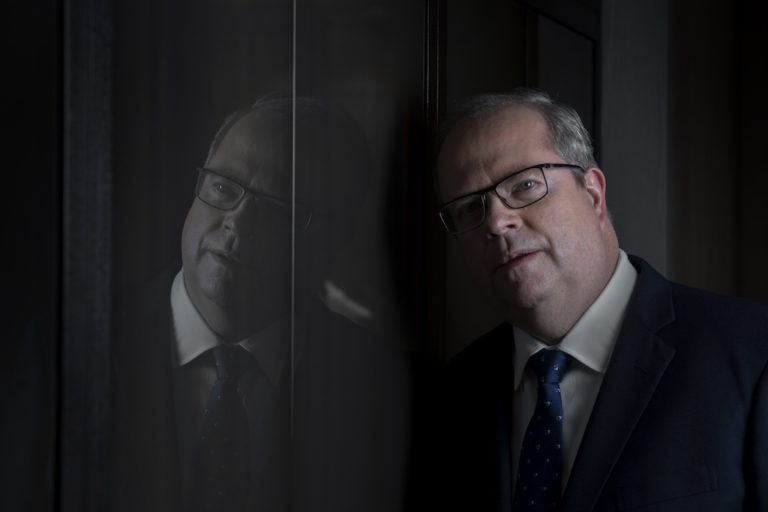
A Canadian co-founder of the Ethereum blockchain and his former common law partner are locked in a long-running separation battle in which millions of dollars are potentially at stake.
The court case has been dogged by years-long disputes over financial disclosure, however, making it the highest profile Canadian example to date of how cryptocurrency is emerging as a thorny issue in family law.
News
With millions at stake, Ethereum co-founder’s separation battle highlights family law’s crypto challenge
Anonymity, price volatility make it harder to divide assets, settle support payments
A Canadian co-founder of the Ethereum blockchain and his former common law partner are locked in a long-running separation battle in which millions of dollars are potentially at stake.
The court case has been dogged by years-long disputes over financial disclosure, however, making it the highest profile Canadian example to date of how cryptocurrency is emerging as a thorny issue in family law.
Talking Points
Nancy Wu and Anthony Di Iorio, co-founder of the Ethereum blockchain and founder of the company Decentral, were common law partners for 15 years. Now separated, Wu is seeking half the company and half Di Iorio’s crypto assets.
The case is the highest profile example yet of the thorny issues cryptocurrency is raising for Canadian family law courts
Nancy Wu is seeking spousal support from Anthony Di Iorio, her former partner of 15 years, dating back to their 2017 separation date. Wu is also seeking a 50 per cent ownership stake in Decentral, a blockchain company he founded in 2014, and half of his crypto assets, which she claims they accumulated together.
Decentral was the operator of Canada’s first two-way Bitcoin ATM and created the Jaxx Liberty crypto wallet. Di Iorio is best known, however, for co-founding Ethereum—the world’s second-biggest blockchain platform, after Bitcoin, and home to a native cryptocurrency, Ether—with Vitalik Buterin after Buterin approached him with the idea of using blockchain technology for applications beyond the financial sector.
In court documents viewed by The Logic, Wu claims she played a key role in the founding of both enterprises. In one filing, she alleged Di Iorio led her to believe they were “equal partners” in a joint family venture and she “implicitly trusted [him].”
Wu initially had a 10 per cent stake in the holding company that owns Decentral—a numbered Ontario corporation, according to court documents—with Di Iorio owning the other 90 per cent and assuming the sole director position. As of August 2020,she owned 8.7 per cent of shares in the private company.
Wu and her lawyers argue Di Iorio hasn’t shared the full details of his financial holdings.
According to a report ordered by Di Iorio’s team, the crypto co-founder’s income was $33.3 million in 2018, largely resulting from significant capital gains from cryptocurrency after the 2017 market boom, and the value of his personally-held cryptocurrency was approximately $350 million at the end of 2017. But Di Iorio argued in an August 2020 factum that while his net worth hit a high of $600 million at the beginning of 2018, it had spiralled to somewhere between $70 and $90 million by the end of the year due to the great crypto crash.
However, an August 2020 factum from Wu includes a six-page list of the ways in which Di Iorio has allegedly delayed disclosing information about his finances, including missing a number of deadlines for providing financial information and leaving out important details about Decentral’s financials and operations. Her lawyers also allege Di Iorio intentionally delayed a meeting where Wu’s lawyers would question him as part of the discovery process.
In May Wu’s lawyers sought to have a cryptocurrency expert attend his cross-examination—something Di Iorio opposed.Ontario Superior Court Judge Fred Myers sided with Wu. “Mr. Di Iorio … is a man of untold wealth. It seems that, in this proceeding, Mr. Di Iorio would prefer to keep the extent of his wealth untold,” Myers wrote in his ruling, noting Wu had now spent five years trying to get information from Di Iorio and ordering him to appear for a private examination by Wu’s counsel on June 9.
In a statement to The Logic, Di Iorio said he attended the June 9 examination, which was part of Wu’s effort to get information about Decentral.
In court documents, Di Iorio has argued that Wu had no role in Ethereum or Decentral and that they did not accumulate cryptocurrency together. While he has acknowledged the delay, in affidavits filed with the court, he has maintained they’re due to the complex nature of his finances, and the need to hire multiple external valuators to assess his income and the company’s value. He declined to comment further to The Logic about his financial disclosures, but said “it is important to note that throughout this proceeding I have complied with all existing disclosure-related orders in the case.”
Aaron Franks, a partner with Epstein Cole LLP who is representing Wu, declined The Logic’s request for comment.
Canadian courts are seeing more disputes over crypto assets in family law proceedings.
Hilary Jenkins, a family lawyer with McKenzie Lake Lawyers LLP in London, Ont., said that while the key issues in family law remain the same, “the very nature of cryptocurrency as an asset lends itself to expand on those problems.”
Because of crypto’s extreme price volatility, it can make the exercise of determining the actual date of a couple’s separation even more hotly contested than usual if one or both parties has significant crypto holdings. The separation date is key in determining how to equalize marital assets and calculating spousal or child support payments. There’s no hard and fast rule under Ontario family lawdictating how to pin down a date of separation, and disagreements between separating couples over the actual date are common, Jenkins said.
For example, Jenkins said, “if the wife has significant crypto holdings and the value on June 1 was significantly less than the value on June 15, she’s likely going to want to do the 1st [as the separation date].”
To determine equalizationand support payments, both parties have to provide full disclosure of their financial and other assets as of the close-of-business on the established date, said Jason Howie, a Windsor, Ont.-based family lawyer with Howie Johnson Barristers & Solicitors.
Howie said that valuing someone’s crypto assets has become much easier with the advent of cryptocurrency exchanges that track the price of Bitcoin, Ether and other major currencies in real time. Before that, lawyers would have had to hire specialized valuators, not unlike assessing the value of a small business or private company, he said.
However, Jenkins said, crypto’s anonymity and ability to be quickly transferred to another account make it particularly challenging to ensure someone with crypto holdings is being honest about their actual value.
But a full accounting of crypto assets can present risks to the person holding them. In February 2019, Ontario Superior Court Judge Llana Nakonechny approved a request from a respondent in a divorce proceeding to provide redacted disclosure about roughly $9.5 million in cryptocurrency investments, agreeing with their argument that there was “substantial risk that production of information could lead to attacks and give third parties the ability to access and perhaps steal these assets.” Cryptocurrency investments are protected by a unique passcode, and disclosing that information to the court could make it possible for others to gain access to the account.
Howie said another issue that emerges with cryptocurrency relates to freezing orders. In divorce proceedings one party can ask the court to prevent the other from selling or moving their assets without first seeking the court’s permission, and deliver notice to the company through which the assets are held. Given many cryptocurrency platforms are operated outside of Canada, a non-dissipation order may be unenforceable.
“You may be trying to enforce orders against what used to be called offshore accounts, which are outside the reach” of a Canadian court he said, likening these accounts to foreign bank accounts. “I can get all the court orders in Ontario I want, but good luck enforcing them.”
Recipients will be able to read the full text of the article after submitting their email address. They will not have access to other articles or subscriber benefits.
Great journalism delivered straight to your inbox.
Commentary
Carmichael: Canadian ignorance about India is a strategic weakness
By
Kevin Carmichael
Briefing
Aritzia shares pop after earnings rise 204%
By Anita Balakrishnan |
First Nation in Alberta goes to court over fast-tracked oil pipeline
By Chaimae Chouiekh |
Chinese EV maker Geely Auto Group to launch in Canadian market in 2027
By Joanna Smith |
Best business newsletter in Canada
Get up to speed in minutes with insights and analysis on the most important stories of the day, every weekday.
Exclusive events
See the bigger picture with reporters and industry experts in subscriber-exclusive events.
Membership in The Logic Council
Membership provides access to our popular Slack channel, participation in subscriber surveys and invitations to exclusive events with our journalists and special guests.