OTTAWA — A U.S. company hoping to revitalize fisheries while pulling carbon dioxide out of the air and water wanted to develop its technology in Canada, but gave up after getting a reception from Canadian authorities as chilly as the North Atlantic.
Skip to content

News
U.S.-based startup with plans to store carbon in deep oceans skips Canada for Iceland
Shopify-backed Running Tide sees Canada as a great market but can’t work here
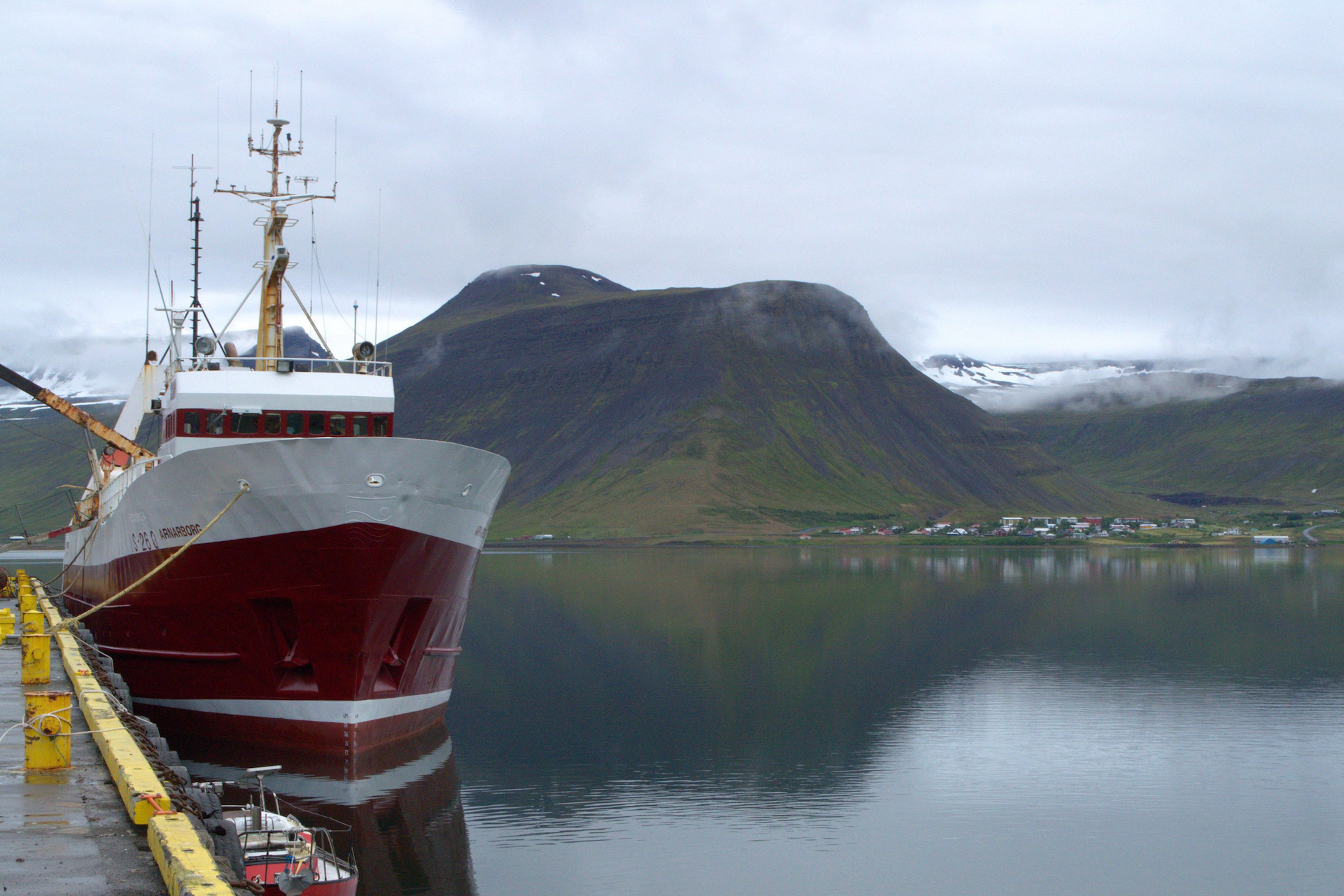
A harbour in the northwest reaches of Iceland, the country Running Tide chose as testing site for its method of sequestering carbon in seaweed after Canada rebuffed the company. Photo: AP Photo/Jim Heintz
OTTAWA — A U.S. company hoping to revitalize fisheries while pulling carbon dioxide out of the air and water wanted to develop its technology in Canada, but gave up after getting a reception from Canadian authorities as chilly as the North Atlantic.
Instead, Running Tide is operating in Iceland, deploying a fleet of sensors in the ocean this year in collaboration with Icelandic shipping company Eimskip.
Talking Points
- Born of a desire to heal climate-damaged fisheries, Running Tide aims to sequester carbon in seaweed grown on wooden buoys, then sunk in deep water
- Canada and Iceland have signed the same ocean-protection treaties but Iceland has adopted provisions allowing research that Canada’s laws treat as dumping
Running Tide’s idea is to fight climate change by growing macroalgae—seaweed—on tiny ocean floats made from waste wood coated with calcium carbonate. As the carbon-rich seaweed grows, it weighs down its buoy and eventually sinks, depositing all that carbon on the seabed.
“Our whole objective is to sink carbon below 1,000 metres, because if you get that carbon below 1,000 metres, it’s gone for roughly 1,000 years,” said Jordan Breighner, Running Tide’s head of business development, in an interview with The Logic.
The process is experimental. But Running Tide has early backing from Shopify’s sustainability fund, which invested in 2020. The Canadian commerce giant also signed a letter of intent to buy carbon offsets Running Tide might eventually produce. Other backers include Stripe and the Chan Zuckerberg Initiative.
Though it’s headquartered in Maine, where founder Marty Odlin was raised in a fishing family, Running Tide looked just a bit northeast for a real-world testing site. North America’s continental shelf happens to be especially wide off the Maine coast, the deep ocean a long way away.
“You’re going to have to go four or five hundred miles offshore in the United States,” Breighner said.
Related Articles
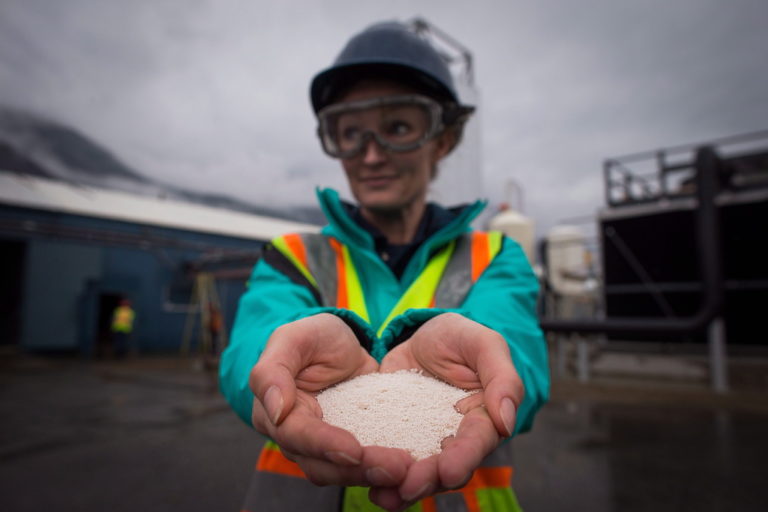

Nova Scotia’s ports are conveniently closer to the shelf-edge, and the region offers ready access to other things the company needs: wood, alkaline minerals and deep ocean currents.
“Canada is probably the gold standard for us,” said Breighner. “You really can’t beat Canada from a market perspective.”
What Canada doesn’t have is regulations allowing Running Tide to operate, even experimentally. So the company is developing its kelp-buoys in Iceland instead, even though it means shipping wood from Nova Scotia to make up for Iceland’s lack of forestry.
“Their political and cultural understanding of carbon removal is very advanced,” Breighner said, pointing to the direct-air capture plant opened there by Switzerland’s Climeworks in 2021.
Canada simply has no rules governing carbon-capture and storage in the oceans, said a briefing note prepared for a meeting in August between Breighner and Canada’s deputy minister of natural resources John Hannaford, and obtained by The Logic through an access-to-information request.
The closest applicable regulations would be under the Canadian Environmental Protection Act, covering “disposal at sea,” and what those essentially say is: Don’t.
In that, Canada follows international agreements dating back to 1972, which were written to stop pollution from industrial waste dumping. A 2013 amendment, however, since climate change became a more urgent worry, allows research on “marine geoengineering,” which includes fertilizing oceans, provided the countries involved set up oversight and permits.
“Canada is probably the gold standard for us,” said Breighner. “You really can’t beat Canada from a market perspective.”
The tone of the note, prepared by an advisor in Natural Resources Canada’s Office of Energy Research and Development, was more broadly skeptical of Running Tide’s prospects, citing a critical story in the MIT Technology Review last June. If Running Tide has solid evidence its technology works, we haven’t seen it, the note said, and we can’t be sure what happens to carbon that reaches the ocean bottom—if it stays fixed well enough to be sequestered away from the atmosphere.
“There are also questions around logistics and impacts,” it went on. “Most kelp grows in shallow waters [and] permanent ocean-floor storage generally happens in deep waters. It is not clear how kelp would be transported from shallow to deep waters, nor how the shallow-water marine life may affect the deep-water ecosystem.”
But in any event, there’s no way to give Running Tide permission to study these things in real life here, the note said, because Canada has no legal mechanism for it.
We do have a working group, the department told Hannaford. It’s examining ocean-based carbon-capture and contemplating legal and regulatory changes. “Amendments to multiple acts may be required, a process that normally takes between five to 10 years,” the note said.
Canada has sunk hundreds of millions of dollars into a supercluster meant to promote marine industry but hasn’t done that work. Iceland, which signed the same pacts, has done the work, and granted Rising Tide a research permit.
(The federal government is also working on a broader overhaul of ocean-related regulations, which are set and enforced by multiple departments, to encourage the “blue economy,” after hearing from industry that “Canada’s regulations are out of date, slow to adapt, and overly cumbersome.” The overhaul is currently seeking more feedback that will lead to a roadmap.)
Natural Resources Canada spokesperson Michael MacDonald told The Logic in an email Canada will watch Running Tide’s work in Iceland.
“In principle, ocean-based [carbon-dioxide removal] technologies are one of the many tools for addressing CO2 emissions which need to be better understood in order to avoid unintended environmental impacts,” he wrote. “It is crucial that we understand the impacts and benefits of each technology before we pursue its development on a large-scale.”
He also noted that the government is working on those potential legal and regulatory changes to allow that understanding of Running Tide’s technology to be researched here (though he didn’t note the years-long timeline).
“Our regulatory infrastructure [in North America] is really built, for good reason, to keep bad things from happening to the ocean,” Breighner said. “We just don’t have … the policy and regulatory infrastructure in place to develop and create the governance infrastructure around positive intervention.”
Iceland does, he said. “It was like a perfect spot. It ticked all the boxes—the talent, the understanding of a partnership with the ocean, the access to an ocean environment that was really good for R&D and development of the system.”
Running Tide announced in February that Deloitte will conduct what amounts to a carbon audit of its Iceland operation, as the company tries to build the case that its technology works and to quantify the carbon benefits. That’s a step toward selling offsets and MacDonald said Canada is pleased to see it.
“This will serve as an important step towards confirming the impact of their technology,” he wrote.



Loading...
Thanks for sharing!
You have shared 5 articles this month and reached the maximum amount of shares available.
CloseThis account has reached its share limit.
If you would like to purchase a sharing license please contact The Logic support at [email protected].
CloseGift the full article!
You have gifted 0 article(s) this month and have 5 remaining.
Recipients will be able to read the full text of the article after submitting their email address. They will not have access to other articles or subscriber benefits.
Photo: AP Photo/Jim Heintz
Most Popular This Week




In-depth, agenda-setting reporting
Great journalism delivered straight to your inbox.
News
Adam Waterous proposes massive crude exports to Asia by rail through northern B.C.
Briefing
Rivals may be ‘horrified’ to realize how exposed their investments are to AI, Aviva CIO warns
Shopify, Sequoia co-lead US$200M investment in online-selling platform Whop
Amid revenue gains, 1Password bets on tools to protect data from AI agents
Best business newsletter in Canada
Get up to speed in minutes with insights and analysis on the most important stories of the day, every weekday.
Exclusive events
See the bigger picture with reporters and industry experts in subscriber-exclusive events.
Membership in The Logic Council
Membership provides access to our popular Slack channel, participation in subscriber surveys and invitations to exclusive events with our journalists and special guests.







