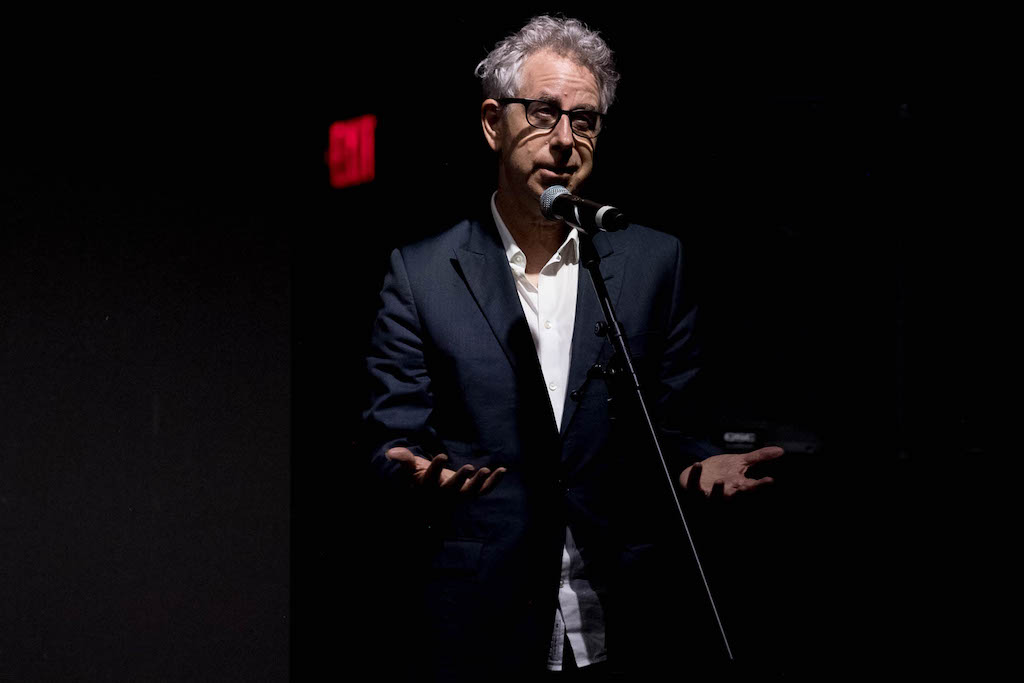
The Canadian law professor behind books and films criticizing the power of corporations is taking Twitter to court.
Joel Bakan of the University of British Columbia says Twitter is part of the modern public square, and a judge should not only order it to take ads promoting his documentary, but should require the government to pass a law protecting free expression on the platform.
Bakan, who wrote the film and book The Corporation in the mid-2000s and is behind their current sequels, filed two cases in Ontario court Monday. One is against Twitter Canada and its U.S. parent, and the other is against the federal government.
The lawsuit claims that the film’s marketing firm wanted to buy promoted tweets so more people would see The New Corporation’s trailer, but Twitter refused. According to the lawsuit, the firm could tweet all it liked, but not pay to put its tweets before more eyeballs.
The claim hasn’t been tested in court. “Not something we’ll be commenting on,” said Twitter Canada spokesperson Cam Gordon by email.
“This is the kind of speech that our Supreme Court in this country has identified as being at the core of the constitutional protection of freedom of expression,” Bakan said in an interview with The Logic. “It’s about public policy, politics; it’s about social relations. And it’s making an argument to try to make society better, to try to make it more democratic.”
Twitter’s central place in Canadian political and social discussion gives it special legal status, Bakan said, despite the fact that it’s a private company. In previous instances, which haven’t involved the company directly, citizens have complained about politicians who have blocked them on Twitter, asserting that it’s unconstitutional for public officials to cut some constituents off from official pronouncements.
According to the court documents, automated replies and Twitter employees gave multiple reasons for denying promoted posts for Bakan’s film over about two weeks last fall. But the suit alleges that they centred on a global policy against promoted tweets with political content, which Twitter defines as “content that references a candidate, political party, elected or appointed government official, election, referendum, ballot measure, legislation, regulation, directive, or judicial outcome.”
Bakan said the film and the trailer in the tweets don’t contain any of those.
“I’m not going to say it doesn’t have a point of view—it does. It has a point of view about the dangers of expanding corporate power and the importance of rejuvenating democracy. But, you know, that’s the view that President Biden in the United States and Prime Minister Trudeau [have] expressed.”
Twitter’s policy says “political message reach should be earned, not bought.” Bakan argued that without promoted tweets, the film’s advertising reach is limited.
For a court to order the federal government to legislate in support of digital speech would be very unusual, Bakan acknowledged, but he said there are precedents for similar orders when it comes to extending collective-bargaining rights.