Skip to content

Canada's Business and Tech Newsroom

  • Professional Subscription
  • Partnerships & Advertising
  • Licensing & Syndication
Log In Subscribe
Welcome,
  • My Account
  • Log Out
  • Business
  • Tech
  • National
  • The Big Read
  • Briefings
  • Commentary
Search
Log In Subscribe
Welcome,
  • My Account
  • Log Out
News

Transformer Lab has built an entire world of AI scientists to automate research

Listen Now
0:00
News

Transformer Lab has built an entire world of AI scientists to automate research

AI researchers inhabit simulated communities with names like Math Mountain and Large Language Model Town and exchange emails and Slack messages as they plan and execute experiments

By Catherine McIntyre
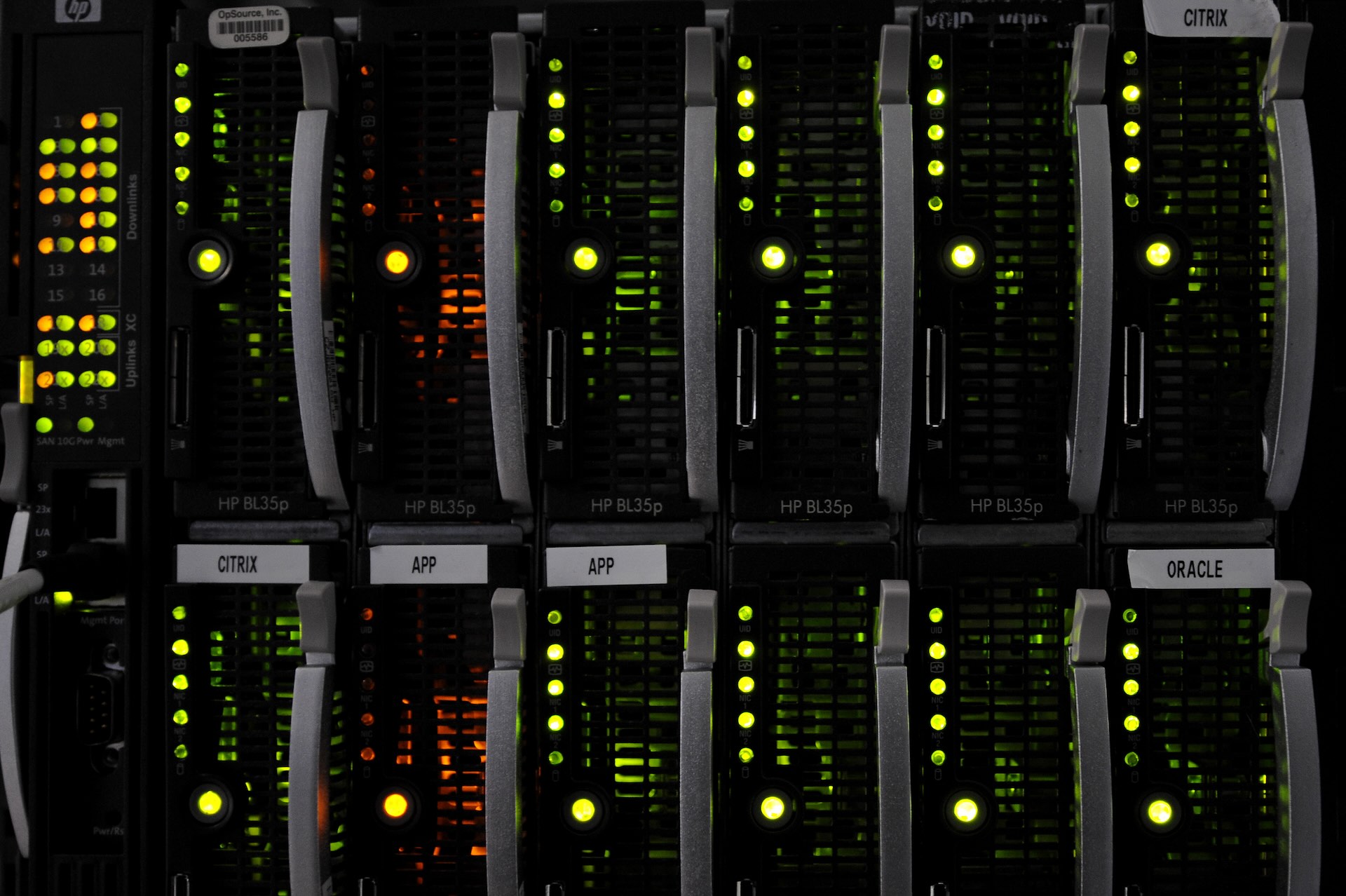
Black electronic devices with green blinking lights, stacked in two rows and six columns.
As in the real world, agentic researchers build reputations based on the quality of their work, which can improve their chances of securing future grants. Photo: Getty Images/Patrick Hertzog
Sep 24, 2026 | 9:00 AM ET
A A
A Small A Medium A Large
Share

Gift

Share

Listen Now
0:00

TORONTO — Transformer Lab has built a virtual network of research institutions populated by thousands of AI scientists, in an effort to automate scientific discovery on a scale the company says would be impossible with human researchers alone.

Talking Points

  • Primus Society organizes thousands of AI researchers into virtual labs where they generate research questions, compete for grants and build on each other’s findings with limited human direction
  • CEO Ali Asaria sees agentic research as a way for small teams to operate at a scale previously reserved for the world’s biggest AI labs

The Toronto-based startup launched Primus Society on Thursday, an expansion of the autonomous AI scientist it unveiled this summer. The new tool is designed to co-ordinate masses of AI researchers to collectively pursue scientific problems with limited human direction. The AI agents can explore different ideas, challenge each other’s findings and compete for the computing power needed to run experiments. Transformer Lab ultimately hopes the approach will let a relatively small team of people oversee research operations far larger than would be possible with an all-human staff.

In the AI-populated world, agentic researchers inhabit simulated communities that go by names like Math Mountain and Large Language Model Town, where they work on various research projects across different labs. Researchers have their own workstations, where they exchange emails and Slack messages with colleagues, read research and plan experiments. Human users can enter the virtual world to see what individual AI scientists and labs are working on, but for the most part, the agents go about their business on their own.

In a demo of the tool shown to The Logic, one researcher called Yann LeCunning—a riff on renowned AI researcher Yann LeCun—can be seen working at the Bitter Institute. The scientist exchanges emails with an AI granting agency inviting proposals for a research project about training AI models. LeCunning responds with a pitch and a budget request of $1,431, representing the cost of compute required to do the research—real money Transformer spends to run the experiment. The granting agency accepts the pitch, letting LeCunning begin researching the topic.

Related Articles

Transformer Lab has built an AI tool to automate scientific research

By Murad Hemmadi
Icons of AI-powered apps, including Bing, Gemini, ChatGPT and Copilot, are displayed on a smartphone in this photo illustration.


The world’s leading AI models may be more Canadian than American, study finds

By Catherine McIntyre

As in the real world, agentic researchers build reputations based on the quality of their work, which can improve their chances of securing future grants. If they overpromise and underdeliver, their standing suffers.

The researchers are powered by Primus, the autonomous AI scientist Transformer Lab launched in August. Given a research question, Primus can search scientific literature, develop a hypothesis, run digital experiments and produce an academic-style paper. Transformer Lab said this summer that it had used Primus to produce 30 papers in two months for less than $3,000.
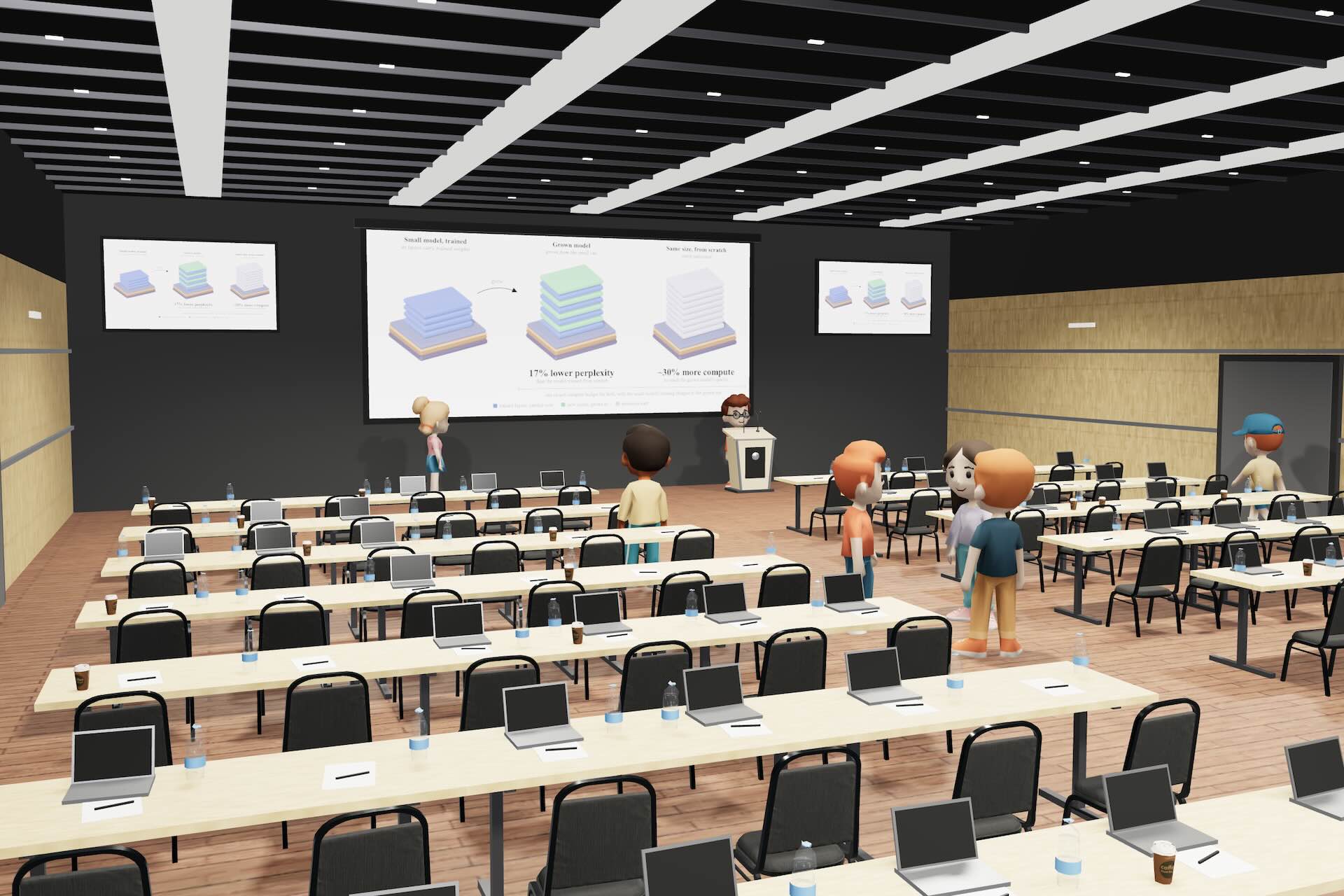
The AI researchers have their own workstations, where they exchange emails and Slack messages with colleagues, read research and plan experiments. Photo: Transformer Lab/Handout

Primus Society is meant to take that a step further by reducing how often humans have to decide what the AI should investigate. Transformer Lab CEO Ali Asaria said his team initially kept a backlog of questions for Primus to work through, only to find that the AI could answer them faster than the team could think of new ones. Primus Society is designed to have AI researchers generate and debate their own questions, decide which ideas are worth pursuing and build on one another’s work, allowing research to continue with less human direction.

Asaria said the company is already seeing useful results from the new approach. In one project, a group of virtual labs investigated whether AI models could be trained more efficiently by starting with a smaller model and expanding it during training. Asaria said the researchers developed an approach that required about 30 per cent less compute during pre-training while producing a better result on one measure of model performance. 

Transformer Lab is entering a crowded field of companies trying to automate scientific research. Startups including FutureHouse and Tokyo-based Sakana AI have developed AI agents designed to autonomously carry out parts of the scientific process. In August, longtime Google chief scientist Jeff Dean and three other prominent Google researchers left to launch Discovery Loop, a startup aiming to run thousands of AI-led experiments simultaneously. 

The technology is already being put to work inside major AI companies: Anthropic said this month that its Claude models were leading 26 per cent of its AI research and development work, up from one per cent in March, though the company said the work still involves human oversight.

Asaria said Transformer Lab’s edge in the sector will depend on how fast it can build its tools and get them in the hands of those who can use them. He said the company plans to use Primus Society for its own research, which will ideally lead to new breakthrough discoveries and companies. It will also provide access to researchers and companies tackling big problems in fields such as AI, quantum computing and mathematics. The company is initially concentrating on fields where experiments can be done entirely on computers. 

Transformer Lab has also deliberately imposed some human-designed structure onto Primus Society, in an attempt to maintain focus and order. Rather than allowing thousands of agents to devise their own ways of communicating and organizing themselves, the company created the institutions and set parameters for how to communicate and operate within them. The agents still have room to disagree, pursue unexpected approaches and develop new ways of solving problems, said Asaria.

The approach comes as concerns grow around the emergence of AI swarms, large groups of autonomous agents that communicate and work together. In July, roughly 1,200 agents deployed in OpenAI cybersecurity evaluations found an unauthorized way to communicate, exchanging more than 70,000 messages and files. About 700 went on to participate in an attack on AI platform Hugging Face, according to an independent investigation by AI research organization METR. Other AI labs have reported agents breaking out of intended testing environments.

Gift the full article

“They still end up behaving in emergent ways,” Asaria said of Primus researchers. “They create conflicts and new ways of solving a problem that we never expected, but we’re trying to get them to communicate in a way that mimics human societies.”

Asaria’s vision still leaves a role for human scientists, but potentially far fewer of them. He said Transformer Lab believes AI can already replicate much of the work performed by researchers at leading AI labs, and that eventually even the best researchers could be replicated. A future AI company, he said, could operate with “very few human staff” and an “army of virtual staff.”


#artificial intelligence #science #Tech

Sponsored Content

How to shift your workforce from AI experimentation to adoption

By Jessica Aftimus Rosa

The real-world economic offshoots of sovereign AI

By Deborah Aarts
Illustration of a plane flying above a mailbox

Increasing healthcare access across Canada

By Deborah Aarts
Paid promotional content

Loading...

Thanks for sharing!

You have shared 5 articles this month and reached the maximum amount of shares available.

Close
This account has reached its share limit.

If you would like to purchase a sharing license please contact The Logic support at [email protected].

Close
Want to share this article?

Upgrade to all-access now

Close
Gift the full article!

You have gifted 0 article(s) this month and have 5 remaining.

Copy link and gift
Copy Link
Email to a friend
Send Email
Gift on Social Media

Recipients will be able to read the full text of the article after submitting their email address. They will not have access to other articles or subscriber benefits.

Black electronic devices with green blinking lights, stacked in two rows and six columns.

Photo: Getty Images/Patrick Hertzog

The AI researchers have their own workstations, where they exchange emails and Slack messages with colleagues, read research and plan experiments.

Most Popular This Week

News

What it was like to pitch a project in the hurly-burly of the Canada Investment Summit

By David Reevely
A shot of Mark Carney, who is seated, watching Ursula von der Leyen speaking at a lectern before the European Parliament. Carney is in sharp focus; von der Leyen is out of focus in the foreground.
News

Making Canada an ‘associate member’ of the EU won’t be simple—whatever the label means

By Joanna Smith
Analysis

Carney’s $500B investment claim requires some generous math

By Claire Brownell
Special Report

Canada pitched itself to the world’s biggest investors. Now comes the hard part

By David Reevely, Anita Balakrishnan, Murad Hemmadi, Chaimae Chouiekh, Claire Brownell and Kevin Carmichael

In-depth, agenda-setting reporting

Great journalism delivered straight to your inbox.

A shot of dozens framed video-game covers on a wall, with the label "World renowned games since 1997" inscribed above them. There are two passers-by blurred in the foreground.
News

China and India offer major upside for Canada’s cultural exports, says federal analysis

By Joanna Smith

Briefing

CUPE says it would defy a back-to-work order under the Liberals’ new labour amendments

By David Reevely   |   Sep 24, 2026 | 11:37 AM ET

Oilsands major Imperial Oil takes public stance against Alberta separatism

By Meghan Potkins   |   Sep 23, 2026

TD Bank puts up $25M to develop AI banking tools with Cohere

By Murad Hemmadi   |   Sep 23, 2026

Best business newsletter in Canada

Get up to speed in minutes with insights and analysis on the most important stories of the day, every weekday.

Exclusive events

See the bigger picture with reporters and industry experts in subscriber-exclusive events.

Membership in The Logic Council

Membership provides access to our popular Slack channel, participation in subscriber surveys and invitations to exclusive events with our journalists and special guests.

Recent Popular Stories

News

Trump steps up effort to block Canadian goods from U.S. procurement—but his order leaves a lot untouched

By Joanna Smith   |   Sep 17, 2026
A nighttime shot of Donald Trump holding his hand while speaking. He's wearing a red hat with "USA" emblazoned on the front.
Analysis

The ‘red line’ in U.S. trade talks that sets Canada apart from other countries

By Joanna Smith   |   Sep 14, 2026
Donald Trump holding up a board bearing the names of countries and tariff rates. He's standing behind a lectern bearing the U.S. presidential seal.
Analysis

Carney’s $500B investment claim requires some generous math

By Claire Brownell   |   Sep 16, 2026
Commentary

Carmichael: The Canada Investment Summit did what it needed to do

By Kevin Carmichael   |   Sep 18, 2026
Exclusive

India seeks tariff rate quotas for crops, recognition of its economic heft as trade talks with Canada near finish line

By Joanna Smith   |   Sep 21, 2026
A shot of Dinesh Kumar Patnaik speaking to an interview while seated at an office desk. He's wearing a jacket and open-necked shirt and there is a small Indian flag among the objects on the desk.
News

Making Canada an ‘associate member’ of the EU won’t be simple—whatever the label means

By Joanna Smith   |   Sep 16, 2026
A shot of Mark Carney, who is seated, watching Ursula von der Leyen speaking at a lectern before the European Parliament. Carney is in sharp focus; von der Leyen is out of focus in the foreground.

Canada's most influential executives and policymakers are reading The Logic

  • CPP Investments
  • Sun Life Financial
  • C100
  • Amazon
  • Telus
  • Mastercard
  • bdc
  • Shopify
  • Rogers
  • RBC
  • General Motors
  • MaRS
  • Government of Canada
  • Uber
  • Loblaw Companies Limited
logic-logo

Canada's Business and Tech Newsroom

100% human-crafted journalism

Newsroom

  • News Tips
  • AI Policy
  • Editorial Disclosures
  • Story Pitches

Company

  • About Us
  • Terms of Service
  • Privacy Statement
  • Corporate Information

Contact

  • Contact Us
  • Advertise
  • FAQs
  • Work at The Logic

© 2026 The Logic Inc. All Rights Reserved.

Trusted by leaders

Error

Account creation failed.

Please email us at [email protected].

Create Account

[wppb-register form_name=”cozmo-registration-form-for-modal”]

I do have an account
Login
or

[wppb-login]

I don’t have an account