OTTAWA — As a way of conveying information that Kurtis McBride says could be worth billions to the Canadian economy, the widget on the built-in dash screen of the Audi SUV he’s driving doesn’t look like much: an icon of a traffic signal with the green light at the bottom lit up, and “40 km/h” beneath it.
Skip to content

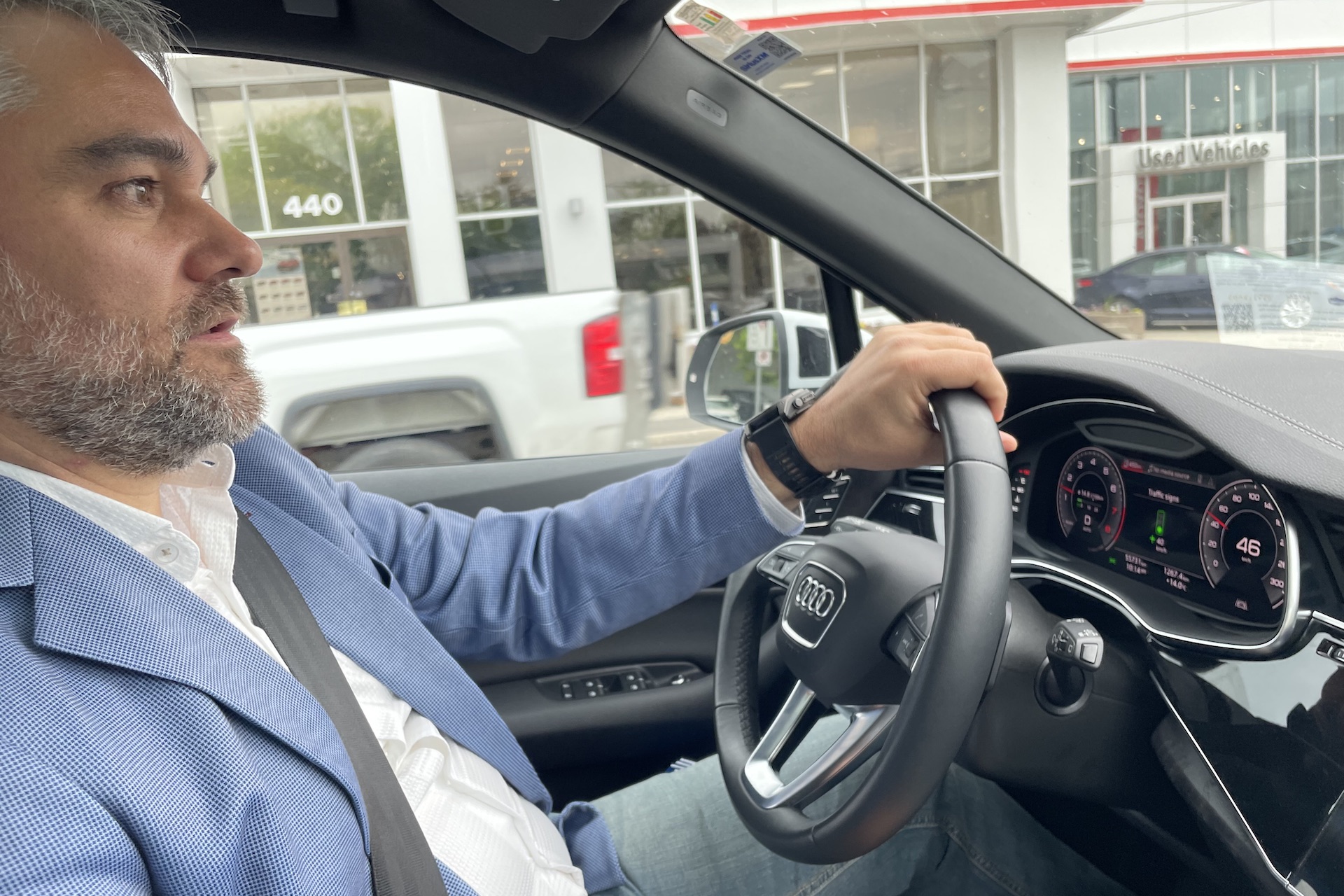 Miovision CEO Kurtis McBride driving through the streets of Ottawa, in an SUV equipped with his company's next-light widget. Photo: David Reevely for The Logic
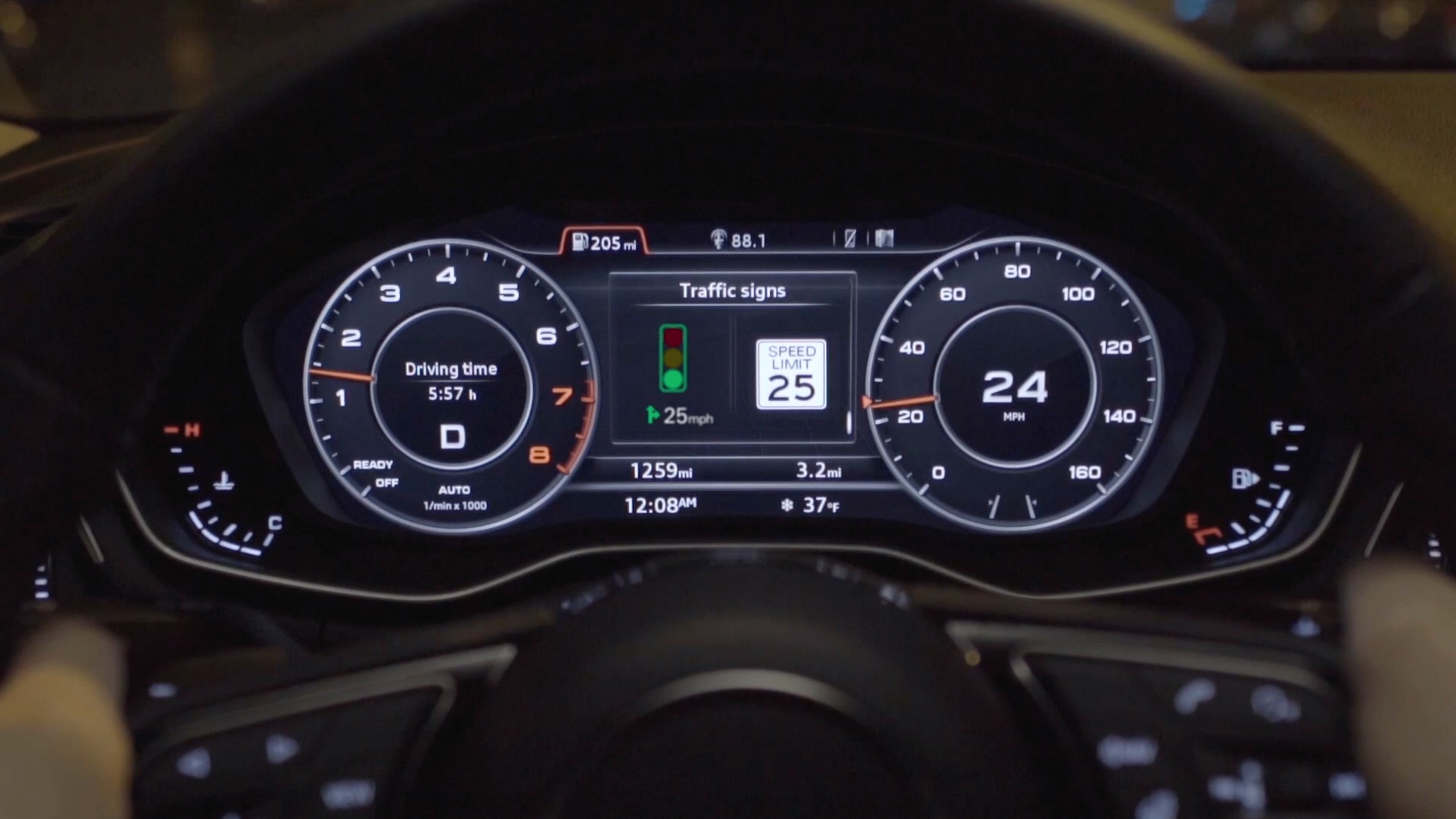 Miovision's technology lets cars communicate with traffic controls at intersections. Photo: Handout/Miovision

News
This Ontario company wants to help your car talk to the nearest traffic light
Backed-up traffic strangles growth, eats time and saps joy. Can Miovision’s technology get things moving?
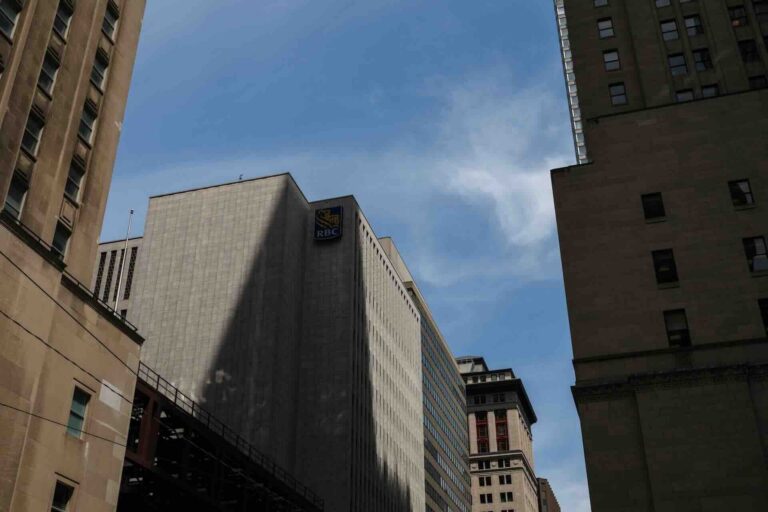
Photo: LightRocket via Getty Images/ Roberto Machado Noa
OTTAWA — As a way of conveying information that Kurtis McBride says could be worth billions to the Canadian economy, the widget on the built-in dash screen of the Audi SUV he’s driving doesn’t look like much: an icon of a traffic signal with the green light at the bottom lit up, and “40 km/h” beneath it.
Talking Points
- Getting stuck in traffic isn’t just a pain for drivers—it does economic damage in lost time, slow deliveries and demand for public spending on new and wider roads
- Miovision of Kitchener, Ont., has attracted hundreds of millions of dollars in venture investment for its systems that optimize traffic lights and inform drivers how to make best use of the roads we already have
If McBride drives at that speed along Ottawa’s Montreal Road, the readout is telling him, he’ll breeze through the next intersection. It’s one of many in the capital where the signal lights are equipped with technology from Miovision, the Kitchener, Ont., scale-up where McBride is the CEO.
“We’re in over a million vehicles now,” he says.
With hundreds of millions in venture capital already invested, this technology is also in about 70,000 of North America’s 350,000 “signalized” intersections, McBride says, including 1,000 of Ottawa’s. Miovision wants to put it in tens of thousands more, as the company strives to make its technology an international standard.
The dashboard display he’s showing off combines data about when the light will change (fed to one of Miovision’s servers via the traffic system’s wires or a cellular signal) with the car’s location, calculates the best speed to drive to hit the next green, and presents it on the Audi’s display, between the tachometer and speedometer. When McBride does have to stop at a red, the widget counts down to the next green.
Related Articles


This is the basic Miovision intersection treatment, a technology the company integrated into its other offerings when it bought U.S.-based Traffic Technology Services last year. Miovision’s other services focus on the opposite end of things—that is, how the signals and traffic systems operate. They do things like setting lights to turn green for emergency vehicles or buses, adjusting signals for big events like concerts and football games, and gathering data on different kinds of traffic.
The mid-sized Ontario city of Peterborough has Miovision devices in all of its more than 100 signalized intersections, McBride says. The company worked with the city to optimize traffic flow, whether or not drivers have the next-light widget in their vehicles’ operating systems.
Drivers still hit red lights, of course, but less often, and a pilot project on busy streets found that, overall, they spend about 40 per cent less time waiting for lights to change. In 2022, Peterborough staff reported that total travel time along a major east-west artery fell 11 per cent in one direction and 30 per cent in the other. Less congestion also means less demand for new and wider thoroughfares, saving money and the urban fabric.
“We think that if you implemented a system like that in every intersection in the country, you could generate somewhere between $2 billion and $3 billion of productivity enhancement for the country, which would be about a six-month payback,” McBride says.
Traffic congestion strangles economic growth, eats free time, saps joy. A 2024 study by the private Canadian Centre for Economic Analysis put the cost of traffic congestion in Ontario alone at about $56.4 billion last year, with the burden concentrated in the Toronto area.
(Toronto has Miovision controls in 94 intersections, according to the company, which is campaigning for a wider deployment.)
To be sure, $43.6 billion of that Ontario price tag is attributed to how much it exasperates commuters to be stuck in traffic, based on some previous social-science work that’s tried to put dollar figures on well-being and happiness.
Even if you discount those completely, the centre estimates the economic cost of Ontario’s clogged roads in 2024—from wasted time, fuel burned pointlessly, slow goods deliveries, workers not taking better jobs because of the commutes, and so on—at $12.8 billion a year, or 1.1 per cent of the provincial economy.
“If you implemented a system like that in every intersection, you could generate between $2 billion and $3 billion of productivity enhancement for the country.”
Miovision will, generally, install the devices needed for the next-light widget at no cost to the local government. Instead, the company gets paid by carmakers like Audi (which offers the green-light service as part of a subscription package for people who buy their cars) and companies with big fleets, for which efficiency on the road is a business imperative.
Municipalities pay for the next levels of service, the software packages that can adjust light timings for special vehicles or unusual circumstances. The fully tricked-out Miovision intersection—at a cost of about $25,000—also has cameras to count traffic for transportation planning and collect data about collisions and close calls.
“By looking at near-collisions—those happen far more frequently than actual collisions—you have a statistical way to predict when you’re going to have crashes,” McBride says.
Ottawa, which has Miovision technology in about 1,000 of its 1,200 signalized intersections, used to hire students in the summers for traffic counts, planting them in lawn chairs with devices to tap as different types of traffic—motor vehicles, bikes and pedestrians—went by. McBride once had exactly such a job, which is where he started thinking about a better way as he slowly baked.
“This new standard led to a significant increase in accuracy in reporting, allowed for data to be captured 365 days a year and led to cost savings,” Stuart Edison, the city’s manager of traffic operations, told The Logic.
As it works out a policy on e-scooters, Ottawa also used Miovision cameras last year to get a sense of riders’ propensity for travelling on sidewalks. They didn’t do so all that much, the city learned from many hours of camera time over several months. The city paid Miovision $250,000 in 2024, which Edison said was for a combination of equipment and data processing.
Investors with big money think this is a good business. In 2020, Telus led a $120-million investment in Miovision, and then in 2023, Miovision raised $296 million—from investors that included Telus again, Maverix Private Equity, McRock Capital, and government agencies. Telus’s venture capital arm shows off Miovision as a prized part of its portfolio.
Getting local governments in can be difficult, even if they’re keen. Municipalities just don’t move that fast, especially with infrastructure that’s supposed to last decades. “Budgets are not designed to differentiate between asphalt and modern digital technology,” McBride says. “From the day they say, ‘Let’s go’ to deploying at scale, it might take them 10 or 15 years.”
Finding a way to speed that up will be essential for Miovision’s growth, he says.
Audi was Miovision’s first brand, but the carmaker’s owner, Volkswagen Group, is now rolling the feature out to all of its brands, McBride says. Other auto companies are kicking the tires, but they’re “earlier in their adoption cycle.”
To make the widget worth their while, Miovision needs to get its devices into more traffic computers.
“At 70,000 intersections, it’s interesting, but there are 350,000 intersections in North America,” he says. “At 150,000 intersections, we get a lot more interesting to some of these other brands.”



Loading...
Thanks for sharing!
You have shared 5 articles this month and reached the maximum amount of shares available.
CloseThis account has reached its share limit.
If you would like to purchase a sharing license please contact The Logic support at [email protected].
CloseGift the full article!
You have gifted 0 article(s) this month and have 5 remaining.
Recipients will be able to read the full text of the article after submitting their email address. They will not have access to other articles or subscriber benefits.
Photo: LightRocket via Getty Images/ Roberto Machado Noa
Miovision CEO Kurtis McBride driving through the streets of Ottawa, in an SUV equipped with his company's next-light widget.
Miovision's technology lets cars communicate with traffic controls at intersections.
Most Popular This Week



In-depth, agenda-setting reporting
Great journalism delivered straight to your inbox.
Commentary
Carmichael: Canadian ignorance about India is a strategic weakness
Briefing
Aritzia shares pop after earnings rise 204%
First Nation in Alberta goes to court over fast-tracked oil pipeline
Chinese EV maker Geely Auto Group to launch in Canadian market in 2027
Best business newsletter in Canada
Get up to speed in minutes with insights and analysis on the most important stories of the day, every weekday.
Exclusive events
See the bigger picture with reporters and industry experts in subscriber-exclusive events.
Membership in The Logic Council
Membership provides access to our popular Slack channel, participation in subscriber surveys and invitations to exclusive events with our journalists and special guests.