Richmond, B.C.-based General Fusion has raised $33.5 million in financing, led by prior backers BDC Capital and Singaporean sovereign wealth fund GIC, to build a new reactor that will show how its clean-energy technology can work, as the firm also shifts its focus back home. Here’s what you need to know:
Skip to content
 General Fusion’s plasma injector, which will be used in the new demonstration machine it’s building at its headquarters in Richmond, B.C. Photo: General Fusion/Handout

News
‘This machine will show that for real’: General Fusion unveils plan for new B.C. reactor
Canadian firm raises $33.5 million with BDC and Singapore’s GIC as backers
General Fusion’s plasma injector, which will be used in the new demonstration machine it’s building at its headquarters in Richmond, B.C. Photo: General Fusion/Handout
Richmond, B.C.-based General Fusion has raised $33.5 million in financing, led by prior backers BDC Capital and Singaporean sovereign wealth fund GIC, to build a new reactor that will show how its clean-energy technology can work, as the firm also shifts its focus back home. Here’s what you need to know:
The science, sort-of: Fusion firms are trying to bring the power of the stars to Earth, generating energy by combining atoms; current nuclear plants use the process of fission, which splits them.
The machine: General Fusion hopes its new project will demonstrate two key technological accomplishments by 2026. First, the Lawson Machine 26 (LM26) must show that it can hold a temperature of 100 million C, retaining heat in the plasma, the gas at the heart of the star-simulation. If that works, the firm will squash the mixture further in a bid to hit breakeven, meaning the fusion produces more energy than it takes to make it go.
The company calculates both are possible based on successful trials at lower densities, “but we haven’t showed it,” chief science officer Michel Laberge, who founded the firm in April 2002, told The Logic. “This machine will show that for real.”
Related Articles
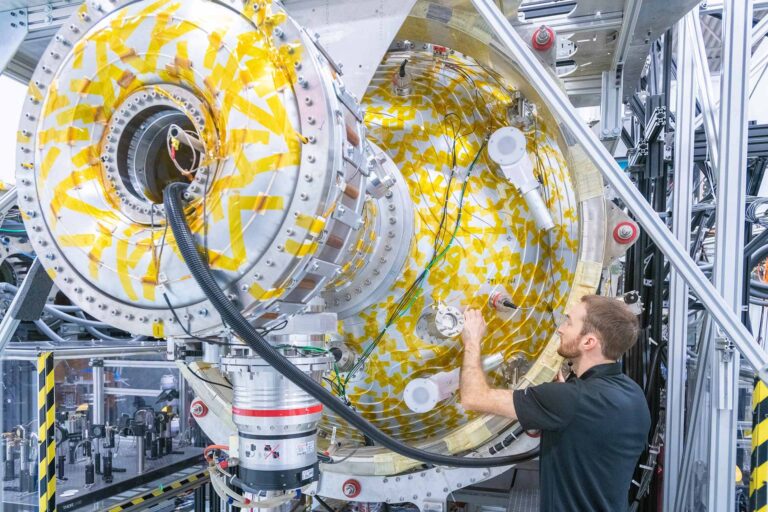
The LM26 is about half the size of the commercial-scale machine General Fusion plans to sell to power plants, and designed differently for the sake of speed and simplicity. “The physics will be the same but the plumbing and the engineering would be quite different,” said Laberge. For example, the LM26’s plasma chamber will have a solid lithium liner instead of a liquid one, and use electromagnets instead of a piston system to squash the mix.
The money: General Fusion previously planned to raise more money to build a bigger, hotter machine in a different place. In June 2021, it announced it would build a US$400-million fusion demonstration plant at the UK Atomic Energy Authority’s (UKAEA) Culham Science Centre. The reactor would be 70 per cent of commercial scale, turn on in 2025 and reach 150 million C.
That November, General Fusion closed a US$130-million Series E round. And in August 2022, newly appointed CEO Greg Twinney told The Logic the company would need to raise a multiple of that sum within the following 12 months to pay for the demonstration plant’s first phase.
General Fusion has now paused the Culham project in favour of the LM26. The smaller machine can be built faster and cheaper, and will produce more results, Twinney said in an interview on Wednesday. Raising capital has become “significantly more difficult” for all kinds of firms over the last 18 months, he noted. While the Culham plan required General Fusion to make significant upfront expenditures to build a new facility, the LM26 is based at its headquarters and can be funded in increments.
The new round includes $28.5 million in equity funding and a $5-million grant from the British Columbia government. “This capital gets us started,” said Twinney; the company will use it to pay for the components for the compression system for the LM26, which it will build in Richmond. The funding came at an increased valuation, according to Twinney, although he declined to disclose the figure. General Fusion is in conversations with investors about further financing, and with the federal and provincial governments about supporting the project.
The light-year view: Two decades in at General Fusion, Laberge says the firm is now 10 years away from having its machines on the power grid.
Fusion startups have proliferated recently, as labs have proven out more of the technology and investors have taken an interest in the new entrants. “Somebody will crack this,” Laberge said, although of course he gives 160-person General Fusion the best chance.



Loading...
Thanks for sharing!
You have shared 5 articles this month and reached the maximum amount of shares available.
CloseThis account has reached its share limit.
If you would like to purchase a sharing license please contact The Logic support at [email protected].
CloseGift the full article!
You have gifted 0 article(s) this month and have 5 remaining.
Recipients will be able to read the full text of the article after submitting their email address. They will not have access to other articles or subscriber benefits.
Photo: General Fusion/Handout
Most Popular This Week




In-depth, agenda-setting reporting
Great journalism delivered straight to your inbox.
News
Cohere plans to acquire cyber startup Aisle and set up a new security division
Briefing
Banks should have kill switches, IDs for AI agents, says global finance watchdog
B.C. First Nations decry rushed consultations as Major Projects Office CEO promises to do better
Feds pledge $100M to back Nova Scotia’s plans for offshore wind farms
Best business newsletter in Canada
Get up to speed in minutes with insights and analysis on the most important stories of the day, every weekday.
Exclusive events
See the bigger picture with reporters and industry experts in subscriber-exclusive events.
Membership in The Logic Council
Membership provides access to our popular Slack channel, participation in subscriber surveys and invitations to exclusive events with our journalists and special guests.