OTTAWA — As the federal Liberals’ Online News Act lurched toward royal assent last spring, government officials were also working on regulations to implement its companion Online Streaming Act. With the two new laws affecting billions of dollars’ worth of business, industry lobbyists have stepped up work they’d already begun.
Skip to content
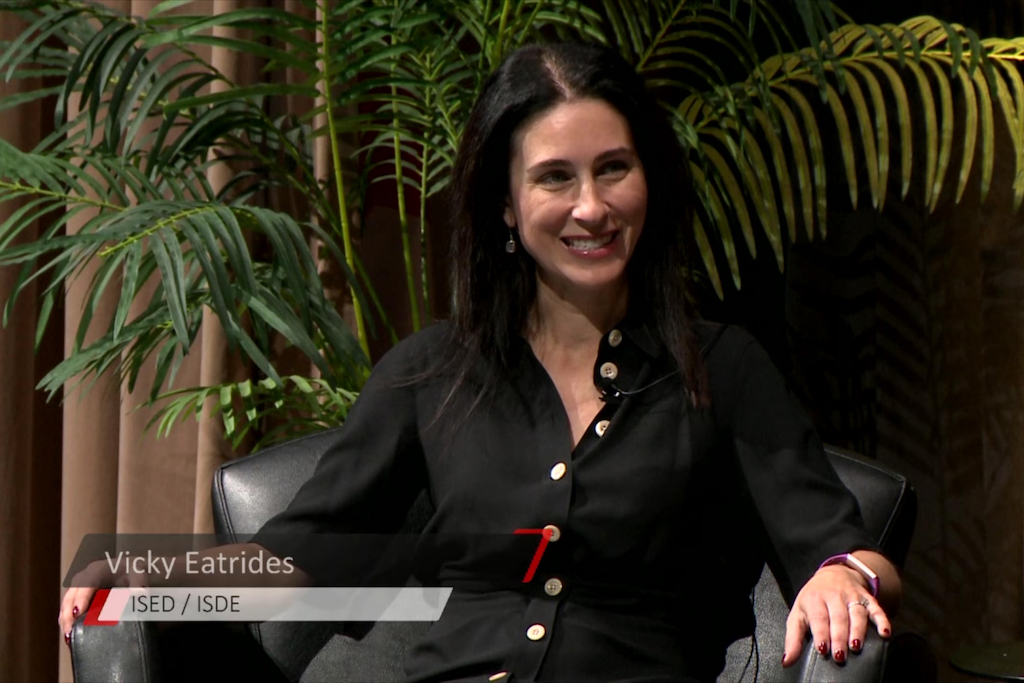 Lobbyists met with CRTC chair Vicky Eatrides several times this past year, while the details of Bill C-11 are hammered out. Photo: Government of Canada/Handout

News
The Room Where It Happens: Lobbyists fought last-ditch battles over Liberals’ internet bills
As Parliament passed the Online News Act and the CRTC took up the Online Streaming Act, the back rooms were busy
Lobbyists met with CRTC chair Vicky Eatrides several times this past year, while the details of Bill C-11 are hammered out. Photo: Government of Canada/Handout
OTTAWA — As the federal Liberals’ Online News Act lurched toward royal assent last spring, government officials were also working on regulations to implement its companion Online Streaming Act. With the two new laws affecting billions of dollars’ worth of business, industry lobbyists have stepped up work they’d already begun.
Culture and cash: The battle lines over the Online News Act—labelled Bill C-18 as it moved through Parliament—have been well defined. Most Canadian news organizations supported the attempt to make large digital platforms pay journalism organizations for carrying links to their content. The large digital platforms—namely Google and Facebook and Instagram parent Meta—did not.
Talking Point
In this regular feature, The Logic looks at how players in the innovation economy are seeking public money and influence over federal policy
Meta, which lobbies here through subsidiary Facebook Canada, worked primarily on senators in May and June, as a Senate committee debated Bill C-18 and the full body voted for an amended version. It recorded lobbying contacts with Sens. Donna Dasko, Paula Simons, Julie Miville-Dechêne and Pamela Wallin; Simons, Miville-Dechêne and Wallin are all former journalists.
Meta also reached out to the top public servant at Canadian Heritage (deputy minister Isabelle Mondou) and senior aides to then-minister Pablo Rodriguez.
Google largely eschewed the politicians and focused on the officials and policy advisors in an early-June blitz, recording contacts with members of Rodriguez’s staff multiple times, several contacts with aides to Prime Minister Justin Trudeau (including his deputy chief of staff Brian Clow and policy director Sarah Hussaini), and one last attempt to influence Rodriguez himself on June 22, the day the Online News Act became law.
On the other side of the argument, News Media Canada reported 28 lobbying contacts from May to July (albeit in a couple of cases it listed “government procurement” as a subject, rather than the more obviously C-18-oriented “intellectual property”). Like Meta and Google, the industry association mainly hit up policy staff and ministerial advisors at Canadian Heritage, though Sens. Dasko, Simons and Miville-Dechêne heard from its representatives, too. As did Trudeau aide and former television journalist Ben Chin.
Related Articles
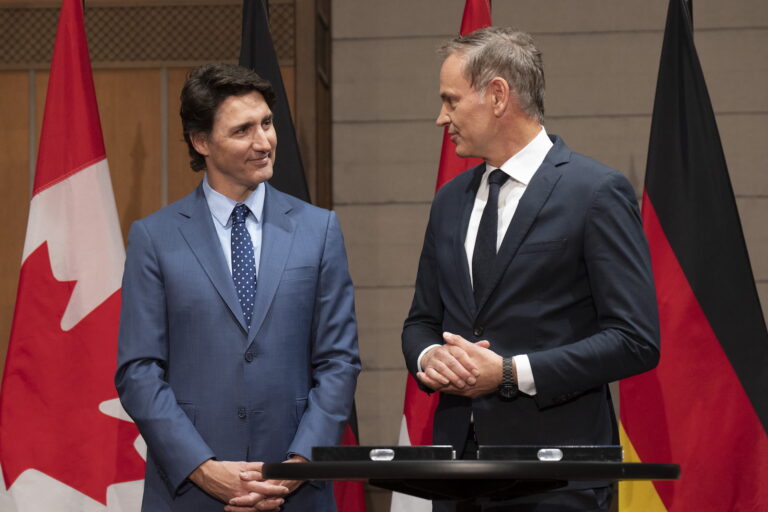

The law passed without major amendments. Rather than pay, Meta has begun blocking news on its platforms; Google has said it will do the same.
What’s on your screen: Meanwhile, officials are setting the fine details of how the Online Streaming Act, formerly called Bill C-11, will work. It brings services like Netflix under the Canadian Radio-television and Telecommunications Commission’s supervision and requires them to promote Canadian content.
Exactly how this is to work will be determined by the commission, which has launched a wholesale overhaul of how it regulates broadcasting that’s supposed to take until late 2024.
Netflix has things to say about that, and has made representations to Mark Schaan, a senior assistant deputy minister in the Innovation Department, and the top people at the CRTC, including chair Vicky Eatrides, vice-chairs Adam Scott and Alicia Barin and the commission’s executive director of broadcasting Scott Shortliffe.
The same officials also heard from Disney, and most got lobbied by industry groups like the Directors Guild of Canada, the International Alliance of Theatrical Stage Employees and the Motion Picture Association of Canada. The Canadian Media Producers Association also hit up the CRTC leaders, as well as a big group of MPs.
Rumble, the Canadian-founded YouTube competitor with a right-wing slant, lobbied as well, dispatching representatives to Rodriguez’s office and Heritage officials Amy Awad and Thomas Owen Ripley (the associate assistant deputy minister overseeing the technical work on both C-11 and C-18).
Bombardier’s bombardment: The aerospace manufacturer put on a massive effort—41 lobbying outreaches since early May, through four professionals and its own staff, some of them targeting multiple people at once.
Bombardier has many interests, from skills training to wireless spectrum licensing to the luxury tax covering private jets, but its hired guns were all concerned with getting the company a chance to bid on a new set of planes to replace the military’s fleet of CP-140 Auroras.
Though the federal procurement office denies it’s committed to buying P-8A Poseidon planes from Boeing in the United States, it has determined that the Poseidon is the only currently available aircraft that fits its needs. Bombardier says it has planes that could be kitted out for the job.
Bombardier’s partner in the project, General Dynamics Mission Systems Canada, has two lobbyists of its own on the case.
Among them all, they’ve gone up and down procurement officials at the Department of National Defence, contacted Innovation Minister François-Philippe Champagne and then-defence minister Anita Anand and hit up numerous MPs—especially from Quebec, where Bombardier is based.
Gases, and what to do with them: The 2022 federal budget included details on a new investment tax credit for carbon-capture facilities and this year’s edition had a tax credit for hydrogen (among a lot of other green-economy programs). Numerous companies have sought information, to explain why they should be eligible, or to pitch projects for government subsidies alongside the credits. Such as:
- Air Products, which already has federal support for a hydrogen plant near Edmonton, lobbied officials and aides at ISED, Finance, Natural Resources, Environment and Global Affairs, with hired gun Stuart McCarthy aiming “to promote hydrogen production and carbon capture and storage (CCS) in Alberta.”
- Ottawa’s Omni Conversion Technologies, which aims to turn garbage into hydrogen fuel, lobbied Environment and Climate Change Canada on a Strategic Innovation Fund (SIF) application, hydrogen tax credits and greenhouse-gas policy.
- Hydrogen Naturally, which wants to make hydrogen fuel out of waste wood, continued lobbying on carbon-capture supports, since its process will create waste carbon dioxide.
- Heidelberg Materials, which makes cement and concrete, wants SIF money for a carbon-capture facility. Lobbyist Michael McSweeney, who previously worked with ISED on a net-zero partnership for the industry as CEO of the Cement Association of Canada, recorded numerous contacts with Champagne policy advisor Kevin Deagle, plus some with ministerial staff at Environment and Natural Resources.
Wheels: Trudeau has already announced that Michelin will get money from the Strategic Innovation fund to expand tire plants in Nova Scotia, but not exactly how much. The company has recorded 18 lobbying contacts since May with officials at Transport Canada, Environment Canada, the Atlantic Canada Opportunities Agency and in Trudeau’s office. Also Sean Fraser, the senior Nova Scotia minister in the cabinet, and his aides.
Goodyear, meanwhile, has been in touch with Denis Martel, an ISED director general who works on the SIF, and with Champagne aide Deagle, on “Advocacy for funding to support new redevelopment project of current facility.”
U.S.-based ChargePoint, which operates commercial electric-vehicle charging stations, hit up officials at Finance, Transport and Natural Resources, plus Natural Resources Minister Jonathan Wilkinson, in its broad push for policies supporting the EV sector.
Also notable:
- SpaceX had lobbyist Bruce Hartley contact aides to Champagne and then-transport minister Omar Alghabra in June and July. He lobbies for the Elon Musk company on the Liberals’ cybersecurity legislation and on authorizations for SpaceX’s Starlink satellites.
- Maritime Launch Services, which plans to fire space rockets from Nova Scotia, had several contacts in its pursuit of SIF money. Those included Mitch Davies, the senior associate deputy minister in charge of the fund; Chin in the PMO; and Arun Thangaraj, the deputy minister at Transport Canada.
- Orica Canada wants SIF money for a new research and development facility and factory for next-generation dynamite; it had several contacts with ISED officials on the subject in May.
- Flying Whales, a French airship company that first drew public investment from Quebec in 2019, is seeking money from the SIF to develop a long-promised dirigible that can carry 60 tonnes.
- In a similar vein, De Havilland Aircraft of Canada sought “support in the fulfillment of procurement activity for Longview’s CL-515 Aerial Fire Fighting Aircraft,” which it wants to make in Calgary and sell worldwide. Lobbyist Andrew Steele has hit up chiefs of staff to Finance Minister Chrystia Freeland and Trade Minister Mary Ng, among others.
- G6 Energy, which has a mothballed graphite mine in Ontario, continued its long effort to get federal money to reopen the site.
- The Canada Bread Company, fined $50 million in June for its role in an elaborate price-fixing scheme, has two lobbyists from GT & Company who are “providing information regarding modernization of Canada Bread’s compliance program, consistent with Competition Act and related provisions.” They’ve been providing that information to officials from the Prime Minister’s Office and the departments of finance, agriculture, innovation and global affairs.



Loading...
Thanks for sharing!
You have shared 5 articles this month and reached the maximum amount of shares available.
CloseThis account has reached its share limit.
If you would like to purchase a sharing license please contact The Logic support at [email protected].
CloseGift the full article!
You have gifted 0 article(s) this month and have 5 remaining.
Recipients will be able to read the full text of the article after submitting their email address. They will not have access to other articles or subscriber benefits.
Photo: Government of Canada/Handout
Most Popular This Week



In-depth, agenda-setting reporting
Great journalism delivered straight to your inbox.
News
Canada’s banking regulator weighs new rules for AI risks
Briefing
Mecka raises US$60M to gather data for robot training
Businesses should expect AI to get better, but not necessarily cheaper
Weston family and Fairfax agree to buy drugstore Boots for US$8.9B
Best business newsletter in Canada
Get up to speed in minutes with insights and analysis on the most important stories of the day, every weekday.
Exclusive events
See the bigger picture with reporters and industry experts in subscriber-exclusive events.
Membership in The Logic Council
Membership provides access to our popular Slack channel, participation in subscriber surveys and invitations to exclusive events with our journalists and special guests.