OTTAWA — Alberta oilpatch entrepreneur Ian MacGregor figures he’s got at least one more big project in him: pioneering a commercial process to make hydrogen fuel from the debris left over after logging companies have taken the high-value wood out of forests.
Skip to content

 Ian MacGregor, the executive chair of Hydrogen Naturally. Photo: Hydrogen Naturally/Handout
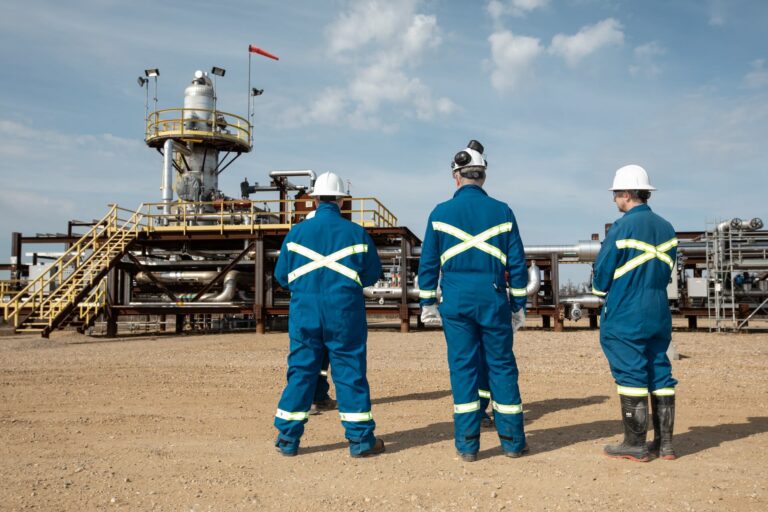
 A mock-up of a regional hub where waste wood would be processed to produce hydrogen fuel. Photo: Hydrogen Naturally/Handout

News
Oilpatch entrepreneur promises ‘bright green hydrogen’ from waste wood
Ian MacGregor backed new Sturgeon refinery and Alberta CO2 pipeline
Logging debris near Port Renfrew, B.C. Photo: The Canadian Press/Jonathan Hayward
OTTAWA — Alberta oilpatch entrepreneur Ian MacGregor figures he’s got at least one more big project in him: pioneering a commercial process to make hydrogen fuel from the debris left over after logging companies have taken the high-value wood out of forests.
The vehicle for trying it is the new company Hydrogen Naturally, where MacGregor is executive chair.
“I’m 73,” he told The Logic in an interview. “The sand is running through the hourglass quickly for me. I’m not going to work on something I can’t do.”
Talking Points
- Alberta’s Ian MacGregor, a driving force behind the country’s first new oil refinery in over 30 years and his province’s central carbon-storage pipeline, has a new venture hoping to turn waste wood into clean hydrogen fuel and storable CO2
- Getting federal support might be challenge, because the project doesn’t fit squarely into existing incentive programs
The idea is to construct four hubs across North America where millions of cubic metres of waste wood would be run through gasifiers to produce megatonnes of hydrogen and pure, easily sequestered carbon dioxide that would otherwise be released into the air.
MacGregor is known in Alberta for championing two major undertakings through his North West Capital investment firm: The Sturgeon refinery northeast of Edmonton was the first new refinery in Canada in over three decades, built from the start to capture carbon dioxide as it upgrades Alberta bitumen. And the Alberta Carbon Trunk Line is a central pipeline for captured CO2, including from the refinery.
Neither was easy. The carbon pipeline’s progress was interrupted repeatedly. The refinery was supposed to cost $5.7 billion and wound up costing $11 billion. The Alberta government spent $825 million in 2021 to rewrite deals it struck in 2011 to support the construction—and took over North West’s equity in the bargain.
Related Articles

The province got a good deal, MacGregor insisted: “If you look at the underlying numbers on that refinery today, it’s printing money.”
The liquefied CO2 from the carbon line is primarily used now to extract more oil from depleted deposits, injected into the ground to force out the last of the fossil fuel. This is, to put it mildly, environmentally controversial. But whatever you think of them, the refinery and the pipeline were not there before Ian MacGregor.
After exiting the refinery, MacGregor said, he got interested not just in keeping carbon dioxide from the atmosphere, but removing carbon that’s already out there. The challenge is filtering CO2 when its concentration in the air is like a drop of ink spread through a swimming pool, the central problem for “direct air capture” projects.
“We started thinking, well, there’s already a machine doing that, it’s called a tree. It takes 400 parts per million in the air and concentrates it to 500,000 parts per million in a tree. Why don’t we just take the carbon out of the tree and use it in the gasifier?”
Neil Dobson joined the effort last March as Hydrogen Naturally’s chief sustainability officer, from cleantech accelerator Foresight Canada—and before that, six years in British Columbia’s climate action secretariat, including leading implementation of the province’s CleanBC climate plan.
Trees do a fine job of fixing carbon if they’re left alone to grow, but logging and sawmills produce vast quantities of “forestry residuals,” Dobson said. “The tree tops, the branches, the skinny trees, the bent trees—all of the stuff that the lumber industry and the pulp industry doesn’t want.”
Much of that is left to rot or heaped into slash piles and burned. The forestry sector has been finding more uses for leftovers, and some sites are at least burning the remains for energy rather than just torching it where it lies. But either way, the carbon from waste wood ends up in the atmosphere again.
“We will put it through a gasification process that captures the carbon that’s in the tree, turns it into a liquid carbon dioxide and then sequesters that permanently underground in a long-term geological storage facility,” Dobson said. “As a byproduct of that process, we create a negative-emission hydrogen.”
The process, as a whole, would be new, but its components are not, he said. “Biomass gasification”—applying high temperatures, oxygen and steam in controlled systems to produce carbon dioxide and hydrogen—is considered a mature technology. Pulp and paper companies have been using it to power their own operations for years. Carbon capture, of course, also isn’t brand new.
The central problem for “direct air capture” projects is filtering widely dispersed CO2, MacGregor noted. “We started thinking, well, there’s already a machine doing that. It’s called a tree.”
“Each individual piece of our equipment is in operation somewhere in the world now,” Dobson said.
Half a million cubic metres of wood produces 480,000 tonnes of carbon dioxide to sequester and 20,000 tonnes of hydrogen, Dobson said. Processing and transporting the wood and powering the gasifier would create emissions, but less than burning the raw material or letting it decay.
Hydrogen fuel already comes in an imaginary colour spectrum depending on how it’s made:
- Green hydrogen, made by breaking hydrogen atoms off water (H2O) molecules using renewable energy, which is generally considered the cleanest form.
- Blue hydrogen, made by breaking hydrogen off methane (CH4) molecules and storing the leftover carbon.
- Grey hydrogen, which is blue hydrogen without the carbon storage. This isn’t considered environmentally friendly.
Because Hydrogen Naturally proposes to cut carbon emissions overall, it brands its fuel as “bright green” hydrogen, greener than green.
Convincing the federal government of the soundness of the plan, so it can qualify for incentives and tax credits meant to support carbon capture and hydrogen-fuel production, will be important. The Liberals’ December fiscal update proposed a tax credit for making clean hydrogen but they haven’t settled on its terms.
MacGregor met Natural Resources Minister Jonathan Wilkinson last September to try to make the case that Hydrogen Naturally’s process is more environmentally friendly than even green hydrogen. A prep note Wilkinson’s department wrote for him, which The Logic obtained under access-to-information law, briefed the minister on what a fine needle Hydrogen Naturally might need to thread: there are public incentives for systems that capture and store carbon dioxide, and incentives for systems that generate hydrogen fuel, but potential problems with federal support for a system that does both.
The company’s hydrogen could be eligible for one set of supports as a clean fuel, if it displaces “traditional liquid fuels.” The equipment for capturing and storing the carbon (called “CCUS”) could be eligible for a different tax credit, “provided it is used solely for CCUS and is not required for hydrogen production.”
Furthermore, the feds won’t grant that CCUS tax credit if the captured carbon is used to enhance oil production.
Consultations on how the hydrogen-production tax credit will work just closed Jan. 6.
“Canada’s approach to hydrogen emphasizes achieving a low-carbon intensity product, rather than focusing on the production pathway,” Wilkinson’s director of communications, Ian B. Cameron, told The Logic in response to emailed questions this month. “Low-carbon hydrogen production in Canada is expected to be based on a mix of pathways; this could include hydrogen derived from biomass.”
Whether the hydrogen tax credit will apply to technology like Hydrogen Naturally’s, he added, the government can’t yet say: “Once the final form of the credit is published, companies will be able to assess how it applies to them.”
As helpful as these incentives and supports would be, especially for getting the first line started, MacGregor said the only really critical federal policy is a price on carbon emissions.
North America likely has room for four regional hubs of the type MacGregor and Dobson envision, they said—places with reasonably close sources of waste wood, markets for hydrogen and potential sequestration sites for carbon dioxide.
“We’d see one in Alberta, one in B.C., one in Nova Scotia and one on the Gulf Coast,” MacGregor said.
Only Alberta and the oil-producing states of Texas and Louisiana on the Gulf of Mexico have the CO2 sequestration capacity in active development now. So Hydrogen Naturally’s Alberta hub, hooked up to the carbon trunk line MacGregor pushed to completion, would be first, fed by wood from British Columbia.
Last April, Hydrogen Naturally and Fort Nelson First Nation in northeast B.C. announced a preliminary agreement to explore cooperation on the project. The Indigenous community has two mills that have been shuttered since 2008 and has been trying—despite some opposition and logistical problems such as sporadic freight rail service—to replace them with a wood-pellet factory.
Peak Renewables, the First Nation’s partner in the pellet project, is also a partner in Hydrogen Naturally.
The Logic sought to contact Fort Nelson First Nation’s Chief Sharleen Gale, who is also chair of the First Nations Major Projects Coalition, but was unsuccessful. The coalition promotes First Nations’ equity participation in major resource projects.
Ultimately, each hub would have eight “production trains” consuming about 500,000 cubic metres of waste wood a year, Dobson said. Four full-sized hubs could sequester almost 1,000 megatonnes of CO2 over their lifetimes. That’s about one and a half years’ worth of Canada’s greenhouse gas emissions, at recent rates.
It’s also a “big, big, hairy goal,” he said, a bit sheepishly. “The first thing we have to do is build a single production train of a single hub.”
The first will be the most expensive, the most difficult, the most prone to mistakes and overruns. That was the case with the Sturgeon refinery, MacGregor said ruefully.
This time, the idea is to invest about $1.2 billion in getting the first production train right and tuning the composition of the wood pellets that go into it—especially learning how to combine different mishmashes of inputs, like leftovers from different species of tree, to produce consistent outputs.
“The most important thing with a gasifier is to have a consistent source of feedstock,” MacGregor said. “If it varies, you won’t be able to get the gasifier to run. I didn’t know that before I spent a couple of billion dollars building and fixing a gasifier. But now I know how essential that is.”
Second and third production trains would be cheaper—$750 million to $800 million each, MacGregor said—if the kinks are worked out with the first.
Dobson said Hydrogen Naturally will likely approach the Canada Infrastructure Bank once plans are firmer; the federal agency is meant to support green projects that have trouble attracting regular investment.
“To some degree, we are relying on future government policy in terms of carbon pricing, clean fuels markets and the like,” he said. “That may create just a bit too much risk for traditional investors.”
Where Dobson is precise and cautious, MacGregor, the oil man, talks about the financing challenges with the swashbuckling confidence of somebody who’s arranged billion-dollar projects before.
“We got an OK amount of money at our end,” MacGregor said. “We’ve got a partner who’s got an OK amount of money, so we can do decent-sized stuff. We’re well known for working at the scale we’re talking about—this is smaller than other things than we’ve done.”



Loading...
Thanks for sharing!
You have shared 5 articles this month and reached the maximum amount of shares available.
CloseThis account has reached its share limit.
If you would like to purchase a sharing license please contact The Logic support at [email protected].
CloseGift the full article!
You have gifted 0 article(s) this month and have 5 remaining.
Recipients will be able to read the full text of the article after submitting their email address. They will not have access to other articles or subscriber benefits.
Photo: The Canadian Press/Jonathan Hayward
Ian MacGregor, the executive chair of Hydrogen Naturally.
A mock-up of a regional hub where waste wood would be processed to produce hydrogen fuel.
Most Popular This Week




In-depth, agenda-setting reporting
Great journalism delivered straight to your inbox.
Commentary
Carmichael: Canadian ignorance about India is a strategic weakness
Briefing
Aritzia shares pop after earnings rise 204%
First Nation in Alberta goes to court over fast-tracked oil pipeline
Chinese EV maker Geely Auto Group to launch in Canadian market in 2027
Best business newsletter in Canada
Get up to speed in minutes with insights and analysis on the most important stories of the day, every weekday.
Exclusive events
See the bigger picture with reporters and industry experts in subscriber-exclusive events.
Membership in The Logic Council
Membership provides access to our popular Slack channel, participation in subscriber surveys and invitations to exclusive events with our journalists and special guests.