In a push to stimulate an economy gutted by COVID-19, the federal government is redesigning its infrastructure strategy. It plans to take on a greater share of the cost of projects, taking the pressure off shriveled provincial and municipal budgets. Infrastructure and Communities Minister Catherine McKenna is also promising a green infrastructure strategy, and one that patches up the socioeconomic holes revealed by the pandemic. Early plans include retrofitting health and long-term care facilities, building out clean transit systems and expanding rural broadband. But as the federal government prepares a throne speech that’s expected to emphasize a “green reboot,” McKenna is facing pressure to balance the urgency of the moment with the diligence needed to actually deliver the sustainable, equitable recovery the government is promising.
Talking Point
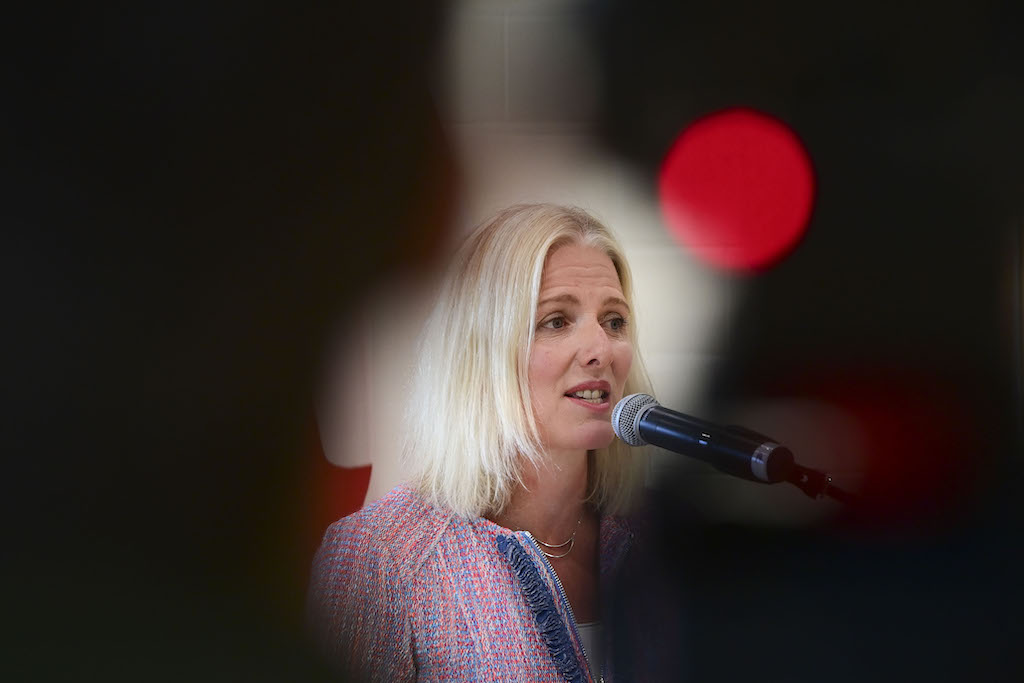
The federal government is promising to “build back better” from COVID-19 with a green recovery plan, details of which have yet to be revealed. In an interview with The Logic, Infrastructure and Communities Minister Catherine McKenna discusses the challenges of balancing ambitions for a green and equitable recovery with pressure to launch projects quickly to stimulate the economy.
In an interview with The Logic, McKenna discussed the state of the Canada Infrastructure Bank—now five months without a CEO—and its role in the recovery, and how federal stimulus could help revive shelved initiatives like Toronto’s smart-city development and high-speed rail through Ontario’s innovation corridor.
This interview has been edited for clarity.
This recession isn’t like any we’ve seen before, and economists have said that recovering from it will require a different kind of infrastructure stimulus than past recessions. How do you plan to implement commitments you’ve made so far quickly enough to stimulate the economy when it needs it?
I had a hard look at our infrastructure programs during COVID-19 and we decided that we needed to make some adjustments in the shorter term. There are some immediate changes that need to be made where we’re vulnerable, and at the same time, create good jobs. That’s the intent of the COVID-19 stream. It’s not new stimulus spending, but we’ve focused the spending on areas we didn’t traditionally focus on—like retrofitting schools and hospitals for physical distancing and ventilation systems—so that we can live with COVID and at the same time create jobs. Those jobs are meant to be finished by the end of next year.
What role do you expect the Canada Infrastructure Bank to play in this recovery?
The Infrastructure Bank was set up to bring the private sector to the table and I think that’s a real opportunity. What we’ve seen through COVID-19 is that Canadians want to see us all working together.
The bank has been criticized for moving slowly, but the government is now promising shovel-ready projects to help with the recovery. What are the government and Crown corporation doing to speed up the approval of projects and get them started faster?
It takes a while to set up [the Infrastructure Bank]. It’s really an innovative financing mechanism. It’s now ready to be activated in a much more robust way. Michael Sabia [chair of the Infrastructure Bank’s board] and I spend a lot of time working together, looking at the shorter-term and longer-term pieces we can do and how [the bank] invests the money it has to [attract] a lot more private-sector money.
What are some of those shorter-term projects you’re referring to?
I’m not going to steal the bank’s thunder, but you’ll see very soon what that means: a broader approach, a more packaged approach to projects that can go faster and also meet multiple benefits, including the cleaner future, because that’s where people want to invest. We do need the money and the investments to be made now. Broadly speaking, we need better broadband. We need to look at projects that present opportunities for the private sector, so it’s not going to be everything. But retrofits of private buildings is an example. Michael Sabia gets that we’re in a pandemic, and that we need to create jobs and get investment going relatively quickly in the short term, and at the same time, achieve these broader objectives that are really about growth and jobs in the longer term. The countries that are the cleanest, that understand the importance of attracting talent, recognize that you want the broadest cross section of people working in your country—where women and Indigenous Peoples have high employment rates—those are going to be the most successful.
The bank’s former CEO Pierre Lavallee left his post about five months ago now. Has a new CEO been selected?
There’s a process ongoing, run by the Infrastructure Bank.
Do you know when the bank will announce its decision?
I’m hoping shortly. It’s run by the Infrastructure Bank; they’re arm’s length and I’m not involved in that.
There’s been a lot of talk about making the recovery a green one. How do you balance that with the need to move fast?
We’re well into COVID-19 and we have to be focused on supporting Canadians through this. But I think there are things to be done that are faster. Retrofits are something that can be done that is fast, and they have to be done, anyway. Some of the things are going to be faster than others. But I think the most important thing is you are being mindful of taxpayer dollars and getting multiple benefits while you do that. Clean [infrastructure] is one [benefit], for sure, but also creating jobs, also making sure everyone has the opportunity to benefit—racialized and Indigenous communities, but also people in all parts of the country. That is the discussion that is going on now.
One major infrastructure project that was shelved earlier this year is the Quayside development in Toronto. Has the government had discussions with other developers or investors interested in pursuing that project since Sidewalk Labs pulled out?
It’s ongoing. We have federal representatives on the board and we’re involved in the project. I had the chance to visit it. It’s pretty amazing when you look at the rehabilitation of a prime piece of land in an area where you could meet multiple objectives: economic, but also having affordable housing components, access to nature and a good environmental frame. This is exactly when I’m talking about when I say having multiple benefits. Sidewalk Labs was one potential partner, but [Waterfront Toronto] is moving forward on it.
The proposed high-speed rail line between Toronto and Kitchener-Waterloo is another project that was put on the backburner—that one shelved by the Ontario government. Are those plans back on the table, given that the federal government is now willing to take on a greater share of the cost of infrastructure projects led by provinces and municipalities?
There’s a working group established that’s looking at how we move forward on high-frequency rail. In general, it’s a challenge during the pandemic because you’re seeing a drop in ridership. But public transit is incredibly important in getting people around the corridor, where you have a large population, quickly. It’s also a trade and economic issue. We’re certainly looking very closely at that. This is a major project and you need to look at what makes the most sense for taxpayer dollars and how to work with different partners. The Canada Infrastructure Bank is involved in the discussion, too. With a project of that scale, you do need to take the proper time, but I do think there’s a real opportunity to get better transportation by rail, in a clean way, in the corridor.
This pandemic has highlighted the gaps in internet access as an equity issue for Canada. Has the government’s plans or timelines for improving rural broadband infrastructure changed since the pandemic?
I think everyone recognizes how critically important it is. There’s been a goal of achieving affordable, reliable high-speed broadband across the country by 2030. We all recognize that we need to accelerate that, and we’re looking at all the opportunities to do that. It’s different challenges in different places, but it’s got to be all hands on deck.