Ted Livingston has moved to the country, where life is different. But the more things change, the more they stay the same.
He has gone from running Kik—one of Canada’s highest-profile tech companies in the mid-2010s, it made a messaging app that boasted hundreds of millions of users until it lost a showdown with U.S. regulators—to running Code, an under-the-radar crypto startup with a fraction of Kik’s staff, and a fraction of Kik’s one-time US$1-billion valuation.
Talking Points
- Ted Livingston, the former CEO of Kik, a Waterloo, Ont.-based messaging startup valued at US$1 billion in 2015, is launching a pay-per-article blogging service as a proof of concept for a crypto payments platform his new startup Code is building
- The blogging service and payments platform are centred on Kin, the crypto token Kik launched in 2017 with a US$100-million sale that drew the attention of the U.S. Securities and Exchange Commission and that led to Kik’s unraveling
He has relocated from Waterloo, Ont., to the village of Amberley, Ont., on the shore of Lake Huron and a property that features a pond he dug himself. He had three kids. Now 37, he’s swapped his trademark hoodie, the techie uniform of the 2010s, for a quarter-zip sweater, the techie uniform of the 2020s.
As a child in Toronto, Livingston used to think, “I wonder what it’s like to grow up in the country?” The transition from urban to rural life was much less difficult than it would have been then, he said, thanks to the internet and Amazon. “Anything we want, we can pretty much have the next day. So we love it.”
If Livingston has retreated even further from the spotlight, with which he was famously uncomfortable to begin, his ambition remains undiminished.
Kik and Code may seem very different, but they had two key things in common: each had a business strategy built around a crypto token called Kin, and each was a vessel for Livingston’s plan to dominate the global payments industry.
With Code—which raised US$6.5 million in February from investors including U.S. venture firms M13 and Union Square and Dapper Labs CEO Roham Gharegozlou—Livingston believes he can finally realize pseudonymous Bitcoin creator Satoshi Nakamoto’s vision of “a peer-to-peer electronic cash system.”
It is not conventional to stick this stubbornly to a grand vision in the face of so many obstacles of the sort Livingston has faced in the last decade. In the startup world, “fail fast” and “pivot” comprise the usual advice to founders whose lofty ideas aren’t quite working out.
“Why did we keep going despite a decade and a half of very high pressure and adversity?” Livingston said. “I think it comes back to my values. I look at all the options, and I work hard to find the win-win. Those are two values I’m deeply committed to. If there’s an option where I don’t just say ‘Screw it’ and walk away… I’m gonna keep going.”
Kik launched Kin in 2017, selling US$98.8-million worth of the token in what was then considered the highest-profile initial coin offering ever in the nascent world of crypto. It was a bleeding-edge experiment in how to generate revenue without competing for advertising dollars against the likes of Google and Facebook, and a major shift for a company whose flagship product was a messaging app that was wildly popular with teens.
It was also the pillar of Livingston’s strategy to make Kik the WeChat of the West. He saw Kik expanding beyond photo sharing and group chats to become a super app, a tool for everyday consumer transactions, with the borderless nature of crypto powering its ability to let users do everything from hailing taxis to applying for a mortgage.
Two years later, the U.S. Securities and Exchange Commission threw a wrench in that plan, declaring the Kin initial coin offering was a sale of unregistered securities and suing Kik. Kik settled with the regulator the following year for a US$5-million payment.
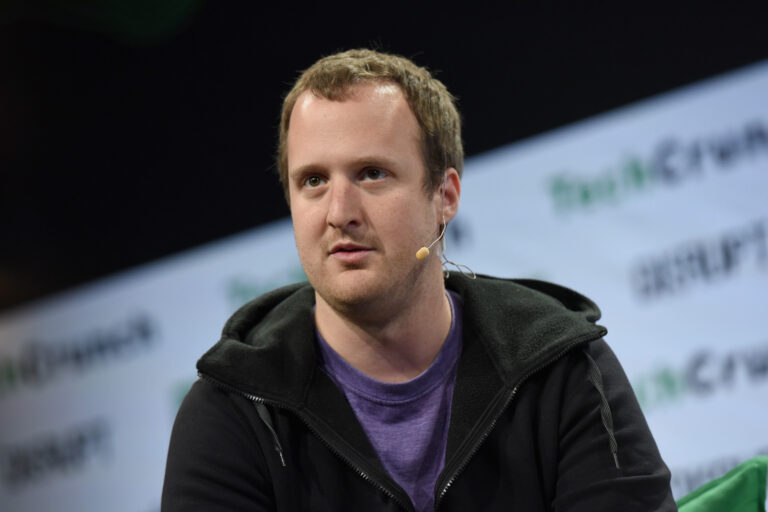
Livingston in his hoodie days, as CEO of Kik at a 2016 TechCrunch Disrupt event in New York City. Photo: Getty Images/Noam Galai for TechCrunch
The legal battle prompted Kik to terminate the vast majority of its staff in the fall of 2019 and sell the messaging app to Santa Monica, Calif.-based holding company MediaLab for, in Livingston’s words, “pennies on the dollar.” But Livingston did not abandon the crypto token that had gotten him into all this trouble.
In 2022, after Kik sold the messaging app, it transferred its remaining employees—including Livingston—and donated its crypto intellectual property to Code, a newly created organization. Kik, meanwhile, became a holding company without employees and with Livingston as a director. Its main asset was roughly 30 per cent of the supply of Kin, or just under a third of its current total market capitalization of about US$52 million.
Like all participants in open crypto protocols—at least theoretically—Livingston has no formal leadership role in Kin’s governance. However, as the visionary behind the token’s creation, as a director of Kik, which owns much of the Kin supply, and as CEO of a startup that’s raised millions in funding to try to drive Kin adoption, he holds a lot of influence over the token’s future.
One very important thing that’s different with Code than it was with Kik, Livingston argues, is the timing. Crypto is much more mainstream than it was in 2017. The technology has improved, he says, to the point where a global crypto-based payments system is actually viable.
Though he ultimately wants to take on the likes of Bitcoin, Visa and PayPal, Livingston has first set his sights on solving problems for publishers, to demonstrate the viability of Kin and the payments platform Code has built. Code is planning to launch a blogging platform called Pennypost that will enable micropayments, with readers paying the equivalent of US$0.25 per article and sending the writer 23 of those cents, while the platform and Code take the rest.
The idea is well–worn in the media world, which has struggled for decades to find a profitable funding model since the internet upended its traditional reliance on advertising. The argument in favour of micropayments is that readers who aren’t willing to buy subscriptions might instead be willing to pay a small fee for a single story. The argument against them is that collecting such digital dimes is too expensive to be worthwhile, doesn’t offer a stable stream of revenue and may even cannibalize the dollars still generated by subscriptions and advertising.
Livingston argues the idea has never seriously been tried, and in fact became technologically possible only recently. Crypto, he said—particularly the fast and cheap Solana blockchain, on which Code’s system is built—is perfect for processing and tracking tiny payments made by people around the world, a task for which credit cards, with their hefty fees, are ill-suited.
“I think there’s lots of theories for why micro payments aren’t going to work for articles,” he said. “All those theories could end up being true. We’ve never actually run the experiment.”
The countryside near the Ontario village of Amberley, where Livingston moved after leaving Kitchener-Waterloo. Once an icon of the KW tech scene, he says he doesn’t miss urban living. Photo: Christopher Katsarov Luna for The Logic
Pennypost will not just use crypto payment rails. Readers will have to pay, and publishers will have to accept payment, in Kin—a volatile crypto token that has lost more than 99 per cent of its value since its peak in January 2018, before the SEC case sent it tumbling.
A less risky option would be for Code to use stablecoins, crypto tokens with a value typically pegged to the U.S. dollar. But the potential upsides of a crypto token with a fluctuating value are what prompted Livingston to experiment with crypto at Kik in the first place.
Livingston’s theory is that writers paid in Kin will want the value of their Kin to go up, incentivizing them to do things that are good for the token, such as posting more and better articles on Pennypost. The quality of the platform would improve, drawing more readers paying in Kin and driving demand for it. If things go as intended, the publishers, Code and anyone else holding Kin would financially benefit.
Livingston launched Kin in 2017 on the same theory. Before Kik introduced the token, the messaging app company’s mostly teenage user base could earn digital points by participating in revenue-generating activities like watching ads and playing branded games. The points were a proof of concept for Kin, which users could trade for cash—or hold in the hopes its value would grow.
Like micropayments for writers, this is a concept with a well-established line of criticism. A community of people holding the same financial asset is also incentivized to increase its value through less noble means: hype, grift, the greater fool theory.
In the 2021 crypto bull run, there was a lot of this behaviour. Crypto now has a significant reputational problem among the very writers and artists Livingston is trying to attract. “‘Crypto micropayments’ aren’t the answer to ‘writers’ problems’ any more than alkaline water or speaking in tongues or any other delusional conduct is,” science fiction writer and tech critic Cory Doctorow said in an email to The Logic.
Livingston is infuriated by crypto grifters, too. Over the course of two bull markets, as he negotiated the sale of his once-high flying app and laid off his staff, he’s watched crypto projects that range from silly to outright fraudulent achieve wild success and face few consequences.
“That was painful,” he said. “Regulators came after us when there were all these scams getting away, quote unquote, scot free.”
In 2017, Kik’s initial coin offering stood out for being serious as well as experimental. High-profile crypto investors Blockchain Capital, Pantera Capital and Polychain Capital were among those who purchased tokens.
“We really tried hard to do our best, to do the right thing in a world where everything’s happening fast, and the rules were completely unclear,” Livingston said. “So to then be singled out after that, and to go on this extremely painful journey, did feel unfair.”
Kik’s SEC settlement three years later, notably, was related to the initial sale of the Kin token, not to the token itself. The regulator ultimately did not require Kik to register Kin as a security, a move that would have seriously hobbled its ability to function as a payment instrument. There are strict investor protection rules around who can issue and hold securities that make them impractical methods of exchange for everyday transactions.
Blockchain lawyer Jonathan Ip said Livingston and his team’s continued commitment to Kik in the face of regulatory trouble is notable. In the crypto world, the phenomenon of founders raising large amounts of money for a project and running off with the funds is so common it has a name: a rug pull.
Livingston on the shore of Lake Huron: “Growing a big team sounds right, but it feels wrong.” Photo: Christopher Katsarov Luna for The Logic
“If the project is failing, often the founders just run off. Token holders are left holding the bag,” Ip said. “Part of it may be reputational. You don’t want to be known as the guy who abandoned Kin after raising US$100 million.”
Token holders have not always been happy with Livingston. Last year, a dispute with fellow directors of the Kin Foundation ended with the organization dissolving. Adam Cochran, a partner at Cinneamhain Ventures and an early contributor to the Kin community, posted on X that “there is no bigger fumble in crypto than this.”
But Livingston has loyal supporters as well, such as prominent U.S. venture capital firm Union Square Ventures, which invested in Kik in 2011 as well as in Code’s recent seed round. “One of the things about me, and my partners at USV, is we tend to stick with companies and their founders for the long haul. One can argue the merits of that approach, but it is what we do, and this particular journey is an excellent example,” partner Fred Wilson wrote in a February blog post about his firm’s investment in Code.
Livingston said he thinks of the investors who participated in Code’s seed round as readers of the next chapter in a compelling book, or maybe more like viewers tuning in to “a sitcom part way through season three.” Either way, he said none of them asked why they should give an idea that has already been tried, with disastrous results, a second chance. “Nobody asked me that,” he said. “Nobody asked me that.”
Sometimes people do ask him what mistakes he thinks he’s made. Livingston said he regrets letting Kik’s workforce grow so large, with more than 100 employees before the mass layoff following the SEC settlement.
“As a young entrepreneur, everyone’s telling you, ‘You gotta get big. That’s a sign of success,’” he said. “Growing a big team sounds right, but it feels wrong.”
Livingston is certainly still thinking big, however. He sees Pennypost as a proof of concept for the crypto payments platform powering it. The bull case is that developers build more apps on the payments platform until Kin and Code’s crypto wallet become integrated into the daily lives of people around the world.
“When you think about the idea of building a new global payments platform, you almost can’t get something that’s bigger or more impactful on society than that,” Livingston said.
Asked if he wants to return to the high-flying days of Kik’s peak, however, he didn’t hesitate to say, “Never.”
“There were some parts that were good in the Kik journey. But there were a lot of parts that were brutal,” he said. “I never want to go back to that.”