Skip to content

 Attabotics’ system, seen here in a screengrab from an animated video, is modeled on movements within ant colonies. Photo: Attabotics/Vimeo/Screenshot
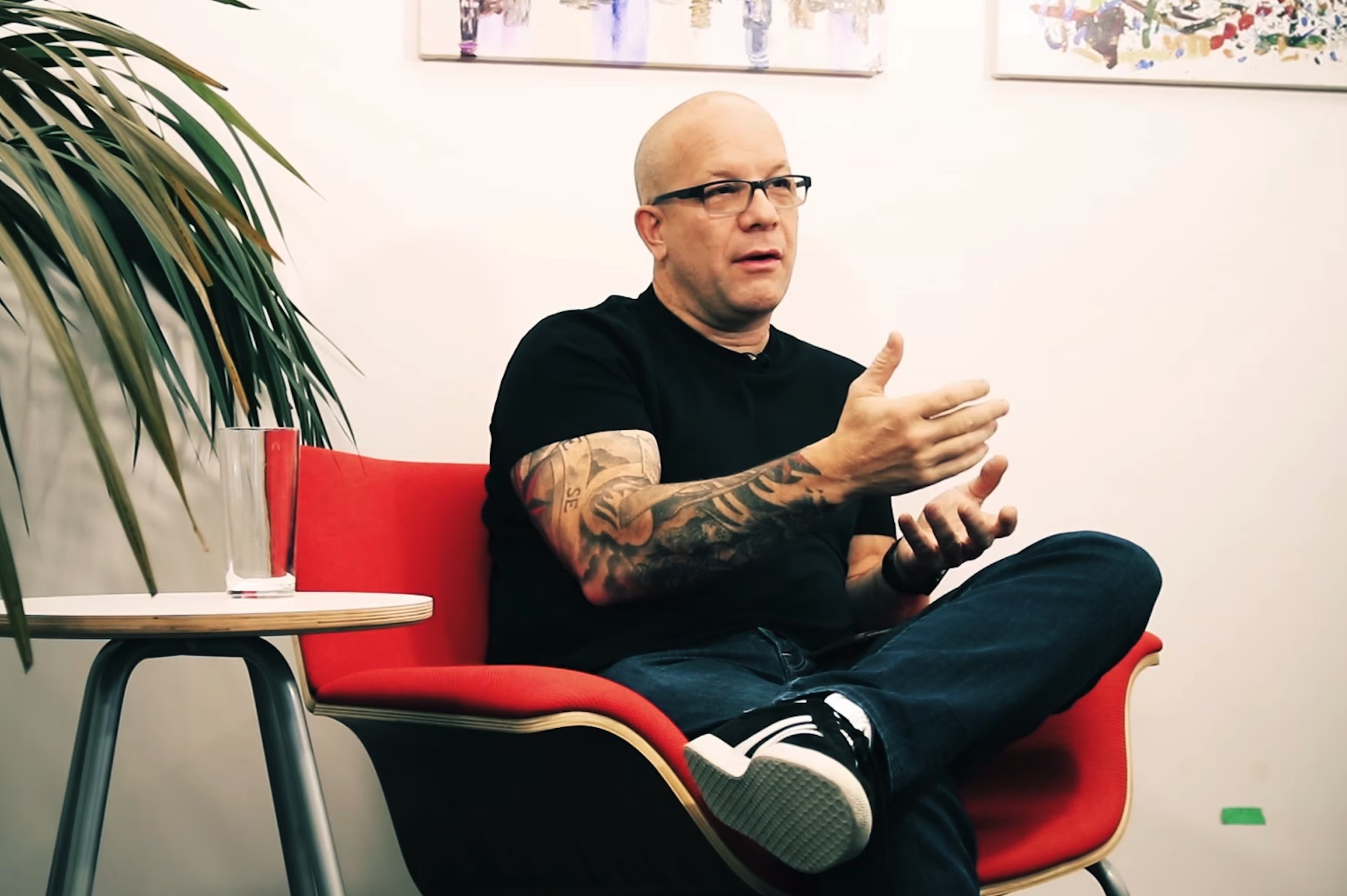 Scott Gravelle worked as an army medic and ran a company that made longboards before he co-founded Attabotics. Photo: Startup Calgary/Vimeo/screenshot
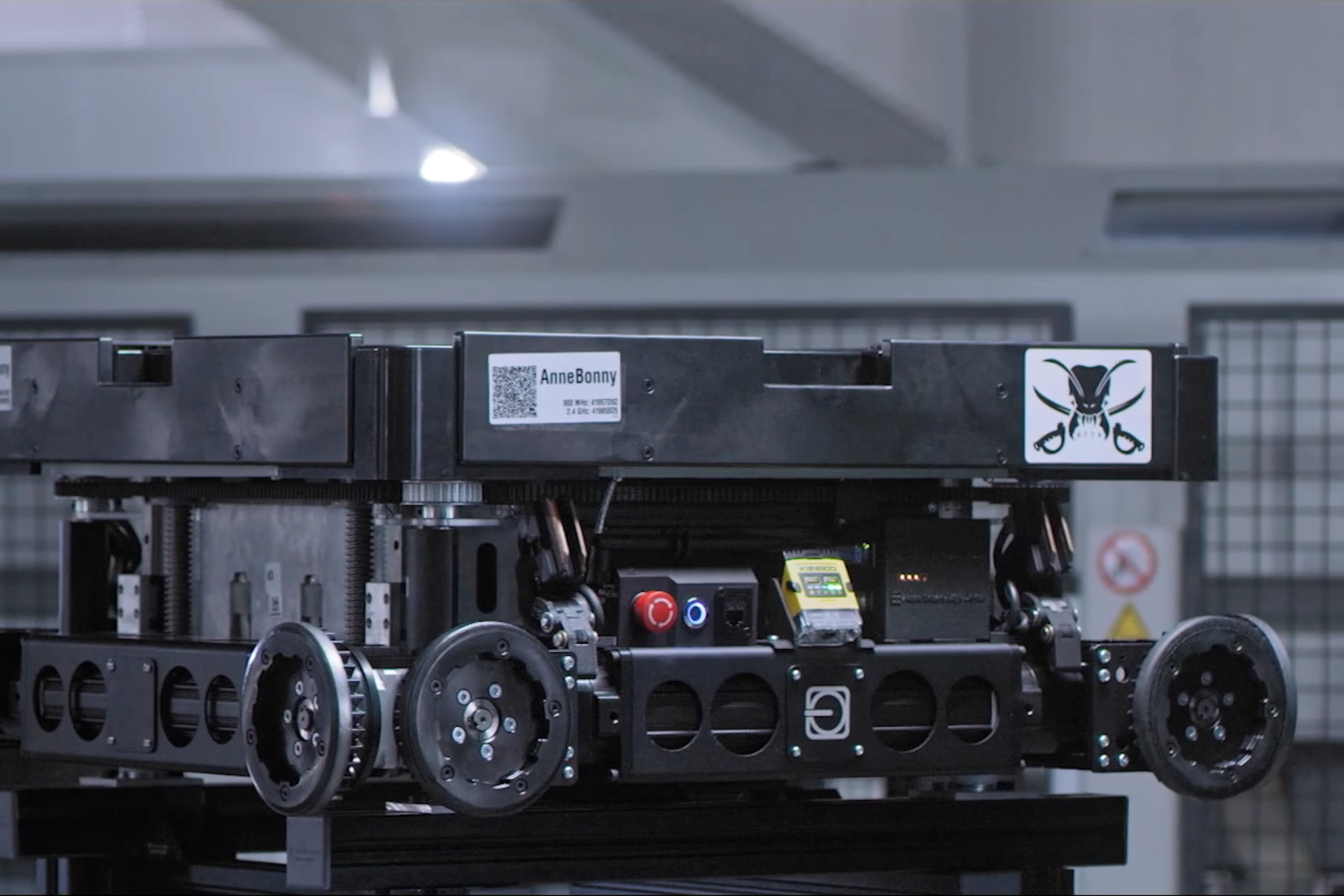 Attabotics' robotic units move both vertically and horizontally on tracks within a contained structure. Photo: Vimeo/Azure/screenshot

The Big Read
How Attabotics went off the rails
The robotics startup was plagued by fires, technical troubles and questionable decisions that led to its financial downfall. Its collapse leaves a huge hole in Calgary’s tech scene.
Co-founded in 2016 by CEO Scott Gravelle, centre, Attabotics had an outsized presence on Calgary’s startup landscape. Photo: Photo illustration by Paul Kim for The Logic; Screenshots: Attabotics/YouTube/Vimeo
Co-founded in 2016 by CEO Scott Gravelle, centre, Attabotics had an outsized presence on Calgary’s startup landscape. Photo: Photo illustration by Paul Kim for The Logic; Screenshots: Attabotics/YouTube/Vimeo
CALGARY — When fire crews in California’s Bay Area were called to a Nordstrom distribution centre in April 2021, one of the first firefighters to reach the scene declared that it was “going to be a weird one.”
The building’s alarms and sprinkler system had gone off, and firefighters had traced the source of the smoke to the centre of the facility, according to radio communications between first responders. The blaze was in check, the firefighter added, but his team was “having access issues” because the smoke was coming from “one big box that goes damn near to the ceiling.” Getting at the fire was no straightforward matter, he said, catching his breath: “We have robots that, uh, move inventory within a closed structure.”
Talking Points
- Attabotics, a prominent Calgary robotics startup that raised more than $200 million, entered bankruptcy protection in July
- The filing delivered a blow to Calgary’s tech sector, where Attabotics was seen as a potential anchor company if it could deliver on its early promise
- Drawing from court documents, financial reports and interviews with sources familiar with the company, The Logic found that persistent technical troubles with its robotic warehouse tech, including at least three fires, hobbled the company before it entered protection
The sprinklers and fire crews eventually doused the flames. But the blaze temporarily shut down the department store’s experimentation with an emerging technology that at the time was stirring excitement in the worlds of logistics and retail. The robotic warehouse system belonged to Attabotics, one of Calgary’s leading tech startups and a Canadian champion in the fast-growing space of supply chain automation.
Attabotics got past the incident, and would later sign deals with other big-name clients. In hindsight, though, the fire was an ill omen. More than setting back its work with an iconic U.S. retailer, the incident was one of many technical issues that were already hobbling the startup and its technology—lapses that, four years later, helped bring about its financial collapse.
In early July, Attabotics entered bankruptcy proceedings, as years of declining revenues and high costs tested its financial viability. The company abruptly laid off 192 employees, leaving a written notice on the door of its Calgary office and retaining a small workforce of 11 as it sought to sell its remaining assets.
Related Articles


It was a dramatic turn of fortune. Co-founded in 2016 by CEO Scott Gravelle, Attabotics’ unique robotics technology had helped it secure $200 million in funding from investors, including U.S. industrial giant Honeywell, San Francisco’s Forerunner Ventures and New York-based Comcast Ventures. In addition to Nordstrom, its customer list included established companies like Canadian Tire and U.S. media company Accelerate360.
Based on the swarm movements of ant colonies, the technology uses fleets of small robots to sort, collect and distribute warehouse inventory. Unlike conventional systems that essentially pluck items from warehouse shelves, Attabotics’ robots move along vertical and horizontal tracks housed within a giant, featureless cube. The technology’s three-dimensional orientation lets it store and move goods—anything from pet food to T-shirts—in a more condensed way, saving potential customers costly warehouse space.
That value proposition, and the money it attracted, gave Attabotics an outsized presence on Calgary’s tech scene—one all the more striking when things fell apart. To trace the arc of its rise and fall, The Logic examined court records and financial filings, while interviewing supply chain industry experts and five people familiar with Attabotics’ operations, including four former senior employees. The Logic granted anonymity to its sources because they were not authorized by the company to speak publicly about the events leading to the bankruptcy.
The insiders describe a startup that aggressively pushed its technology to ever-greater limits, even as technical glitches prompted repeated shutdowns, drove up costs and complicated relationships with customers. Three fires—one at Nordstrom, a second at a Canadian Tire distribution centre in Ontario, and a third, much larger fire at the same Canadian Tire warehouse—interfered with the company’s efforts to climb to the top of the highly competitive supply chain and logistics market.
Even though Attabotics continued to attract major pools of investment, Gravelle’s relationships with staff, some customers and at least one investor began to sour, three sources said. Communications with investors became sparse, and the company started to churn through executive staff. Its three other co-founders—Jacques LaPointe, Anthony Woolf and Rob Cowley—all left the firm between October 2018 and July 2020, although none publicly stated his reasons.
Gravelle’s fundraising success had instilled a “too-big-to-fail mentality,” one person said, and as the startup’s financial woes continued, it became embroiled in lawsuits against customers and outgoing staff members alike.
Attabotics did not respond to The Logic’s request for comment for this story. When contacted, Gravelle told The Logic he had received a cease-and-desist notice that prevented him from speaking to media. He did not respond when asked who sent the notice.
While Attabotic’s impending collapse didn’t surprise insiders, the blow it dealt to Calgary’s nascent tech sector was severe. Long associated with its vast oil and gas wealth, the city has sought to diversify its economy toward emerging fields like fintech and clean energy.
Despite making strides in recent years, the size and range of Calgary’s tech community continues to lag that of other Canadian cities, and it has yet to produce its own tech champion—the sort of anchor firm that Shopify was to Ottawa, or AbCellera is to Vancouver.
Attabotics counted among a handful of startups that—to outsiders, at least—looked poised to break that barrier. The company raised hundreds of millions in the span of a few years, regularly topping fast-growth lists. In 2019, Time magazine gave Attabotics’ technology a special mention on its annual list of best inventions.
Gravelle seemed keen to feed the excitement, boasting that the firm’s system could ultimately disrupt the entire e-commerce supply chain. In a TED Talk in 2019, he said Attabotics had developed “the world’s first 3D robotics shuttle” that would all but eliminate the need for cardboard boxes and air cargo, reorienting supply chains around smaller distribution hubs that could automatically sort and distribute goods.
Starting around mid-2018, Attabotics enjoyed a growth spurt that launched it from a seed-funded startup to a robotics company with major clients. At the time, the firm had built a testing facility for its robotic system in Calgary and was piloting its technology with Gordon Food Service, a grocery distributor in the city.
That summer, it started working with its first major client in Nordstrom, which three sources told The Logic was also an investor in Attabotics. (PitchBook does not list Nordstrom as a current or past Attabotics investor, but sources said the retailer later sold its stake.) Nordstrom did not respond to The Logic’s questions.
Attabotics needed on-site personnel to rescue the robots. “We hired an army of people just to babysit it.”
Under the deal, Attabotics agreed to install its technology at Nordstrom’s Newark, Calif., distribution centre—the same facility that would catch fire a few years later. It was a sizable leap for Attabotics in both capacity and software requirements. While the Gordon Food installation ran with about six robots, the Nordstrom plans would require around 18, according to one senior source.
Gravelle set an ambitious timeline to scale up capacity at the Newark project—internally coded contract “499”—with initial testing starting around July 2018. He aimed to ramp up to commercial installation by January 2019, a narrow window given that the Attabotics system was repeatedly malfunctioning, lagging far below the industry standard of being operational 99 per cent of the time, according to three sources familiar with the project. “For sure, the system wasn’t ready,” one former senior staff member said.
Among the issues plaguing it: robots occasionally failed to properly latch onto their tracks before descending the shafts, and would crash to the warehouse floor, two people said. In the first two days of testing at the Nordstrom facility, 12 of the 18 robots fell off the tracks or otherwise malfunctioned, said one person with knowledge of the project.
Attabotics needed on-site personnel to do “robot rescue”—essentially, hoisting the units back onto the track system. The additional staffing requirements accelerated the company’s cash burn. “We hired an army of people just to babysit it,” said one source.
The Attabotics system’s reliability would improve as staff tested thousands of new robot iterations. (In 2022, it started incorporating AI into the system.) The Newark system was one of Attabotics’ first prototypes and, given the complexity of the hardware, some defects were to be expected, said one person familiar with the company’s technology. Ideally, the firm could have refined the technology at its Calgary test site, then moved on to commercialization once the hardware and software kinks were ironed out, three sources said.
“I told Scott, ‘I believe your company is going to fail. Frankly, your cash burn rate is an embarrassment.’”
Instead, Attabotics rapidly moved onto bigger and bigger contracts. Despite a rocky start at the Newark facility, Nordstrom ordered more systems. In the space of a year starting early 2019, the retailer installed Attabotics’ tech at its warehouse in Maryland and its Los Angeles “omnicentre” distribution hub. Even with the technical setbacks, one former Attabotics employee said, “we were rolling out project after project after project.”
Brittain Ladd, a Texas-based supply chain expert and founder of Six Page Consulting, called the Attabotic’s technology a “mechanical marvel” that was among the most sophisticated on the market. It was also “ungodly complex,” he said, with its robots constantly optimizing and updating routes to improve efficiency. That made the technology difficult to manage and scale, Ladd said.
Shortly after the Nordstrom fire, Ladd said, Gravelle contacted him for advice on how to restore his wounded relationship with the department store. Ladd continued to speak to the CEO a few times a year for the next four years. During those discussions, he advised Gravelle to make way for a chief executive who was better-versed in the technical aspects of robotics.
“I told Scott, simply: ‘I believe your company is going to fail. I absolutely think you lack a strategy,’” Ladd recalled. “I don’t believe your operations are running anywhere near as well as they should, and frankly your cash burn rate is an embarrassment.” His advice to stanch the cash bleed and find a new CEO went unheeded, Ladd said.
Described by former colleagues as a “dreamer” and a “passionate” salesman who constantly pushed his vision for Attabotics, Gravelle took an unlikely path to founding a high-profile tech startup. Before launching the company, he worked as an army medic and later ran a longboard manufacturing firm.
Former employees and other sources said Gravelle is a gifted storyteller, capable of convincing would-be investors about his technology’s potential. His pitch even won the attention of legendary investor and SoftBank CEO Masayoshi Son, whom Gravelle said he met in Japan in the summer of 2019 to discuss Attabotics’ business and technology, according to one person familiar with the meeting. A short time later, Attabotics agreed to supply its system to Gopuff, a food delivery company backed by SoftBank, according to the details of a term sheet shared with The Logic. The project was never executed.
As he continued selling customers on the promise of Attabotics’ technology, Gravelle seemed unfazed by its technical limits, according to four people with knowledge of his efforts to expand the business. Hardware and software engineers’ concerns about the stability and performance of the product went unaddressed, three people said. Gravelle pushed to “keep the company moving forward at all costs,” a former employee said, adding that there was a sense inside the firm “that we were overselling and under-delivering.”
Meanwhile, communication with investors became more guarded following the company’s US$50-million Series C fundraising in 2020, backed by Honeywell and the Ontario Teachers’ Pension Plan’s venture capital arm.
After the round, management stopped providing investors with any information aside from financial statements, declining to offer context on business decisions, for example, or explain its broader corporate philosophy, according to one source. Following its Series C1 in 2022, when it raised US$71.7 million, Attabotics adjusted its shareholder status so that it only had to supply financial documents to shareholders with major stakes—a decision that one person called an effort to “restrict view of the company.” Two sources said that the firm did not hold annual meetings with all shareholders.
Some who raised dissenting opinions about Attabotics’ decisions didn’t remain in their positions of influence, one source said. SeeHon Tung, then managing director of Werklund Family Office, a Calgary-based investment firm, was among the most outspoken critics of the company’s decisions in his role as a board observer, three people said. In 2020, he left that position. It was not an atypical outcome, said one person with knowledge of the turnover on Attabotics’ board at the time: “These guys would ask really pointed questions about spend and performance, and they’d be pushed off the board.”
Tung did not respond to The Logic’s request for comment.
Despite Attabotics’ communication style and its technological struggles, Crown-owned and taxpayer-funded organizations remained some of the startup’s most eager backers. Export Development Canada, the Business Development Bank of Canada, the Strategic Innovation Fund and the Opportunity Calgary Investment Fund all supported the firm through loans, grants, revolving credit facilities and equity.
As of the bankruptcy filing, Attabotics owed EDC around $41 million in convertible promissory notes. BDC and Western Economic Diversification Canada were owed $2.8 million and $2.5 million, respectively, making those Crown corporations the company’s three largest secured creditors.
Ontario Teachers’ Pension Plan and its VC arm, Teachers’ Venture Growth, were also major Attabotics’ investors, participating in both the company’s Series C and Series C1 rounds in 2020 and 2022.
On March 15, 2023, the company was hit with arguably its biggest setback when a fire broke out in an Attabotics system installed at a Canadian Tire distribution centre in Brampton, Ont. Canadian Tire was using the system to sort auto parts, one person familiar with the operation said.
This time, flames spread through the warehouse, destroying loads of inventory and costing the retailer $74.6 million in quarterly earnings. It was the second time Attabotics’ system had caught fire in the Canadian Tire warehouse, after its “proof-of-concept” system started a much smaller blaze in August 2021.
Attabotics alleged that Canadian Tire’s fire alarm failed to go off, and that its employees were forced to flee the warehouse, one by one, through the front entrance turnstiles.
Attabotics blamed Canadian Tire for the 2023 incident and filed a lawsuit against the retailer two months later in Ontario Superior Court. In it, Attabotics claimed $32.5 million in damages, alleging that Canadian Tire’s “gross negligence, wilful misconduct” and “recklessness” had caused the blaze. The Calgary startup claimed that the fire had caused reputational damage, lost profits and missed business opportunities.
In its claim, Attabotics said the fire started in a bin transporting brake pads, a steering pump and other automotive products. At some point, the suit alleged, a Canadian Tire employee added a “foreign fire hazard or ignition source” that likely caused the fire. “The swiftness with which the initial fire ignited indicates that an improper material was placed in the relevant bin,” the company said. It also alleged that Canadian Tire’s fire alarm had failed to go off, and that some emergency exits in the facility were locked, forcing Attabotics’ employees to “flee one-by-one out of the turnstile front entrances of the Brampton warehouse.”
Canadian Tire denied Attabotics’ claim that its employee had placed hazardous or flammable products in the bin that caught fire. Further, none of the items the robot was carrying “contain any electricity, combustible fluids or other sources of fuel that would have been capable of igniting the fire,” it said in its legal response.
The retailer was also aware of the 2021 Nordstrom fire, and said the incident was “strikingly similar” to the fire that broke out four months later in its own warehouse. Canadian Tire noted that an Attabotics’ robot was to blame for the Nordstrom fire, pointing to the startup’s own investigation that traced the source to a faulty module in the system’s battery chargers that caused a sudden spike in voltage, from 86 volts to 140 volts. Attabotics then failed to make the necessary improvements to stop the second, larger fire from igniting, Canadian Tire alleged.
“After an investigation of the [proof-of-concept] fire, Attabotics told Canadian Tire that they had implemented a solution that would prevent a similar incident from reoccurring. Attabotics lied.”
Canadian Tire did not respond to The Logic’s questions.
The two companies reached a settlement in February 2024, with Canadian Tire stating publicly that the cause of the fire was never found. One former Attabotics employee who spoke to The Logic said they believed Attabotics’ claim was accurate, based on the company’s own investigation of electrical currents, voltages and other data during the fire’s ignition. Ladd said he spoke to Gravelle after the fire. “The way he described it, in all honesty, legitimately sounded like Attabotics was not at fault,” Ladd said.
Around the time the Canadian Tire fire broke out, though, Attabotics was ensnared in another customer lawsuit, this time with Indiana-based supply chain and logistics firm Bastian Solutions.
The Bastian operation also suffered technical complications, which the U.S. company detailed in a lawsuit filed against Attabotics in February 2023. Under a 2020 agreement between the two firms, Attabotics had authorized Bastian to resell its robotics tech to end users. By December of that year, Bastian had negotiated a deal with media logistics firm Accelerate360 (A360), which later installed Attabotic’s system in its 716,000-square-foot warehouse in Kansas.
In July 2022, A360 filed a lawsuit against Bastian in Delaware Superior Court, alleging that Attabotics’ system had failed to operate as promised. Bastian in turn sued Attabotics, citing A360’s claim that there were “a host of ‘catastrophic’ issues with the Attabotics nest, ants and software.” (The “nest” refers to the structure in which the robots move.)
According to A360, Bastian broke its contract with the company due to a “failure to meet the approved project schedule, and for breach of representations”—claims Bastian effectively passed on to Attabotics in its lawsuit against the Calgary startup.
According to Bastian’s complaint, filed in the Indiana District Court, A360 told the company “that Attabotics was not forthcoming with what it was doing to the system, that Attabotics negligently updated the software to a version which made the system unworkable, and that Attabotics staff failed to show up” at site. The combination of shortfalls shut down A360’s operations, the document alleges.
Indiana District Court Judge James Sweeney has not yet issued a verdict on the lawsuit.
By the end of 2024, Attabotics’ struggles were evident in its bottom line, and were made worse by the hangover of the COVID-19 pandemic.
Lockdowns initially kicked off an e-commerce craze that jump-started logistics firms, but there were after-effects: supply chain disruptions and, later, a spike in interest rates and a decline in consumer spending. In an affidavit filed as part of Attabotics’ bankruptcy proceedings, board chair Edna Conway cited those pressures as reasons for the company’s deteriorating finances, saying that customers subsequently delayed warehouse investment plans.
According to the affidavit, annual revenue plunged from $11.4 million in 2022 to just over $3 million in 2024, a meagre figure considering the $200 million it has raised. Meanwhile, costs were ballooning. Over that period, research and development expenditures alone totalled about $76 million, while debt and interest payments in 2024 surpassed revenues, according to financial statements. All told, the company’s annual losses reached $35 million by 2022, then soared to $49.5 million in 2024.
Attabotics’ current book value is $31.6 million, while its liabilities total $73.8 million, according to the affidavit.
In late 2024, Attabotics tried to start a Series D funding round, but existing shareholders raised concerns about the company’s cash flows, Conway said in her affidavit. That caused a “ripple effect across the investor community” and made it impossible for the company to deliver on its remaining orders, Conway said.
By July 2025, after filing for creditor protection, the company had begun seeking a buyer for its remaining assets, which included what Conway called a “highly valuable suite of intellectual property.”
Ladd suggested to The Logic that any number of major companies from U.K. grocery chain Tesco to Danish logistics giant Maersk might have an interest in acquiring Attabotics’ intellectual property.
In late July, The Logic reported that Honeywell had expressed interest in acquiring Attabotics in 2020 for US$350 million. Sources could not specify why the deal never went through, but the bid illustrated how far the company had fallen from its previous heights.
Gravelle, at least in his public-facing communications, seemed to ride Attabotics’ stomach-turning descent with an upbeat demeanor. As recently as early 2024, he starred in a video the company posted on YouTube, extolling the system’s strengths with little hint of its operational problems, or the financial crisis already on Attabotics’ horizon.
At one point in the video, however, Gravelle stands in front of a metal structure painted bright yellow—the kind utility workers use to lower themselves into confined spaces like manholes. Attabotics staff sometimes use such equipment, he explains in the clip, to descend into its system’s downshafts and retrieve fallen robots.
“The hardest part about developing a 3D robotics platform,” he says, “is we were never able to push pause on gravity.”
Correction: This story has been updated to correctly reflect the status of Bastian Solutions’ court action against Attabotics.



Loading...
Thanks for sharing!
You have shared 5 articles this month and reached the maximum amount of shares available.
CloseThis account has reached its share limit.
If you would like to purchase a sharing license please contact The Logic support at [email protected].
CloseGift the full article!
You have gifted 0 article(s) this month and have 5 remaining.
Recipients will be able to read the full text of the article after submitting their email address. They will not have access to other articles or subscriber benefits.
Photo: Photo illustration by Paul Kim for The Logic; Screenshots: Attabotics/YouTube/Vimeo
Attabotics’ system, seen here in a screengrab from an animated video, is modeled on movements within ant colonies.
Scott Gravelle worked as an army medic and ran a company that made longboards before he co-founded Attabotics.
Attabotics' robotic units move both vertically and horizontally on tracks within a contained structure.
Most Popular This Week



In-depth, agenda-setting reporting
Great journalism delivered straight to your inbox.
Commentary
Carmichael: Canadian ignorance about India is a strategic weakness
Briefing
Aritzia shares pop after earnings rise 204%
First Nation in Alberta goes to court over fast-tracked oil pipeline
Chinese EV maker Geely Auto Group to launch in Canadian market in 2027
Best business newsletter in Canada
Get up to speed in minutes with insights and analysis on the most important stories of the day, every weekday.
Exclusive events
See the bigger picture with reporters and industry experts in subscriber-exclusive events.
Membership in The Logic Council
Membership provides access to our popular Slack channel, participation in subscriber surveys and invitations to exclusive events with our journalists and special guests.