MONTREAL — The Quebec government will cease subsidizing access to Starlink for people living in remote areas of the province next week.
Skip to content

News
Quebec will stop subsidizing access to Elon Musk’s Starlink
The province will continue to prioritize fibre-optic infrastructure over the low-Earth orbit satellite services offered by Starlink and its rivals
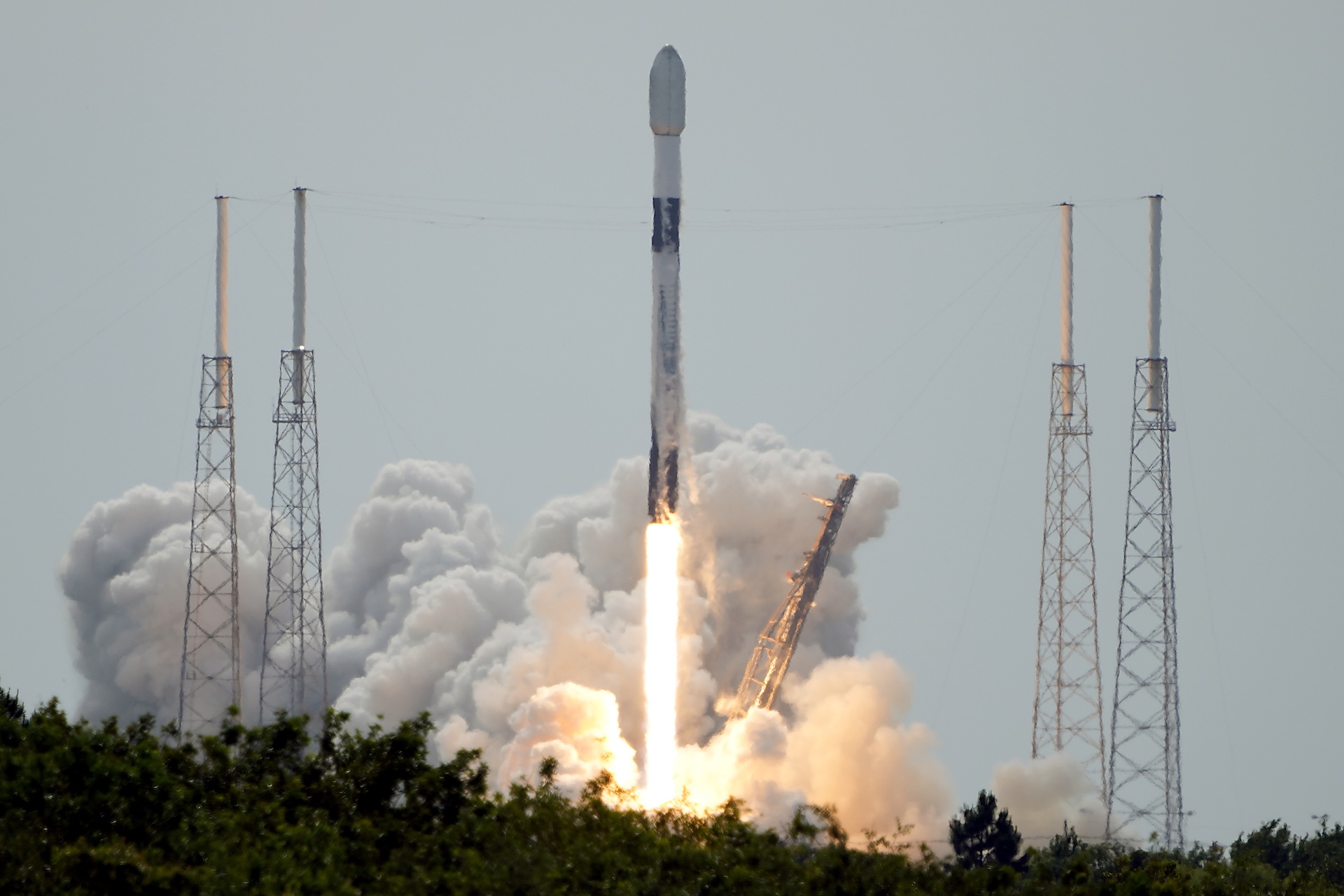
A rocket with a payload of Starlink internet satellites lifts off in Cape Canaveral, Fla. Quebec has subsidized access to the company’s internet service for people in remote communities since 2022. Photo: AP Photo/John Raoux
MONTREAL — The Quebec government will cease subsidizing access to Starlink for people living in remote areas of the province next week.
The province isn’t renewing its three-year, $130-million contract with the Elon Musk-owned internet provider, which comes to an end on June 15, cybersecurity ministry spokesperson Émile Boudreau confirmed in an email to The Logic. Though access to Starlink won’t be interrupted, Quebecers in remote areas will lose access to the $40-a-month subsidy, as well as free Starlink receivers, which retail for $599.
Talking Points
- Quebec has chosen not to renew its contract with the Elon Musk-owned satellite internet provider
- The province has delivered high-speed internet to nearly 369,000 mostly-rural homes since 2022
Quebec signed the contract with Starlink in 2022 as part of Opération haute vitesse, its $1.3 billion initiative to deliver high-speed internet to 250,000 households in the province. As part of the plan, Starlink’s low-orbit satellites brought internet service to 10,000 “orphan households” in the province—those addresses that were too remote for traditional fibre optic installations.
In February, in the wake of U.S. President Donald Trump’s trade war and threats to annex Canada, Quebec signalled its intent to end its relationship with Starlink in order to develop “connectivity sovereignty,” said Quebec MNA Gilles Bélanger, who has since been named cybersecurity minister.
Opération haute vitesse has exceeded its original connectivity target, having hooked up nearly 369,000 more households as of June 9, representing the entirety of homes in the province, Boudreau said. It is unclear how many of these homes still rely on Starlink for access to high-speed internet.
Related Articles


Despite the removal of the Starlink subsidy, some of Quebec’s courthouses will continue to rely on the technology to stay online. In April, the government awarded a contract to install Starlink internet services in remote courthouses, underscoring how there are currently few if any viable alternatives to the service.
Amazon expects to begin rollout of Project Kuiper, its satellite broadband network, later this year, though the company hasn’t announced a Canadian launch date. Ottawa-based Telesat, which secured a $2.14-billion loan from the federal government in 2024 to develop its own network of low-earth orbit satellites, doesn’t expect to launch its own satellites until 2026.
Quebec prioritizes fibre-optic infrastructure over the low-Earth orbit satellite services offered by Starlink and its rivals.
Ontario-based Xplore has petitioned the province for funding to expand fibre-optic network deployment in Quebec’s rural regions, yet cost and lack of telephone poles has hindered progress.



Loading...
Thanks for sharing!
You have shared 5 articles this month and reached the maximum amount of shares available.
CloseThis account has reached its share limit.
If you would like to purchase a sharing license please contact The Logic support at [email protected].
CloseGift the full article!
You have gifted 0 article(s) this month and have 5 remaining.
Recipients will be able to read the full text of the article after submitting their email address. They will not have access to other articles or subscriber benefits.
Photo: AP Photo/John Raoux
Most Popular This Week




In-depth, agenda-setting reporting
Great journalism delivered straight to your inbox.
News
Adam Waterous proposes massive crude exports to Asia by rail through northern B.C.
Briefing
Rio Tinto gets nearly $165M in additional federal funds for Quebec aluminum
U.S. to lift tariffs on some Canadian products crucial to Maine: Collins
Carney warns of tech dependence after Starlink disruptions in Ukraine
Best business newsletter in Canada
Get up to speed in minutes with insights and analysis on the most important stories of the day, every weekday.
Exclusive events
See the bigger picture with reporters and industry experts in subscriber-exclusive events.
Membership in The Logic Council
Membership provides access to our popular Slack channel, participation in subscriber surveys and invitations to exclusive events with our journalists and special guests.






