Listen Now
0:00
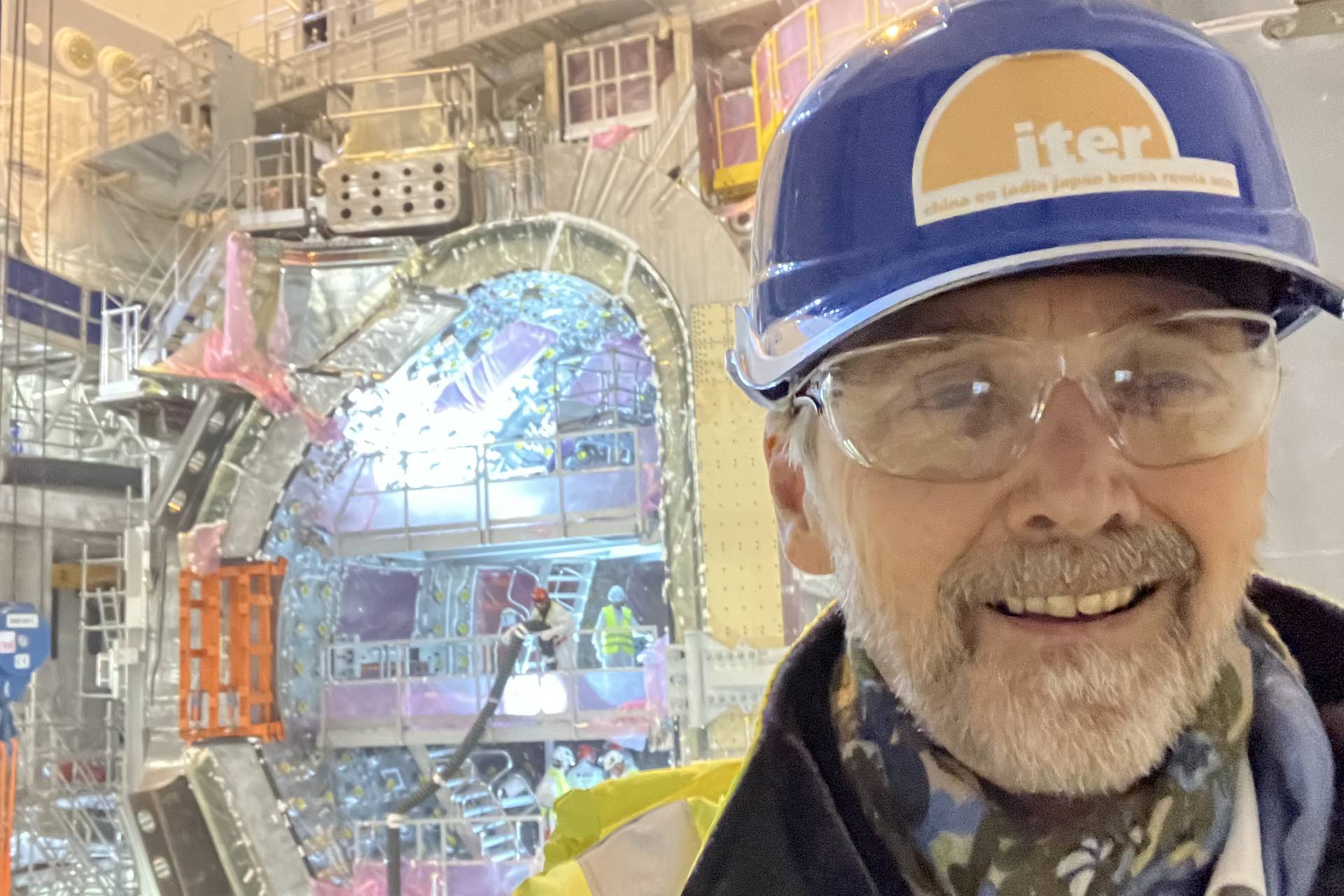
After a career of trying to solve the mysteries of nuclear fusion in the United States and Europe, Spencer Pitcher is coming home to Canada to try to build a commercial reactor that will change the world. And he’s bringing some friends with him.
“I personally cannot bear the thought that the world’s moving, and Canada is going to end up buying its fusion reactors from other countries,” said Pitcher in a video interview from the south of France. He was packing up his life and preparing to move back to Toronto, where he was born and initially educated as an engineer.
Talking Points
- Canada once had a national research effort pursuing nuclear fusion energy, but ceded to other countries amid budget cuts in the 1990s
- Now, its lucky advantage as a source of tritium and extensive ecosystem around more traditional fission energy—plus a dose of patriotic fervour—is helping bring home fusion researchers who made their careers abroad
His research life has taken him to fusion-research centres in the United Kingdom, the United States, Germany and France. He’s leaving Iter, a multinational effort to crack the practical problems of fusion, where he’s been a principal engineer.
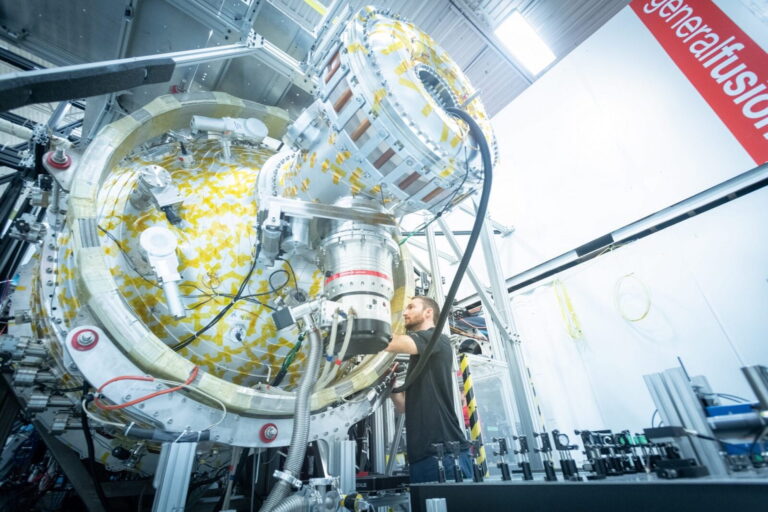
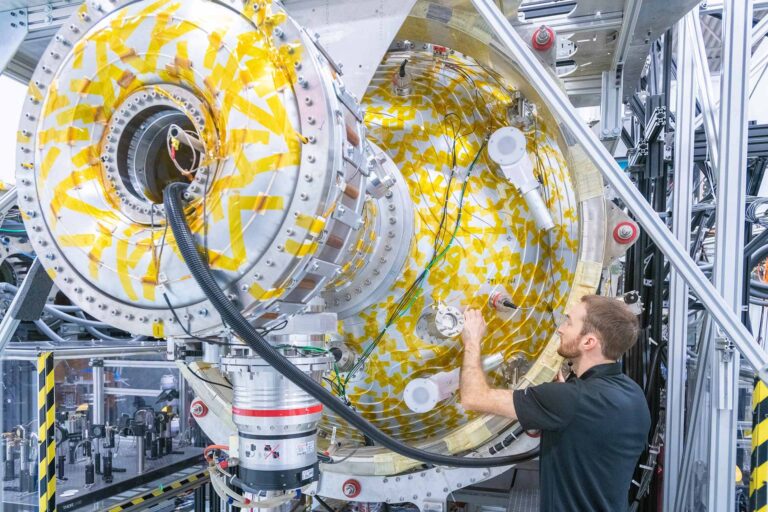
Pitcher has co-founded Stellarex, a competitor to B.C.’s General Fusion, aiming to make a safer form of nuclear power that yields more energy and much less radioactive waste than more familiar fission reactors.
Related Articles
The company is raising a seed round of capital. As CEO, Pitcher said he expects to hire about 100 people in Toronto over the next few years, bringing in fellow Canadian expats if he can—“If I gathered up all the Canadians working abroad, we’d have quite a team,” he said—and keeping young fusion physicists and engineers from leaving.
“I’ve been giving lectures at the universities in southern Ontario, and my God, you should see the enthusiasm,” he said.
Pitcher’s fellow founders are former colleagues at Princeton University in New Jersey: Amitava Bhattacharjee and Michael Zarnstorff. As professors with decades of academic work behind them—Bhattacharjee won a major physics award in 2022 for a lifetime of contributions and Zarnstorff was formerly the chief scientist at the Princeton Plasma Physics Laboratory—they are perhaps not typical startup leaders.
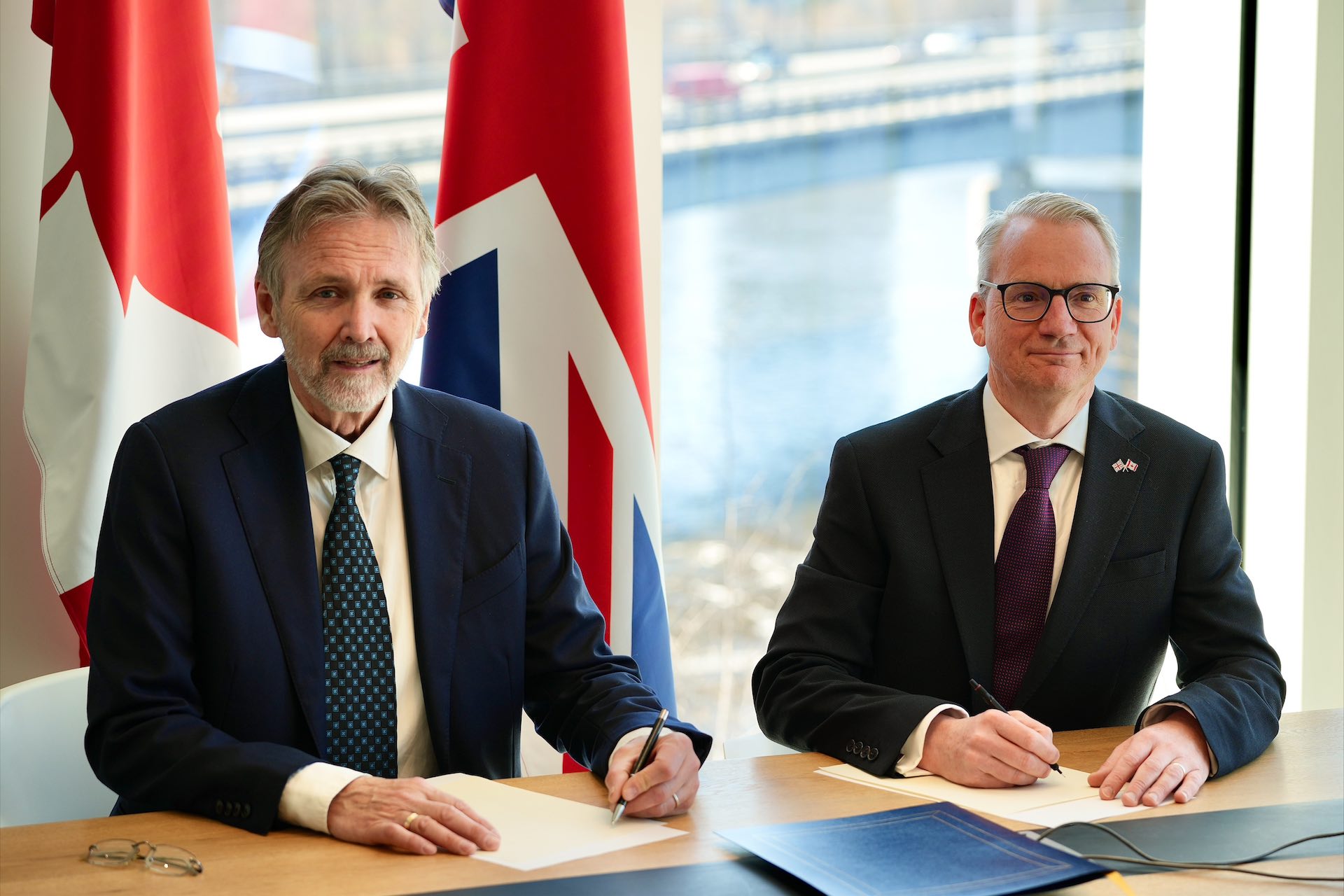
But their heft might have opened doors that a brasher, younger crew couldn’t have. Stellarex has agreements with pillars of the Canadian nuclear sector—like Canadian Nuclear Laboratories and Ontario Power Generation—to advance its fusion plans. In mid-May, Pitcher signed one with the U.K.’s Atomic Energy Authority.
The Ontario government is kicking in $19.5 million to establish a fusion-energy centre with Stellarex as its private-sector leader, and the company is seeking federal funding to make the centre a powerhouse.
Part of what drew Stellarex to Ontario was its enthusiasm for nuclear energy and the deep ecosystem of nuclear suppliers connected to its many fission reactors. “We’re building upon the fission supply chain that exists in Canada already,” Pitcher said.
But there’s another advantage in his home country and province: Tritium.
“The tritium, in a sense, is the trump card,” Pitcher said. “I don’t like to use that word, ‘trump,’ but it is the trump card.”
Tritium, a form of hydrogen with two neutrons in its nucleus instead of the usual zero, occurs in truly minuscule amounts in the upper atmosphere. The best artificial source of tritium happens to be Canadian-developed Candu nuclear fission reactors.
(Fission reactors like Candus break unstable big atoms into smaller ones; fusion reactors combine unstable small atoms into bigger ones. If you start with the right kinds of atoms, either process can give off surplus energy.)
“For most of the history of Candu, [tritium’s] been a damn pain in the rear, because it’s radioactive, it’s very elusive, it escapes, it diffuses through materials,” Pitcher said. Now, as one of the small atoms that’s most readily fused with another, it’s incredibly valuable.
Canada has pursued fusion in fits and starts for decades. It had a national fusion program that built an experimental reactor near Montreal in the 1980s, and an effort called the Canadian Fusion Fuels Technology Project that aimed to turn Canadian tritium into a marketable commodity; both were cancelled in 1997.
That scuppered thoughts he had at the time of moving to Montreal to join the project there. “It was a very painful thing to watch,” Pitcher said.
That was nearly 30 years ago; the knock on fusion power is that it’s 30 years away, and always will be. Humans first smashed atoms together and made bigger ones—giving off a whole lot of energy in the process—in a lab experiment in 1934. They’ve been working seriously on turning the process into a practical power source since the 1950s.
Indirectly, fusion energy powers much of human life; the sun is a giant fusion reactor, emitting the heat and light that sustain us.
At this point, Pitcher says, artificial fusion is out of the realm of theoretical physics. Humans know how to make it happen—just not reliably and cost-effectively enough to be useful. At its core, it’s an engineering problem.
Projects like those Pitcher has worked on have been inching toward solutions for decades, manipulating superheated plasma (the freaky state matter reaches in the star-like conditions in which fusion is possible) with super-chilled magnets (whose fields keep the plasma together). English lacks the superlatives needed to describe the temperatures involved: the plasma can be 150 million degrees Celsius; the magnets have to be close to absolute zero.
Within two metres, “you have the biggest temperature difference in the universe. It’s amazing that mankind can even get close to this,” Pitcher said.
Sustaining those temperatures and fine control inside equipment that’s constantly being pummelled by free-flying neutrons is the really hard part.
Stellarex’s planned solution is a “stellarator,” which maintains plasma inside a doughnut-shaped chamber surrounded by magnets in an incredibly intricate layout. The stellarator concept has been around for decades—pioneered at Princeton in 1951—but has previously been discarded as impractical.
The stellarator game has been changed by superconducting magnets that can be a few degrees warmer than previously, plus unprecedented computing power that lets fusion researchers use AI tools, Pitcher said. Those can whip through the complexities of the magnetic control fields to optimize designs.
A stellarator isn’t the only potential solution to the fusion problem. Iter, the project in France, uses something called a “tokamak.” That type of device also uses magnets and a doughnut-shaped plasma chamber (the name is from the Russian acronym for “toroidal chamber with magnetic coils”), but it also shoots electricity through the plasma. For physics reasons, that makes for a machine that depends less on precise magnet placement, but one that also outputs energy in less-efficient pulses rather than a steady stream.
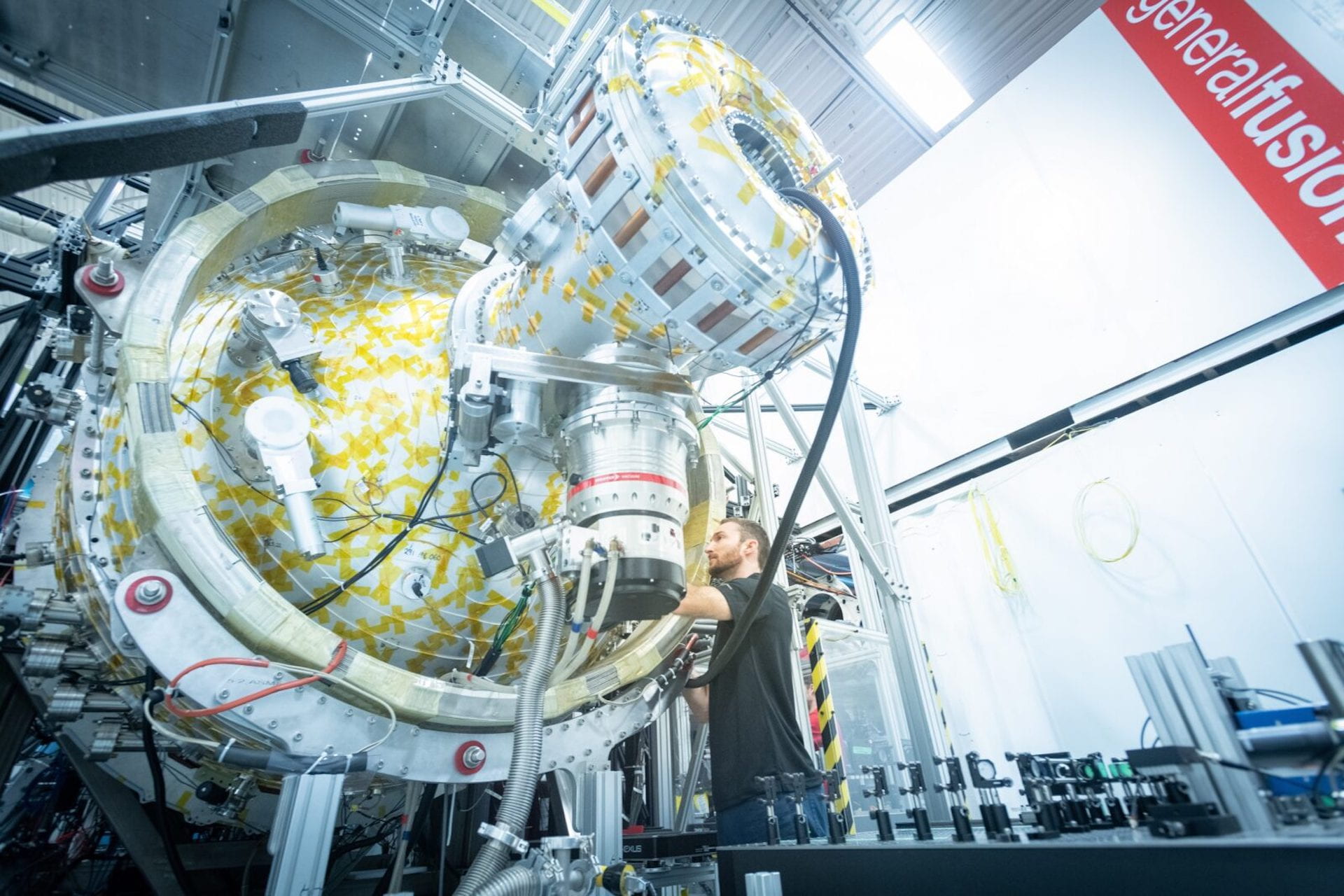
General Fusion, long the big dog of Canada’s fusion-power efforts—with nearly $75 million in federal support behind it—goes at the problem in a different way. Its fusion machine has an inner lining of liquid lithium, which the company says can absorb neutrons without damage and doesn’t need super-chilled magnets.
General Fusion also has a deal with Canadian Nuclear Laboratories and, after nearly running out of money last year, fresh financing. It’s planning to go public to try to get its technology to market, and just added an experienced public-company CFO to its board to help.
Another firm, Celeriti Fusion Canada, started lobbying federally and in Ontario in April, recording contacts with people as senior as Natural Resources Minister Tim Hodgson’s chief of staff, Eamonn McGuinty. Its public filings say Celeriti wants to talk about “energy-sector innovation funding opportunities and to assess suitability for potential research and development investments.”
Naresh Raghubeer, a lobbyist working for Celeriti alongside former Liberal minister Don Boudria and longtime party insider Kevin Bosch, said Celeriti’s work is “highly sensitive and quiet right now,” but it’s sharing information confidentially with the federal and provincial governments.
If there’s a run on fusion these days, Pitcher thinks there’s a reason. He knows the joke about the perpetual 30-year timeline very well, but prefers to think of Evgeny Velikhov, a Soviet scientist and fusion pioneer who was instrumental in creating the Iter project.
“Velikhov said fusion will be ready when it’s needed,” Pitcher said. “We’re at the point where fusion is needed.”