Listen Now
0:00
OTTAWA — Canada and the European Union are set to outline a sweeping new partnership to create shared prosperity beyond the shadow of superpowers, yet it will be up to businesses and investors on both sides of the Atlantic to turn lofty diplomatic goals into results.
“We need to actually collaborate because governments can help make rules, do treaties, et cetera, but businesses actually have to do the work, sign the contracts and engage in the supply chain,” said Martha Hall Findlay, director of the School of Public Policy at the University of Calgary.
Talking Points
- Prime Minister Mark Carney and the leadership of the European Union are gathering in Montreal to outline a closer alliance, with the goal of “associate membership” in 2027
- The European Investment Bank is expected to reach an agreement with Canada that would see the lending arm of the EU back projects related to critical minerals
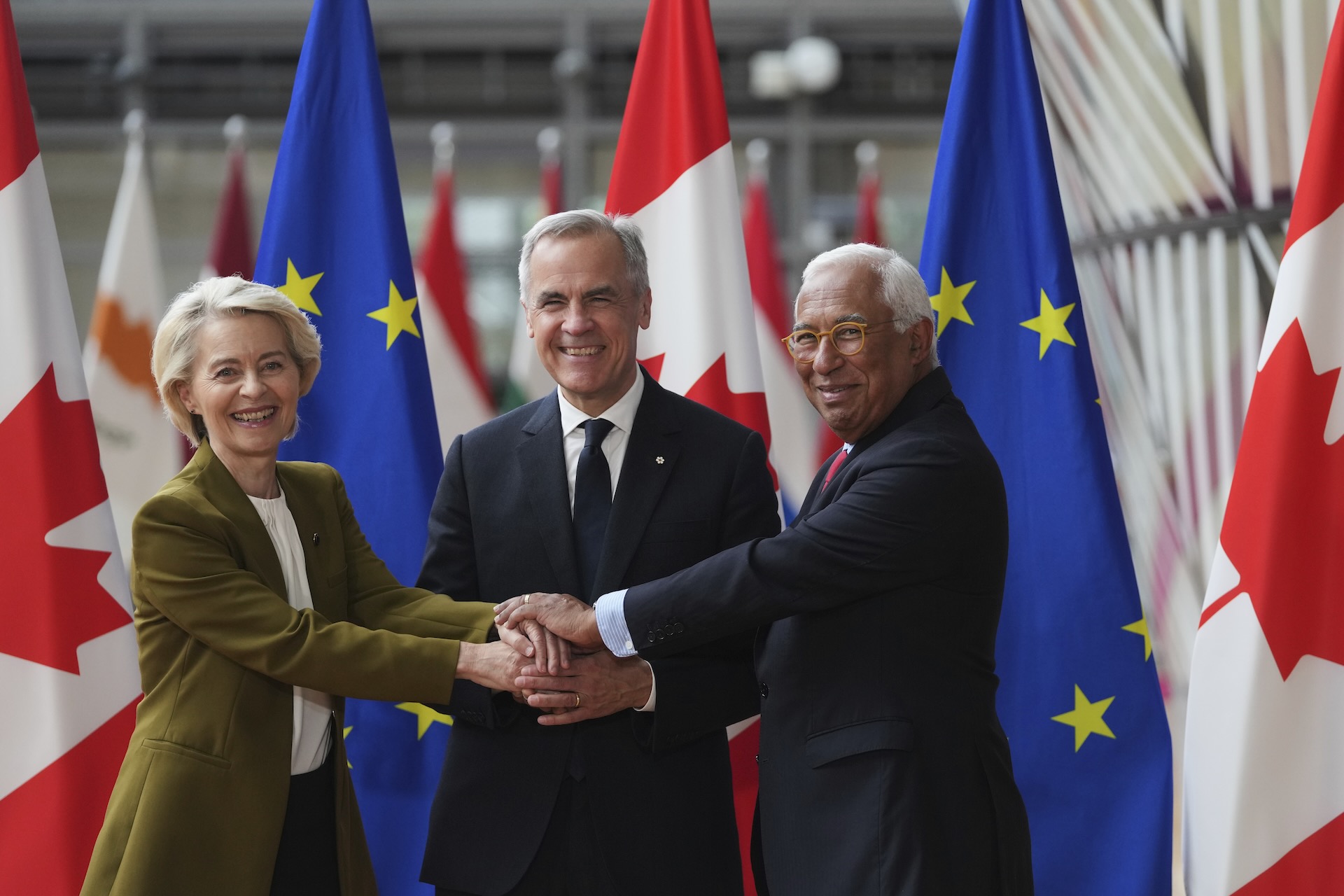
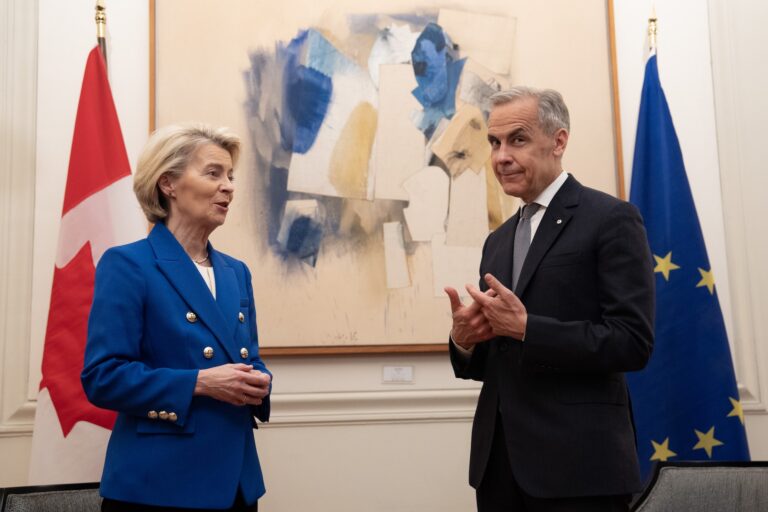
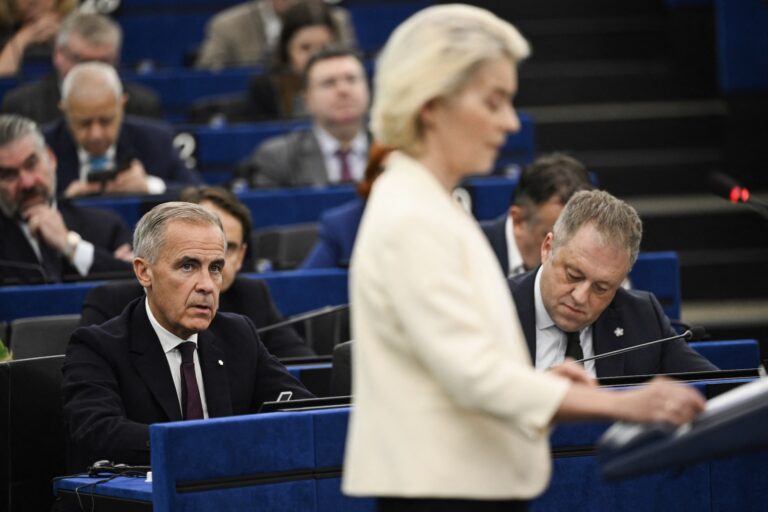
Prime Minister Mark Carney will welcome European Commission President Ursula von der Leyen and António Costa, president of the European Council, to Montreal on Thursday for what the political leaders are framing as the most important Canada-EU Summit yet. Until next year.
Last month, von der Leyen caught officials on both sides of the Atlantic off guard by announcing she wanted Canada to become the first associate member of the EU, a status without precedent or definition. In a media briefing provided Tuesday on the condition they not be named, EU officials were confident the summit would advance the idea of associate membership as a goal. But they are still working on the mechanics of the arrangement, they said, which they aim to settle in time for next year’s gathering.
The vision for associate membership would see Canada and the EU shape policy together in areas such as climate, energy, AI, innovation and security, the officials said, checking in with each other along the road to implementation. Brussels also wants Canada to participate more fully in EU programs, in the vein of its participation in the €150-billion Security Action for Europe (SAFE) military procurement fund. Bigger roles in Horizon Europe, the EU’s funding program for research and innovation; as well as the Erasmus+ student exchange program, are both in the cards.
Related Articles
In their own briefing, Canadian officials said Wednesday they hope reducing remaining barriers to collaboration will help businesses make full use of the existing Canada-EU trade deal.
As he headed into a cabinet meeting on Tuesday, Carney stressed the tangible benefits co-operation offers Canadian youth, businesses and researchers. “The good news is it doesn’t matter about specific names or nomenclature,” he said, with the goal of “Canada as a whole becoming a more independent, more sovereign nation, so we can live our lives as we choose.”
German Ambassador Matthias Lüttenberg, whose country has led the push to keep associate membership out of the joint statement expected Friday, said Berlin is simply challenging the top-down endorsement of an ill-defined term. “Content matters much more than the label that we finally choose for our partnership,” he told The Logic. “We want to have a relationship with Canada that is as close as possible.”
While EU officials stressed in the briefing that the offer of associate membership is exclusive to Canada, they view the “alliance for the future” they are crafting as a template for co-operation with other like-minded countries, especially in areas such as critical minerals.
That is similar to the vision outlined in a paper published this month by a group of Canadian foreign policy and trade experts, including Hall Findlay, who urged Ottawa and Brussels to stretch the model of Canada-EU partnership to include the other “middle powers” that Carney called to action in his January speech at the World Economic Forum.

Be it the trade war launched by U.S. President Donald Trump or the global pandemic, it can be hard for businesses to make decisions when bracing for the next shock. “The geopolitical context is changing the game for businesses,” said Anna Rosenberg, head of geopolitics at Amundi, a European asset management firm. “The uncertainty is now omnipresent.”
While much of the Canada-EU alliance remains under construction, at least some of the opportunities and implications it holds for businesses are coming into view. Here are a few.
Digital trade
Ottawa and Brussels began exploring a digital trade agreement last year to complement the Canada-EU Comprehensive Economic and Trade Agreement (CETA), which was begging for an update in the era of rapidly evolving artificial intelligence and quantum computing.
According to a summary of consultations published by Global Affairs Canada, business voices on this side of the Atlantic championed measures to enable secure cross-border data flows—and strongly opposed “costly and counterproductive” requirements to collect, process or store data within either Canada or the EU.
Vass Bednar, managing director of the Canadian Shield Institute, believes increasing their digital trade could help both partners reduce dependency on the U.S. The sovereignty-focused think tank published an analysis of trade data on Tuesday showing the U.S. exported $83.3 billion worth of digitally deliverable services to Canada in 2025. That was higher than the combined value of autos, steel, aluminum, softwood lumber, potash and electricity that Canada exported to the U.S. the same year. In an interview, Bednar said Europe is further along in figuring out how to get past the imbalance of digital trade with the U.S., asking: “Where can we copy their homework?”
A draft joint statement leaked last month suggested Canada could be designated one of the “associated countries” under the EU’s proposed Cloud and AI Development Act, which would let Canadian tech firms bid on sensitive and critical infrastructure contracts. The act’s stringent criteria, however, could make it hard for a firm with any exposure to U.S.-based cloud services to qualify. Patrick Leblond, an associate professor at the University of Ottawa who specializes in international economic relations, said Ottawa and Brussels should find a solution that would let Canadian firms be recognized in the EU without shutting the door to the U.S. “I would hope that that’s what Canada and the EU should be working towards in trying to find ways to make it as easy as possible for their companies to work together.”
Be it AI, social media or cybersecurity, Hall Findlay cautioned against meeting every emerging challenge with new regulations, especially if governments cannot back them with enforcement. She points to email spam filters, which she said proved more effective than anti-spam legislation, as an example of the private sector’s capacity to develop technological solutions. “That’s my one worry about Europeans trying to regulate everything,” she said. “If Canada gets caught up in that, it’s naive.”

Critical minerals
The European Investment Bank, which is the EU’s long-term lending arm, is expected to finalize an agreement with Canada at the summit, paving the way for it to back critical mineral projects in this country. The state investor, whose €600-billion balance sheet makes it one of the largest multilateral financial institutions in the world, recently requested an exemption from Canada’s rules for foreign banks.
The bank directs 90 per cent of its funding to EU members, with the remainder going elsewhere in Europe or developing economies. So this foray into Canada is new, said Lüttenberg. “I think once again Canada will be the first in something.”
Supercomputers
In 2024, the EU and seven of its member countries, including Germany and Italy, committed €1.5 billion to build or upgrade supercomputers through the European High Performance Computing funding program, creating a formidable network of infrastructure across the continent.
Now, Europe is ready to open these AI-optimized systems to Canadian researchers and industries, EU officials said in this week’s briefing, which will encourage joint innovation in strategic sectors, including health sciences. Henna Virkkunen, the European Commission’s executive vice-president responsible for technological sovereignty and security, told The Logic last December that Canada should be the first non-EU country to join.
Next-generation payments
The preliminary joint statement said Canada and the EU would work toward “connecting next-generation payment systems” to make it easier and cheaper to do business, invest and transfer funds across their borders.
Ottawa and Brussels view this as a hedge against being too interconnected with U.S. digital systems. Before his trip to Europe, Carney said integration of payments systems “can be used as leverage against you.” Major European payment groups—including Spain’s Bizum, Italy’s Bancomat and Brussels-based Wero—announced last month they were building a cross-border network amid wider efforts to curb dependence on U.S.-based giants Visa and Mastercard. Canada’s Real-Time Rail instant payments system is set to begin rolling out this year.
Subsea cables
There are currently no undersea cables connecting an EU member state directly to North America that do not also end up in the United States. Canada and the EU are planning a joint feasibility study on the best way to change that, according to the draft joint statement. An Arctic strategy the EU released last week pledged support for a cable that would link Greenland directly to Europe, “with potential future extensions towards Canada and Japan.”
In 2021, Bulk Infrastructure, which operates data centres in Norway and Denmark, began shopping a proposal to build a 4,200-kilometre subsea cable linking southern Norway to Happy Valley-Goose Bay, N.L. Norway is not an EU member but has a closely integrated economic relationship with the bloc. The US$620-million project appeared in the deal book at last month’s Canada Investment Summit, with the firm saying it seeks “a Canadian strategic partner for majority ownership.”