Keith Oben had hoped to start upgrading his autobody shop in the next couple of years, aiming to give workers raises, expand his shop floor and hire more techs to work on that floor.
Skip to content

News
Sales fall and investments stall as trade war hits small auto firms
Dealers, parts makers and repair shops are already feeling pain as new tariffs loom, survey finds
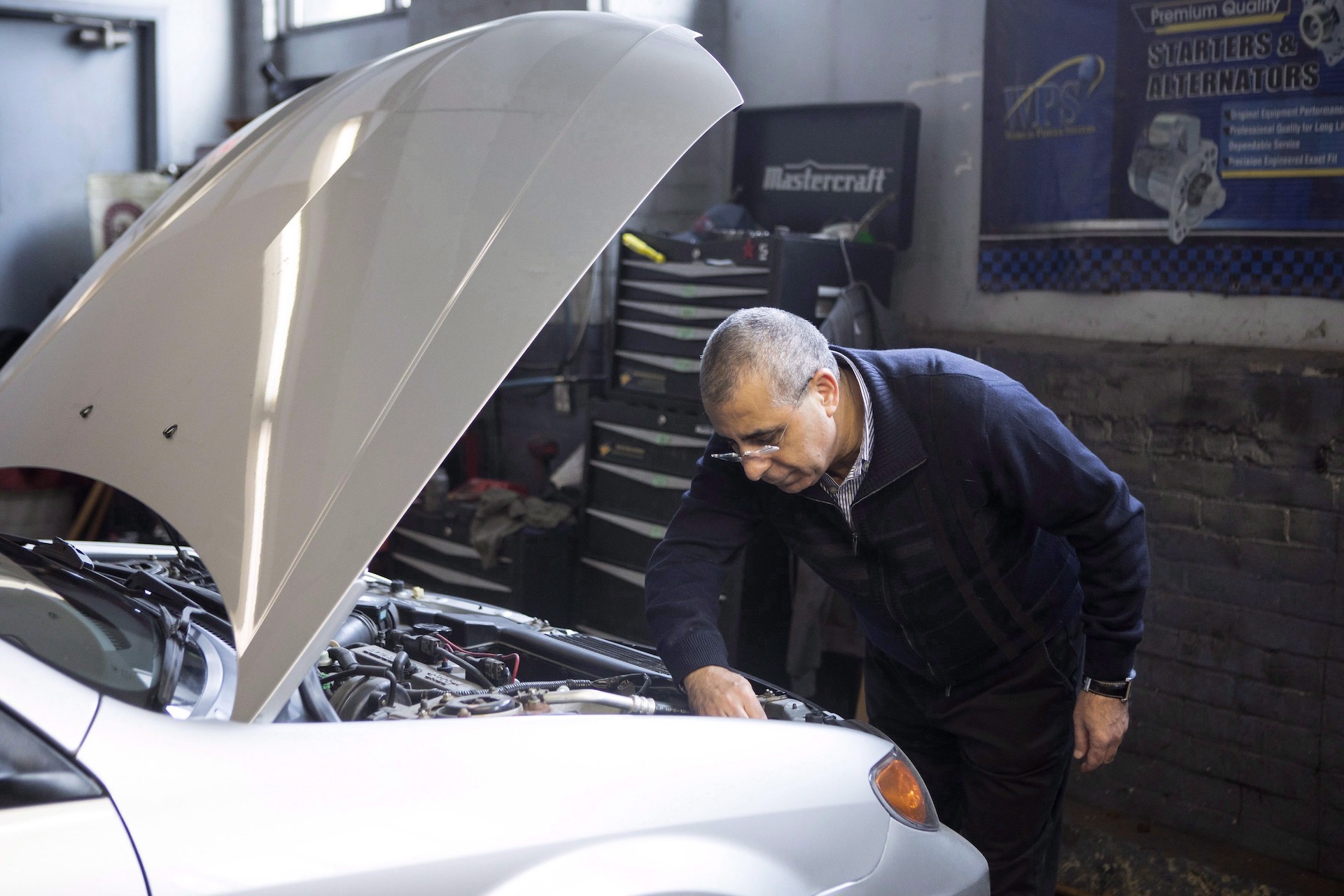
A repair shop in Toronto; nearly half of small auto businesses surveyed said they were delaying or cancelling investments. Photo: The Canadian Press/Chris Young
Keith Oben had hoped to start upgrading his autobody shop in the next couple of years, aiming to give workers raises, expand his shop floor and hire more techs to work on that floor.
Due in part to U.S. President Donald Trump’s trade war, that probably won’t be happening anytime soon, he says.
Talking Points
- Small and medium auto businesses in Ontario are seeing sales fall despite tariff protections, a CFIB survey has found
- Uncertainty is holding back investment decisions for business owners, who have less negotiating power than major automakers, say industry observers
“We’re not thinking about expansion at the moment,” says Oben, who owns Colorworks in Huntsville, Ont., about two-and-a-half hours north of Toronto. “We are trying to trim our budget a wee bit.”
Colorworks is like many of the 187 small and medium-sized Ontario auto businesses surveyed by the Canadian Federation of Independent Business in May and June. The companies reported a revenue drop of 13 per cent, on average, since the start of the trade war. Nearly half are pausing or cancelling investments, said the survey, which polled parts makers, dealers, wholesalers, repair shops and leasing businesses that belong to the federation.
Related Articles
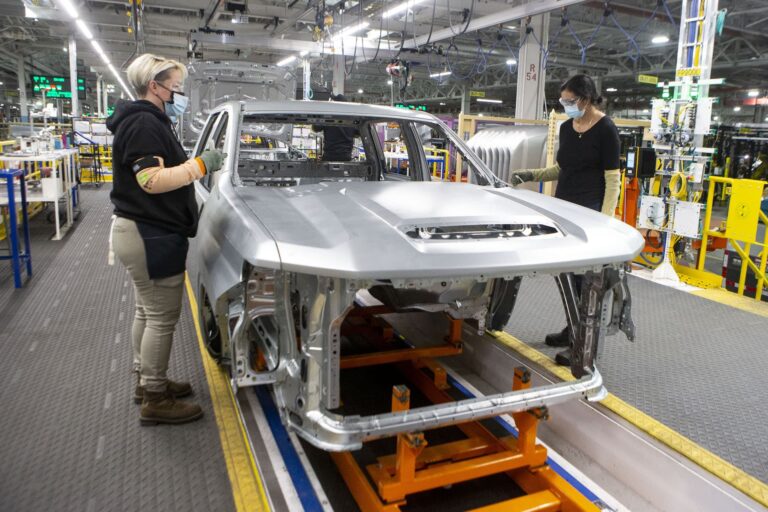
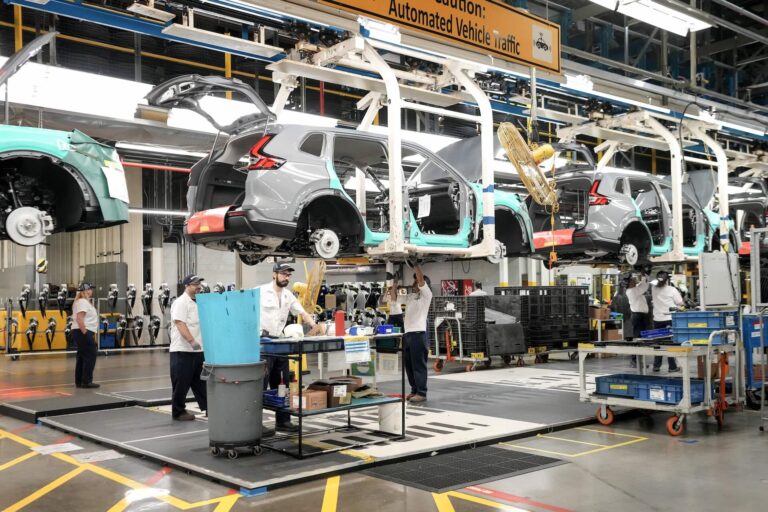
So far, many auto parts have been exempted from heavy tariffs, provided they are traded under the United States-Mexico-Canada Agreement. And the federal government has agreed to remit some of its counter-tariffs to big automakers.
Still, the CFIB says small businesses in Ontario’s auto sector in particular are seeing sales dry up nonetheless—with implications for the rest of the sector. Automakers are pausing investments in their Canadian plants and looking to move supply chains to the U.S., which trickles down those chains. Business owners must hedge in case Trump decides to raise the cost of auto parts, which history suggests he might do on a whim. Dealers are running low on pre-tariff vehicles and wondering how to raise prices.
“Everyone’s talking about your Ford, your Stellantis, your GM, but what about the little guy?” asked Joseph Falzata, a policy analyst who worked on the report. “Your Bob’s Auto Shops, they couldn’t survive without Ford, Stellantis, GM, whatever it might be. But the reverse is also true, right?”
The Global Automakers of Canada, which represents the local arms of vehicle manufacturers headquartered outside the U.S., said its member companies directly employ 101,935 people in Canada, but that 217,259 jobs at dealerships, warehouses and parts makers rely on them.
Irina Im, senior analyst for the manufacturing sector at RSM Canada, consults with middle-market companies on tax advisory and audit services. She said smaller businesses may not have the negotiating power to push back or adjust costs if their customers cut orders.
The CFIB’s survey found that many respondents weren’t aware of support programs like the Ontario Automotive Modernization Program, the Ontario Vehicle Innovation Network, and the new Ontario Together Trade Fund. The first two reward companies investing in new technologies—investments that many smaller businesses don’t feel confident making, the group said.
“You’re not focused on reinvesting back into your business,” said Falzata. “You’re focused on keeping your doors open.”
Meanwhile, the new provincial trade fund focuses on businesses at significant risk from the trade war, such as those that could see revenue loss of 30 per cent or higher. That’s a much steeper loss than the average business reported in the CFIB’s survey.
That type of program is not the best fit for a business like Oben’s shop, which has actually seen an uptick in customers, as thrifty drivers repair their vehicles instead of upgrading to new ones.
Which is not to say his company could absorb 25 to 35 per cent tariffs on paint-shop supplies. Many repairs are reimbursed by auto insurance companies that would likely resist that kind of cost increase, he said.
“We’re trying to make hay while the sun shines, but we’ve got no idea what the next couple of months, next couple of years, will bring,” said Oben.
Jennifer Cunliffe, press secretary for Ontario economy minister Vic Fedeli, defended the province’s record on the auto sector, noting it has cut small business taxes to 3.2 per cent and put $1.3 billion toward a manufacturing-focused tax credit. The government says its regional support for advanced manufacturing, as well as its modernization and innovation programs, have supported hundreds of businesses and thousands of jobs. Alicia Pereira, a spokesperson for the Ontario Vehicle Innovation Network, said the program will work with the government on ways to protect businesses from the current economic shock.
While Falzata supports keeping innovation-focused programs for companies that qualify, the CFIB would like further tax breaks to help auto-adjacent businesses such as restaurants in Windsor, Ont., whose tables sit empty when workers are laid off from nearby factories. Tax changes are a low-barrier way to help businesses, he argued, at a time when owners are swamped with daily trade news and paperwork to qualify for USMCA exemptions.
On Tuesday, Prime Minister Mark Carney said that he will continue to stand up for workers and businesses, after Trump threatened to apply a 35 per cent tariff to Canadian goods on Aug. 1. Reports suggest that USMCA-compliant products, a category that includes most auto parts, would be exempt, though Carney acknowledged the U.S. has so far shown little interest in a totally tariff-free deal.
As for the body shop in Huntsville, Oben stressed that no one should mistake his delay of improvements for surrender. “We’re hungry, we’re resilient, and we definitely don’t plan on just rolling over and giving up,” he said.



Loading...
Thanks for sharing!
You have shared 5 articles this month and reached the maximum amount of shares available.
CloseThis account has reached its share limit.
If you would like to purchase a sharing license please contact The Logic support at [email protected].
CloseGift the full article!
You have gifted 0 article(s) this month and have 5 remaining.
Recipients will be able to read the full text of the article after submitting their email address. They will not have access to other articles or subscriber benefits.
Photo: The Canadian Press/Chris Young
Most Popular This Week




In-depth, agenda-setting reporting
Great journalism delivered straight to your inbox.
Commentary
Carmichael: Canadian ignorance about India is a strategic weakness
Briefing
Aritzia shares pop after earnings rise 204%
First Nation in Alberta goes to court over fast-tracked oil pipeline
Chinese EV maker Geely Auto Group to launch in Canadian market in 2027
Best business newsletter in Canada
Get up to speed in minutes with insights and analysis on the most important stories of the day, every weekday.
Exclusive events
See the bigger picture with reporters and industry experts in subscriber-exclusive events.
Membership in The Logic Council
Membership provides access to our popular Slack channel, participation in subscriber surveys and invitations to exclusive events with our journalists and special guests.





