Listen Now
0:00
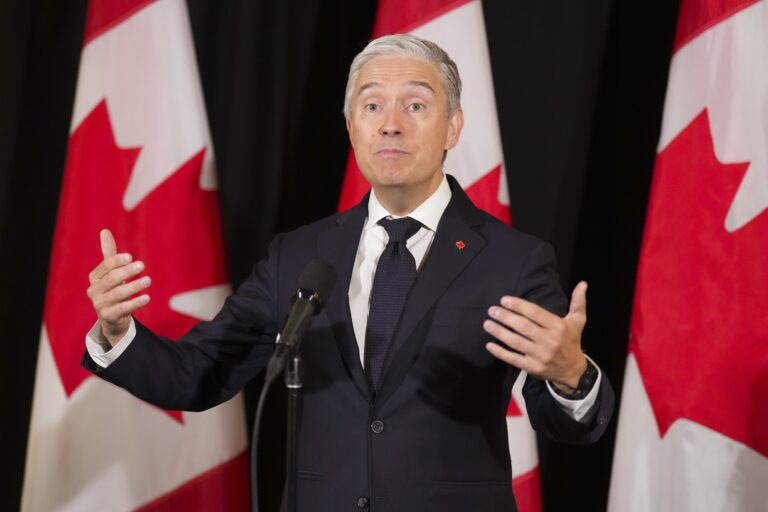
HANNOVER, GERMANY — The federal government is contributing $23 million to a battery production R&D centre that German multinational Siemens is setting up in Ontario, Industry Minister Mélanie Joly announced Tuesday.
Ottawa’s support comes with a promise from Siemens to keep 3,310 of its jobs in Canada—and play a role in breathing new life into Ontario’s struggling automotive manufacturing industry.
Talking Points
- The federal government is contributing $23 million from its Strategic Response Fund to Siemens for a project linked to the $150-million battery production R&D centre the German multinational is setting up in Ontario
- Siemens committed to increasing its R&D footprint in Canada—and maintaining more than 3,000 jobs in the country—in exchange for federal funding
“While the U.S. is taking its own decision regarding the auto sector, we believe that battery manufacturing in auto, but also for defence purposes and energy storage purposes, is the way to go,” Joly told The Logic in an interview ahead of the announcement at Hannover Messe, a massive international trade fair in northern Germany focused on advanced manufacturing.
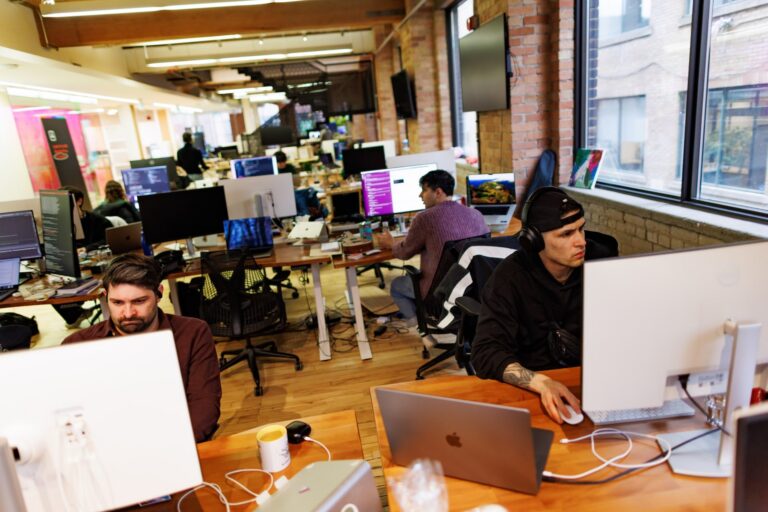
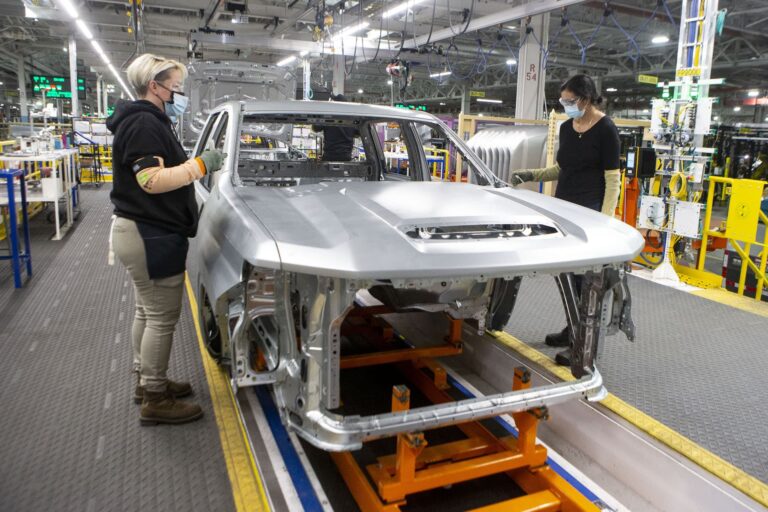
The federal funding will support the $70-million operating costs of an R&D centre for artificial intelligence in manufacturing. It is part of an overall $150-million investment Siemens announced in March 2025 for the centre, which will focus on improving battery efficiency and production methods. Commercializing that research, an area where Canada has long faced challenges, is also one of the goals. Siemens said the centre will be based at its Canadian headquarters in Oakville, Ont., as well as Toronto and Kitchener-Waterloo.
Related Articles
Joris Myny, the senior vice-president of digital industries at Siemens Canada, told The Logic the company promised Ottawa it would keep growing its research and development footprint in Canada. He also made clear that Canada was not alone in chasing such an investment.
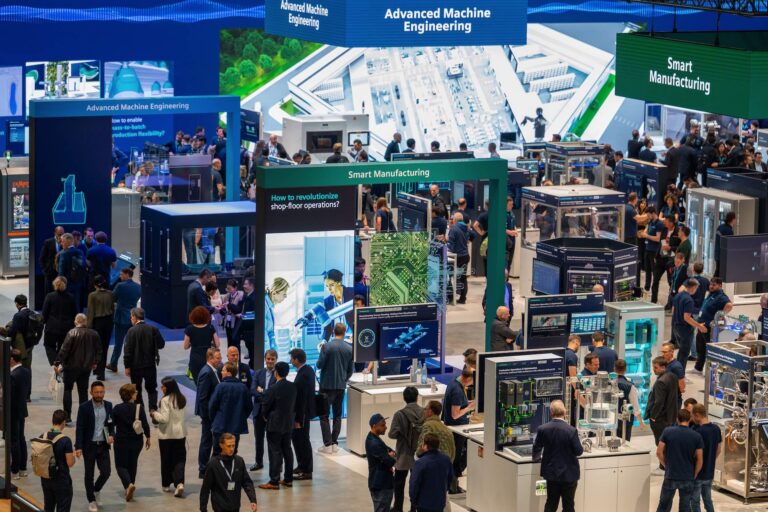
“Rest assured that the other jurisdictions are not sitting still, and tried to convince Siemens to invest in their jurisdiction when it comes to R&D,” Myny said Tuesday at Hannover Messe, where the Siemens booth—big enough to fill an entire convention hall anywhere other than at the world’s largest industrial trade fair—is always packed with visitors. The U.S. was one of them, “most definitely,” Myny confirmed.
In addition to its promise to maintain overall job levels in Canada, the company committed to create 90 new full-time jobs and 625 student co-op positions for the R&D centre. Siemens, which established an office in Montreal in 1912, announced last June it would shed about 90 jobs in relocating manufacturing operations from Peterborough to an existing plant in Concord, Ont., by September 2027.
Siemens spokesperson Laura Heidbuechel said Tuesday the company currently has 4,600 employees across Canada, which includes those at Siemens Healthineers and Siemens Mobility. Those divisions are not part of the R&D investment project that Ottawa is supporting.
The federal contribution comes from Ottawa’s $5-billion Strategic Response Fund, which replaced the Strategic Innovation Fund, a flagship program set up under former prime minister Justin Trudeau. Supporting companies struggling through the trade war that U.S. President Donald Trump launched last year is one of the goals of the retooled fund.
Myny said the economic benefits are likely to ripple beyond the number of promised jobs.
“There is an interesting multiplier effect in certain jurisdictions when you are involved in the development of the technology,” he said. It helps create a “thriving ecosystem” whose knock-on effects include commercial pilot projects deploying technology in the surrounding community, Myny said. “If you are only [applying] technology developed elsewhere, you’re trying to catch up,” he said. “You are not leading.”
The technology developed at the R&D centre will be deployed in the battery sector, but will not be limited to batteries, Myny said. Nor will its application be limited to Canada, meaning Siemens could export that knowledge to other factories and supply chains around the world. Yet he noted the centre’s proximity to the EV battery gigafactory that PowerCo, a subsidiary of Volkswagen that Myny called “one of our very important customers,” is building in St. Thomas, Ont.
“Canada is convincing, at least Siemens and some other big players, that it is open for investment, open for business, and open to allowing companies to take risks,” Myny said of what he took away from his meeting at Hannover Messe with Joly.
Joly acknowledged Tuesday in a speech focused on Canada’s new defence-centred industrial strategy that Canada spent a long time benefiting from the “peace dividend” without meeting its NATO commitments on defence spending.
“We’re coming from so far behind that this is a fantastic opportunity to partner together and to do business,” she said in the interview ahead of her appearance on the main stage. “We’re focusing on building in Canada, but that can be done through investments of German companies establishing themselves in Canada,” she said. “If we can’t build in Canada, we’ll partner.”
Conservative industry critic Raquel Dancho, who is also at Hannover Messe, said that a Conservative government would take a different approach to showing European investors that Canada is open for business, including through regulatory reforms.
“It wouldn’t be: ‘We’re ready to cut checks from the taxpayer,’” Dancho said in an interview. “It would be: ‘You want to do business here because it’s the best environment.”