The critical-mineral sector is braced for a nearly 100-fold rise in global demand for EVs.
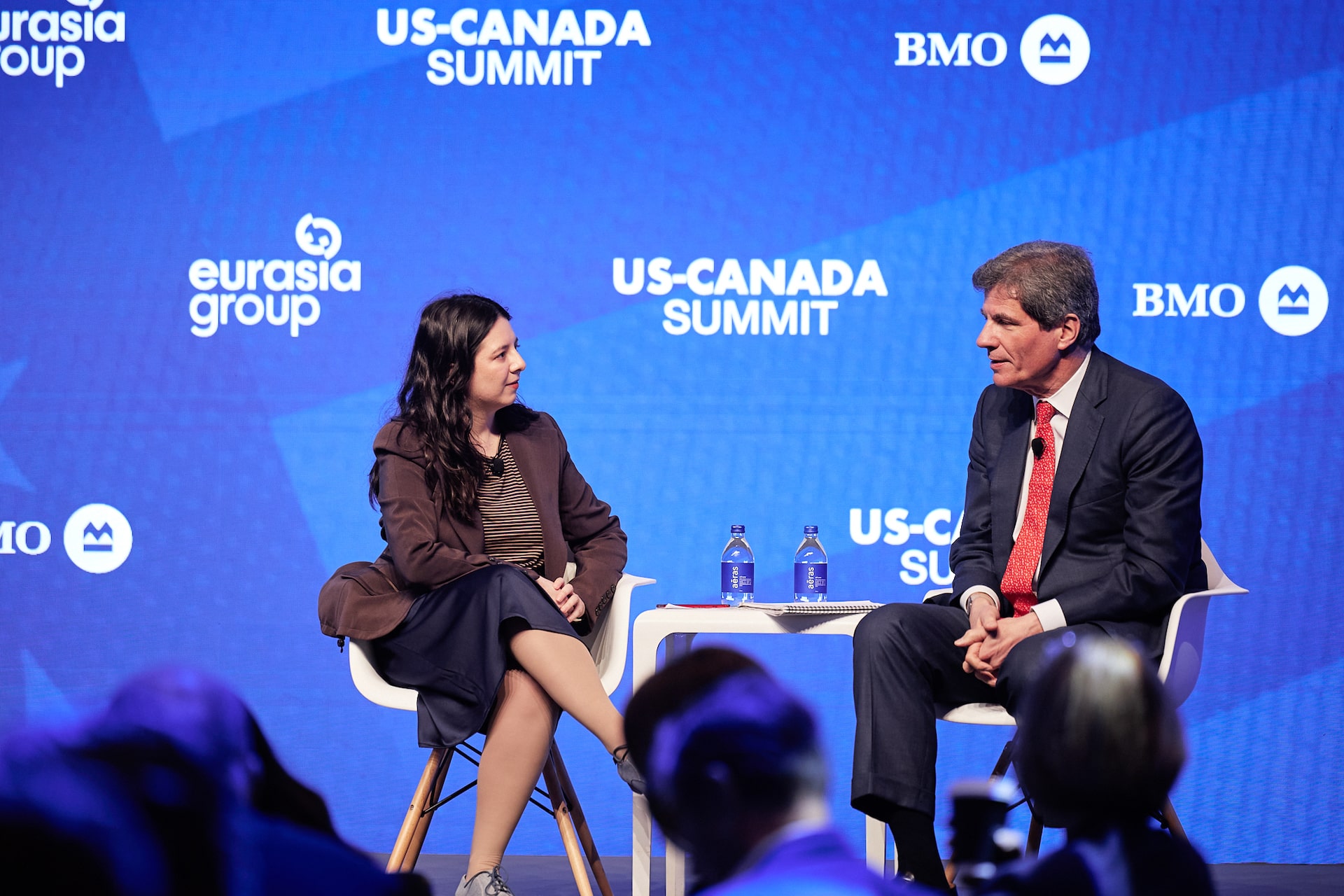
That number looms large in the mind of Nigel Steward, chief scientist at the mining giant Rio Tinto. “We’ve got a big, big challenge on our hands,” he told me this week during a panel at the U.S.-Canada Summit hosted by the Eurasia Group and BMO in Toronto.
With at least 98 per cent of the zero-emissions vehicle transition ahead of us—Bloomberg data suggested EVs may have reached two per cent of the world’s fleet at the end of last year—we’d need to replace a huge share of the 1.2 billion light-duty passenger vehicles now on the road, only 20 million of which plug in. And we need to produce the minerals needed for EV batteries—lithium, cobalt, nickel and more—with less fossil fuels.
Is that realistic?
Intellectual property protections: The U.S., Canada and our allies must share and protect the IP of critical-mineral extraction startups, said Nazak Nikakhtar, a national-security lawyer at Wiley Rein and former U.S. Commerce assistant secretary at the International Trade Administration.
Deeper investing from automakers: General Motors Canada president Marissa West said seriously cutting tailpipe emissions will “take partnerships and joint ventures, not supply agreements” between vehicle manufacturers and mining companies.
BMO Capital Markets managing director Rahim Bapoo said the bank’s massive mining division is reorganizing to drum up more partnership deals, calling the rush to fund and build critical-mineral mines a “call to arms.”
“We need to build 100 new lithium mines, and a lot more graphite mines, manganese and cobalt,” he said. “You start thinking about the scale of the problem, ticket sizes of a billion or two billion dollars. That starts to become a really big number, really quickly.”
Stop outsourcing mineral processing: Jonathan Evans, the CEO of Lithium Americas noted that key critical-mineral processing methods were developed in North America before overseas players like China came to dominate the industry.
“It’s not that we don’t know what to do or how to do it; it’s just we chose not to,” he said.
Yes, but: Despite the time crunch to get minerals out of the ground, panellists said companies and governments cannot cut corners on consultations with Indigenous communities and local residents; rather, they should bring them in as early as the design stage of the mining and development process.
“To succeed, we’re going to have to convince communities, convince environmental groups, NGOs,” Jose Fernandez, the U.S. under secretary in charge of energy and supply-chain security, told me. “We will not make you choose between economic prosperity and environmental degradation.”
Read Shift—The Logic’s authoritative weekly newsletter on automotive technology industry news—for more; and if you know someone who should be reading it, they can sign up here.