It was the best of times, it was the worst of times.
It’s still hard to be a car buyer, despite hopes that vehicle availability would improve in the second half of this year.
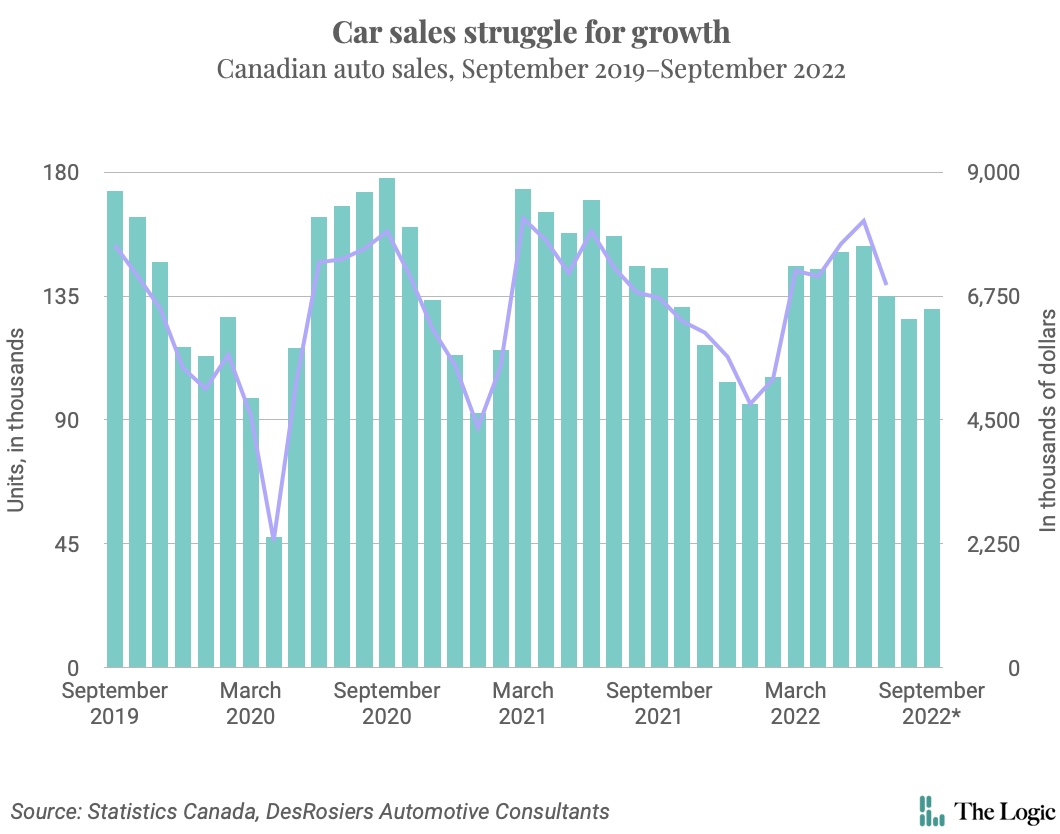
It was the worst September since 2009 for vehicle sales, research group DesRosiers Automotive Consultants said this week, even as General Motors marked a 27.6 per cent third-quarter sales increase in Canada—revealing a dichotomy in the way different automakers are handling the latest supply-chain challenges.
The consultancy said there were “remarkable” third-quarter sales gains by Detroit automakers like Ford and General Motors in Canada, and the 4.5 per cent year-over-year decline in vehicle sales from September 2021 to September 2022 was actually among the smallest declines for any month this year.
But the Detroit automakers’ gains are relative to the dismal summer of 2021, when companies like Toyota were outselling domestic manufacturers and were thought to have had a better handle on the semiconductor shortages. Given the uneven recovery in auto sales amongst different brands, DesRosiers Automotive Consultants managing partner Andrew King said “it would be foolish to get too optimistic,” amid “the interaction between vehicle availability, pent-up demand and a rapidly worsening economic environment.”
CarGurus data suggests that the $35,237 average price of a used vehicle listed on the platform has fallen about half a percentage point in the past 90 days—but remains up nearly 28 per cent from a year ago.
Blair Qualey, CEO of the New Car Dealers Association of British Columbia, has seen automakers making progress, including recent improvements in Detroit automakers’ sales. But, Qualey said, “We’re clearly not in a usual market situation. Everything is still turned upside down.”
The long wait for vehicle availability
Qualey said wait times vary widely by manufacturer, but are longer for more popular vehicles. Popular EV models can require months or in some cases years of waiting, with dealers sometimes recommending an interim used model to shoppers instead, said Qualey.
Fifty-two per cent of respondents surveyed by Google Canada in May reported longer wait times or availability issues when buying a car in the 12 months, with almost 14 per cent changing their buying decisions as a result. The Quebec group Equiterre found in late July that 70 per cent of Canadians were less likely to consider an EV due to wait times.
Charting the supply-chain crisis
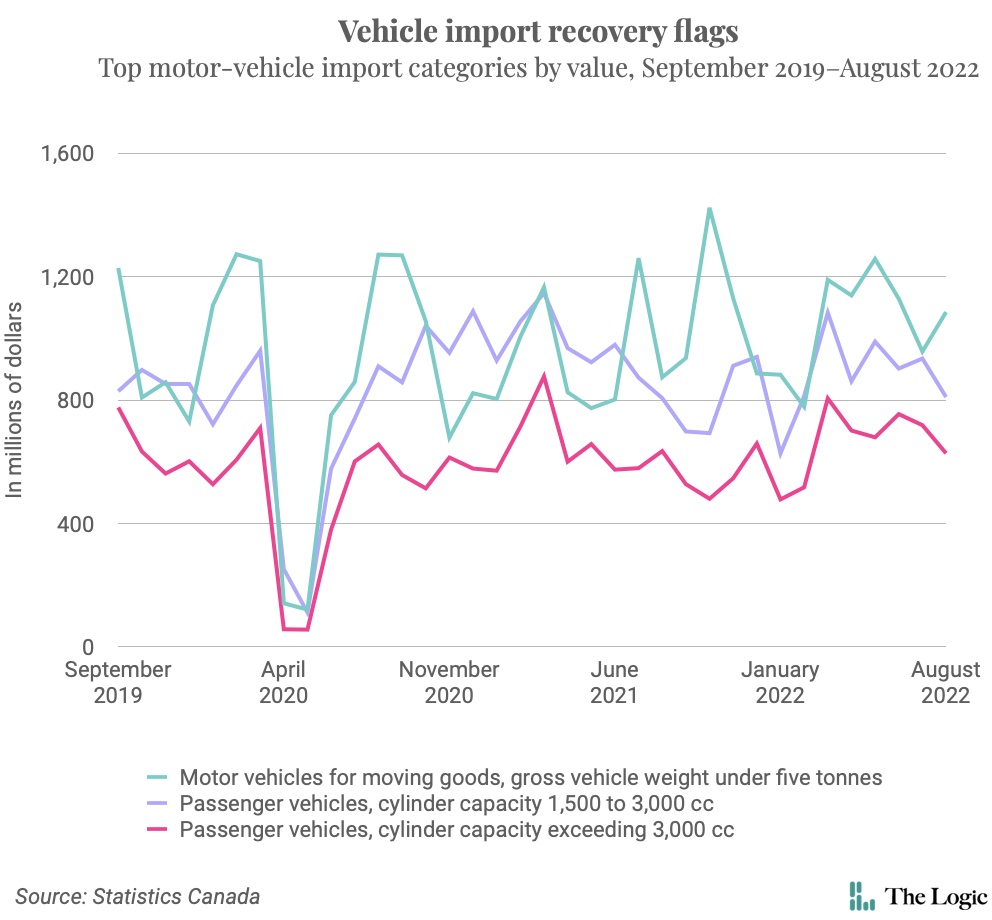
Imports of motor vehicles and parts in Canada fell 7.1 per cent in August, after a 12.3 per cent increase in July, due to supply-chain issues; August is typically when North American motor-vehicle production usually recovers.
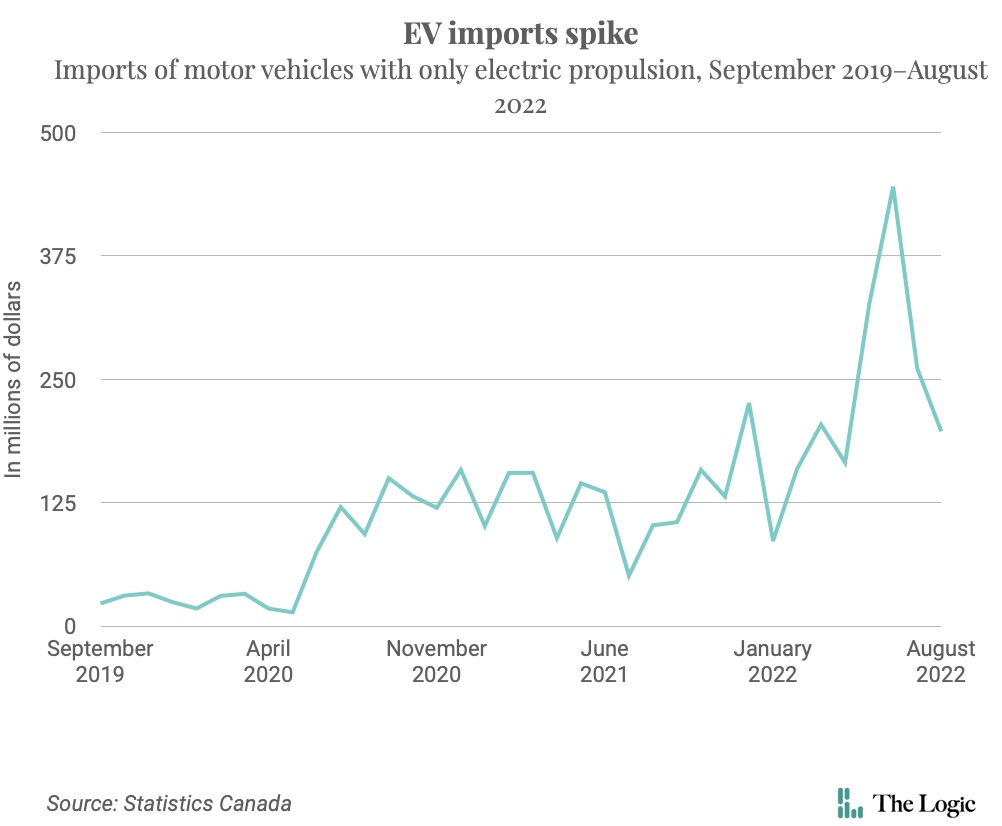
Electric vehicles, however, are seeing an uptick in imports.
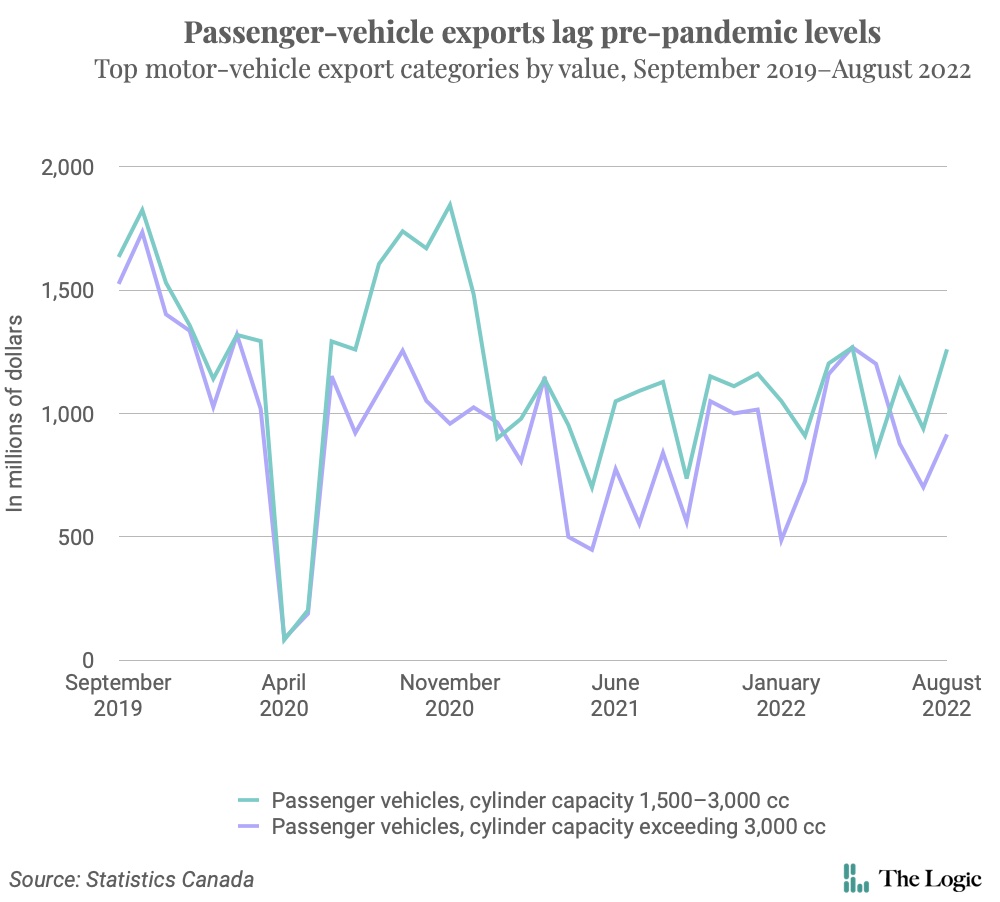
The most high-volume categories of vehicle exports, however, are not recovering as quickly.
Fewer vehicles is the new normal
Joseph McCabe, president and CEO of the research firm AutoForecast Solutions, said asking consumers to wait for their vehicles became so normal during the pandemic that it’s likely to continue after supply-chain issues stabilize.
“The concept of holding 60 to 90 days of inventory on the lots will change,” he told The Logic in an email. “We will see a completely revamped dealership process promoting a build-to-order strategy with less onsite inventory and less incentives for the consumers.”
“All the manufacturers are doing the best they possibly can,” said Qualey. “I’m not sure that we’ll ever get back to dealer lots just bulging with vehicles.”
Read Shift—The Logic’s authoritative weekly newsletter on automotive technology industry news—for more; and if you know someone who should be reading it, they can sign up here.