OTTAWA — Ottawa has backed Entos Pharmaceuticals’ plans for an Edmonton research and production facility with $62 million from the Strategic Innovation Fund, in the government’s latest bid to boost Canada’s biomanufacturing capacity.
Skip to content

News
Feds inject $62M into biomanufacturing project to boost domestic drug production
Entos Pharmaceuticals facility in Alberta would develop and produce treatments for genetic disorders, but could also churn out vaccines in a pandemic
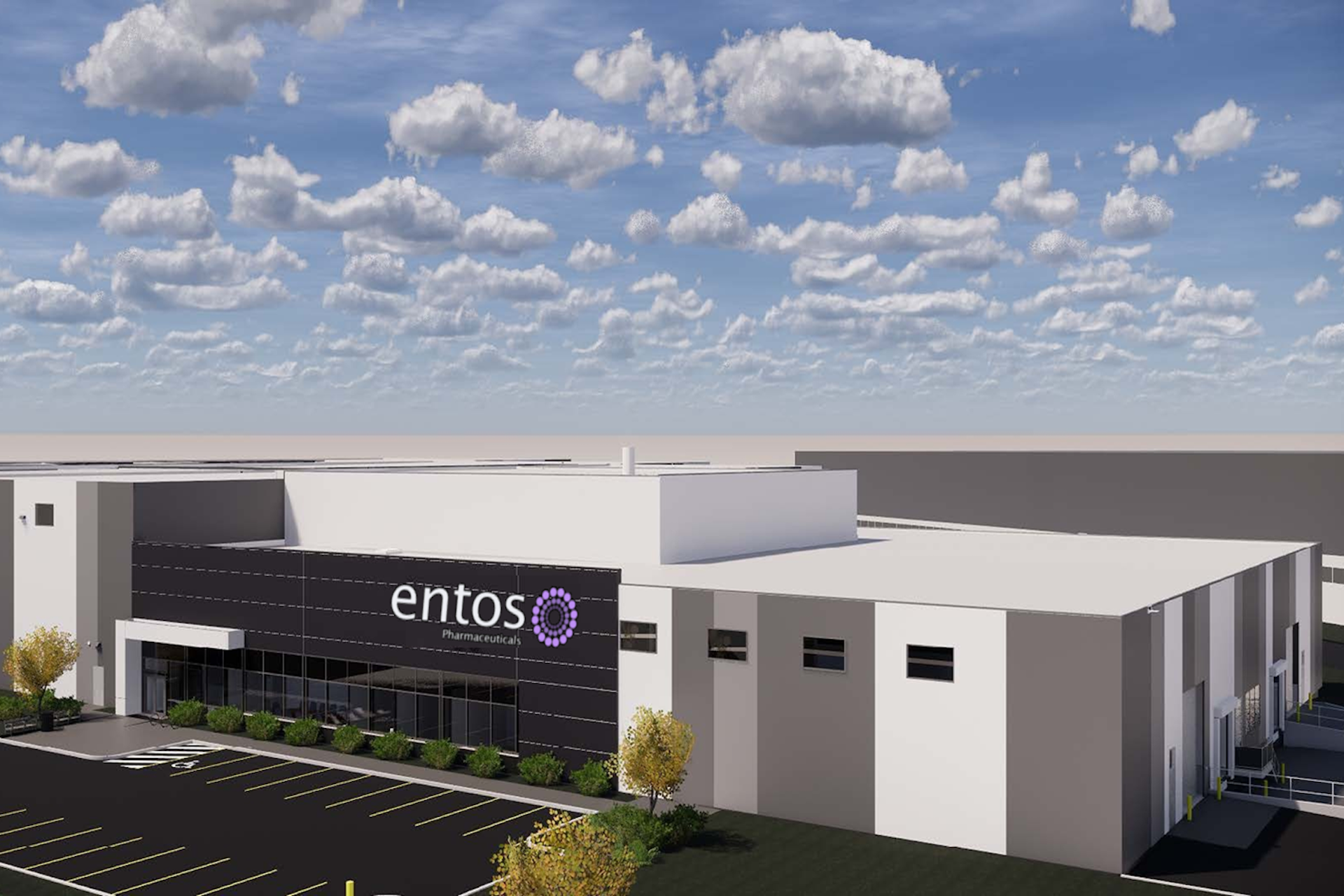
The facility Entos plans to build in south Edmonton would house both research and manufacturing. Photo: Entos/Handout
OTTAWA — Ottawa has backed Entos Pharmaceuticals’ plans for an Edmonton research and production facility with $62 million from the Strategic Innovation Fund, in the government’s latest bid to boost Canada’s biomanufacturing capacity.
The $198.5-million plant is the centrepiece of Edmonton-based Entos’s scale-up plans, as it moves to begin commercial production of its novel medicines and vaccines. The company’s platform is used to develop medicines for genetic disorders, with a unique method of delivering RNA, DNA and gene-editing therapies to human cells. In simple terms, the drug “delivers instructions to have the patient basically generate their own cure,” said CEO John Lewis.
Talking Points
- Entos Pharmaceuticals received $62 million from the federal Strategic Innovation Fund to build an R&D and commercial production facility in Edmonton for novel medicines
- The facility would also be used to produce vaccines in health emergencies, as the federal government works to shore up domestic biomanufacturing to prepare for another pandemic
The 103,000-square-foot facility in south Edmonton will also house a new research and development centre, and Lewis hopes to have the company’s lead product approved by Health Canada by 2029. It’s a treatment for congenital lipodystrophy, a rare disease that causes babies to lose almost all of their body fat at birth or soon after.
The facility should be up and running in time to start producing that medication as soon as the therapy is approved, Lewis said.
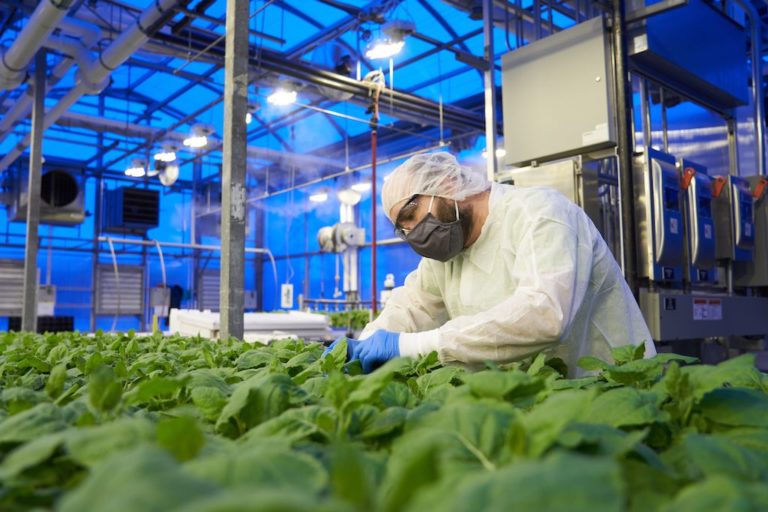
The same infrastructure can be repurposed in an emergency like the COVID-19 pandemic, which is another reason why Ottawa is keen to fund it. “This facility will be part of a network of facilities throughout Canada,” Lewis said in an interview with The Logic, adding that it will make bulk vaccines that will be shipped to other places to be packaged in vials. “I believe our capacity will be able to make about 10 million vaccines a year,” he said.
That kind of domestic capacity was sorely missing when the pandemic struck, leaving the government scrambling for shots made abroad. The innovation minister at the time, François-Philippe Champagne, set about rebuilding the country’s ability to make its own vaccines and medicines with bold promises about getting new plants up and running quickly.
Related Articles

Champagne heralded plans for the Edmonton facility just before he was shuffled into a new role as finance minister, saying it “will better equip Canada in responding to future health emergencies.”
The government granted another $60 million from the Strategic Innovation Fund on Tuesday to help finance the $220-million expansion of a Delpharm facility that makes essential medicines in Boucherville, Que. That company plans to double its production capacity at the plant by adding 28,000 square feet and installing new equipment, according to the government’s press release.
Ottawa has put roughly $2.3 billion toward 41 biomanufacturing and life-sciences projects since the pandemic started, but the success of those enterprises has been patchy. The $130-million, publicly owned Biologics Manufacturing Centre in Montreal was supposed to start churning out COVID-19 vaccines by the end of 2020, but hadn’t produced a single shot as of October 2024.
Ottawa also gave Quebec City-based Medicago more than $300 million to develop a homegrown COVID-19 vaccine and build a production plant to manufacture them. The company ran into production difficulties, though, and a tobacco firm’s minority stake in it ran afoul of World Health Organization policies. The facility closed in 2023 when Medicago’s buyer, Mitsubishi Chemical Group, decided to dissolve the company.
Other projects might soon pay off, though. The government signed an agreement with Moderna in 2021 to build a manufacturing facility in Laval, Que., which is set to start producing mRNA vaccines this year.
Like the pandemic, the threat of U.S. President Donald Trump’s tariff plans have thrown the importance of shoring up domestic drug production into relief, Lewis said, calling it a “wake-up call” for Canadians. The upside, he said, could be a lot more capability in the innovative medicine sector.
For example, Entos’s new Edmonton facility will be adaptable to make drugs developed outside of Canada domestically. “We have a number of partners around the world, including Eli Lilly, that are developing innovative medicines for brain diseases, for instance, like Alzheimer’s and Parkinson’s,” Lewis said. “In Canada we have all the raw materials to make innovative new drugs. We have academics, we have fantastic clinical trials.
“What we need are the companies who bring those drugs to market to be able to manufacture them in Canada. So that’s our goal.”



Loading...
Thanks for sharing!
You have shared 5 articles this month and reached the maximum amount of shares available.
CloseThis account has reached its share limit.
If you would like to purchase a sharing license please contact The Logic support at [email protected].
CloseGift the full article!
You have gifted 0 article(s) this month and have 5 remaining.
Recipients will be able to read the full text of the article after submitting their email address. They will not have access to other articles or subscriber benefits.
Photo: Entos/Handout
Most Popular This Week



In-depth, agenda-setting reporting
Great journalism delivered straight to your inbox.
Analysis
Flaws in CPP legislation have left billions of dollars at stake ahead of Alberta’s referendum
Briefing
RBC pledges $70M to support young entrepreneurs
Banks should have kill switches, IDs for AI agents, says global finance watchdog
B.C. First Nations decry rushed consultations as Major Projects Office CEO promises to do better
Best business newsletter in Canada
Get up to speed in minutes with insights and analysis on the most important stories of the day, every weekday.
Exclusive events
See the bigger picture with reporters and industry experts in subscriber-exclusive events.
Membership in The Logic Council
Membership provides access to our popular Slack channel, participation in subscriber surveys and invitations to exclusive events with our journalists and special guests.






