CALGARY — Pathways Alliance, a consortium of six of Canada’s largest oil sands companies, has wiped its website.
Skip to content

News
Oil sands group scrubs website in advance of new anti-‘greenwashing’ rules
‘Significant uncertainty’ over how to talk about carbon capture and other cleantech, Pathways Alliance says
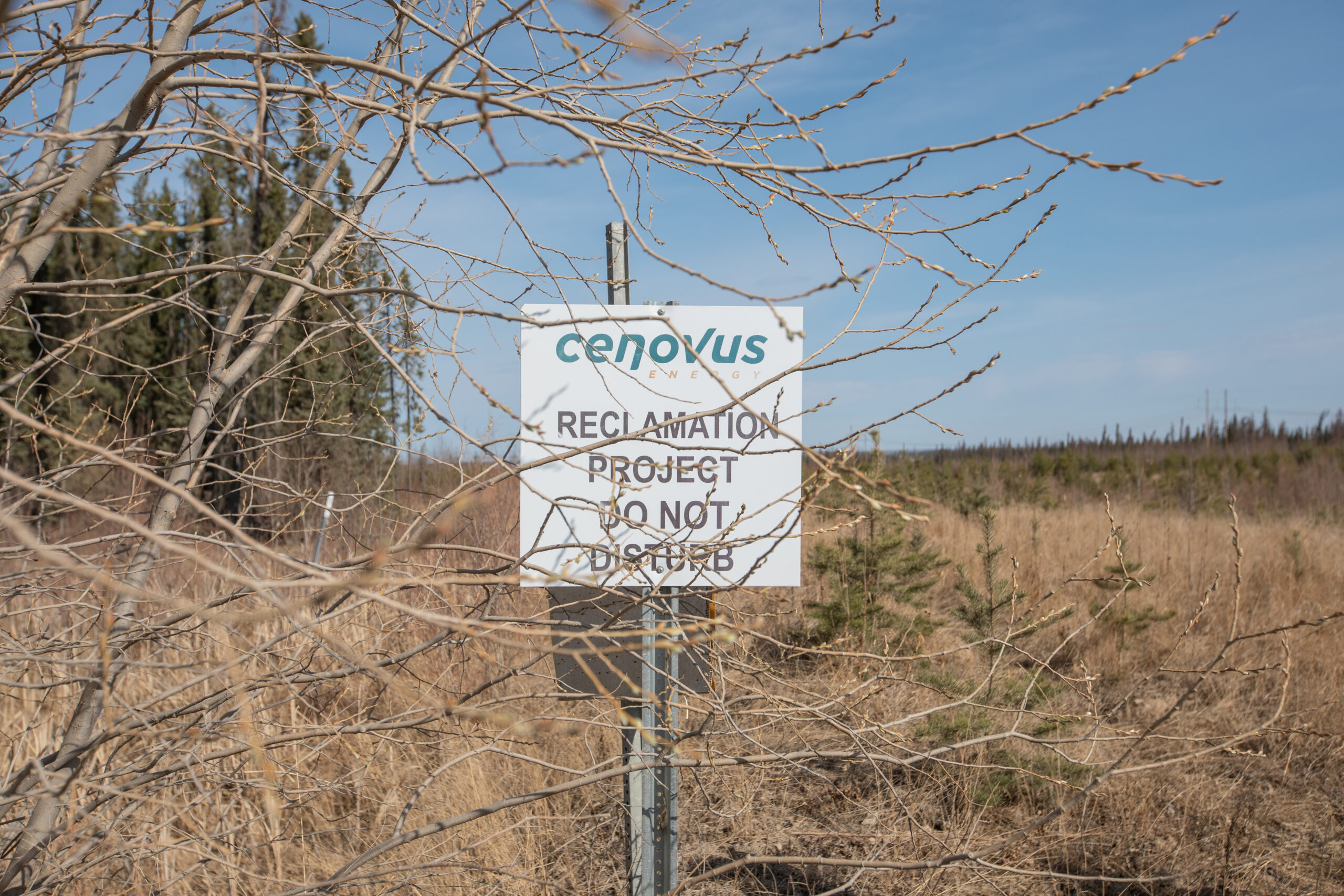
A reclaimed area of the Cenovus Christina Lake oil sands site southeast of Fort McMurray, Alta., on Wednesday April 24, 2024. Photo: The Canadian Press/Amber Bracken
CALGARY — Pathways Alliance, a consortium of six of Canada’s largest oil sands companies, has wiped its website.
All information about the group and its activities, including its plans to build a $16.5-billion carbon sequestration hub in northern Alberta, was removed at some point around early Thursday. It was replaced by a brief statement saying that imminent changes to the country’s competition laws created “significant uncertainty for Canadian companies that want to communicate publicly about the work they are doing to improve their environmental performance, including to address climate change.”
The changes are part of a federal government effort to declare that “greenwashing,” a term used to describe efforts to obscure a company’s environmental footprints, is a form of deceptive advertising.
Environmentalists say Pathways’ decision is hard proof that fossil fuel companies can’t back up their environmental claims. Energy industry representatives say the new rules complicate their desire to market new technologies—like carbon capture and storage, for example—that could significantly drive down CO2 emissions.
Related Articles


Just don’t talk about it: The rules that prompted Pathways’ scrubbing are tucked inside Bill C-59, the government’s budget implementation act, which the Senate approved on Wednesday, and will be passed into law shortly.
Among other things, the law exposes companies to legal action should they make claims about the environmental benefits of any of their activities or technologies “that [are] not based on an adequate and proper test” or “the proof of which lies on the person making the representation.”
Green-scrubbing: Pathways removed information from its website in anticipation of C-59 becoming law. In its statement, the group said it made the move as “a direct consequence of the new legislation and is not related to our belief in the accuracy of our environmental communications.”
The Calgary Chamber of Commerce said the rules “are extremely concerning and run at cross-purposes to the climate ambitions and leadership demonstrated by industries across sectors.” It warned the law will simply cause companies to cut back on their climate targets and environmental disclosures.
Cenovus Energy, Suncor Energy and Canadian Natural Resources, three major Calgary-based oil sands producers and Pathways members, also posted disclaimers on their websites related to the legislation.
Cenovus, which produces around 800,000 barrels of crude per day, said the Competition Act changes were “enacted without any transition period or guidance from the Canadian government” and “have created significant uncertainty as to how companies may legally communicate about their environmental goals and performance.
Guilty as charged? Greenpeace Canada sought to frame the web wipe as evidence of a cover-up.
“If scrubbing all information from their website in the face of truth-in-advertising legislation doesn’t make Pathways look guilty of something, I don’t know what does,” wrote Nola Poirier, senior researcher at Greenpeace, in a statement.
The Pembina Institute, a Calgary-based cleantech advocacy group, said Pathways’ decision suggests oil producers in Canada should face tighter regulatory scrutiny.
“For some time now, our research and analysis has been identifying significant gaps between the emissions reduction promises that the Pathways Alliance first made in 2021, and their actions to deliver those promises,” Pembina program director MC Bouchard said in a statement.
Now prove it: The new law comes as heavy emitters face increasing pressure to reduce their carbon footprints and disclose climate-related information.
For oil producers, which have placed a lot of their emissions-cutting plans on carbon capture and storage—a technology that has been used at just 45 commercial facilities globally thus far—it could prove challenging to perform an “adequate and proper test” on environmental claims they make when communicating with investors, regulators or the public.



Loading...
Thanks for sharing!
You have shared 5 articles this month and reached the maximum amount of shares available.
CloseThis account has reached its share limit.
If you would like to purchase a sharing license please contact The Logic support at [email protected].
CloseGift the full article!
You have gifted 0 article(s) this month and have 5 remaining.
Recipients will be able to read the full text of the article after submitting their email address. They will not have access to other articles or subscriber benefits.
Photo: The Canadian Press/Amber Bracken
Most Popular This Week




In-depth, agenda-setting reporting
Great journalism delivered straight to your inbox.
The Big Read
Alberta’s referendum is just the start of the turmoil
Briefing
EverWind plans $10B data centre and wind development in Nova Scotia
Canada ready to force Stelco to sell its Canadian operations, Joly says
Feds plan a 60 MW defence-oriented data centre for Ottawa
Best business newsletter in Canada
Get up to speed in minutes with insights and analysis on the most important stories of the day, every weekday.
Exclusive events
See the bigger picture with reporters and industry experts in subscriber-exclusive events.
Membership in The Logic Council
Membership provides access to our popular Slack channel, participation in subscriber surveys and invitations to exclusive events with our journalists and special guests.






