A Canadian man is suing OpenAI, claiming his interactions with the company’s ChatGPT chatbot destroyed his reputation, alienated him from his family and sent him into a mental health crisis.
Skip to content
News
Lawsuits claim ChatGPT encouraged delusional spirals and suicides
Allan Brooks, one of the plaintiffs, spent weeks speaking to ChatGPT about a mathematical formula he had devised that could bring down global financial systems. Then he realized it was all a lie.
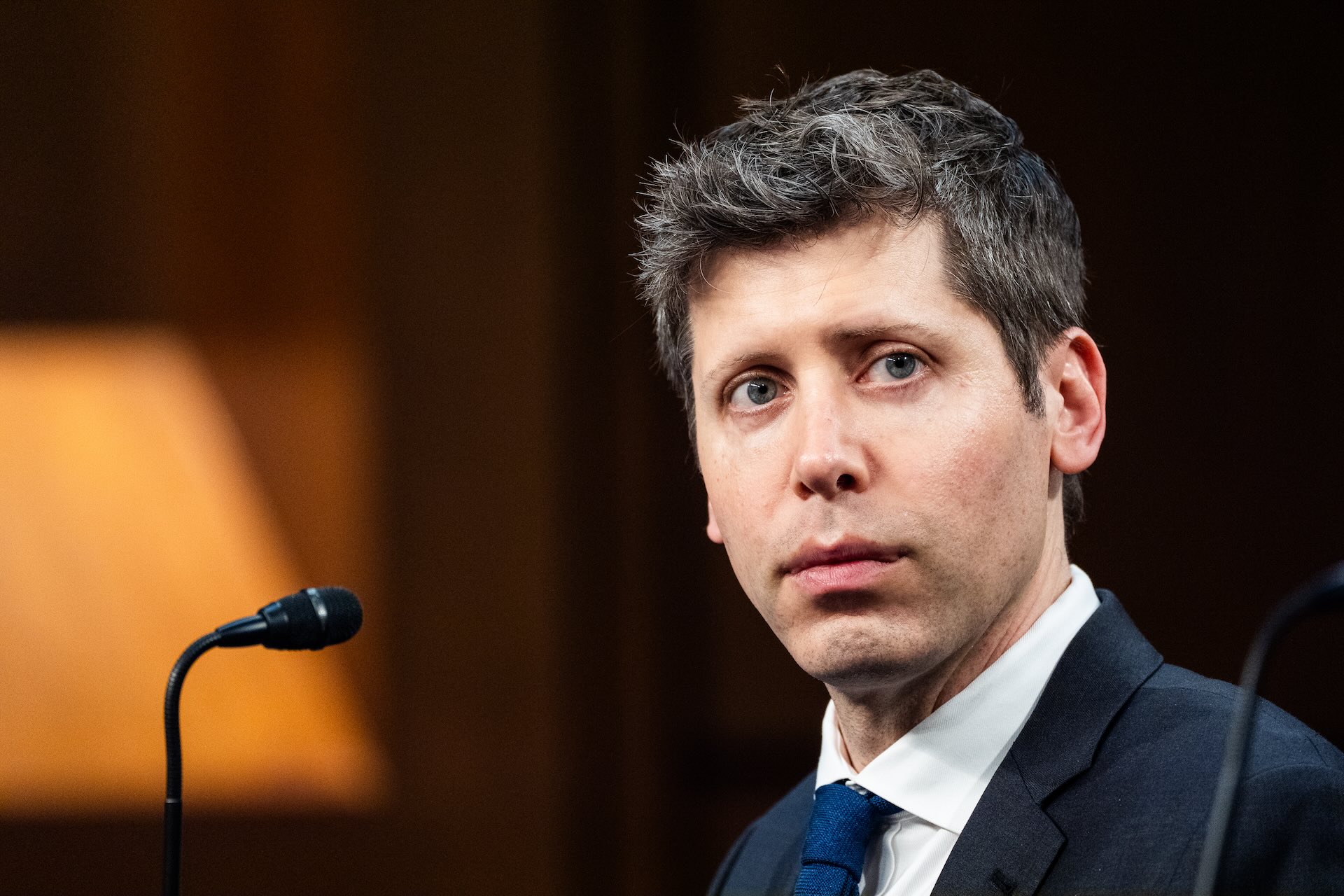
OpenAI co-founder and CEO Sam Altman. Seven complaints, filed Thursday, claim the firm’s chatbot led to mental health crises. Photo: The Washington Post via Getty Images/Demetrius Freeman
A Canadian man is suing OpenAI, claiming his interactions with the company’s ChatGPT chatbot destroyed his reputation, alienated him from his family and sent him into a mental health crisis.
Allan Brooks is one of seven plaintiffs in cases filed against OpenAI in California state court on Thursday, claiming their conversations with ChatGPT caused delusional behaviour and led to mental health crises. Four of the seven cases involve people who died by suicide after lengthy interactions with the chatbot, which has 700 million weekly active users, according to OpenAI.
Talking Points
- Allan Brooks said ChatGPT caused him to have delusional thoughts and convinced him that he was being surveilled by “at least one national security agency,” according to a lawsuit filed in a California state court against OpenAI on Thursday
- Brooks is one of seven plaintiffs in cases filed against the firm. Four of the cases involve people who died by suicide after lengthy interactions with the chatbot.
Last May, according to his complaint, Brooks, 48, had a three-week conversation with ChatGPT, during which the chatbot convinced the Cobourg, Ont.-based recruiter that he’d devised a mathematical theory that could hack sophisticated encryption algorithms protecting global payments and secure communications.
During these conversations, which spanned more than 300 hours over 21 days, ChatGPT repeatedly affirmed Brooks’ belief in his theory and convinced him his obsession was pure, even necessary, to the process of developing cutting-edge mathematical equations. It further urged him to warn people about the implications of his theory, leading Brooks to contact a host of security and law enforcement agencies, including the Royal Canadian Mounted Police and the National Security Agency in the U.S., according to the complaint. The chatbot also told Brooks that it was probable he was being surveilled “by at least one national security agency,” the complaint reads.
Related Articles


His delusion broke after three weeks when he tested his mathematical equation on Google’s Gemini chatbot, which debunked it. In subsequent conversations quoted in the complaint, ChatGPT admitted to deluding Brooks, and said its behaviour had been flagged to OpenAI’s trust and safety team. This, too, was false, according to the complaint.
The lawsuit seeks unspecified monetary relief, as well as a requirement that ChatGPT include comprehensive safety warnings and implement ways to track and verify the source of its data. Brooks also wants the company to delete any models or training data created as a result of conversations with him and other ChatGPT users.
OpenAI spokesperson Jason Deutrom said the firm was reviewing the filing. “This is an incredibly heartbreaking situation,” he said. He added that OpenAI trained ChatGPT “to recognize and respond to signs of mental or emotional distress, de-escalate conversations, and guide people toward real-world support” and that the firm would “continue to strengthen ChatGPT’s responses in sensitive moments, working closely with mental health clinicians.”
“I want them to be held accountable,” Brooks told The Logic, referring to OpenAI. “I want the government to step in and help regulate these companies, because we can’t trust them to do it themselves. We have to remember that this is a product created by people. It’s a manipulation machine. It’s designed to prolong engagement,” he claimed. “It doesn’t push back on dangerous thought spirals.”
Brooks said he began using ChatGPT as a replacement for Google search not long after the chatbot’s November 2022 release, often for recipes and movie recommendations. In April 2025, shortly before Brooks began his conversations with ChatGPT about his mathematical equation, OpenAI removed a ChatGPT update that it deemed “overly flattering and agreeable.” In August, the company also introduced changes to the chatbot to “better detect signs of mental or emotional distress.”
Brooks’ suit is one of seven against OpenAI filed by the Tech Justice Law Project and Social Media Victims Law Center. They include the case of Zane Shamblin, a 23-year-old Texas A&M graduate who died by suicide after ChatGPT allegedly encouraged him to take his own life.
Bringing seven cases in the same day shows the harms done by ChatGPT—and how these systems are affecting all types of people, according to Sarah Kay Wiley, director of legal and strategic initiatives at the Tech Justice Law Project. “ChatGPT is harming everybody,” she claimed.
If you or someone you know is thinking about suicide, support is available 24-7 by calling or texting 988, Canada’s national suicide prevention helpline, or visiting the 988 website.



Loading...
Thanks for sharing!
You have shared 5 articles this month and reached the maximum amount of shares available.
CloseThis account has reached its share limit.
If you would like to purchase a sharing license please contact The Logic support at [email protected].
CloseGift the full article!
You have gifted 0 article(s) this month and have 5 remaining.
Recipients will be able to read the full text of the article after submitting their email address. They will not have access to other articles or subscriber benefits.
Photo: The Washington Post via Getty Images/Demetrius Freeman
Most Popular This Week




In-depth, agenda-setting reporting
Great journalism delivered straight to your inbox.
News
National Bank CEO warns AI alone won’t give banks a lasting edge
Briefing
Canada and Ontario commit over $5B to support tariff-hit steel sector
Hackers will see cars as major targets in next 3 years, 83% of car-tech workers say
EA shutting down Edmonton studio BioWare
Best business newsletter in Canada
Get up to speed in minutes with insights and analysis on the most important stories of the day, every weekday.
Exclusive events
See the bigger picture with reporters and industry experts in subscriber-exclusive events.
Membership in The Logic Council
Membership provides access to our popular Slack channel, participation in subscriber surveys and invitations to exclusive events with our journalists and special guests.





