Skip to content


News
What an investor does at the world’s biggest AI research conference
From supporting portfolio firms to finding the next big thing, NeurIPS has become an essential gathering for venture capitalists looking to strike AI gold
Attendees queue for a panel discussion hosted by Radical Ventures involving AI pioneer Geoffrey Hinton and Google DeepMind chief scientist Jeff Dean on the sidelines of NeurIPS in San Diego in December 2025. Photo: Radical Ventures/Handout
SAN DIEGO — Mixed among the computer scientists and engineers at NeurIPS, the world’s largest AI research conference, a growing number of investors are looking for the next big thing. “Everybody’s there,” said Daniel Mulet, a partner at Toronto-headquartered Radical Ventures.
In December, the 39th edition of the conference welcomed more than 20,000 researchers, recruiters and venture capitalists. Mulet arrived with a busy calendar, but also plenty of time to meet the people, and find the ideas, that could rise to the top in a wildly competitive industry.
Talking Points
- NeurIPS, the world’s largest academic AI conference, now attracts a lot of investors looking for the next big thing
- Radical Ventures partner Daniel Mulet spent the week in San Diego in December meeting researchers who might help on deals or launch their own startups, brushing up on the tech specs of world models and AI for scientific discovery and figuring out which trends might fizzle
Papers presented at NeurIPS, formally the Conference on Neural Information Processing Systems, have led to some of AI’s biggest and most lucrative breakthroughs. Still, Mulet isn’t here to make deals, at least not immediately—venture capital is a waiting game of finding the right founder with the right technology at the right moment.
Tuesday is for the portfolio
Radical has backed a number of startups founded by star AI researchers, including hardware optimizer CentML, large language model (LLM) maker Cohere, material-design firm Periodic Labs, 3D space builder World Labs and search developer You.com.
Related Articles

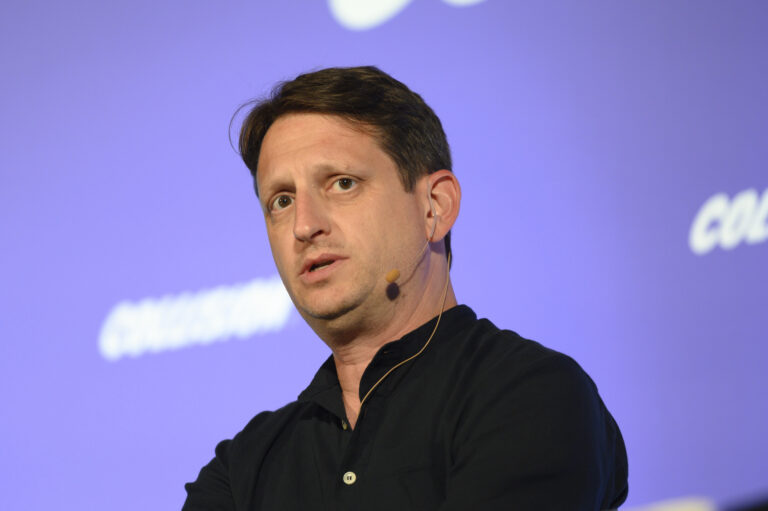
On Tuesday, Dec. 2, his first full day at NeurIPS, Mulet took on the role of hype man for portfolio firms that are trying to recruit top talent. While founders discuss tech specs with researchers, Mulet, and Radical’s backing, can add credibility. “I talk the company up a little bit,” he said.
The work extends after hours. Investors’ private dinners are the most exclusive of the NeurIPS side events, with venture firms booking out restaurants and clubs up and down San Diego’s Gaslamp Quarter each night of the conference. Radical hosted one for about 30 people on Tuesday night, at the pierside Malibu Farms. At the dinner, the founders of portfolio firms like Artificial Agency, Cohere, P-1 and Yutori shared the table with senior academics from schools like the Massachusetts Institute of Technology, Université de Montréal, Stanford University and the University of Toronto.
Gatherings like these help startups hire, because young researchers look up to the high-profile professors and want to share their air. “Extending access to the portfolio companies a little bit helps them on their selling,” said Mulet, who tells founders to “bring the most impressive person you’re trying to recruit.”
Wednesday is for scouting
NeurIPS also gives investors a chance to meet researchers they know only virtually, or to catch up with longer-standing connections. Mulet collects professors who could provide technical advice when Radical is conducting due diligence on potential deals.
Those ties can also lead to investment opportunities. In San Diego on Wednesday, Mulet unearthed two AI startups that will soon be launched—one building a recommendation system, the other chip design tools—by the doctoral students of professors with whom he’s been chatting for a while. “We talk to these people [for] three months [to] a year before they’re ready to actually start the company,” he said.
Wednesday was a two-event evening for Radical. Managing partner Jordan Jacobs moderated a chat between Geoffrey Hinton, the Nobel winner and Radical limited partner, and Jeff Dean, chief scientist at Google’s DeepMind AI lab; the two reminisced about the AI breakthroughs they made together at the tech giant. The event’s 200-person capacity was three times oversubscribed, Mulet said. Radical also co-hosted a party on the USS Midway, a decommissioned aircraft carrier turned museum, with portfolio flagship Cohere.
Thursday is for research
Conferences like NeurIPS used to be where the big breakthroughs in AI made their debut. These days, many researchers post their papers to open-access sites like arXiv and OpenReview before peer review. “None of the research is new,” said Mulet. “It’s all been out for at least six months.”
Still, Mulet arrived in San Diego with a list of researchers to meet. It’s a chance for him to fill in the details of what remains a deeply technical field. “I’ll hear things, and then come back with a research agenda for myself for the next year,” he said.
High on Mulet’s NeurIPS program was learning more about AI for scientific discovery, an approach taken by Radical portfolio firms Intrepid Labs and Periodic. Several papers and workshops showcased how the technology could speed up R&D in biology, chemistry, cosmology and even machine learning itself.
Mulet—who walked the poster sessions where researchers show off their work on Thursday too—was also interested in the application of so-called world models to areas like robotics and gaming. These new systems understand the physics of real life, and can train themselves by simulating situations instead of having to be shown videos of them. “Very practically for a VC, it means you need less money and time to get to an economically viable task that the robot could do,” he said, citing disassembling electronic devices to pull out recyclable rare earth minerals as one potential use of the technology.
Among the NeurIPS papers are more subtle developments that could be useful to the startups Radical has backed. “It’s a lot of these best-in-class, micro-innovations that get pulled together,” said Mulet. “So it’s trying to understand what those are.”
He cited a paper from the Alibaba team that builds the firm’s Qwen models, which was chosen for the NeurIPS best-of awards. The Chinese tech giant applied a technical trick called gating to the attention mechanism that powers today’s LLMs, improving the systems’ performance while reducing the amount of data and time needed to train them.
Friday is for what’s next
Across three days at NeurIPS, Mulet’s calendar included at least five meetings with AI researchers and professors; four public events for scientists and founders; three poster sessions; two private dinners; two visits to robotics startups out of the University of California San Diego and one morning jog along the beachfront.
Radical also closed one investment during the conference, and made solid progress on another that’s likely to wrap up early this year; venture capital is a game of many, many meetings. Mulet also gained some insight into what the firm might want to pass on in 2026.
In every AI investment cycle, crops of startups sprout around what looks like a promising application of the technology or a gap that needs filling. Mulet uses NeurIPS to figure out whether the idea is technically feasible, and whether it’s more likely that a tech giant or major AI challenger will simply do it themselves. “It’s as much about finding the right investment opportunity with the right timing as avoiding making investments that are maybe not going to pan out in the short term,” he said.
Several startups launched between 2017 and 2020 to sell developer tools that made it easier to work with AI models, only to become obsolete when developers were able to work directly with LLMs. In the next wave, startups sold tools that made it easier to build AI agents; model-makers like OpenAI, Google and Cohere have since built those features into their own software.
The reach and ambition of NeurIPS has snowballed from the early days of the conference, when a few dozen scientists would gather to swap notes near ski slopes. So has that of its community. Investors at the conference say a growing number of researchers are interested in commercializing their work. “Research is a very entrepreneurial activity, when done right,” Mulet said. “You are looking for things that have not been discovered before.”
Still, only a fraction of researchers will make successful founders. In the midst of a feverish AI boom, it falls to investors like Mulet to suss out which ones. “There is so much enthusiasm and potential in what all this could mean for the world,” he said. “The money is there.”



Loading...
Thanks for sharing!
You have shared 5 articles this month and reached the maximum amount of shares available.
CloseThis account has reached its share limit.
If you would like to purchase a sharing license please contact The Logic support at [email protected].
CloseGift the full article!
You have gifted 0 article(s) this month and have 5 remaining.
Recipients will be able to read the full text of the article after submitting their email address. They will not have access to other articles or subscriber benefits.
Photo: Radical Ventures/Handout
Most Popular This Week




In-depth, agenda-setting reporting
Great journalism delivered straight to your inbox.
News
A tech firm born from post-Brexit trade chaos sets its sights on Canada
Briefing
Dozens of Canadian researchers join chorus of scientists calling for a global AI oversight
TC Energy strikes deal with Indigenous groups for ownership stake in Coastal GasLink pipeline
Canada’s Tailscale taps Google Moonshot alum to lead sovereign AI push
Best business newsletter in Canada
Get up to speed in minutes with insights and analysis on the most important stories of the day, every weekday.
Exclusive events
See the bigger picture with reporters and industry experts in subscriber-exclusive events.
Membership in The Logic Council
Membership provides access to our popular Slack channel, participation in subscriber surveys and invitations to exclusive events with our journalists and special guests.