Skip to content


News
Nobody is talking about a bubble at the world’s biggest AI research conference
More than 20,000 researchers gathered in San Diego this week for NeurIPS. The hallway chatter was focused on how AI systems work—and how to make them work better.
Frenzied conversations about an AI bubble are all over the headlines, earnings calls, and tech podcasts. Photo: Greg Baker/AFP via Getty Images
SAN DIEGO — This convention centre on the shore of San Diego Bay may be the only place in the world of AI right now not talking about a bubble.
More than 20,000 AI researchers and a smaller number of recruiters, investors and reporters have descended on the California coast for the Conference on Neural Information Processing Systems (NeurIPS), the field’s most important annual academic event.
Related Articles
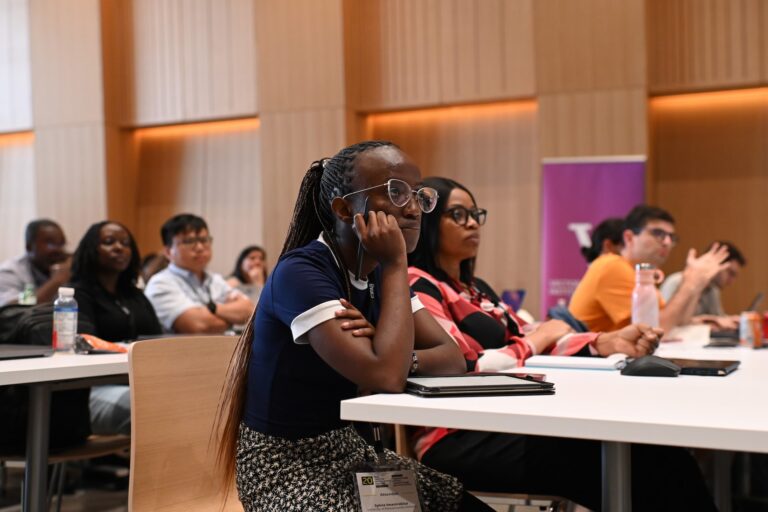

Fears of a bubble are being driven by the see-sawing stock prices of chip and tech giants, huge valuations of some AI startups, hundreds of billions of dollars in data centre deals and mixed signals about how widely consumers and businesses are actually using AI. Frenzied conversations about when it might pop are all over the headlines, earnings calls, and tech podcasts.
Those concerns aren’t getting nearly as much airtime in San Diego, where the hallway chatter is focused on the more interesting questions of how these systems work—and how to make them work better. This is, after all, a conference of computer scientists and engineers and the occasional neuroscientist, not an economic symposium or a meeting of worrying investment bankers.
It’s not that NeurIPS attendees are unaware of all the money sloshing around AI right now. It’s hard to miss in the sponsors’ hall at one end of the building, where the names of Amazon and ByteDance hang from the rafters in super size alongside Shopify’s green-bag logo. Toolmaker Turing and financial firm Jump both have robots making coffee. The swag slingers at quant trading firms Optiver, Susquehanna and Citadel compete to get tote bags on as many arms as possible.
The hall next door, though, is just as packed. On Thursday afternoon researchers examined posters detailing new models and methods called things like Audio Flamingo 3, HawkBench and CoLT. A small crowd gathered in front of a presentation from a team at Meta about how AI agents themselves can be used to train machine learning models. At a time when many are fearful that they’ll lose their jobs to AI, even AI researchers themselves may not be safe.
“Poster sessions are still extremely popular,” said Hugo Larochelle, scientific director at Mila, the Montreal-based AI research institute. There are six this year. Larochelle tends to avoid them, saying that it’s hard to hear over the noise. These days, he’s more likely to search through the paper database online and email the author.
Larochelle has been coming to NeurIPS for decades, starting when the conference accepted just a few hundred papers a year; this year it took 5,858. He organized a few of the Montreal editions, and now sits on the conference’s board. While NeurIPS has taken on more industrial trappings in recent years, researchers still come primarily to network with their peers, swap ideas and explore new scientific discoveries. “It’s a space where the lesser-known labs have a shot at getting some spotlight,” said Larochelle, who’s attending the mirror NeurIPS event in Mexico City this year.
What it’s not is a place to speculate about whether or when the AI bubble will pop. “It’s not a technical [or] scientific question,” said Larochelle. “It’s a financial markets question.” Even NeurIPS attendees worried about a bubble believe that the scientific foundations of AI are solid, and that its potential to transform society and the economy will be realized in time. “It’s not fake,” Larochelle said. So instead of worrying about markets, researchers are focused on advancing AI’s capabilities.
Sara Hooker, co-founder of AI startup Adaption and former vice-president of research at Toronto-based Cohere, said there are valid questions about the huge amounts of money and mega-infrastructure being thrown into the sector right now. “People here care about innovation more than anything,” she said, and the technical challenges AI researchers are tackling are as compelling as ever.
That’s not to say the population of NeurIPS this year is pollyannaish about AI. On Wednesday, Princeton University sociologist Zeynep Tufekci delivered a keynote about the major challenges that generative AI will create for humanity long before it poses any possible existential threat. The thousands of seats in the hall filled fast, and fire marshalls redirected latecomers to an overflow room where the talk was being livestreamed.
AI could make it impossible to tell what’s real, human, or the product of actual hard work, according to Tufekci. She’s long criticized the harms caused by social media, claiming that platforms like Facebook and X encourage polarization to keep people engaged while collecting masses of information on them to serve them ads. AI firms will also turn to advertising, Tufekci predicted, because they can’t generate enough revenue from their current products to justify their big investments and valuations.
“The AI will try to keep each person there, and engaged, and trusting,” she said. “This is an extremely dangerous thing.” AI could be very useful and good for the world, Tufekci added, but it must be designed and rolled out correctly. “Everybody in this room is going to have a say on whether this works.”
Billions of dollars are being pumped into AI from board rooms in San Francisco and New York, but this research conference in San Diego is just as likely to hold the future of the field. “You never feel the urgency like you do at NeurIPS, because everyone is doing interesting things,” said Hooker. “People feel this excitement—it’s alive and well.”



Loading...
Thanks for sharing!
You have shared 5 articles this month and reached the maximum amount of shares available.
CloseThis account has reached its share limit.
If you would like to purchase a sharing license please contact The Logic support at [email protected].
CloseGift the full article!
You have gifted 0 article(s) this month and have 5 remaining.
Recipients will be able to read the full text of the article after submitting their email address. They will not have access to other articles or subscriber benefits.
Photo: Greg Baker/AFP via Getty Images
Most Popular This Week


In-depth, agenda-setting reporting
Great journalism delivered straight to your inbox.
News
A tech firm born from post-Brexit trade chaos sets its sights on Canada
Briefing
Dozens of Canadian researchers join chorus of scientists calling for a global AI oversight
TC Energy strikes deal with Indigenous groups for ownership stake in Coastal GasLink pipeline
Canada’s Tailscale taps Google Moonshot alum to lead sovereign AI push
Best business newsletter in Canada
Get up to speed in minutes with insights and analysis on the most important stories of the day, every weekday.
Exclusive events
See the bigger picture with reporters and industry experts in subscriber-exclusive events.
Membership in The Logic Council
Membership provides access to our popular Slack channel, participation in subscriber surveys and invitations to exclusive events with our journalists and special guests.