The NDP is calling for the appointment of an ombudsperson to provide independent oversight of the federal immigration department after revelations that employees created a software tool to let them process applications faster, and an internal report detailing racist behaviour from some managers.
Skip to content

News
NDP calls for independent ombudsperson at IRCC in wake of reports on Chinook, internal culture
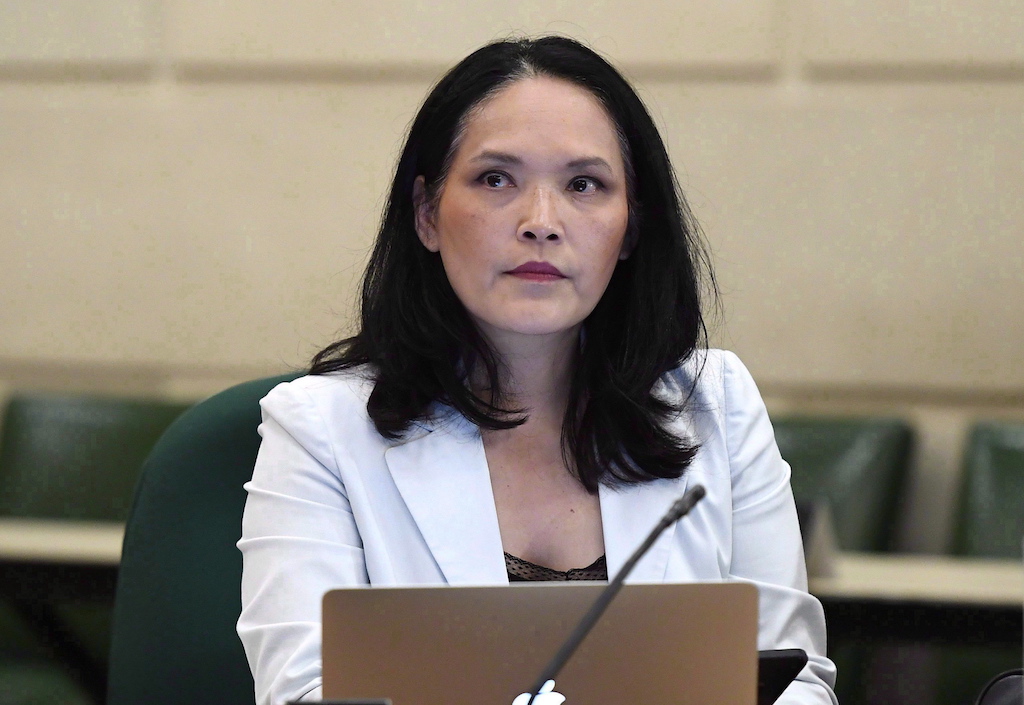
NDP immigration critic Jenny Kwan in Ottawa in July 2018. Photo: The Canadian Press/Justin Tang
The NDP is calling for the appointment of an ombudsperson to provide independent oversight of the federal immigration department after revelations that employees created a software tool to let them process applications faster, and an internal report detailing racist behaviour from some managers.
Last month, The Logic reported on the existence of Chinook, a software tool that officers at Immigration, Refugees and Citizenship Canada created to flag certain immigration applications by risk level, identify applications based on criteria like nationality and age and write refusal letters more quickly. On the same day, CBC reported on an internal review which found an “old-boys network” exists within IRCC, with employees facing few or no consequences for racist behavior, where applicants from certain countries are held to different standards for processing applications and discriminatory practices are built into automation tools.
Talking Point
The NDP’s Jenny Kwan is among those saying IRCC needs independent oversight amid concerns about errors and racial bias being embedded in technology like Chinook, a software tool that immigration officers created to help them process applications faster.
NDP immigration critic Jenny Kwan said in that context, the use of a digital tool like Chinook to process immigration applications “really begs the question…. Who are the people who created this Chinook system? Does that person have these internal biases, and is that embedded in the Chinook system?”
Kwan, who has represented the riding of Vancouver East since 2015 after a long career in provincial and municipal politics, said the complaints she’s gotten from her constituents suggest there’s a misallocation of resources within IRCC, with automation and human discretion sometimes applied haphazardly. As the government works to modernize and build a replacement system for Chinook—as The Logic reported, IRCC has a roughly $1.8-million contract with Accenture to design a product to replace it—she said it’s important that IRCC get independent oversight.
Lawyers told The Logic that the Chinook tool, the existence of which was revealed publicly through two recent court cases, raised concerns about accountability. Because immigration officers using the tool delete their working notes from the system, those notes can’t be used as evidence when challenging an immigration decision in court. They also raised worries about discrimination, since the tool lets the officers use spreadsheets that highlight factors like nationality and age, and allow immigration officers to “flag” words they deem high or low risk.
In an interview with The Logic, Kwan said these reports plus recent revelations about IRCC’s processing delays during the pandemic, as well as the government’s handling of the exodus from Afghanistan, make the need for independent oversight more urgent. “IRCC needs to step up, and the minister needs to step up,” she said.
The office of now-former immigration minister Marco Mendicino did not respond to requests for an interview prior to his switching portfolios in last week’s cabinet announcement.
The complaints about Chinook echo those that several witnesses raised in May at the House of Commons’ Standing Committee on Citizenship and Immigration, said Kwan.
Experts testified that errors by IRCC staff and visa officials are often difficult to get fixed, requiring a “huge amount of time and resources” in Federal Court. Part of the problem, exacerbated during the pandemic, was that visa officers were releasing “standard forms in which boxes are checked off” instead of the full reasoning behind a decision, said Guillaume Cliche-Rivard, president of the Association québécoise des avocats et avocates en droit de l’immigration.
The complaints this spring similar to those The Logic heard from lawyers about immigration officers using Chinook deleting their working notes or generating mismatched refusal letters.
Based on testimony from Cliche-Rivard and others, the committee released a report in May recommending that visa officers “release to applicants the full records of any information and the full reasons for the refusal of their application,” and create an office that would provide oversight and accountability of the persistent errors and delays within IRCC. The committee requested a government response on their 38 recommendations to improve IRCC, but didn’t get one due to the election.
“What I’m hearing from other people is that there’s a whole lot of concerns with the utilization of that [Chinook] system effectively,” said Kwan. “The people who have experienced [Chinook] are also sounding the alarm.”
One of the biggest concerns that lawyers had about IRCC’s undisclosed use of Chinook was the rate of apparent errors, saying they’d seen more immigration applications rejected with form letters that appeared unrelated to their clients’ cases, especially from certain countries.
At a recent immigration-law conference that included a session on Chinook, lawyer Will Tao said Chinook has upended the application strategy for work permits, study permits and temporary-resident visas. Tao said he is filling out forms differently, bearing in mind what information the tool scrapes, and keeping an eye out for irregular refusal letters that suggest an immigration officer may have used Chinook to review a case.
At the conference, Tao encouraged other lawyers to challenge in court refusals that use Chinook—and raised concerns about whether the tool being built to replace Chinook will have adequate legal oversight—or whether it will fail to address its shortcomings and reinforce biases with artificial intelligence.
“Some of these systems are state-sponsored discrimination,” he said.
Andrew Griffith, former director general of IRCC’s citizenship and multiculturalism branch, said the potential for bias shows the importance of adopting systems like Chinook in a very measured way, with quality control, simulations and comparisons to the type of data and decisions made without the system.
“There is always a risk that whenever you try to codify something, you may be codifying stuff that you shouldn’t,” said Griffith in an interview with The Logic.
These risks were highlighted by the internal review on which CBC reported last month. Prepared for IRCC by research firm Pollara Strategic Insights, it found some IRCC workers referred internally to certain African nations as “the dirty 30,” and branded applicants from certain parts of the world with racist stereotypes of corruption or laziness. The review said employees believed they risked reprisal if they spoke out about racism, and concluded there were racial biases in how IRCC’s “programs, policies and client services,” are delivered, “as well as administrative practices that introduce biases or the potential for biases over time.” Some focus-group participants suggested the creation of a permanent anti-racism ombudsperson to provide independent oversight of the department, although an IRCC proposal for an anti-racism secretariat was not seen as a strong key solution during the review, as it lacked a clear mandate.
Griffith said he isn’t convinced an ombudsperson is the solution to the challenges within IRCC. Without significant resources, it may add another layer that further extends the already-lengthy process of challenging immigration decisions, he said.
But he said it’s unlikely IRCC will back away from technological tools, including automation, as it tries to work through a growing number of applications while using taxpayer funds efficiently. He said it’s possible to build a system well, by focusing on simple applications like visitor visas, so officers have more time to work on complex files like refugee cases.
The IRCC has said it will modernize its approach to access to information and privacy amid a dramatic increase in requests to “provide clear and concise communications to explain the reasons why an application was not approved.” Kwan said there isn’t enough information about how exactly it plans to do that.
“I think it’s really good that these kinds of stories are coming out. I think it’s important for people to understand the reasons that really require government to use technology,” said Griffith of Chinook. “The stories, [by] highlighting these issues, remind policymakers and politicians that these kinds of choices will always be under scrutiny. So they better make sure they get it right from the get-go.”



Loading...
Thanks for sharing!
You have shared 5 articles this month and reached the maximum amount of shares available.
CloseThis account has reached its share limit.
If you would like to purchase a sharing license please contact The Logic support at [email protected].
CloseGift the full article!
You have gifted 0 article(s) this month and have 5 remaining.
Recipients will be able to read the full text of the article after submitting their email address. They will not have access to other articles or subscriber benefits.
Photo: The Canadian Press/Justin Tang
Most Popular This Week




In-depth, agenda-setting reporting
Great journalism delivered straight to your inbox.
Commentary
Carmichael: Being boxed in will help Canada focus on what matters
Briefing
Rio Tinto gets nearly $165M in additional federal funds for Quebec aluminum
U.S. to lift tariffs on some Canadian products crucial to Maine: Collins
Carney warns of tech dependence after Starlink disruptions in Ukraine
Best business newsletter in Canada
Get up to speed in minutes with insights and analysis on the most important stories of the day, every weekday.
Exclusive events
See the bigger picture with reporters and industry experts in subscriber-exclusive events.
Membership in The Logic Council
Membership provides access to our popular Slack channel, participation in subscriber surveys and invitations to exclusive events with our journalists and special guests.






