OTTAWA — Competition commissioner Matthew Boswell scored a huge win last week, when MPs on the House of Commons’s finance committee voted to make corporate mergers presumptively illegal if the deals would put more than 30 per cent of market share in one company’s hands.
Skip to content

News
MPs seek to slide a big M&A requirement into competition law
Deals leading to 30% market share concentration would be presumed to be anti-competitive
Competition commissioner Matthew Boswell speaks at Canada's Competition Summit in Ottawa in October 2023. Photo: The Canadian Press/Sean Kilpatrick
OTTAWA — Competition commissioner Matthew Boswell scored a huge win last week, when MPs on the House of Commons’s finance committee voted to make corporate mergers presumptively illegal if the deals would put more than 30 per cent of market share in one company’s hands.
Here’s what you need to know:
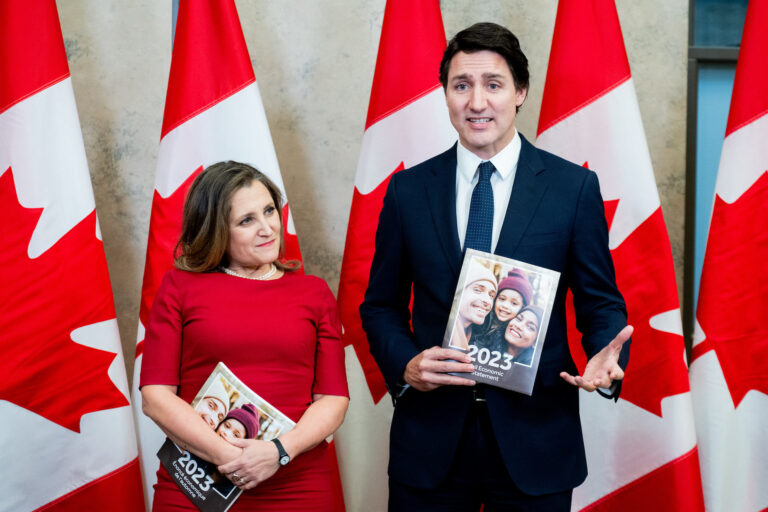
Where this came from: The fall economic statement included changes to the Competition Act to strengthen the commissioner’s powers. In March, Boswell wrote to parliamentarians to say those are “a generational upgrade in our competition law framework,” but he wanted more.
Among his requests was a “structural presumption” that mergers leading to concentrations of market share over 30 per cent (or similar findings using a calculation of concentration called the Herfindahl-Hirschman Index) are anti-competitive. To get approval, merging parties would have to prove the opposite to the Competition Tribunal that hears the commissioner’s challenges.
NDP Leader Jagmeet Singh had a private member’s bill in the House of Commons that would do roughly the same thing.
Related Articles

What happened: About eight hours after the Commons finance committee got to work April 30, going over the bill implementing the fall economic statement, the NDP’s Don Davies proposed amendments to put a version of Boswell’s proposal into the law.
The committee approved them, following a further tweak from Liberal MP Ryan Turnbull to let the federal cabinet adjust the 30 per cent threshold as conditions warrant.
Why it matters: A reversed burden of proof would have totally changed the way Rogers’s takeover of Shaw played out, Boswell wrote in his March pitch, forcing them to propose “remedies” to the merger’s impact on competition earlier.
“Every negotiation before the tribunal [stage] happens in the shadow of what people think will happen at the tribunal,” Innovation Department competition expert Martin Simard told the MPs last week.
The move would also make Canada one of the world’s few countries to have such a provision: Germany has a threshold in law, while the U.S. has one as a guideline and in case law, but not codified.
Who likes it: “We’re very encouraged by the move to include structural presumptions against mergers in concentrated markets,” Keldon Bester of the Canadian Anti-Monopoly Project told The Logic.
Who doesn’t: In a paper for the C.D. Howe Institute, University of Toronto competition law professor Edward Iacobucci said it would be a mistake. (He was talking about Singh’s bill, but the principle is the same.) Just defining “market share” is fraught, he wrote—who decides where the limit of the market is?
Sometimes a merger creating a new big player will mean more competition, but such results can be hard to prove, he wrote.
The Canadian Bar Association’s competition-law section also criticized the reverse-onus provisions in Singh’s bill, on similar grounds.



Loading...
Thanks for sharing!
You have shared 5 articles this month and reached the maximum amount of shares available.
CloseThis account has reached its share limit.
If you would like to purchase a sharing license please contact The Logic support at [email protected].
CloseGift the full article!
You have gifted 0 article(s) this month and have 5 remaining.
Recipients will be able to read the full text of the article after submitting their email address. They will not have access to other articles or subscriber benefits.
Photo: The Canadian Press/Sean Kilpatrick
Most Popular This Week




In-depth, agenda-setting reporting
Great journalism delivered straight to your inbox.
Commentary
Carmichael: Being boxed in will help Canada focus on what matters
Briefing
Rio Tinto gets nearly $165M in additional federal funds for Quebec aluminum
U.S. to lift tariffs on some Canadian products crucial to Maine: Collins
Carney warns of tech dependence after Starlink disruptions in Ukraine
Best business newsletter in Canada
Get up to speed in minutes with insights and analysis on the most important stories of the day, every weekday.
Exclusive events
See the bigger picture with reporters and industry experts in subscriber-exclusive events.
Membership in The Logic Council
Membership provides access to our popular Slack channel, participation in subscriber surveys and invitations to exclusive events with our journalists and special guests.






