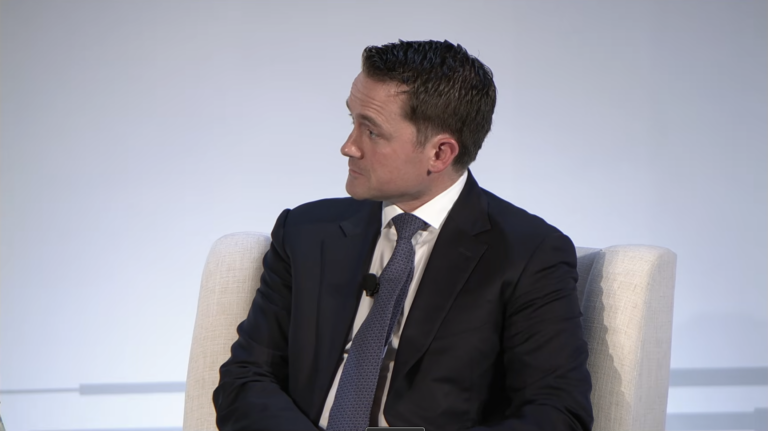
TORONTO — Bill Morneau is worried about “the pace of economic growth in this country” and the lack of urgency in the Liberal government—in which he once played a starring role—to enliven it.
In an address to Toronto-based think-tank C.D. Howe Institute, the former finance minister called for more intergovernmental cooperation and lamented partisan polarization—common and quixotic refrains outside the capital. It’s his first public speech since he left office in August 2020, reportedly amid differences with the Prime Minister’s Office. On Wednesday, the former financial services executive cited competitiveness as Canada’s “fundamental problem,” and diagnosed lacklustre productivity growth, capital investment and R&D spending as the causes.
Morneau’s big idea now: A permanent growth commission tasked with workshopping the problem and dreaming up solutions. As finance minister, Morneau established just such an advisory council in March 2016, and named consulting, institutional investing, heavy industry, venture capital and academic luminaries to it.
It was “the single most productive approach to policy development that I saw when I was in office,” he said Wednesday. But “the recommendations—even the excellent ones that could and should have been acted on—became politicized.”
While the Liberal government hasn’t followed through on the economic advice of other expert groups it’s assembled, Morneau’s counsellors got pretty much everything they wanted. Here’s a quick check-in on some of the major to-dos in their December 2017 final report:
- Establish a Canada Infrastructure Bank. The Crown corporation is now on its second CEO, who’s tasked with getting more of its $35-billion endowment out the door.
- Set up an agency to attract foreign direct investment. Invest in Canada is currently searching for its own second CEO.
- Increasing the number of new permanent residents admitted to Canada from 300,000 to 450,000 over five years. The government’s 2023 target is 421,000.
- Launch superclusters, provide growth capital for startups, and buy from them. The April federal budget renewed the superclusters program, albeit at half the level the five consortia sought. Last year’s budget recapitalized the Venture Capital Catalyst Initiative. Innovative Solutions Canada, Ottawa’s startup procurement program, has struggled to meet its spending requirements.
- Set up a FutureSkills Lab to study and support workforce development. Toronto Metropolitan University hosts the Future Skills Centre.
Most of those initiatives were launched before Morneau, and their early results—whether stakeholders found them productive or underwhelming—were already available. Meanwhile, some council members were appointed to other influential roles by the Liberal government, with chair Dominic Barton dispatched as envoy to China.
And while Morneau blasted Ottawa’s lack of focus on productivity, innovation and growth, successor Chrystia Freeland has increasingly emphasized them as drivers of her policy decisions over the last year. Her second budget proposed a new agency and fund to tackle those challenges, plus a permanent Council of Economic Advisors, for which influential industry voices have long called. Michael Sabia, deputy minister of Finance Canada, is another author of the Liberal’s current fiscal policy. He’s also a former member of Morneau’s growth council.