MONTREAL — At the sprawling Palais des congrès on Wednesday, a freakish AI-powered robot held court. A robot dog walked around. AI, we are told, is streamlining bulky item delivery services, revolutionizing gastrointestinal research and saving the bananas. It might be the first year for the All In artificial intelligence conference in Montreal, but organizers and attendees had the vibe down pat.
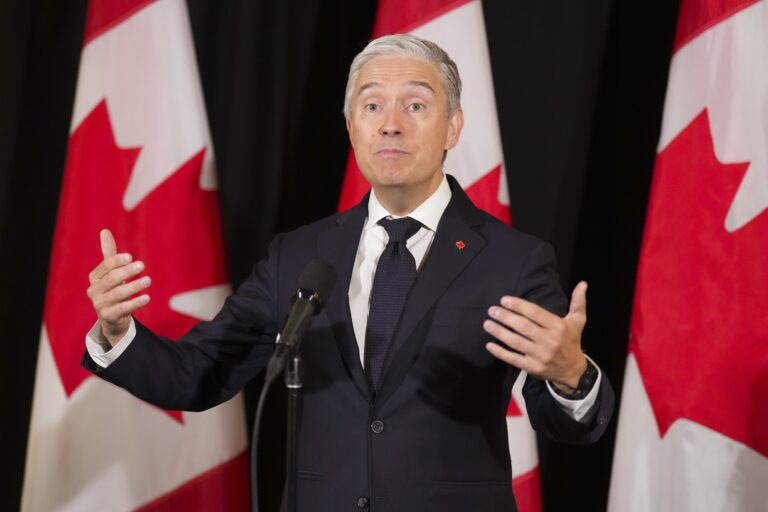
The biggest news came early, from Innovation Minister François-Philippe Champagne. He announced a voluntary code for generative AI, which includes large language models that produce text and code, as well as image-making tools like Midjourney. The signatories—which include Canadian AI firms Cohere, Coveo and Ada—pledge to assess the potential negative impacts of these systems.
‘Something concrete’: Champagne was bullish on the country’s progress in curbing AI’s many would-be pitfalls, allowing it (and its researchers) to pursue the massive upsides of the technology—much of which, he noted, is happening in Montreal. “We need to rebuild trust in order to allow for responsible innovation,” he said in an interview with The Logic following the code’s announcement. “We need to move from fear to opportunity.”
Champagne’s code joins a flurry of attempts to set AI rules around the world. Canada is also working with the U.S.—which has its own voluntary commitments—and the EU on a voluntary code designed as an interim measure ahead of binding laws in those places. The G7 governments, led by Japan, are working to come up with AI policy.
Champagne sees the code as a way to cooperate, rather than a potential source of fragmenting global AI policy. “AI knows no boundaries,” he said, noting the need for international frameworks, adding “you need to start at home in order to influence.”
Godfather’s eye view: Yoshua Bengio isn’t done with fear, it seems. Onstage with Champagne when the code was announced, the scientific director of Montreal-based artificial intelligence institute Mila said the government’s code was “a really important step.” But Bengio, who has previously likened AI’s potential destruction to that of nuclear bombs, said the rush towards implementing and monetizing AI has meant a dearth of meaningful safeguards around the technology. “For each dollar we invest in making AI more capable, we should also invest one dollar in making it safer and protecting the public. And right now that’s not at all what’s going on.”
Canada’s opportunity: A Deloitte Canada national AI ecosystem report released Wednesday found that Canada’s AI talent growth outpaced rates in the U.S., U.K., Germany, France and Sweden from 2017 to 2022.
But to remain a global leader, Canada must find ways to retain researchers and workers as the war for AI talent heats up, leaders from Canada’s major AI research institutes said onstage. To achieve that, according to Elissa Strome, executive director of CIFAR’s Pan-Canadian AI Strategy, Canada needs to provide AI talent with compelling innovation opportunities and connect them with industry partners “interested in tackling challenges that really matter to society.”
Cam Linke, CEO of the Alberta Machine Intelligence Institute, argued global AI researchers already want to come here. The problem is there aren’t enough spots for them. “Canada is this little country that, in a lot of ways, is punching way above its weight class in what it’s doing in AI,” Linke said. “We should be thinking about 10 times the number of researchers and opportunities for students—we could absorb that with how many students want to be here.”