
Listen Now
0:00
In November, Sam Cole, a visual effects artist at Untold Studios in Toronto, received a message on LinkedIn from a recruiter about a three-month contract at Meta. The recruiter, from Insight Global, said they were rushing to fill the role. Over the following weeks, Cole received three more messages from other recruiters looking to hire Canadian VFX artists to work on contracts at Meta.
Cole didn’t reply. He’d already seen details of Meta’s apparent VFX recruitment blitz in Canada and the U.S. on Reddit. “Everyone was saying they were intentionally hiring us to train AI models,” Cole said.
Talking Points
- Recruiters working on behalf of Meta are trying to hire VFX artists on short-term contracts to help train and fine-tune the outputs of an AI system capable of producing high-quality visual effects
- The VFX industry, which is a major employer in Canada, is in crisis with falling demand leading to job cuts and studio closures. Some fear AI systems could replace human VFX artists.
The messages to Cole didn’t mention AI. A similar role, also based in Canada and posted by recruitment firm Aquent, described work supporting “computer vision models” at a Menlo Park, Calif.-based social media company with more than three billion users—a description that only matches Meta. The Menlo Park-based company didn’t respond to requests for comment. Jason Boyer, Aquent’s global chief marketing officer, said the company doesn’t comment on specific clients or hiring initiatives.
The role posted by Aquent called on VFX artists to review massive image datasets, evaluate AI-generated visuals and help fine-tune model outputs—essentially blending creative work with the behind-the-scenes labour of training and testing AI systems.
It’s not new territory for Meta. The tech giant’s Movie Gen, unveiled in 2024, can produce realistic clips with sound. Now, as the AI race gets hotter and hotter, Meta seemingly needs more human experts to help train its AI-powered VFX machine.
Related Articles
For Cole, Meta’s timing was both opportunistic and foreboding. “That sucks for us,” Cole said of the recruitment drive. “They’re hitting up people at a pretty desperate time.” For many VFX artists, that desperation is a result of an industry in crisis.
For years, Vancouver, Toronto and Montreal have been among the busiest VFX centres outside Los Angeles and London, fuelled by generous tax incentives and access to talent. Provincial tax credits often cover roughly 25 to 40 per cent of eligible labour costs, on top of a 16 per cent federal credit. As a result, Canada’s VFX industry has flourished, and the country boasts a large, skilled workforce of artists and technicians.
During the pandemic, those advantages became even more valuable. Travel restrictions limited location shoots, while demand for new content exploded as people were forced to stay home. Studios leaned into VFX-heavy productions that could be done remotely, and Canadian VFX houses expanded quickly. Between 2021 and 2024, Netflix alone worked with 90 Canadian VFX vendors on popular shows such as Stranger Things and Wednesday.
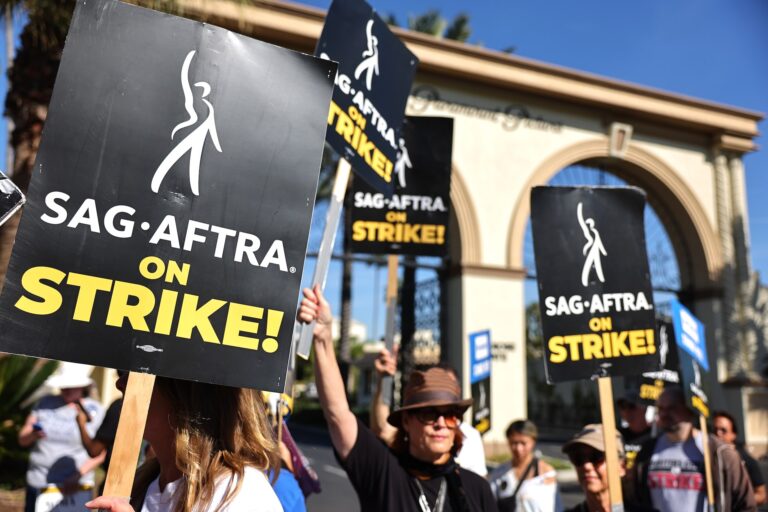
That boom has since died. In 2023, the 148-day Hollywood writers’ strike froze production and cut off the flow of projects into post-production. Then streaming companies started cutting costs and shelving shows.
By 2024, the slowdown had turned into layoffs and closures. In Quebec, more than 4,000 animation and VFX jobs have disappeared since late 2022, roughly half of the sector’s workforce in the province. Part of that shift traces back to May 2024, when Quebec raised its VFX tax credit rate to 25 per cent but capped eligible expenses at 65 per cent—a change that the industry said reduced the value of the incentive for large service contracts, which had previously been fully covered.
In August 2024, major VFX studio DNEG made major cuts to its workforce in Montreal as work slowed. Framestore, known for its work on Marvel franchises, also closed its Vancouver studio in mid-2024, citing an industry-wide drop in production. In early 2025, British Columbia responded by boosting credits to as much as 40 per cent.
Federal labour data shows there are more graphic arts and visual production workers in the Toronto region than available jobs, leaving many artists competing for a shrinking pool of contracts.
At the same time, Canada still lacks binding rules governing how creative work can be used to train commercial AI systems, leaving artists with limited leverage over how their skills and output are repurposed, according to the Canadian Centre for Policy Alternatives, an Ottawa-based think tank.
Against that backdrop, Meta’s hiring spree could be both a potential lifeline and an existential threat to VFX artists in Canada and around the world. Dennis Berardi, founder and president of Toronto-based VFX studio Mr. X, said studios and artists are being forced to confront AI at a moment when traditional work is harder to find.
“It’s a difficult topic. It’s sort of a philosophical challenge of our era,” Berardi said. “It’s not like you can ignore it or put your head in the sand. You have to deal with it.
At established studios, Berardi said, AI is largely being used to speed up technical and repetitive tasks, rather than replace artists outright. While he doesn’t know the specifics of Meta’s hiring push, he said there’s a difference between bringing artists into stable, full-time roles with benefits and signing them to short-term contracts to “train an AI to effectively replace them.”
“It’s highly unethical,” Berardi said. Ideally, he said, there’d be full transparency about how the AI system VFX artists are training for Meta will be used in the future.
One VFX artist who worked on the Meta project, and spoke to The Logic on condition of anonymity because they’ve signed a non-disclosure agreement, said much of the speculation on social media has stemmed from how the hiring is being handled rather than the work itself.
“Honestly, it’s not a big conspiracy,” the artist said. “It’s just the abnormal initiation process that is throwing people off, and lack of info due to secrecy.”
They likened the work Meta is doing with VFX artists to the creation of next-level social media filters as opposed to the sort of work professional studios do. The artist said most people involved viewed the work as typical contract labour. “Work is pretty standard: shot comes in, small team works on it,” they said. “I imagine in a year or something when they release the work people will be like, ‘Oh, that was it, what were we freaking out about?’”
The VFX industry is already attempting to draw lines on how, when and where AI gets used. In July, the creative team behind the Netflix show El Eternauta used generative AI to virtually collapse a building. Berardi’s Mr. X recently wrapped work on Guillermo del Toro’s Frankenstein. Berardi said del Toro had been clear that he didn’t want generative AI to be used to make any part of the film. “He’s trying to make a period piece, it’s handmade,” Berardi added. “He wants it to feel like it is a film for humans, by humans.”
That approach is easier to sustain on prestige films with large budgets and strong creative control, Berardi said. Lower-margin TV and streaming projects, by comparison, are under growing pressure to reduce costs and shorten post-production timelines.
A recent analysis by Roland Berger, a global management consultancy, found that AI-assisted tools are increasingly being built into VFX workflows to automate labour-intensive tasks that once kept huge teams of junior artists busy for months on end. The rise of AI could shrink demand for these kinds of roles and upend an entire industry.
To Cole, the idea of VFX artists training AI to do their work on a whim is an existential threat to the industry. “The job market is going to shrink,” he said. “They’re recruiting us to put ourselves out of business.”














