On a recent Tuesday afternoon, shoppers at a Loblaw grocery store in Toronto’s Annex neighbourhood gawked and pointed as a pair of robots trundled back and forth between the store and parking lot, delivering groceries to customers’ cars.
Skip to content


News
Meet ‘Dill’ and ‘Basil,’ the autonomous delivery carts Loblaw is testing in a Toronto store
Robots produced via partnership between Magna International and California firm Cartken
Dill, one of Loblaw’s two autonomous robots participating in a pilot, outside its grocery store in Toronto’s Annex neighbourhood in July 2023. Photo: Jonathan Got for The Logic
On a recent Tuesday afternoon, shoppers at a Loblaw grocery store in Toronto’s Annex neighbourhood gawked and pointed as a pair of robots trundled back and forth between the store and parking lot, delivering groceries to customers’ cars.
Dill and Basil—named after the herbs, of course—are the autonomous delivery carts at the heart of a new single-store pilot program Loblaw is running to test whether the robots can reduce the wait time for customers picking up online orders.
Talking Points
- Dill and Basil are autonomous delivery carts Loblaw is experimenting with to see if it can reduce wait times for customers picking up online orders
- The carts are the product of a partnership between Ontario-based auto-parts maker Magna International and California-based Cartken, a startup launched by ex-Google staffers
“This is in the very early stages of the pilot and we’re really just testing whether or not this type of technology is even feasible in a retail environment,” said Catherine Thomas, vice-president of communication, in an email to The Logic.
Onlookers saw the pair navigate the store’s aisles, maneuver around customers and staff, and carry loads heavier than a human could, all with mostly hands-free supervision. They don’t have arms, so a worker must still load them up with orders and then unload them in the parking lot.
The carts are the product of a partnership between Magna International, the Ontario-based auto-parts manufacturer, and Cartken, an Oakland, Calif.-based startup that a group of ex-Google staffers founded in 2019 in an effort to revolutionize short-distance transportation.
In the Loblaw pilot, Magna handles the hardware assembly and cart design, said Thomas, while Cartken is responsible for the software. Magna uses its vehicle-manufacturing, engineering and systems-integration experience “to help scale operations and bring these products to market,” Magna spokesperson Dave Niemiec said in an email. Cartken did not respond to a request for comment.
Related Articles

Dill and Basil are examples of Cartken’s Model E. They have multiple adjustable shelves and can carry up to 80 kilograms. It’s the first time this cart model has been tested in any real-world retail environment, Thomas said, and it’s too soon to say how well they work in stores.
Loblaw chose the Annex store for the pilot because it has a long path from the packaging area to the parking lot, Thomas said, meaning there are “more obstacles to test and learn from.” An employee initially trained the robots by moving them around the store so they could learn the layout, much like how a Roomba vacuum learns the constraints of the home it’s meant to tidy. Charging a robot’s battery overnight typically gives it enough power to last more than a day.
The pilot program is another example of how retailers are moving to automate their operations. “Retailers in Canada, they’ve been experimenting and dipping their toes into the water with respect to automation for a number of years now,” said Sunil Johal, professor in public policy and society at the University of Toronto.
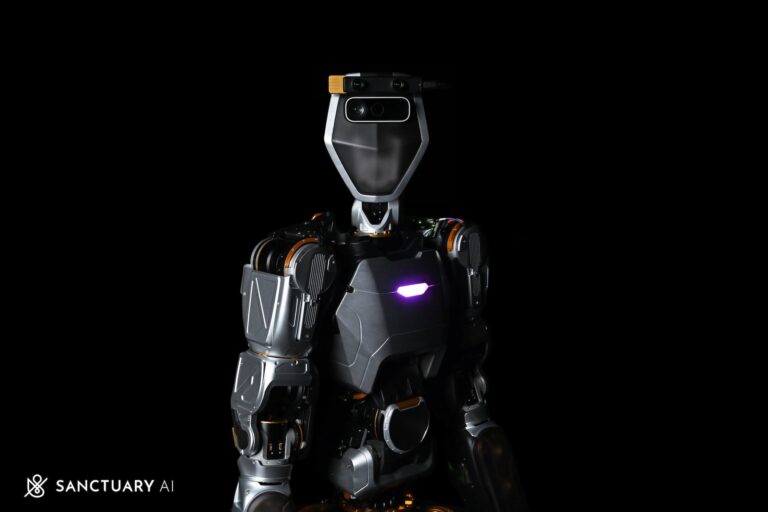
Some of that technology, such as self-checkouts, is now commonplace, he said, but other parts of the business—warehouse operations, in particular—are ripe for innovation. Amazon, for example, uses a variety of robotic tech in its warehouses to move packages, build pallets and move empty totes around. Meanwhile, several restaurants have deployed robots to bring diners their food, and in March, Sanctuary AI announced its humanoid robot had been working in a Mark’s clothing store in Langley, B.C., for a week, packing up merchandise, cleaning and folding clothes.
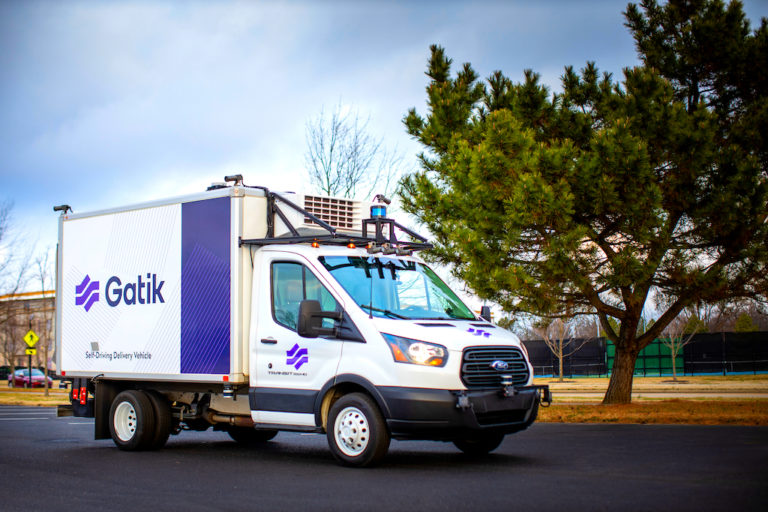
Loblaw has been experimenting with automation in other areas, too. Late last year, it announced it was operating fully driverless vehicles on one route near Toronto as part of its partnership with California-based Gatik. Loblaw-affiliated venture capital firm Wittington Ventures had previously invested in the startup.
The spread of automation often prompts concerns about job loss. A much-cited 2016 report from the Brookfield Institute found almost 42 per cent of the country’s workforce was at high risk of being affected by automation in the next two decades, especially retail salespeople, administrative assistants and food court attendants. A Statistics Canada report four years later determined nearly 11 per cent faced that risk.
To date, though, those predictions appear not to have come true. Johal chalks that up to the expense involved, as well as deployment issues around the technology, and simple consumer preference—shoppers, he said, don’t all love self checkouts.
Johal said the Loblaw pilot seems like a “good example of how technology can be a complement to human labour,” in that it eases the physical strain on a worker, who no longer has to carry heavy packages or push a loaded cart, but still requires a human for loading and unloading. The employer benefits, as well, as it’s likely to lose fewer workers to injuries and can free up people for other tasks, he said.
Thomas agreed with that assessment, saying the robots are intended to make staff more available to connect with customers. Meanwhile, the United Food & Commercial Workers union Local 1006A, which represents many of Loblaw’s retail workers, said protecting jobs from increased automation is one of its priorities and that it is monitoring the pilot closely.
The Toronto pilot began in mid-June and will run to the end of this month. Thomas said the company has not yet decided whether it will broaden the scope of the test and deploy more carts into more stores. However, Magna spokesperson Niemiec said that company is in talks with a number of other potential partners. “The pilot with Loblaw is one of many that we are currently running on a global scale.”
With files from Jonathan Got



Loading...
Thanks for sharing!
You have shared 5 articles this month and reached the maximum amount of shares available.
CloseThis account has reached its share limit.
If you would like to purchase a sharing license please contact The Logic support at [email protected].
CloseGift the full article!
You have gifted 0 article(s) this month and have 5 remaining.
Recipients will be able to read the full text of the article after submitting their email address. They will not have access to other articles or subscriber benefits.
Photo: Jonathan Got for The Logic
Most Popular This Week




In-depth, agenda-setting reporting
Great journalism delivered straight to your inbox.
Commentary
Carmichael: Canadian ignorance about India is a strategic weakness
Briefing
Aritzia shares pop after earnings rise 204%
First Nation in Alberta goes to court over fast-tracked oil pipeline
Chinese EV maker Geely Auto Group to launch in Canadian market in 2027
Best business newsletter in Canada
Get up to speed in minutes with insights and analysis on the most important stories of the day, every weekday.
Exclusive events
See the bigger picture with reporters and industry experts in subscriber-exclusive events.
Membership in The Logic Council
Membership provides access to our popular Slack channel, participation in subscriber surveys and invitations to exclusive events with our journalists and special guests.