Skip to content

 Lululemon has struggled with supply shortages and product quality issues. Earlier this week, it pulled a new line of tights, known as Get Low, due to complaints about them being see-through. Photo: Plexi Images/GHI/UCG/Universal Images Group via Getty Images
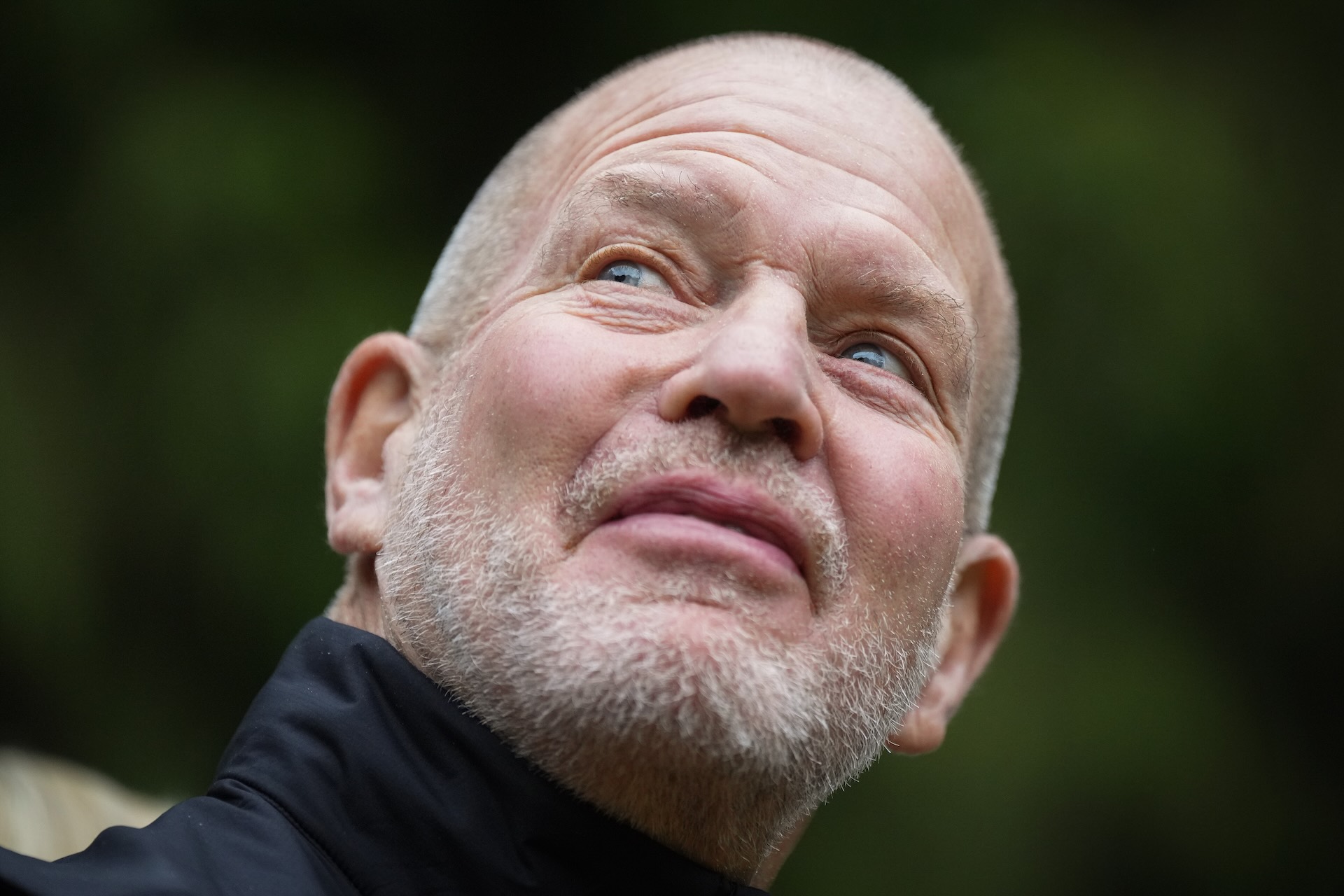 Lululemon founder Chip Wilson. Since resigning from the board in 2015, Wilson has become one of the firm’s fiercest critics. Last December, he launched a proxy battle to try and reshape the company’s board. Photo: The Canadian Press/Darryl Dyck

News
How Lululemon lost its way
Falling market share and a sinking stock price have pushed the athleisure giant into a power struggle that could decide its future
As more people buy their athleisure wear from firms such as California-based Alo and Vuori, Lululemon’s sales in North America have fallen. Photo: Sven Hoppe/Picture Alliance via Getty Images
See-through leggings. Unflattering butt seams. An attack ad placed in The Wall Street Journal by its founder. It’s been a rough few years for Lululemon. Now, a power struggle is playing out to decide the Vancouver-based athleisure giant’s future.
At stake are the fortunes of a behemoth of Canadian business, one that profited hugely from the pandemic-era penchant for athleisure wear—only for its stock to tank as botched product launches and increasing competition whittled away at its market share. Lululemon’s stock ended 2023 at an all-time high closing price of US$511.29 on the Nasdaq. It has since slumped, reaching as low as US$159.25 last September.
Talking Points
- Lululemon is searching for a new CEO after announcing Calvin McDonald will step down from the top post at the end of the month with no permanent successor in place
- The company is facing pressure from an activist investor and its founder to shake up its executive ranks as its stock price trends down and sales in North America falter
“Whenever the stock is down as much as Lululemon stock is down, there’s always pressure on the board to do something about it,” said David Swartz, senior equity analyst of consumer research at Morningstar. All eyes are on what happens next.
Much of the current drama engulfing Lululemon started last December when CEO Calvin McDonald announced he would step down after more than seven years. That prompted activist investor Elliott Investment Management, which has built a stake of more than US$1 billion in the firm, to push for the appointment of former Ralph Lauren executive Jane Nielsen to the top role. Seemingly unimpressed, Lululemon founder and outspoken critic Chip Wilson launched a proxy battle, asking shareholders to vote three of his nominees onto the board at the company’s next annual general meeting. Only then, he claims, should the board choose the right person to lead the firm. Lululemon did not respond to a request for comment.
As more people buy their athleisure wear from Lululemon rivals such as California-based Alo and Vuori, the company’s sales in North America have fallen. In its 2024 financial year, net revenue across the U.S., Canada and Mexico grew four per cent compared to the previous year, but comparable sales fell one per cent. In its most recent quarter, net revenue in North America fell by two per cent and comparable sales dropped by five per cent. Lululemon’s other markets, on the other hand, have performed strongly, though they make up a smaller portion of the company’s overall sales.
Related Articles


Competition is part of the problem—but so is the quality and availability of Lululemon’s products, according to Swartz. The company has struggled with supply shortages at times, he said, and some new items haven’t landed well with customers. Earlier this week, Lululemon temporarily pulled a new line of tights, known as Get Low, from its website after complaints about the leggings being see-through and difficult to squat in. Wilson cheekily called it “a new low” for the firm. Lululemon added the leggings back online shortly after, along with disclaimers about sizing and wearing skin-tone, seamless undergarments. The company faced similar issues in July 2024 when customers complained about an unflattering V-shaped seam on the back of a new line of leggings. Loyal Lululemon fans also grumble about quality issues online. In May 2024, chief product officer Sun Choe, left the company. There are no plans to replace her.
“There’s been a lack of really exciting new products in the last couple of years,” Swartz said. That’s not for want of trying. In March 2022, Lululemon tried to get into footwear and while it continues to sell sneakers the market is dominated by established brands. A bungled gamble on smart fitness led to a nearly US$443-million writeoff and layoffs.
Ultimately, Lululemon may have strayed too far from its roots, said Darrell Kopke, who was the firm’s sixth employee and helped oversee the company’s early expansion. He’s now a lecturer at the University of British Columbia’s Sauder School of Business and executive director of the Creative Destruction Lab, a non-profit that works with early-stage science and technology firms.
Kopke believes Lululemon was once a health and fitness company disguised as an apparel retailer. He looks back fondly on the days when there was no marketing department and Lululemon instead relied on local yoga instructors to showcase its products. The switch to paying superstars such as Formula 1 driver Lewis Hamilton to promote its clothing is, in his view, a mistake. Gen Z, which he believes is Lululemon’s most important demographic, is not being won over. “That’s bullshit,” he said of the company’s current marketing approach.
Kopke’s views echo those of Lululemon’s most outspoken critic: its founder. Wilson, who is still a significant shareholder but last held a role with the company in 2015 when he resigned from the board, has remained a thorn in Lululemon’s side. In 2016, he launched a website to criticize its leadership and strategy, then, the following year, took out a bus stop ad outside the company’s headquarters to encourage it to acquire Under Armour. Most recently, in October 2025, he took out a full-page ad in The Wall Street Journal headlined: “Lululemon: In a nosedive.” Wilson declined a request for comment.
Wilson has publicly called out what he perceives as Lululemon’s lack of succession planning and called on the board to find new directors who can then help it find a new leader. Last December, he launched a proxy battle, recommending that Marc Maurer, a former co-CEO of shoe manufacturer On; Laura Gentile, former chief marketing officer at ESPN; and Eric Hirshberg, a former CEO of gaming company Activision, be elected at the upcoming annual general meeting. Wilson has also reportedly asked for two current board members with ties to a private equity firm to resign. In a statement, Lululemon said that its board will review Wilson’s proposal and make a recommendation for how shareholders should vote.
Wilson’s concerns about the current board are valid, according to Matt McClintock, CEO of research firm M Squared Capital. McClintock said that much of the board has been in place for a long time and that some board members have overseen previous unsuccessful changes of CEO.
Wilson is trying to convince institutional shareholders, who will vote at the upcoming AGM, that change is needed, said McClintock. A date for the meeting is yet to be made public. Ultimately, Wilson may have left Lululemon with few options. While the company can make a recommendation for what shareholders should do, they ultimately hold the power to vote on Wilson’s proposal, McClintock said. He expects at least one, if not two, of Wilson’s nominees to be voted in.
One of the new-look board’s first jobs will likely be to appoint a new CEO. Wilson has some ideas for who this could be, too—though he’s yet to name them publicly. Elliott Investment Management, the activist investor that has acquired a significant stake in Lululemon, has put forward Jane Nielsen, former COO and CFO at Ralph Lauren. The investment management firm, which in 2024 led a successful shake-up of Starbucks’ C-suite, declined a request for comment.
Nielsen is a strong contender, according to Swartz, as she was responsible for much of Ralph Lauren’s recent turnaround and international growth. Growing internationally is a priority for Lululemon, too—of Lululemon’s 796 company-operated stores, as of Nov. 2, 2025, 165 were in mainland China, 112 were in the Asia-Pacific region, and 49 were spread across Europe, the Middle East and Africa. International revenue growth well outpaces that of North America.
Amidst the noise, Lululemon needs to decide if it wants an operator or a visionary, according to Glen Harrison, vice-president at Sigma Assessment Systems, which helps organizations with succession planning. The former would give the company a CEO who is focused on margins, quality and consistency, while the latter may bring some inspirational spark. Ideally, the new CEO would be a mix of both, he added, suggesting that the interim co-CEOs—CCO André Maestrini and CFO Meghan Frank—collectively fit the bill.
If Harrison were a betting man, he’d place his money on Elliott Investment Management’s candidate. No matter who gets the job, it’s unlikely they’ll come from within the company, he believes. Lululemon hasn’t appointed a CEO from within its ranks since Christine Day, who was promoted from executive vice-president of retail operations to the top role in June 2008. She first joined the company in January 2008. The company has had two CEOs since Day.
Candidates approached for the job will likely want to know how much power they will have, Harrison said. Will they have decision rights? Will they have autonomy to bring in their people? And how much will the board get involved? “I don’t think it’s going to be an easy job,” he said. “Regardless of who they choose, you’re going to have a pretty large stakeholder and shareholder that’s not happy.”



Loading...
Thanks for sharing!
You have shared 5 articles this month and reached the maximum amount of shares available.
CloseThis account has reached its share limit.
If you would like to purchase a sharing license please contact The Logic support at [email protected].
CloseGift the full article!
You have gifted 0 article(s) this month and have 5 remaining.
Recipients will be able to read the full text of the article after submitting their email address. They will not have access to other articles or subscriber benefits.
Photo: Sven Hoppe/Picture Alliance via Getty Images
Lululemon has struggled with supply shortages and product quality issues. Earlier this week, it pulled a new line of tights, known as Get Low, due to complaints about them being see-through.
Lululemon founder Chip Wilson. Since resigning from the board in 2015, Wilson has become one of the firm’s fiercest critics. Last December, he launched a proxy battle to try and reshape the company’s board.
Most Popular This Week




In-depth, agenda-setting reporting
Great journalism delivered straight to your inbox.
News
India wants to buy less Canadian uranium. Canada’s nuclear lab is helping
Briefing
First Nation in Alberta goes to court over fast-tracked oil pipeline
Chinese EV maker Geely Auto Group to launch in Canadian market in 2027
Get ready, because AI could break crypto security, says Vitalik Buterin
Best business newsletter in Canada
Get up to speed in minutes with insights and analysis on the most important stories of the day, every weekday.
Exclusive events
See the bigger picture with reporters and industry experts in subscriber-exclusive events.
Membership in The Logic Council
Membership provides access to our popular Slack channel, participation in subscriber surveys and invitations to exclusive events with our journalists and special guests.





