As small- and medium-sized retailers and restaurants look for extra funds to help them through a challenging economy, Lightspeed Commerce is doubling down on offering cash advances to its merchants.
Skip to content

News
Lightspeed doubles down on growing capital business amid banks’ credit crunch
‘There’s so much demand in today’s environment’: CFO
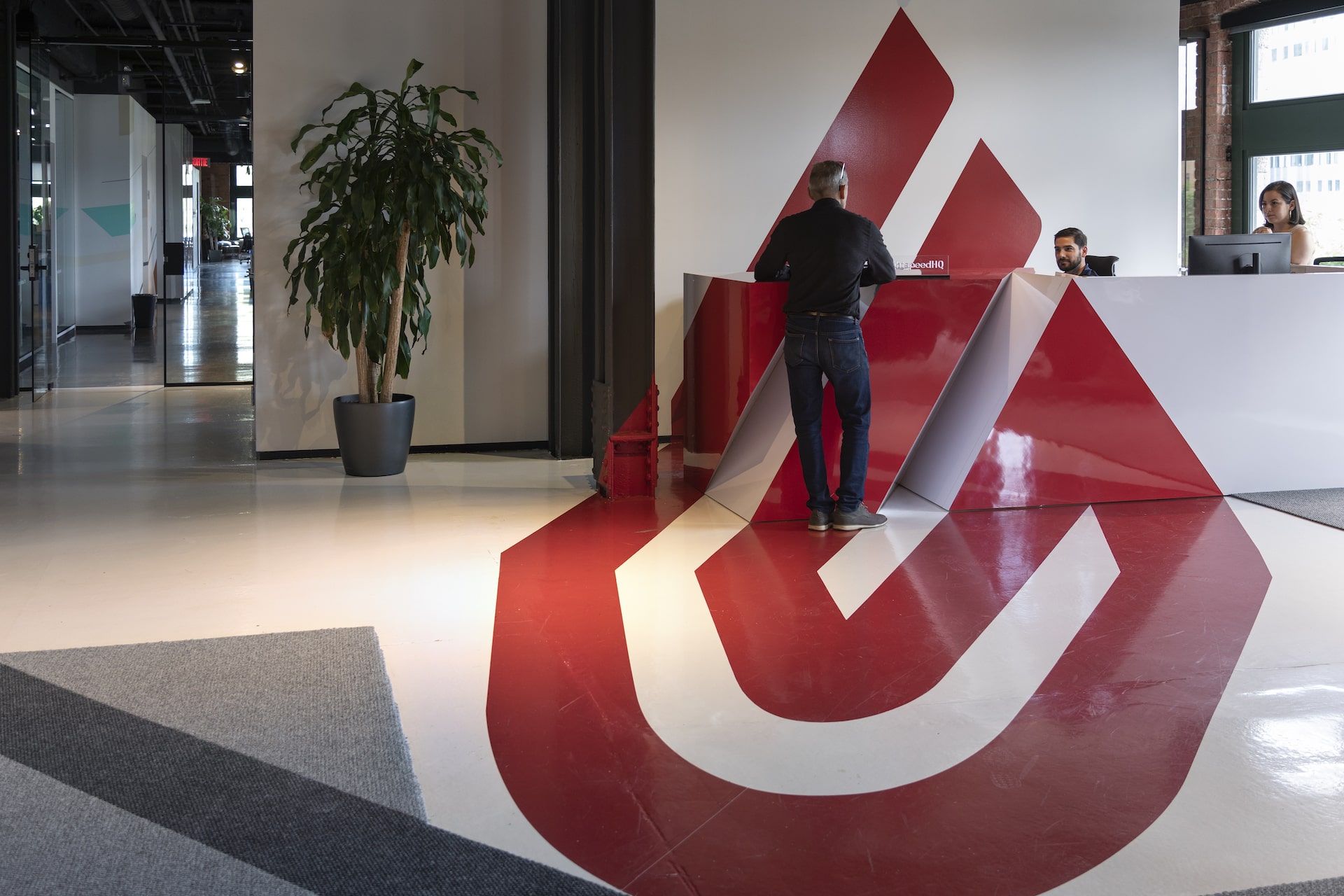
Lightspeed's office in Montreal, in June 2022. Photo: Roger Lemoyne for The Logic
As small- and medium-sized retailers and restaurants look for extra funds to help them through a challenging economy, Lightspeed Commerce is doubling down on offering cash advances to its merchants.
The Montreal-based fintech, which built its business on point-of-sale and payments software, has offered its merchants cash advances since 2021 under the banner Lightspeed Capital.
Talking Points
- Lightspeed has expanded its cash-advance offering to its merchants in the U.K., Australia, New Zealand and Quebec, and created a dedicated sales team to the service
- The company’s increased focus on its capital offering comes as U.S. banks exercise greater caution around lending
This summer, Lightspeed announced it was expanding Lightspeed Capital—previously available only to its customers in the U.S. and Canada, excluding Quebec—to Australia, New Zealand, the U.K. and the company’s home province.
In an interview with The Logic, Lightspeed chief financial officer Asha Bakshani said that in the future, the company would like to roll out its capital offering everywhere its Payments service is available, including Germany, France, the Netherlands and Belgium. The company currently has 160,000 retail and restaurant locations using its Payments software worldwide.
Lightspeed has also launched a new dedicated team of 10 to 15 salespeople to push the capital offering.
“There’s so much demand in today’s environment,” Bakshani said.
When Lightspeed determines one of its merchants has qualified for a cash advance, the company sends the merchant a prompt in the Lightspeed app telling them they’re eligible for an advance of a specified amount (the company has given individual merchants up to US$250,000). If the merchant accepts the offer, Lightspeed deposits the money in their bank account within a couple of days. Lightspeed then takes a percentage of the merchant’s daily sales volume to pay itself back.
Related Articles
Since Lightspeed has access to its Payments customers’ sales information, profit and losses and prior-year performance, it’s in a good position to spot who is credit worthy, and determine how much cash they should receive, Bakshani said.
The company is pushing its cash-advance product as small- and medium-sized businesses grapple with an uncertain economy. Same-store sales, the performance of an individual store over a given period of time compared to that same period in the past, have declined, particularly in retail, as consumers shop less due to inflation, Bakshani said. They’re spending money on groceries and gasoline, and less in discretionary areas.
Meanwhile, with interest rates high and in the wake of the collapse of Silicon Valley Bank and Signature Bank, banks have been more selective about lending money.
“They’re asking for tons of documentation. Restaurants and retailers have to fill out application after application. They need to visit the bank multiple times [and] they need to figure out how to repay the bank,” Bakshani said.
“When a merchant is with Lightspeed… they don’t need to fill anything out because they’re typically already a Payments customer and they’ve already done the paperwork.”
Lightspeed considers its merchant cash-advance offering different than a loan because it comes with a fixed price and no set repayment schedule.
Krunal Pastagia, director of Orilla, Ont.-based Lightspeed merchant Lucky Vape, told The Logic he has taken four cash advances for a combined total of $85,000, which have helped him load up on inventory during the busy summer months and expand with a new store.
“It’s easy [and] super fast,” he said. Pastagia also noted that not every bank will lend money to the vaping industry.
Though Lightspeed officially launched its cash-advance offering in 2021, Bakshani considers the company’s last fiscal year, which ended on March 31, as the first year it “had a fully-baked capital product.” Prior to that, the company spent time learning the business and the technology involved, after acquiring New York-based cloud-commerce platform ShopKeep for US$440 million in November 2020. ShopKeep had its own prominent capital business, Bakshani said, and the acquisition also helped Lightspeed gain a stronger foothold in the U.S.
“We have over US$800 million in the bank, and we’re using US$60 million last year to fund our merchants at very [low] default rates, and we’re making anywhere from 12 to 19 per cent [interest] over six to nine months,” Bakshani said.
“So when you think about the math, the gross margin comes in at 90 per cent because we’re using our own funds to fund this business. There’s very little cost to us doing this.”
Ottawa-based Shopify began offering its own merchant cash advance service in 2016, following in the footsteps of PayPal and Square. Bakshani considers it similar to Lightspeed’s own offering in functionality, but with the difference that a typical Lightspeed customer makes half a million to a million dollars in annual sales while Shopify’s customers have a smaller gross merchandise volume.
In a note published June 22, a team of National Bank analysts wrote that Capital is the “obvious next service” given Lightspeed’s ability to underwrite business owners based on their transactional data.
“The intention is to allocate $200 to $300 million on Capital which generates a mid-20 per cent annualized fee at 90 per cent gross margin and one per cent default rate,” they wrote.
“I think there’s a lot of potential in expanding service offerings but the focus short-term is going to be scaling Payments as that’s the low hanging fruit,” analyst Richard Tse, one of the note’s authors, told The Logic in an email. “Capital is closely tied to Payments as the latter provides data to assess credit risk; as such, it follows on the Payments opportunity.”
The service has the potential to be meaningful in the long-term, he added.
In Lightspeed’s Q4 2023 earnings call on May 18, CEO JP Chauvet told analysts that “Capital continues to be one of our highest growth margin businesses, even surpassing software, and still maintains very low default rates.”
Bakshani added that Lightspeed Capital had its strongest quarter to date, with revenue growth of over 200 per cent compared to the fourth quarter of last year, when it was still in its early beginnings.
The service is still new, so the percentage of customers using Capital “is very small right now” Chauvet said, but “the story around Capital is you need to surface the right offer at the right time. So we’re putting a lot of effort into that.”
Bakshani pointed out that competitors are giving out about one percent of their portfolio gross transaction value in merchant cash advances, while Lightspeed’s giving out well below that.
“If we were giving out one per cent, we would be giving out almost a billion dollars in advances and we would be making a few hundred million in gross profit just from doing that,” Bakshani said.
“It was less than a US$10 million business last year. If we were giving out what our competitors are, we would 10x the revenue. So that’s the opportunity that’s in front of us.”
The company next reports quarterly earnings on Thursday.



Loading...
Thanks for sharing!
You have shared 5 articles this month and reached the maximum amount of shares available.
CloseThis account has reached its share limit.
If you would like to purchase a sharing license please contact The Logic support at [email protected].
CloseGift the full article!
You have gifted 0 article(s) this month and have 5 remaining.
Recipients will be able to read the full text of the article after submitting their email address. They will not have access to other articles or subscriber benefits.
Photo: Roger Lemoyne for The Logic
Most Popular This Week




In-depth, agenda-setting reporting
Great journalism delivered straight to your inbox.
News
Adam Waterous proposes massive crude exports to Asia by rail through northern B.C.
Briefing
Rio Tinto gets nearly $165M in additional federal funds for Quebec aluminum
U.S. to lift tariffs on some Canadian products crucial to Maine: Collins
Carney warns of tech dependence after Starlink disruptions in Ukraine
Best business newsletter in Canada
Get up to speed in minutes with insights and analysis on the most important stories of the day, every weekday.
Exclusive events
See the bigger picture with reporters and industry experts in subscriber-exclusive events.
Membership in The Logic Council
Membership provides access to our popular Slack channel, participation in subscriber surveys and invitations to exclusive events with our journalists and special guests.






