The federal government will appoint an expert panel to suggest changes to its controversial proposal to regulate harmful online content, after criticisms that the plan gives too much power to law enforcement and Big Tech and could lead to censorship and the creation of a “surveillance state.”
Skip to content

News
Liberals turn to experts to fix online-harms proposal after public concerns about censorship, ‘surveillance state’
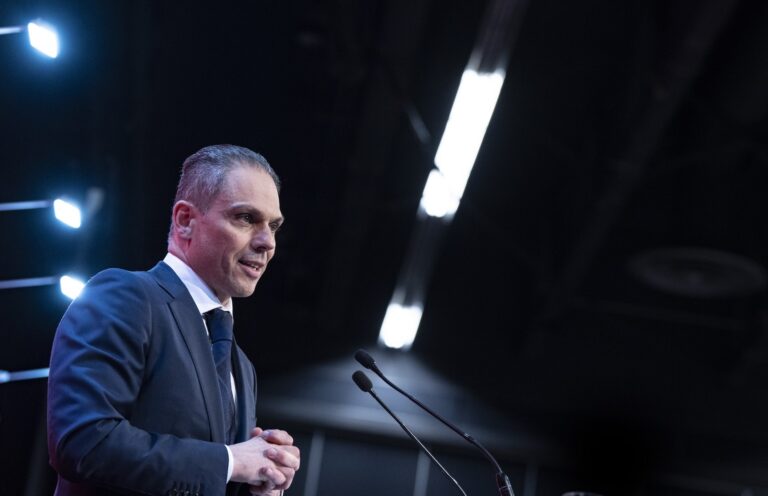
Canadian Heritage Minister Pablo Rodriguez speaks during a news conference, Wednesday, Feb. 2, 2022 in Ottawa. Photo: Adrian Wyld/The Canadian Press
The federal government will appoint an expert panel to suggest changes to its controversial proposal to regulate harmful online content, after criticisms that the plan gives too much power to law enforcement and Big Tech and could lead to censorship and the creation of a “surveillance state.”
The announcement came alongside Thursday’s release of a federal heritage ministry report analyzing over 9,200 written submissions made to the government as part of a public consultation on the proposal. While the report says most Canadians who took part in the consultation want harmful online content regulated in some way, they worry the Liberal government’s plan to tackle the issue is too broad.
Talking Point
Ottawa will appoint an expert panel to suggest changes to its proposal to regulate online harms after public consultations warned the plan it constituted “pre-publication censorship” and could contribute to a “surveillance state” by giving too much power to law enforcement and Big Tech.
In a release, the ministry acknowledged concerns about “unintended consequences if a thoughtful approach is not taken,” and announced it will take the advice of experts “in the coming weeks.” Though the statement did not name who will make up the panel, it said “the work will be carried out in a transparent and expedited manner, and the minister will propose a revised framework as soon as possible.”
“We will continue to engage stakeholders and Canadians in order to get this right,” Heritage Minister Pablo Rodriguez said in the same release.
In February 2021, The Logic first reported on then-heritage minister Steven Guilbeault’s plans to try to rein in hate and violence on social media platforms. The Liberals published a set of proposals in July, which, among other things, included the notion of creating a government digital-safety regime. The government invited members of the public to offer their thoughts through late September of last year. In the concurrent federal election campaign, the Liberals promised if re-elected they would introduce legislation in their first 100 days, a deadline they now appear unlikely to meet.
Meanwhile, the proposals drew high-profile criticism at home and internationally. In September, the University of Toronto-based research group Citizen Lab said the Liberals’ proposed approach would create “nothing short of a positive legal obligation to monitor users and moderate their content.”
Speaking to reporters on Monday about the government’s upcoming legislative agenda, Liberal House leader Mark Holland was cagey on the subject of its plans for online harms legislation, saying only that “more information” was coming.
The government’s proposals targeted five categories of online content: terrorist content, content that incites violence, hate speech, the non-consensual sharing of intimate images and child sexual-exploitation content. Among other measures, the proposed approach called for social media platforms to inspect content proactively and would compel “online communication service providers” to remove content from their service in Canada within 24 hours of being flagged.
Thursday’s report, called “What we heard: The government’s proposed approach to address harmful content online,” says respondents overwhelmingly opposed the government’s proposed approach. Core aspects of it, including the requirement that business-to-business cloud providers “proactively monitor” their customers’ networks “would have serious privacy and security risks” should they be implemented, according to many respondents.
Others critiqued the proposed requirement that platforms report information on their users to law enforcement and national security agencies, which they saw as a “significant risk to individuals’ right to privacy” without safeguards like judicial oversight. Coupled with the proactive monitoring obligation, which many said amounted to “pre-publication censorship,” the proposals “could result in the creation of a surveillance state, wherein the platforms are online monitoring appendages of law enforcement.”
Big Tech’s role in the policing of content was another major concern among the thousands of respondents. “Multiple submissions asserted that requiring platforms to proactively monitor and share user data would effectively deputize non-democratically accountable providers to make subjective determinations on criminal issues that they are not qualified to do,” the report reads. It also says many respondents warned the use of AI to ferret out harmful online content would result in a flurry of false positives as well as “discriminatory censorship of content produced by certain marginalized communities.”
Respondents also expressed concerns that in compelling platforms to proactively monitor their sites, “the regime would effectively force platforms to censor expression, in some instances prior to that expression being viewed by others.” As well, the government’s requirements that platforms preserve and report potentially harmful content would likely “lead to improper and excessive surveillance and storage of personal data.”
If the government requires platforms to collect and report demographic data about users, respondents warned it would essentially force platforms to collect and retain even more sensitive data, leaving Canadians vulnerable to breaches. “As such, these stakeholders recommended that any demographic data collection obligation be abandoned,” the report reads.
Some respondents said the proposed governmental authorities—the framework included a plan to create a new Digital Safety Commission, headed by a commissioner with the power to enforce the rules, including through inspections and raids—would be “incredibly broad, intrusive, and inviting of abuse,” and set an “unnecessary and unfortunate precedent for other regulatory regimes.”



Loading...
Thanks for sharing!
You have shared 5 articles this month and reached the maximum amount of shares available.
CloseThis account has reached its share limit.
If you would like to purchase a sharing license please contact The Logic support at [email protected].
CloseGift the full article!
You have gifted 0 article(s) this month and have 5 remaining.
Recipients will be able to read the full text of the article after submitting their email address. They will not have access to other articles or subscriber benefits.
Photo: Adrian Wyld/The Canadian Press
Most Popular This Week




In-depth, agenda-setting reporting
Great journalism delivered straight to your inbox.
News
National Bank CEO warns AI alone won’t give banks a lasting edge
Briefing
Canada and Ontario commit over $5B to support tariff-hit steel sector
Hackers will see cars as major targets in next 3 years, 83% of car-tech workers say
EA shutting down Edmonton studio BioWare
Best business newsletter in Canada
Get up to speed in minutes with insights and analysis on the most important stories of the day, every weekday.
Exclusive events
See the bigger picture with reporters and industry experts in subscriber-exclusive events.
Membership in The Logic Council
Membership provides access to our popular Slack channel, participation in subscriber surveys and invitations to exclusive events with our journalists and special guests.





