Skip to content

Canada's Business and Tech Newsroom

  • Professional Subscription
  • Partnerships & Advertising
  • Licensing & Syndication
Log In Subscribe
Welcome,
  • My Account
  • Log Out
  • Business
  • Tech
  • National
  • The Big Read
  • Briefings
  • Commentary
Search
Log In Subscribe
Welcome,
  • My Account
  • Log Out
News

Most Canadians look unfavourably on India, trade minister told

Listen Now
0:00
News

Most Canadians look unfavourably on India, trade minister told

Internal memo obtained by The Logic predicted pushback as the federal government pursues a trade deal with the world’s most populous country

By Joanna Smith
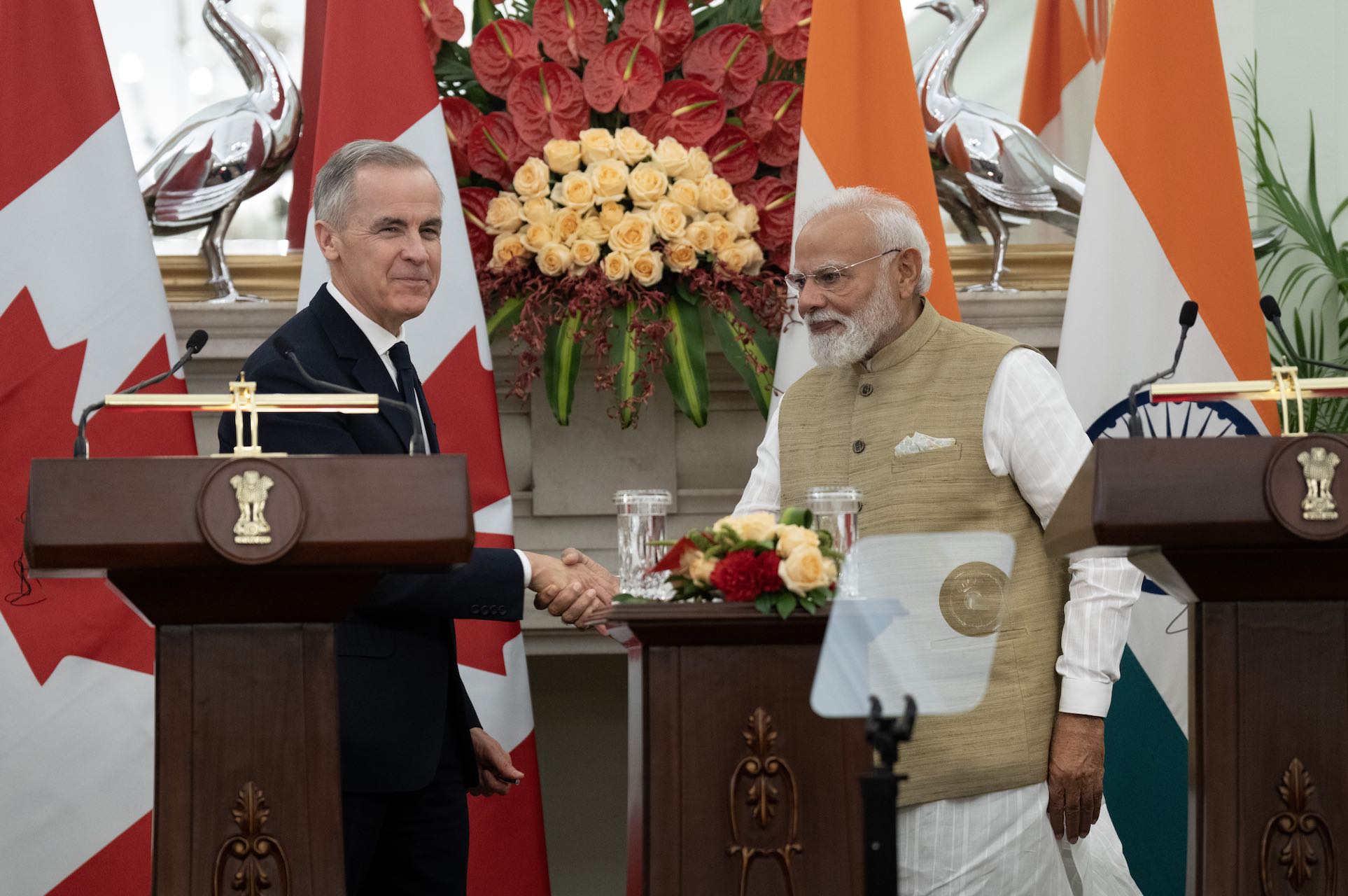
Mark Carney shaking hands with Narendra Modi behind a pair of lecterns. There are Canadian and Indian flags in the background, along with a large floral display.
Prime Minister Mark Carney and Indian Prime Minister Narendra Modi agreed during Carney's visit in March to speed up trade talks. Photo: The Canadian Press/Adrian Wyld
May 20, 2026
A A
A Small A Medium A Large
Share

Gift

Share

Listen Now
0:00

OTTAWA — Canada’s international trade minister was warned last year that most Canadians have an unfavourable view of India, making it especially important to seek updated public input before resuming trade talks with the South Asian giant, according to a newly released internal memo.

“Critical and negative views from stakeholders can therefore be expected, especially from civil society organizations, as well as Canadian businesses already familiar with India’s [redacted],” said the memo to Maninder Sidhu from the top bureaucrat on his file. The Logic obtained the document through the Access to Information Act.

Talking Points

  • Global Affairs Canada braced for scrutiny ahead of launching public consultations on the resumption of trade talks with India, according to a memo The Logic obtained through the Access to Information Act
  • A trade deal with India has increased in strategic importance for Canada amid the push to diversify exports, including energy, in response to the U.S. trade war

The memo signed Dec. 3 by Rob Stewart, who was then deputy trade minister, recommended Sidhu conduct public consultations on trade deals with India and the South American trade bloc known as Mercosur, which in India’s case Ottawa did between Dec. 13 and Jan. 27 of this year. 

About a month later, Prime Minister Mark Carney and India’s Prime Minister Narendra Modi met in New Delhi, where they agreed to speed up talks in the hopes of reaching a deal by the end of this year.

Related Articles
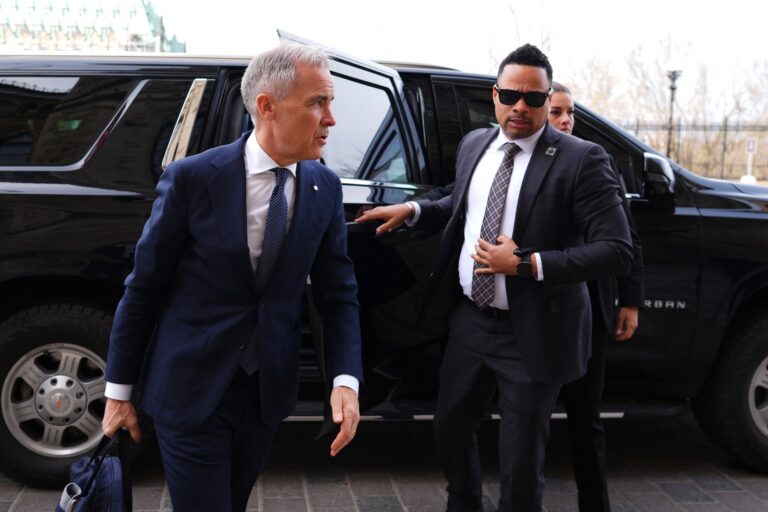
Mark Carney emerges from a black van. A man wearing a dark suit and sunglasses stands behind him.

Canada tilts trade strategy toward investment as U.S. trade tensions persist

By Joanna Smith
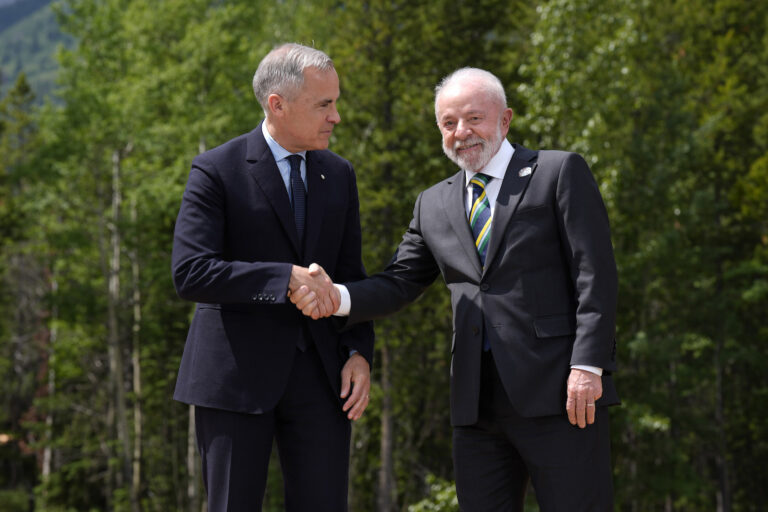
A shot of Mark Carney shaking hands with Lula, the Brazilian president, against a backdrop of trees and mountains.

Trade deal with Mercosur would be a win for Canadian pharma, says Brazilian envoy

By Joanna Smith

It is standard for the federal government to ask Canadians for their views before entering trade negotiations, but the choice to get back to the table with India marked a major thaw in the bilateral relationship after a deep and bitter freeze.

The two countries had begun negotiating a Comprehensive Economic Partnership Agreement in 2010, but talks had been on ice since 2023, as then-prime minister Justin Trudeau accused India’s government of plotting the killing of a Canadian Sikh activist in B.C. earlier that year. India denied involvement.

The standoff appeared to ease only after Trudeau left office—and after U.S. President Donald Trump announced tariffs on countries around the world. Last June, Carney and Modi met at the G7 summit in Kananaskis, Alta., where they agreed to restore diplomatic ties. In November, they announced that trade talks would resume.

India, which has historically been strongly protectionist, has meanwhile been securing or advancing trade agreements with others, including the European Union, the United Kingdom and Australia. It is also negotiating a deal with the United States, although there have been some bumps in the road.

In a report published in March shortly after Carney’s visit to Mumbai and New Delhi, the Asia Pacific Foundation of Canada said trade between Canada and India was already performing below expectations and Canada is now at risk of getting crowded out by others. “Without preferential access,” the think tank wrote, “Canadian exporters would risk a gradual erosion of their competitiveness in one of the world’s fastest-growing markets.”

The memo from Global Affairs Canada, however, indicated public sentiment was not yet there. It referred to an October 2025 survey by Angus Reid, which suggested 54 per cent of Canadians had an unfavourable view of India. Thirty-five per cent of respondents said Canada should approach India with caution, while 23 per cent said the world’s most populous country should be treated as a potential threat to Canadian interests—or an enemy. (Another figure in that online survey, done in partnership with the Asia Pacific Foundation, that was not included in the memo: Some 46 per cent said Canada should view the U.S. as a potential threat or enemy.)

Either way, Global Affairs Canada said it was high time to hear from Canadians again.

“Although publication consultations have been conducted in the past for negotiations with each of these partners, a significant amount of time has elapsed between the last set of negotiations, and the global trade landscape has changed, including for Canada,” said the document, referring to India and Mercosur, which includes Argentina, Brazil, Paraguay and Uruguay.

For its public consultations on the proposed Canada-India deal, the government received 624 submissions, according to a summary published in April. The agriculture and agri-food sector was “highly engaged,” flagging India’s high tariffs, sanitary measures and other regulations as barriers, the summary said. Automakers called for reciprocal market access, and strong rules of origin reflecting the North American integration of their industry. They also called for recognition of Canadian and U.S. safety standards and removal of discriminatory taxes and regulations.

In digital services, there were calls for protection for intellectual property, as well as the need to maintain Canada’s self-regulation system, especially in engineering.

Most submissions were more concerned with human rights than market opportunities. A letter-writing campaign organized by the World Sikh Organisation of Canada was responsible for 398 submissions—64 per cent of the total. They urged Ottawa to refuse talks until allegations of foreign interference by India are addressed. In a media briefing ahead of Carney’s visit to India in February, a senior government official speaking on the condition they not be named downplayed the threat of foreign interference from that country. The Canadian Security Intelligence Service later said its threat assessment had not changed.

Vina Nadjibulla, vice-president of research and strategy at the Asia-Pacific Foundation, said much has evolved since Ottawa last consulted with Canadians on a trade deal with India in 2009. Back then, the government highlighted the fact that the South Asian country was projected to become the third-largest economy in the world by 2050. Now, India is set to reach that milestone by 2030. The federal government has said the Canada-India agreement could more than double bilateral trade to $70 billion by the end of this decade.

Gift the full article

There is also a greater focus on energy, as India’s population growth is expected to boost demand 70 per cent by 2040. The memo suggested the Conservatives might push for the agreement to boost exports of Canadian oil and gas, especially as India is trying to reduce its reliance on Russia. In January, Natural Resources Minister Tim Hodgson and his Indian counterpart agreed that India could offer Canada “a natural and symbiotic partnership” as it looks to increase exports of liquefied natural gas, crude oil and liquefied petroleum gas to Asia. In March, Saskatoon-based Cameco signed a $2.6-billion deal to supply uranium to India.

“The world is in a very different place,” Nadjibulla said in an interview. “Canada’s diversification imperatives are now much more urgent and India is a much more powerful economy now.”


#Canada-India trade #economy #India #international trade #National

Loading...

Thanks for sharing!

You have shared 5 articles this month and reached the maximum amount of shares available.

Close
This account has reached its share limit.

If you would like to purchase a sharing license please contact The Logic support at [email protected].

Close
Want to share this article?

Upgrade to all-access now

Close
Gift the full article!

You have gifted 0 article(s) this month and have 5 remaining.

Copy link and gift
Copy Link
Email to a friend
Send Email
Gift on Social Media

Recipients will be able to read the full text of the article after submitting their email address. They will not have access to other articles or subscriber benefits.

Mark Carney shaking hands with Narendra Modi behind a pair of lecterns. There are Canadian and Indian flags in the background, along with a large floral display.

Photo: The Canadian Press/Adrian Wyld

Most Popular This Week

News

Bay Street backs Canada’s AI strategy, but warns the devil is in the details

By Anita Balakrishnan and Chaimae Chouiekh
A diptych showing Mark Carney on the left, and CIBC CEO Harry Culham on the right.
News

Diversifying trade requires banks to take bigger risks, official advised Carney before CIBC meeting

By Joanna Smith
The image shows the inside of Toronto Stadium on a sunny day. The rows of seats are empty; an empty green field is visible.
News

Toronto and Vancouver aren’t getting a World Cup bookings boom

By Chaimae Chouiekh
A yellow ambulance is pictured outside of a hospital in Montreal. A red sign in the foreground reads, “Urgence / Emergency.”
Commentary: Quebec Ink

Quebec just found out what not having digital sovereignty really means

By Martin Patriquin

In-depth, agenda-setting reporting

Great journalism delivered straight to your inbox.

Evan Solomon in a suit and tie, gesturing with his left hand as he speaks, Several people sit and stand behind him looking in other directions. There's an orange curtain behind him lit from above.
News

Canadians could demand firms delete their personal data under new privacy bill

By Laura Osman

Briefing

IPOs need to be easier for startups if Canada wants 1,000 Shopifys, Champagne says

By Anita Balakrishnan   |   Jun 15, 2026 | 3:05 PM ET

Nuvei to acquire cross-border payments company Payoneer for US$2.75B

By Claire Brownell   |   Jun 15, 2026 | 3:01 PM ET

Joly to visit carmakers on 10-day trip to China and Japan

By David Reevely   |   Jun 15, 2026 | 2:59 PM ET

Best business newsletter in Canada

Get up to speed in minutes with insights and analysis on the most important stories of the day, every weekday.

Exclusive events

See the bigger picture with reporters and industry experts in subscriber-exclusive events.

Membership in The Logic Council

Membership provides access to our popular Slack channel, participation in subscriber surveys and invitations to exclusive events with our journalists and special guests.

Recent Popular Stories

Commentary: Quebec Ink

Quebec just found out what not having digital sovereignty really means

By Martin Patriquin   |   Jun 8, 2026
A yellow ambulance is pictured outside of a hospital in Montreal. A red sign in the foreground reads, “Urgence / Emergency.”
News

OMERS investment chief departs for Singapore’s Temasek

By Chaimae Chouiekh   |   Jun 10, 2026
News

Diversifying trade requires banks to take bigger risks, official advised Carney before CIBC meeting

By Joanna Smith   |   Jun 9, 2026
A diptych showing Mark Carney on the left, and CIBC CEO Harry Culham on the right.
News

Canada’s surprise plan to buy Saab command jets leaves competitors seeking answers

By David Reevely   |   May 29, 2026
A closeup of a scale model of a jet covered in pixellated camouflage, with sensor equipment attached to the top of its fuselage. There are civilians and uniformed military personnel milling in the background.
The Big Read

We found every data centre in Canada

By Murad Hemmadi, David Reevely, Aleksandra Sagan, Chaimae Chouiekh, Martin Patriquin and Catherine McIntyre   |   Apr 8, 2026
Four vertical slices of aerial view photos. From left, a building in downtown Toronto housing several data centres, a picture of the Albertan wilderness where the proposed Wonder Valley data centre would go, a lit-up QScale data centre in Quebec, and a data centre at a Hydro-Quebec dam.
News

Toronto and Vancouver aren’t getting a World Cup bookings boom

By Chaimae Chouiekh   |   Jun 8, 2026
The image shows the inside of Toronto Stadium on a sunny day. The rows of seats are empty; an empty green field is visible.

Canada's most influential executives and policymakers are reading The Logic

  • CPP Investments
  • Sun Life Financial
  • C100
  • Amazon
  • Telus
  • Mastercard
  • bdc
  • Shopify
  • Rogers
  • RBC
  • General Motors
  • MaRS
  • Government of Canada
  • Uber
  • Loblaw Companies Limited
logic-logo

Canada's Business and Tech Newsroom

100% human-crafted journalism

Newsroom

  • News Tips
  • AI Policy
  • Editorial Disclosures
  • Story Pitches

Company

  • About Us
  • Terms of Service
  • Privacy Statement
  • Corporate Information

Contact

  • Contact Us
  • Advertise
  • FAQs
  • Work at The Logic

© 2026 The Logic Inc. All Rights Reserved.

Trusted by leaders

Error

Account creation failed.

Please email us at [email protected].

Create Account

[wppb-register form_name=”cozmo-registration-form-for-modal”]

I do have an account
Login
or

[wppb-login]

I don’t have an account