Skip to content

Canada's Business and Tech Newsroom

  • Professional Subscription
  • Partnerships & Advertising
  • Licensing & Syndication
Log In Subscribe
Welcome,
  • My Account
  • Log Out
  • Business
  • Tech
  • National
  • The Big Read
  • Briefings
  • Commentary
Search
Log In Subscribe
Welcome,
  • My Account
  • Log Out
News

Data sovereignty can’t mean shutting out U.S. tech giants, says IBM exec

Listen Now
0:00
News

Data sovereignty can’t mean shutting out U.S. tech giants, says IBM exec

Government views on digital independence are “maturing” beyond knee-jerk suspicion of U.S. providers, says IBM Canada’s chief technical officer

By David Reevely
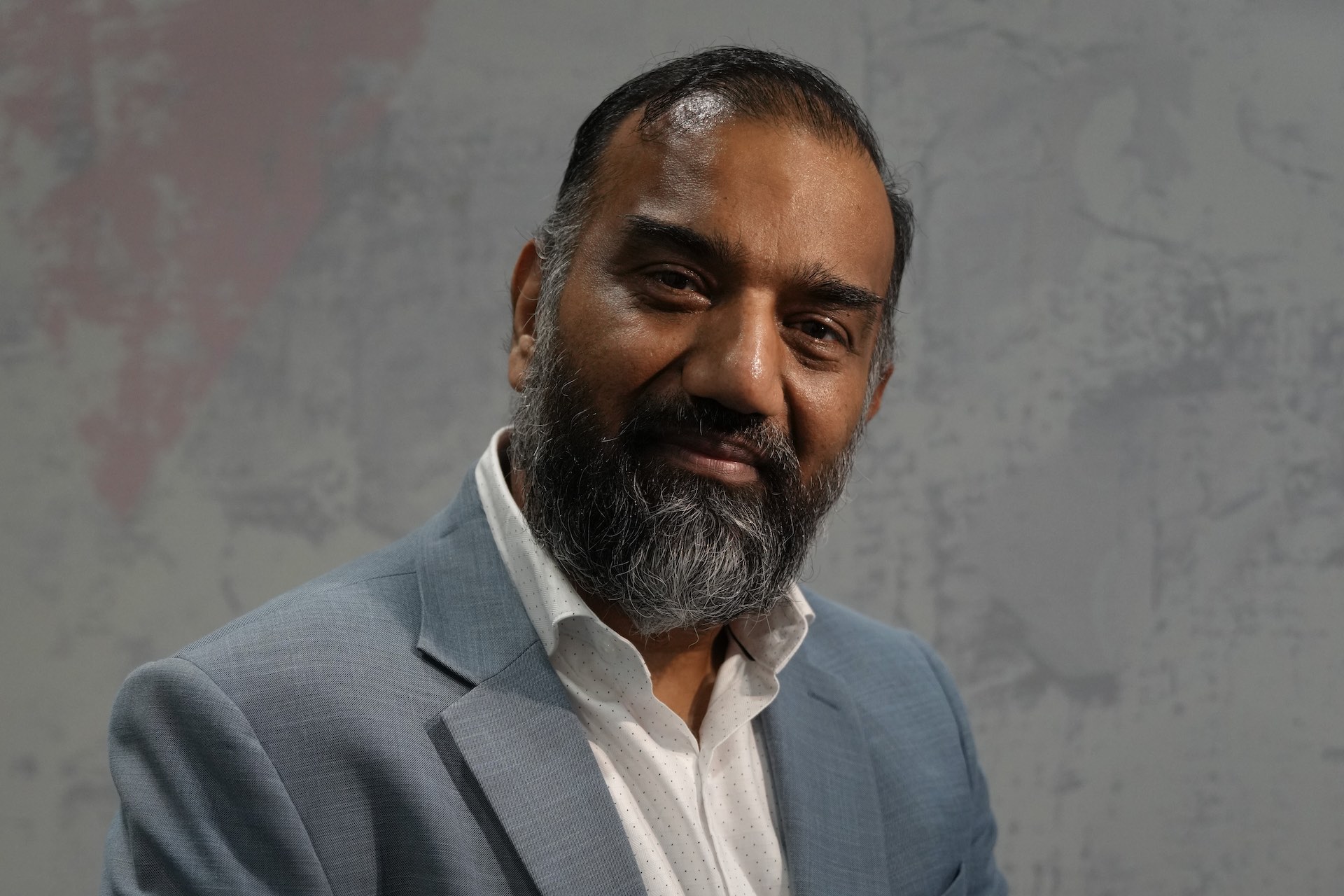
A portrait of Manav Gupta. He's wearing a grey suit with a white, open-necked shirt.
Manav Gupta, the CTO of IBM Canada, warns against simplistic solutions to data sovereignty. Photo: The Canadian Press/Chris Young
Mar 23, 2026
A A
A Small A Medium A Large
Share

Gift

Share

Listen Now
0:00

OTTAWA — American hyperscalers can be trustworthy holders of critical Canadian data, IBM Canada’s chief technology officer says—an idea that he believes he’s persuading governments to adopt.

Political leaders’ views on what digital sovereignty means are “maturing,” after months of discussions about what assuring the sovereignty of Canada’s data and key digital systems really means, says Manav Gupta.

Talking Points

  • Canadians need cloud computing from U.S. providers, says IBM Canada CTO Manav Gupta, and politicians have come around to that after a knee-jerk impulse to try to go it alone in the face of Donald Trump’s attacks
  • The options go far beyond insisting that Canadian data stay in Canada, including deep encryption and kill switches for connections to hyperscalers’ global clouds

“Sovereignty does not equal solitude,” Gupta says, echoing a phrase much employed by AI Minister Evan Solomon. In an interview with The Logic, Gupta will use variations of the expression four times.

Since U.S. President Donald Trump’s started threatening Canada’s independence and attacking its economy, governments have been struggling with how to make sure critical digital systems aren’t vulnerable to a sudden presidential whim to shut them down or crack them open and see what Canadian secrets they might contain.

Related Articles
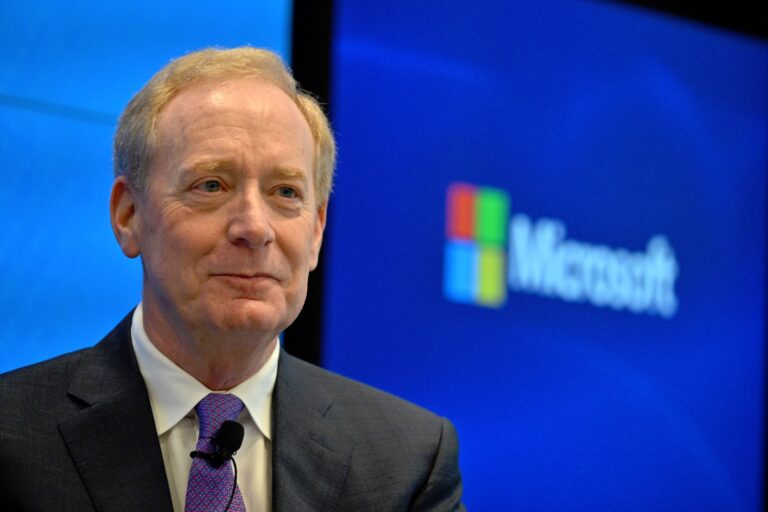
A close-up of Brad Smith. He's wearing a suit, and a purple tie with a remote mic attached to it. The Microsoft logo is visible on a large screen behind him.

Microsoft to spend $7.5B on data centres in sovereignty-focused pitch to Canada

By David Reevely
Prime Minister Justin Trudeau, wearing a grey suit and blue tie, speaks at a lectern before a backdrop of onlookers in a large room with fluorescent lights and a white ceiling

Canada puts $59.9M into IBM’s $1B Quebec semiconductor packaging expansion

By Murad Hemmadi

For cloud-computing providers that do business with the Canadian government, including IBM, that’s meant rushing to convince leaders that their services are as secure from foreign government intrusion as Canadians could want.

It’s been a slog, says Gupta. “The belief was ‘sovereignty’ means ‘sovereign right down to the grain of sand that goes into a chip,’ which probably is a step too far.”

Canada can’t manufacture, assemble and operate every component in a data centre that runs even the most important government systems, and developing all those capabilities isn’t realistic, he says.

The government itself acknowledged as much in an October position paper on digital sovereignty: “It is impossible for the [Canadian government] to obtain a state of complete digital sovereignty, known as digital autonomy, due to the absolute interconnected nature of the digital world,” the paper said.

What appropriate protections do look like is harder to say, though, especially when one of the most worrying threats is from the country that’s home to the world’s largest cloud computing companies.

Gupta, a “loud and proud Canadian,” has been IBM Canada’s chief technology officer since 2021, and he’s also loud and proud about that. The company’s deep roots in Canada differentiate it from Google or Amazon, he says: “We are unlike other hyperscalers or other digital giants.”

IBM has been in Canada for more than a century—its Canadian subsidiary was the first part of the company to use the name “International Business Machines”—and employs thousands of people in more than a dozen Canadian offices and labs. It has a key semiconductor plant in Quebec, the largest of its kind in North America.

But it’s still an American company, subject to American law. That includes the CLOUD Act, which entitles U.S. authorities to data held by American tech companies, no matter where in the world it happens to be kept.

Keeping Canadian data in Canada is table stakes, in Gupta’s view, but by itself data residency—where the servers physically are—is an “infantile way of thinking about sovereignty.”

IBM can build cloud services that the company itself couldn’t get into without Canadian authorization, Gupta says. Data can sit on IBM servers but be protected by encryption to which IBM doesn’t have the keys. The United States—or another government—could demand it, but so what?

“If they do not have the means to decrypt the data, that data becomes worthless,” he says.

Microsoft president Brad Smith visited Canada in December to make his own company’s pitch for Canadians’ trust, which included the option of encrypting customer data even while Microsoft servers are crunching it and a promise to “challenge any government demand for Canadian government or commercial customer data where we have a legal basis for doing so.”

Gupta goes a step beyond, saying IBM can offer systems that are part of its global cloud but that can be severed from it on command.

A customer, like the federal government, can “effectively have an air-gapped environment that no other nation-state, no other foreign actor, can touch,” but only when that customer needs it, Gupta says.

Gift the full article

Permanently isolating data centres from the rest of the internet is very possible—and appropriate for the most sensitive systems—but it means giving up many of the benefits of cloud-based computing, Gupta says. Those include economies of scale, redundancy, having extra computing power available when it’s needed and constant attention from some of the best technical people around.

That’s the core problem the government, like any entity holding masses of important data, has to contend with. The more separated from the global cloud a system is, the more resources the owner has to put into operating it and the less resilient it’ll be, Gupta says: “Ultimately, sovereignty or exclusion is going to come at the detriment of the business model.”


#cloud computing #data centres #digital sovereignty #economy #IBM #Manav Gupta #Tech

Loading...

Thanks for sharing!

You have shared 5 articles this month and reached the maximum amount of shares available.

Close
This account has reached its share limit.

If you would like to purchase a sharing license please contact The Logic support at [email protected].

Close
Want to share this article?

Upgrade to all-access now

Close
Gift the full article!

You have gifted 0 article(s) this month and have 5 remaining.

Copy link and gift
Copy Link
Email to a friend
Send Email
Gift on Social Media

Recipients will be able to read the full text of the article after submitting their email address. They will not have access to other articles or subscriber benefits.

A portrait of Manav Gupta. He's wearing a grey suit with a white, open-necked shirt.

Photo: The Canadian Press/Chris Young

Most Popular This Week

A diptych showing Mark Carney on the left, and CIBC CEO Harry Culham on the right.
News

Diversifying trade requires banks to take bigger risks, official advised Carney before CIBC meeting

By Joanna Smith
The image shows the inside of Toronto Stadium on a sunny day. The rows of seats are empty; an empty green field is visible.
News

Toronto and Vancouver aren’t getting a World Cup bookings boom

By Chaimae Chouiekh
A yellow ambulance is pictured outside of a hospital in Montreal. A red sign in the foreground reads, “Urgence / Emergency.”
Commentary: Quebec Ink

Quebec just found out what not having digital sovereignty really means

By Martin Patriquin
An image of Mark Carney standing in front of a red podium with the words "AI for All / L'IA pour tous." He is wearing a suit and tie. In the background, people wearing scrubs and white coats are visible.
Special Report

Canada’s new AI strategy sets lofty goals for adoption and growth

By Murad Hemmadi and Laura Osman

In-depth, agenda-setting reporting

Great journalism delivered straight to your inbox.

An image of Tiff Macklem standing in a dimly-lit hallway, wearing a blue suit and glasses. He is clasping his hands in front of him and looking ahead.
Commentary

Carmichael: Tiff Macklem can’t save you

By Kevin Carmichael

Briefing

Canada to publish list of imports at risk of being made with forced labour

By Joanna Smith   |   Jun 12, 2026

TMX Group acquires RAFI Indices for $683M

By Anita Balakrishnan   |   Jun 12, 2026

Ikea invests in Toronto food startup NS/TX Industries’ US$10.5M fundraise

By Catherine McIntyre   |   Jun 12, 2026

Best business newsletter in Canada

Get up to speed in minutes with insights and analysis on the most important stories of the day, every weekday.

Exclusive events

See the bigger picture with reporters and industry experts in subscriber-exclusive events.

Membership in The Logic Council

Membership provides access to our popular Slack channel, participation in subscriber surveys and invitations to exclusive events with our journalists and special guests.

Recent Popular Stories

Commentary: Quebec Ink

Quebec just found out what not having digital sovereignty really means

By Martin Patriquin   |   Jun 8, 2026
A yellow ambulance is pictured outside of a hospital in Montreal. A red sign in the foreground reads, “Urgence / Emergency.”
News

OMERS investment chief departs for Singapore’s Temasek

By Chaimae Chouiekh   |   Jun 10, 2026
The Big Read

We found every data centre in Canada

By Murad Hemmadi, David Reevely, Aleksandra Sagan, Chaimae Chouiekh, Martin Patriquin and Catherine McIntyre   |   Apr 8, 2026
Four vertical slices of aerial view photos. From left, a building in downtown Toronto housing several data centres, a picture of the Albertan wilderness where the proposed Wonder Valley data centre would go, a lit-up QScale data centre in Quebec, and a data centre at a Hydro-Quebec dam.
News

Diversifying trade requires banks to take bigger risks, official advised Carney before CIBC meeting

By Joanna Smith   |   Jun 9, 2026
A diptych showing Mark Carney on the left, and CIBC CEO Harry Culham on the right.
News

Canada’s surprise plan to buy Saab command jets leaves competitors seeking answers

By David Reevely   |   May 29, 2026
A closeup of a scale model of a jet covered in pixellated camouflage, with sensor equipment attached to the top of its fuselage. There are civilians and uniformed military personnel milling in the background.
The Big Read

ApplyBoard faces a reckoning as Canada’s immigration boom turns into a bust

By Claire Brownell and David Reevely   |   May 27, 2026

Canada's most influential executives and policymakers are reading The Logic

  • CPP Investments
  • Sun Life Financial
  • C100
  • Amazon
  • Telus
  • Mastercard
  • bdc
  • Shopify
  • Rogers
  • RBC
  • General Motors
  • MaRS
  • Government of Canada
  • Uber
  • Loblaw Companies Limited
logic-logo

Canada's Business and Tech Newsroom

100% human-crafted journalism

Newsroom

  • News Tips
  • AI Policy
  • Editorial Disclosures
  • Story Pitches

Company

  • About Us
  • Terms of Service
  • Privacy Statement
  • Corporate Information

Contact

  • Contact Us
  • Advertise
  • FAQs
  • Work at The Logic

© 2026 The Logic Inc. All Rights Reserved.

Trusted by leaders

Error

Account creation failed.

Please email us at [email protected].

Create Account

[wppb-register form_name=”cozmo-registration-form-for-modal”]

I do have an account
Login
or

[wppb-login]

I don’t have an account








