OTTAWA — General Motors’ decision to stop making BrightDrop electric delivery vans at its Ingersoll, Ont., plant has delivered another blow to Canada’s auto industry, which is already grappling with weak demand and President Donald Trump’s drive to move auto production to the United States.
Skip to content


News
GM pulls the plug on Canadian EVs as Trump changes the game
Citing sluggish demand and shifting EV policies in the U.S., the automaker is abandoning BrightDrop production in Ontario—or anywhere
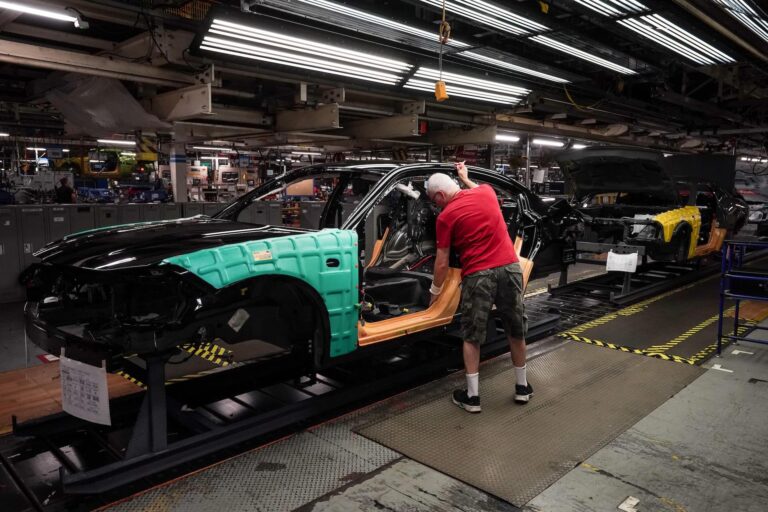
A worker adds a muffler to the sub-assembly at the CAMI Automotive Inc. plant assembly line in Ingersoll, Ontario, on Monday, Nov. 9, 2009. Photo: Norm Betts/Bloomberg via Getty Images
OTTAWA — General Motors’ decision to stop making BrightDrop electric delivery vans at its Ingersoll, Ont., plant has delivered another blow to Canada’s auto industry, which is already grappling with weak demand and President Donald Trump’s drive to move auto production to the United States.
The news came just days after GM paused future investments in another EV project in Quebec. Last week, Stellantis said it would move Jeep Compass production from its plant in Brampton, Ont., to Illinois—part of a US$13 billion plan to make more of its vehicles in the U.S. GM Canada is also planning to cut one of its shifts at its Oshawa, Ont., plant in January. The Ford Motor plant in Oakville, Ont., has been on hiatus since last year for retooling to make F-Series Super Duty pickup trucks. (It had earlier planned to retool to make EVs.) The company said that work is still going ahead, despite new 25 per cent tariffs on medium- and heavy-duty trucks coming into effect Nov. 1.
Talking Points
- GM is ending production of the BrightDrop EV delivery vans at the CAMI assembly plant in southwestern Ontario, citing the end of the U.S. EV tax credit and other regulatory changes
- Federal Industry Minister Mélanie Joly said Ottawa, Ontario and GM would create a “response group” aimed at finding a new model for the plant to work on
Ontario’s auto manufacturing sector has been struggling with added costs and uncertainty from U.S. tariffs and the coming review of the North American trade pact, but industry analysts, government officials and even GM itself are framing this one differently.
“A changing regulatory environment and the elimination of tax credits in the United States have made the business even more challenging,” the automaker said Tuesday in a statement confirming the end of production for BrightDrop at its CAMI plant about 35 kilometres east of London, Ont. It said it had no plans to make it anywhere else, either.
“This one’s about Trump, but it’s not necessarily about tariffs,” said Brendan Sweeney, managing director of Trillium Network for Advanced Manufacturing at Western University. “It’s about the product,” he said, which was never going to be a “hot seller” but became unviable when the president started pushing back so strongly against EVs.
Related Articles
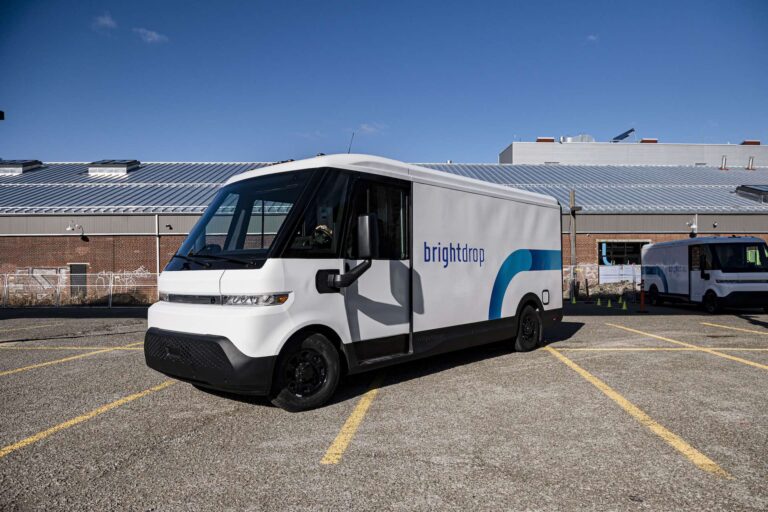
CAMI became Canada’s first auto plant dedicated entirely to assembling electric vehicles in 2023 after GM quickly retooled it to make the BrightDrop. Walmart and FedEx were among its customers. The $2-billion retooling was a big bet on the future of zero-emission vehicles—with $518 million in combined funding coming from the Ontario and federal governments—at a time when the U.S. government was also boosting North American market demand through consumer tax credits and plans to electrify the federal fleet.
GM has struggled to sell the vehicles on both sides of the Canada-U.S. border. In April, GM announced a BrightDrop production hiatus at CAMI. It had planned to restart with just one shift this month—not enough work for its 1,200 unionized employees. In a filing last week, GM said Trump’s elimination of EV incentives and loosening of emissions regulations would slow EV adoption. Kristian Aquilina, GM Canada’s president and managing director, was blunt Tuesday when asked about the disappointing demand for BrightDrop vans. “It was a fraction of what was originally anticipated,” he told the CBC.
GM’s shares closed up 15 per cent Tuesday after it reported strong third-quarter sales and improved profit expectations—including smaller losses linked to EVs.
Industry Minister Mélanie Joly drew a distinction between GM and Stellantis—as well as Ottawa’s responses to both their moves. “Stellantis had an obligation to bring back production to the Brampton plant, and they failed that obligation. And so that’s why we’re putting maximum pressure on the company,” she told reporters Tuesday on Parliament Hill before heading into the Liberal cabinet meeting. GM, however, “decided to let go of BrightDrop, which was an [electric] vehicle that was not doing well commercially.”
She said Ottawa would “hold [GM] to account for any support we have given them to develop that model.” Rather than threatening legal action as she did for Stellantis, however, Joly said the federal and Ontario governments, as well as GM, would form a new “response group” aimed at finding GM something else to make in Ingersoll. “We need to make sure that we fight for these jobs, that there are new models coming back to Ingersoll, and that GM has a bright future here in Canada.”
Lana Payne, the national president for Unifor, which represents workers at CAMI, released a statement Tuesday pointing to both Trump’s radical reversal of U.S. EV policies and his auto tariffs for what is happening at Ingersoll. But she called on Canada’s federal government to be the one to do something about it. “Canada must respond with a real industrial strategy that defends Canadian jobs, leverages our market, and pushes back on Trump’s economic bullying.”
Greig Mordue, an associate professor at McMaster University, who previously led corporate planning efforts for Toyota’s Canadian manufacturing division, said GM was on this path before Trump returned to the White House. “There’s a lot of blame to be thrown around,” said Mordue.
The plant, called CAMI after its former occupants, Canadian Automotive Manufacturing Inc., at one time produced up to 300,000 vehicles per year and was making the Chevrolet Equinox—a “high-selling core vehicle,” said Mordue—before switching to an “unproven new product” for a fraction of the market. “And now we’re supposed to be surprised that it didn’t work,” he said.
Last week, Stephen Beatty, a former executive at Toyota Canada, reacted to the news from Stellantis by warning more was on the way—including from GM in Ingersoll. “I think it’s easiest to make a decision to shutter plants that are already on hiatus, but I don’t think it has to stop there,” Beatty told The Logic in an interview at the time, saying he thought BrightDrop production at CAMI was also at risk. “I think there’s trouble here and I think it’s spreading now.”
With files from Anita Balakrishnan



Loading...
Thanks for sharing!
You have shared 5 articles this month and reached the maximum amount of shares available.
CloseThis account has reached its share limit.
If you would like to purchase a sharing license please contact The Logic support at [email protected].
CloseGift the full article!
You have gifted 0 article(s) this month and have 5 remaining.
Recipients will be able to read the full text of the article after submitting their email address. They will not have access to other articles or subscriber benefits.
Photo: Norm Betts/Bloomberg via Getty Images
Most Popular This Week




In-depth, agenda-setting reporting
Great journalism delivered straight to your inbox.
News
Panel decries Canada’s chaotic way of funding world-class science
Briefing
Feds pledge $15M for U.S. satellite navigation company Xona to expand in Montreal
Inovia raises US$200M for new VC fund as it eyes AI’s impact
43% of eligible Albertans voted ahead of Monday’s referendum
Best business newsletter in Canada
Get up to speed in minutes with insights and analysis on the most important stories of the day, every weekday.
Exclusive events
See the bigger picture with reporters and industry experts in subscriber-exclusive events.
Membership in The Logic Council
Membership provides access to our popular Slack channel, participation in subscriber surveys and invitations to exclusive events with our journalists and special guests.