Skip to content

Canada's Business and Tech Newsroom

  • Professional Subscription
  • Partnerships & Advertising
  • Licensing & Syndication
Log In Subscribe
Welcome,
  • My Account
  • Log Out
  • Business
  • Tech
  • National
  • The Big Read
  • Briefings
  • Commentary
Search
Log In Subscribe
Welcome,
  • My Account
  • Log Out
News

Willie Gagnon is tired. So is Canada’s shareholder activism movement

Listen Now
0:00
News

Willie Gagnon is tired. So is Canada’s shareholder activism movement

After nearly two decades on the frontlines, Gagnon says shareholder activism must change its approach to continue to have a voice

By Chaimae Chouiekh
Willie Gagnon stands against a statue in a dimly lit building. He gazes off to the side,whiel wearing a black vest over a blue shirt.
Willie Gagnon, executive director at the Mouvement d’éducation et de la défense des actionnaires, is leaving after nearly two decades at the shareholder advocacy group. Photo: Roger Lemoyne for The Logic
Sep 18, 2026
A A
A Small A Medium A Large
Share

Gift

Share

Listen Now
0:00

“Where is Monsieur Willie Gagnon?” a shareholder asked at TD’s annual general meeting in April, after noticing that the longtime face of the Mouvement d’éducation et de la défense des actionnaires (MÉDAC) was missing.

Gagnon was at CIBC’s overlapping AGM down the block. For nearly two decades, the 52-year-old was a fixture of Canada’s proxy season, pressing executives on issues like executive pay, board diversity and climate policy. The shareholders considered him one of the more interesting voices at the bank’s meetings. 

Next year, however, Gagnon won’t be taking the microphone. After roughly 400 annual general meetings, Gagnon is leaving shareholder activism, with his executive director role at MÉDAC now abolished.

Talking Points

  • Willie Gagnon spent 19 years leading the Mouvement d’éducation et de la défense des actionnaires (MÉDAC), attending roughly 400 annual general meetings during his tenure
  • Several shareholder advocacy groups have shut down in Canada this year, while major banks have continued to scale back some of their climate commitments

Originally from Saint-Mathieu-d’Harricana, Que., Gagnon regularly appeared before Senate committees and at annual meetings, where he addressed executives exclusively in French.

“I feel like I’ve covered the important issues that are likely to keep coming back,” Gagnon told The Logic in an interview. He said he had grown tired and felt he had taken many of those battles as far as he personally could.

The fatigue, he said, extends beyond him: Canada’s shareholder-activism community is shrinking, longstanding groups are disappearing and corporate resistance is hardening.

Related Articles
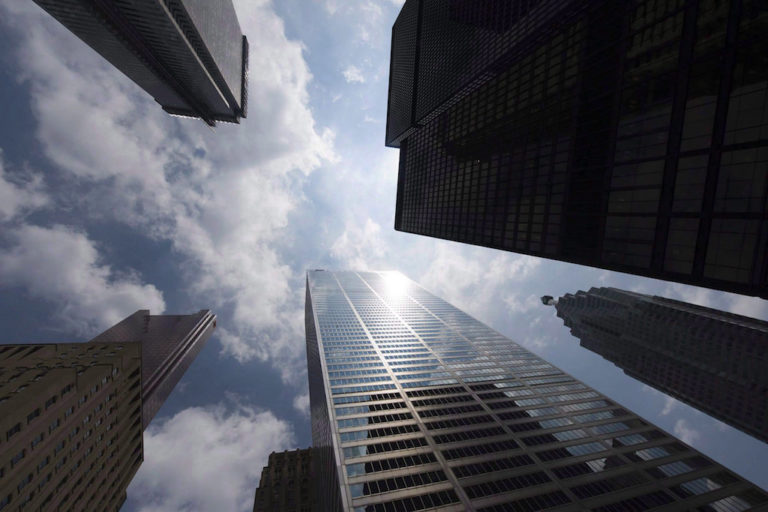
Bank towers are shown from Bay Street in Toronto's financial district, on Wednesday, June 16, 2010.

Canada’s big banks face shareholder pressure on AI and climate disclosures

By Chaimae Chouiekh
Two firefighters with gear face a massive wildfire at night, with flames and smoke engulfing dry vegetation. The scene conveys urgency and danger.

The ESG and DEI backlash has caught up to corporate Canada

By Catherine McIntyre

The country has seen a number of shareholder groups dissolve this year. In June, Quebec-based Regroupement pour la responsabilité sociale des entreprises (RRSE) permanently closed after more than 25 years of advocacy on corporate responsibility.  Investors for Paris Compliance, a group that had pressed financial institutions to align their activities with climate commitments since 2021, ceased operations in May, saying it believed “investor accountability has reached its limits.”

“The resources necessary to lead these types of fights are not infinite. We [at MÉDAC] weren’t exactly rolling in money, and that is the case for all organizations that make shareholder proposals,” Gagnon said, adding that he’d been MÉDAC’s sole employee since joining in 2007. 

The financial pressure on advocacy groups is unfolding alongside a shift in the priorities of some of the companies they target. 

All of Canada’s largest financial institutions are scaling back their climate commitments. TD, BMO, National Bank and CIBC withdrew from the Net-Zero Banking Alliance in January last year. In April, RBC and Scotiabank lowered their 2030 financed-emissions targets for several carbon-intensive sectors, citing changes in government policy, energy demand and the slow development of carbon capture technologies.

Gagnon said he has observed a shift in corporate Canada since the start of U.S. President Donald Trump’s second term, describing a “cooling” in relations between advocacy groups and corporate boards. While companies remain willing to engage, he said they have become more resistant to activist demands, particularly on environmental and governance issues. 

He linked the shift to Canada’s economic reorientation amid the U.S. trade war and broader economic uncertainty, pointing to the federal push to remove interprovincial trade barriers, expand fossil fuel exports and diversify trade as factors driving the change. 

“If we want to establish an energy corridor, we will have to violate certain principles we held previously that prevented us from doing so,” he said. “The interest of big Canadian corporations in their company’s development is now based on different principles, and that made our life more difficult.”

Shareholder activism has significantly transformed since Gagnon’s early days. When he started, MÉDAC was more openly confrontational; at annual meetings, the group would spend hours challenging management. That’s since given way to more professional, constructive rapport, he said. Corporations now anticipate the group’s presence, often dispatching the same secretaries or legal counsel year after year to maintain a steady, ongoing dialogue.

For small shareholders, Gagnon said, filing a proposal is often the only real leverage they have with a large company. Whether a proposal gains traction often depends on support from Canada’s largest institutional investors, who can use the weight of their holdings to influence management.

Among Gagnon’s proudest accomplishments at MÉDAC was the push to preserve in-person annual meetings after the COVID-19 pandemic. He also pointed to greater disclosures around executive compensation and increased representation of women on corporate boards as areas where shareholder pressure helped drive change. Executive pay, however, remains a problem, rising “de manière folle,” or “in a crazy way,” he said.

MÉDAC submitted the vast majority of shareholder proposals during the 2026 proxy season at Canada’s Big Six, all of which were defeated. Nonetheless, Gagnon said a proposal does not have to win a vote to have an impact. Companies often negotiate with shareholders before an annual meeting because they would rather avoid a public vote that could expose meaningful opposition to management, he said.

Even as proposals fail at the ballot box, the issues reaching bank boards are evolving. 

Gagnon sees AI governance as one of the next major battlegrounds. MÉDAC filed proposals urging companies to adopt a voluntary federal framework to address risks including AI bias, hallucinations and weak oversight. Companies generally told Gagnon they preferred to wait for the then-forthcoming federal policy rather than adopt a framework they said was not designed for them.

Canada tends to “take its time” rather than lead on governance reform, Gagnon said, and he would like to see regulators take a more active role. He said securities regulators—rather than corporations themselves—should determine whether a proposal can be excluded, arguing that the country’s relatively small volume of proposals makes this approach manageable. 

As for what’s next, Gagnon, who became a father in recent years, wants to focus on his family life before pursuing other opportunities. MÉDAC said in a statement its board has put measures in place to ensure continuity following his departure.

Gift the full article

Shareholder activism hasn’t reached its limit, Gagnon said, but its approach may need to change. He envisions a model of governance that goes beyond traditional shareholder meetings toward something resembling European stakeholder assemblies, where employees, customers, communities, governments and shareholders take a greater role in decision-making. 

“The [shareholder advocacy] movement has to think about not its relevance, but its existence. How are we going to continue the fight to defend shareholders where they are now?”


#exit interview #profile #shareholder activism

Sponsored Content

The road to risk-smart regulation

By Deborah Aarts

Why cybersecurity needs to match pace with AI

By Jessica Aftimus Rosa

How to shift your workforce from AI experimentation to adoption

By Jessica Aftimus Rosa
Paid promotional content

Loading...

Thanks for sharing!

You have shared 5 articles this month and reached the maximum amount of shares available.

Close
This account has reached its share limit.

If you would like to purchase a sharing license please contact The Logic support at [email protected].

Close
Want to share this article?

Upgrade to all-access now

Close
Gift the full article!

You have gifted 0 article(s) this month and have 5 remaining.

Copy link and gift
Copy Link
Email to a friend
Send Email
Gift on Social Media

Recipients will be able to read the full text of the article after submitting their email address. They will not have access to other articles or subscriber benefits.

Willie Gagnon stands against a statue in a dimly lit building. He gazes off to the side,whiel wearing a black vest over a blue shirt.

Photo: Roger Lemoyne for The Logic

Most Popular This Week

A side shot of Annie Andrews passing a cluster of supporters with a hand outstretched and a joyful look on her face.
News

What the Democrats’ midterm sweep means for Canadian business

By Joanna Smith
An image of Prime Minister Mark Carney, standing in front of a microphone and speaking. He is wearing a blue suit and tie, while looking away from the camera. He is standing in front of a dark background. The Cohere logo is visible in the background.
News

Conservatives challenge Ottawa to justify its $1.6B Cohere investment

By Catherine McIntyre
A logo that reads AI in blue lettering against a light yellow background.
News

BDC launches programs to test Canadian AI tools in small businesses

By Catherine McIntyre
A man wearing a headset microphone sits on a stage. He is speaking and gesturing with his hands. The background is dark blue.
News

Ottawa will invest up to $1.6B in Cohere as firm’s valuation hits $35.7B

By Catherine McIntyre

In-depth, agenda-setting reporting

Great journalism delivered straight to your inbox.

An image of a person holding a book titled, "Masters of our destiny: Budget 2026." The person is wearing a dark suit and tie and standing in front of a Canadian flag, visible in the background.
News

The Liberals are spending Canada’s energy windfall in a bid to boost productivity

By Joanna Smith

Briefing

Champagne tells the Bank of Canada to keep on fighting inflation

By Kevin Carmichael   |   Nov 5, 2026 | 5:13 PM ET

Federal budget gives Build Canada Homes an additional $13B over 10 years

By Sharon Lam   |   Nov 5, 2026 | 4:10 PM ET

Federal budget includes funding for government’s new internet super-regulator

By Jordan Timm   |   Nov 5, 2026 | 4:08 PM ET

Best business newsletter in Canada

Get up to speed in minutes with insights and analysis on the most important stories of the day, every weekday.

Exclusive events

See the bigger picture with reporters and industry experts in subscriber-exclusive events.

Membership in The Logic Council

Membership provides access to our popular Slack channel, participation in subscriber surveys and invitations to exclusive events with our journalists and special guests.

Recent Popular Stories

Analysis

Why a midterm sweep for the Democrats won’t end Canada’s trade nightmare

By Joanna Smith   |   Oct 29, 2026
Commentary

Carmichael: Canada’s Nobel-winning economist thinks Carney is on the right track

By Kevin Carmichael   |   Oct 31, 2026
A man wearing a dark suit jacket, blue button-down shirt and spotted brown-and-blue tie stands in front of a black and blue background, gesturing and speaking into a microphone.
News

Ottawa will invest up to $1.6B in Cohere as firm’s valuation hits $35.7B

By Catherine McIntyre   |   Oct 29, 2026
A man wearing a headset microphone sits on a stage. He is speaking and gesturing with his hands. The background is dark blue.
News

Former Ciena employee claims she was fired for reporting sexual assault by executive

By Catherine McIntyre   |   Nov 3, 2026
An exterior of a five-storey office building with two Canadian flags out front. Above the entrance is a four-storey window with Ciena's logotype written sideways.
News

The Canadian Forces were warned about safety gaps for 20 years before Wainwright disaster

By David Reevely   |   Oct 30, 2026
A side shot of a row of fully equipped soldiers making a beach landing from zodiac watercraft, rifles in hand.
News

Canada is buying military gear for a world where ‘pretty much everything’ changed

By David Reevely   |   Nov 2, 2026
Three people, wearing business clothing and red poppy pins, sit on chairs on a stage. The person in the middle is speaking. A blue background is visible behind them.

Canada's most influential executives and policymakers are reading The Logic

  • CPP Investments
  • Sun Life Financial
  • C100
  • Amazon
  • Telus
  • Mastercard
  • bdc
  • Shopify
  • Rogers
  • RBC
  • General Motors
  • MaRS
  • Government of Canada
  • Uber
  • Loblaw Companies Limited
logic-logo

Canada's Business and Tech Newsroom

100% human-crafted journalism

Newsroom

  • News Tips
  • AI Policy
  • Editorial Disclosures
  • Story Pitches

Company

  • About Us
  • Terms of Service
  • Privacy Statement
  • Corporate Information

Contact

  • Contact Us
  • Advertise
  • FAQs
  • Work at The Logic

© 2026 The Logic Inc. All Rights Reserved.

Trusted by leaders

Error

Account creation failed.

Please email us at [email protected].

Create Account

[wppb-register form_name=”cozmo-registration-form-for-modal”]

I do have an account
Login
or

[wppb-login]

I don’t have an account