Skip to content


Analysis
The ESG and DEI backlash has caught up to corporate Canada
Recent policy and market changes have prompted more Canadian companies to water down or remove social and environmental commitments
Until recently, Canadian companies had generally held steady on environmental, social and governance policies like net-zero and diversity targets. Photo: Brandon Bell/Getty Images
After years of holding firm against the U.S.-led anti-ESG movement, Canadian companies reined in talk of net-zero and diversity in 2025 amid a wave of regulator reversals.
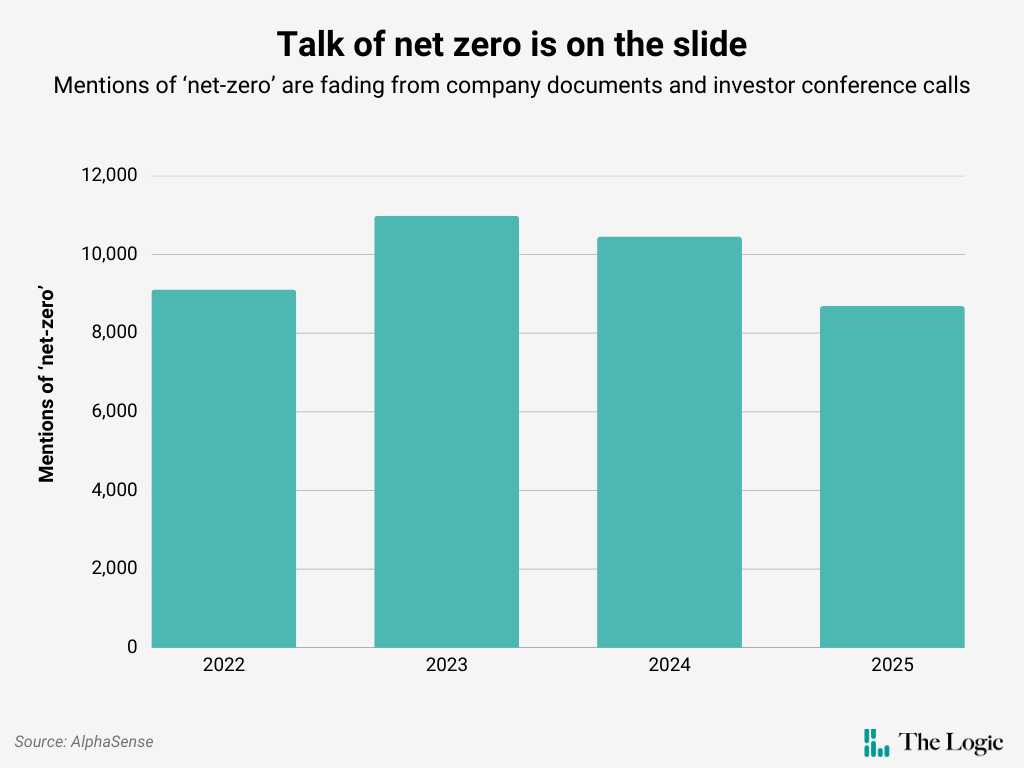
Terms like “net-zero,” “carbon neutral” and “zero emissions” are fading from company documents and investor conference calls, data from AlphaSense shows. References to net zero have dropped from their peak of nearly 3,500 in early 2024 to about 1,700 in the fourth quarter of 2025, as of Dec. 22, a 51 per cent decline.
Talking Points
- Canadian companies watered down ESG commitments last year as global regulators shelved mandatory reporting rules
- The shift is revealing which companies were serious about issues like climate change and diversity, and which were likely making symbolic gestures that have now been dropped
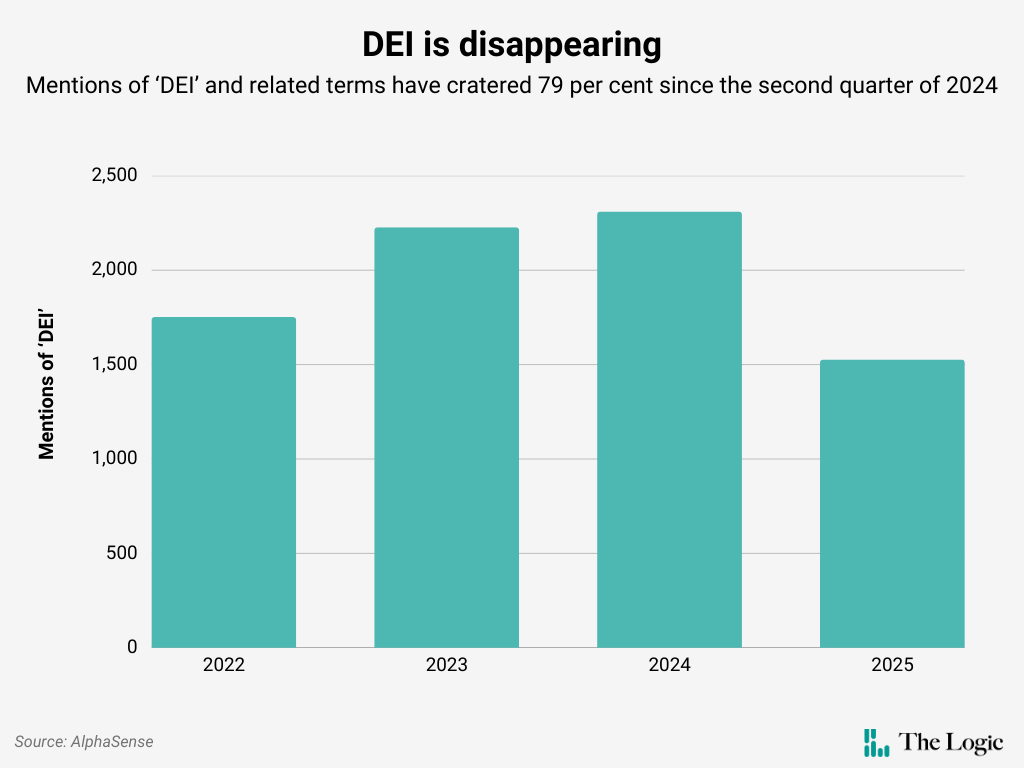
Mentions of diversity, equity and inclusion (DEI) and related terms have cratered 79 per cent since the second quarter of 2024.
Until last year, Canadian companies had generally held steady on environmental, social and governance (ESG) policies like net-zero and diversity targets. That’s despite their U.S. counterparts retreating from ESG business practices in response to political pressure from Republican lawmakers.
Recent policy and market changes, however, have prompted more Canadian companies to water down or remove social and environmental commitments.
Public Canadian companies had long been preparing for mandatory rules from global regulators that would require them to report on their sustainability practices, including their impact on the environment, their net-zero goals and plans for reaching them. The anticipation of those rules led Canadian firms to keep tracking and reporting ESG-related risks and targets, despite the political and cultural pushback south of the border.
Over the course of last year, however, global regulators scaled back their sustainability rules, in what Nadia Narain, a capital markets lawyer at Aird & Berlis, described as a “domino effect” triggered by the U.S.
Related Articles


In March 2025, the U.S. Securities and Exchange Commission voted to stop suing firms for not reporting their carbon emissions, effectively ending its requirement that companies disclose climate-related information. In April, the Canadian Securities Administrators (CSA), the umbrella group representing Canada’s securities regulators, shelved its planned requirement for companies to report and manage financial risks related to climate change and diversity factors. The regulator cited risks to Canada’s competitiveness in light of the “rapidly and significantly” changing geopolitical reality in the U.S. and elsewhere.
Then, in November, the EU voted to scale back its ESG disclosure rules. Those regulations had been a major influence on Canadian companies that do business in Europe to keep tracking and reporting on ESG.
With those policy pressures gone, companies have been left to respond to market forces instead, said Laura Zizzo, founder of Manifest Climate, which helps firms assess business risks associated with climate change. Zizzo said that may be steering some firms away from issues like climate change to focus on other priorities, such as the trade war with the U.S.
A recent analysis by Montreal-based advisory firm Millani found that while 76 per cent of public Canadian companies issued sustainability reports for their latest fiscal years, the information in those reports has become less detailed, with some companies scaling back ESG policies.
While Zizzo said the retreat from ESG in Canada isn’t as drastic as it is in the U.S., the country is still feeling the effects. “We’re fooling ourselves if we’re saying things are trucking along normally here,” she said.
In January of last year, Canada’s Big Six banks quit the global Net-Zero Banking Alliance amid an exodus of Wall Street firms, including BlackRock. The alliance dissolved in October. Also that month, Shopify eliminated several diversity programs, and in May, the Canada Pension Plan Investment Board scrapped its pledge to reach net-zero emissions by 2050.
Along with fewer ESG reporting requirements, Ottawa’s anti-greenwashing bill, which came into effect in June 2024, has also sapped environmental target-setting. Zizzo said that’s not necessarily a bad thing and that it may weed out companies that didn’t have credible plans for meeting their net-zero commitments. “You don’t want this ambition disclosure in publicly traded companies’ documents if they don’t know how they’re going to get there,” she said.
Narain said Canadian companies with ESG policies that aren’t directly tied to their business or financial performance may be vulnerable to lawsuits in the U.S. That, too, has curbed how firms publicly discuss environmental and social issues, she said.
Companies for whom financial performance and ESG are closely linked haven’t retreated, she said. Many have just changed the language they use. “They’re not using ‘ESG’ and ‘DEI,’” said Narain. “They’re talking about sustainability broadly so as to not attract the wrong attention.”
Narain said companies that ditched ESG and DEI initiatives entirely were likely never serious about them to begin with. In that sense, she said, ESG’s waning popularity has revealed which firms were merely virtue signalling. “It’s probably good because it means it’s becoming a little less performative and optics-based.”



Loading...
Thanks for sharing!
You have shared 5 articles this month and reached the maximum amount of shares available.
CloseThis account has reached its share limit.
If you would like to purchase a sharing license please contact The Logic support at [email protected].
CloseGift the full article!
You have gifted 0 article(s) this month and have 5 remaining.
Recipients will be able to read the full text of the article after submitting their email address. They will not have access to other articles or subscriber benefits.
Photo: Brandon Bell/Getty Images
Most Popular This Week




In-depth, agenda-setting reporting
Great journalism delivered straight to your inbox.
The Big Read
Alberta’s referendum is just the start of the turmoil
Briefing
EverWind plans $10B data centre and wind development in Nova Scotia
Canada ready to force Stelco to sell its Canadian operations, Joly says
Feds plan a 60 MW defence-oriented data centre for Ottawa
Best business newsletter in Canada
Get up to speed in minutes with insights and analysis on the most important stories of the day, every weekday.
Exclusive events
See the bigger picture with reporters and industry experts in subscriber-exclusive events.
Membership in The Logic Council
Membership provides access to our popular Slack channel, participation in subscriber surveys and invitations to exclusive events with our journalists and special guests.






