KANANASKIS, Alta. — Group-of-Seven leaders intend to create “economic corridors” for critical minerals and enforce standardized markets as part of an effort to combat China’s dominance in the space, according to a draft strategy obtained by The Logic.
Skip to content

News
G7 plan calls for secure corridors and standardized markets for critical minerals
Draft of statement obtained by The Logic reveals comprehensive strategy to safeguard supplies of key minerals
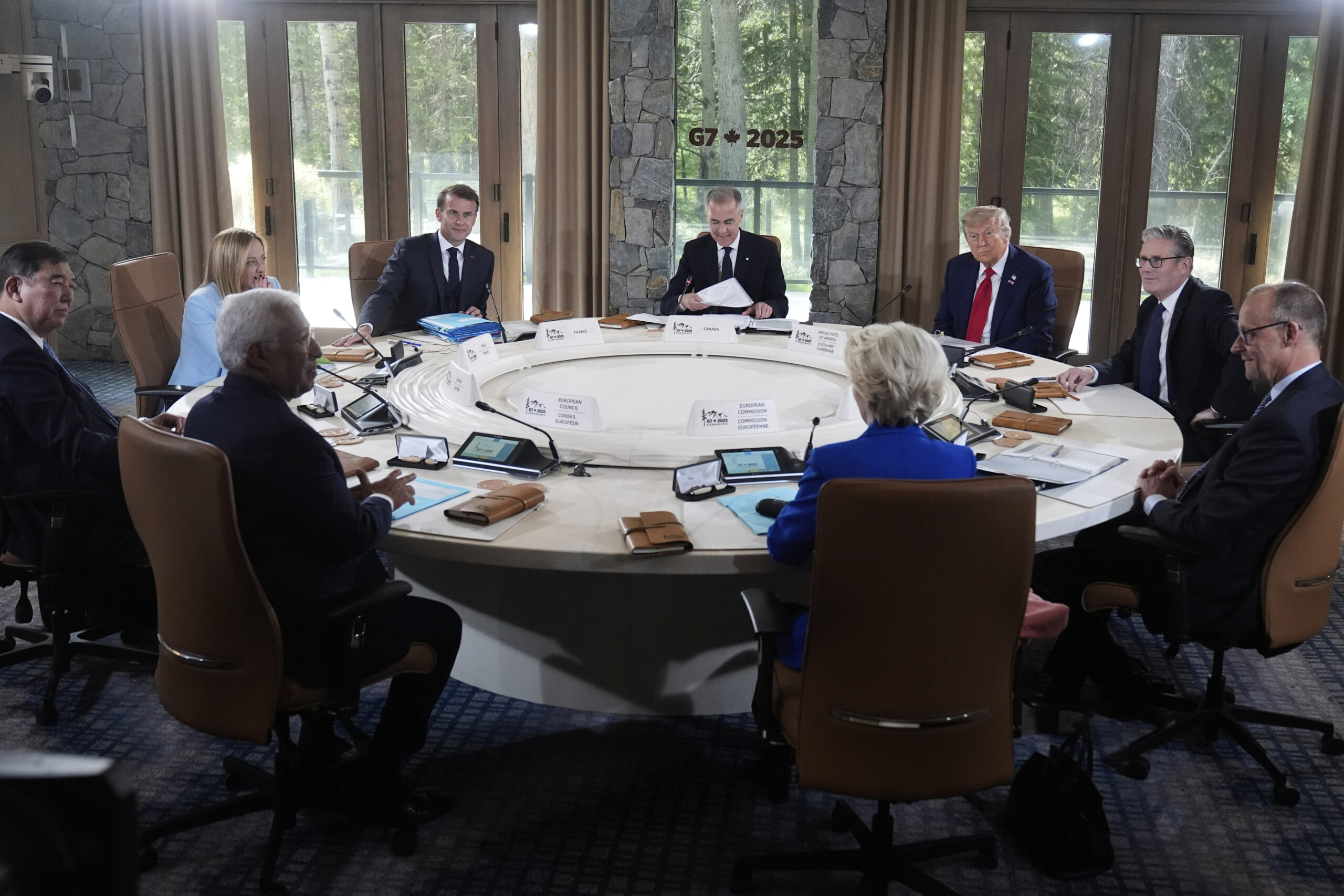
G7 leaders meeting in Kananaskis, Alta., have agreed to strategy aimed at securing supplies of critical minerals. Photo: AP Photo/Mark Schiefelbein
KANANASKIS, Alta. — Group-of-Seven leaders intend to create “economic corridors” for critical minerals and enforce standardized markets as part of an effort to combat China’s dominance in the space, according to a draft strategy obtained by The Logic.
The agreement as written expands on a five-point plan the G7 established in 2023. Leaders agreed to create a “roadmap” by the end of this year that will help critical minerals buyers and mining firms account for “negative externalities” like environmental footprints, labour standards or bribery and corruption.
Talking Points
- G7 leaders have agreed to a critical minerals strategy aimed at standardizing global markets and creating “economic corridors” between allies, according to a draft agreement obtained by The Logic.
- The measures could help curb China’s dominance of the critical minerals sector, which has let the country keep prices artificially low.
Another measure in the strategy aims to increase investment in “responsible critical minerals projects within the G7 and around the world” through regulatory reforms and the creation of “economic corridors” between allies.
While the draft agreement does not mention China, it comes as Western nations look to combat the country’s global grip on the metals and rare earths needed to manufacture strategic products like semiconductors and EV batteries. China has long kept prices for such critical minerals artificially low by flooding the market with supply, thereby undercutting Canadian and other mining firms.
“We recognize that non-market policies and practices in the critical minerals sector threaten our ability to acquire many critical minerals, including the rare earth elements needed for magnets, that are vital for industrial production,” the draft document said.
A final version is expected to be released later Tuesday at the summit in Alberta.
Related Articles


In the draft, G7 leaders also urge banks and export credit agencies to mobilize investment capital for the purpose of producing critical minerals.
“To build on this momentum, we encourage multilateral development banks, as well as private sector lenders, to make further capital available for investment in standards-based critical minerals projects, including through innovative financing,” the document said.
The Paris-based International Energy Agency expects critical minerals demand to rise sixfold by 2050, with the industry expanding to an estimated US$400 billion to match growing investment in digitization and electrification.
“Immediate and scaled investment is required to secure future supply chains and ensure promising mining and processing projects overcome barriers such as delays in permitting and approvals processes, market manipulation, and price volatility,” the draft said.
The measures in the document are largely aligned with private sector recommendations ahead of the G7. Mining firms have long called for reforms that would help them compete with Chinese producers.
Ottawa has previously floated price floors for critical minerals to combat foreign manipulation, and the CEO of Calgary’s E3 Lithium recently said artificially suppressed prices was the company’s “biggest challenge.”
Tuesday’s draft document does not seek to enforce price floors—a measure that would likely come at considerable cost. But its efforts to standardize markets could go some way toward ensuring parity.
Such moves on critical minerals were among the recommendations of the B7, a group representing the private sector and led this year by the Canadian Chamber of Commerce.
The B7 called on leaders to “establish market stability” in the sector, drive investment into it and “build competitive and secure processing and recycling capabilities” for critical minerals within G7 member nations’ borders.



Loading...
Thanks for sharing!
You have shared 5 articles this month and reached the maximum amount of shares available.
CloseThis account has reached its share limit.
If you would like to purchase a sharing license please contact The Logic support at [email protected].
CloseGift the full article!
You have gifted 0 article(s) this month and have 5 remaining.
Recipients will be able to read the full text of the article after submitting their email address. They will not have access to other articles or subscriber benefits.
Photo: AP Photo/Mark Schiefelbein
Most Popular This Week




In-depth, agenda-setting reporting
Great journalism delivered straight to your inbox.
News
Panel decries Canada’s chaotic way of funding world-class science
Briefing
AI is pushing insurers to become asset managers, Canadian CEOs say
Trump administration faces lawsuit over 50% tariffs on Canadian goods
Canada-U.S. trade war to reduce real GDP by 1.4% over 2024 levels after five years: PBO
Best business newsletter in Canada
Get up to speed in minutes with insights and analysis on the most important stories of the day, every weekday.
Exclusive events
See the bigger picture with reporters and industry experts in subscriber-exclusive events.
Membership in The Logic Council
Membership provides access to our popular Slack channel, participation in subscriber surveys and invitations to exclusive events with our journalists and special guests.





