Skip to content

Canada's Business and Tech Newsroom

  • Professional Subscription
  • Partnerships & Advertising
  • Licensing & Syndication
Log In Subscribe
Welcome,
  • My Account
  • Log Out
  • Business
  • Tech
  • National
  • The Big Read
  • Briefings
  • Commentary
Search
Log In Subscribe
Welcome,
  • My Account
  • Log Out
Shift newsletter

AI is ready to join the high-stakes hunt for critical minerals

Canadian AI is helping the critical mineral industry get metals out of the ground—and into EVs. 

Vancouver-based Vrify Technology just raised $12.5 million in a series B round, led by New York VC firm LGVP. The company, which uses artificial intelligence to help geologists discover mineral deposits, says it is already breaking even. But it’s expanding its business as the mining sector approaches its “ChatGPT moment,” said CEO Steve de Jong in an interview. 

Investors and companies in a range of fields are hoping 2025 is the year AI begins transforming humankind’s relationship with the physical world, and mining is no exception. KoBold Metals, which is backed by Bill Gates, Jeff Bezos, and Jack Ma and also uses AI for mineral discovery, closed a US$537 million series C round in January. 

Vrify’s connection to things we can see and touch is one of the factors that drew LGVP’s Itai Tsiddon. Much of the hype around AI has centred on YCombinator companies “selling to other YC companies,” Tsiddon noted in an interview, whereas companies like Vrify are driving changes in the “real world.”

Shift newsletter

AI is ready to join the high-stakes hunt for critical minerals

Geologists are turning to AI to find and mine the minerals that power EVs

By Anita Balakrishnan
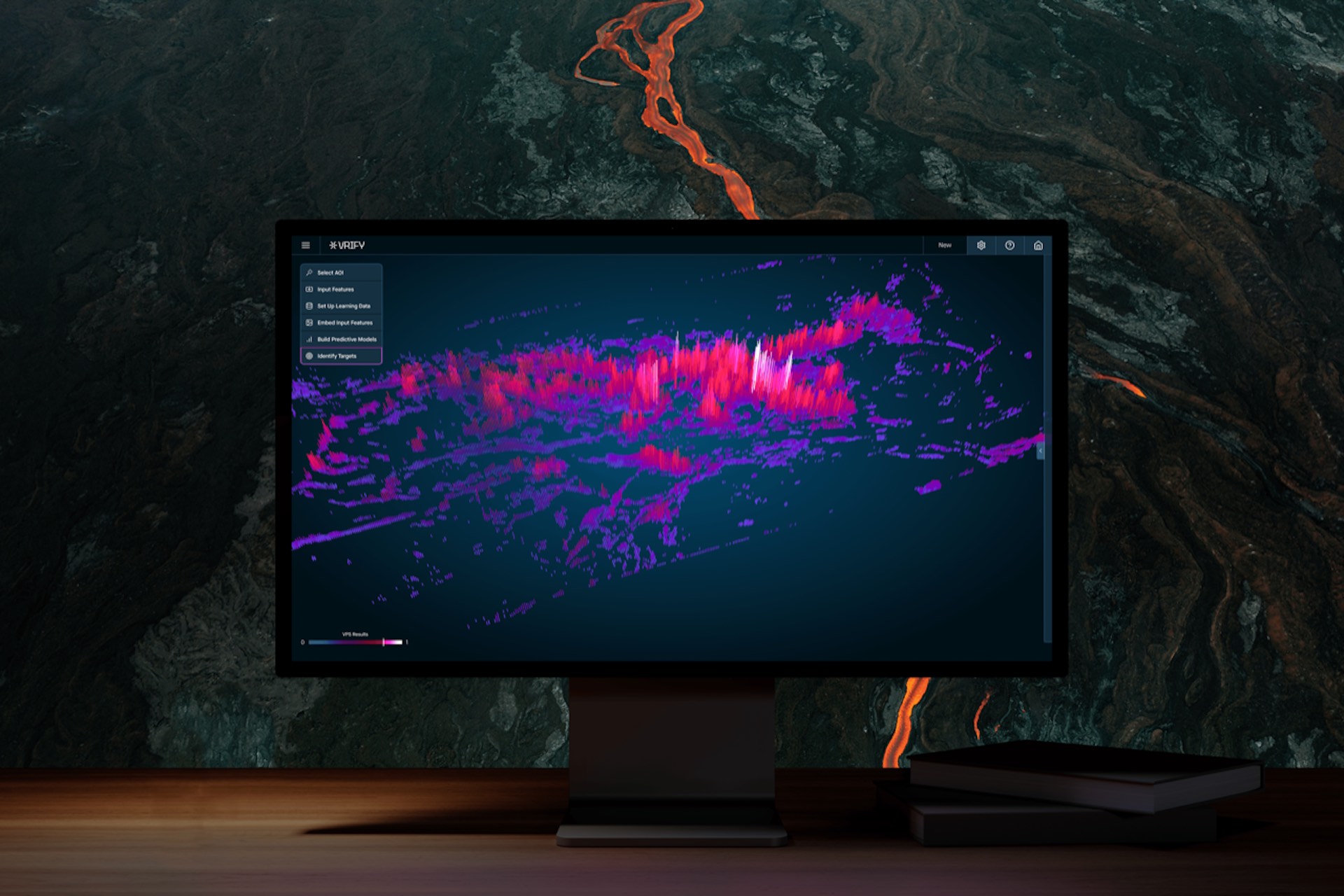
A monitor screen shows a rendering of a topographical map with pink and purple spikes on a black background. Behind the monitor is a backdrop of a stone wall.
Canadian AI startup Vrify is hoping its data visualizations will help small mineral exploration firms improve their drilling plans and reach new investors. Photo: Handout/Vrify
Feb 27, 2025
A A
A Small A Medium A Large
Share

Share

Canadian AI is helping the critical mineral industry get metals out of the ground—and into EVs. 

Vancouver-based Vrify Technology just raised $12.5 million in a series B round, led by New York VC firm LGVP. The company, which uses artificial intelligence to help geologists discover mineral deposits, says it is already breaking even. But it’s expanding its business as the mining sector approaches its “ChatGPT moment,” said CEO Steve de Jong in an interview. 

Investors and companies in a range of fields are hoping 2025 is the year AI begins transforming humankind’s relationship with the physical world, and mining is no exception. KoBold Metals, which is backed by Bill Gates, Jeff Bezos, and Jack Ma and also uses AI for mineral discovery, closed a US$537 million series C round in January. 

Vrify’s connection to things we can see and touch is one of the factors that drew LGVP’s Itai Tsiddon. Much of the hype around AI has centred on YCombinator companies “selling to other YC companies,” Tsiddon noted in an interview, whereas companies like Vrify are driving changes in the “real world.”

Related Articles

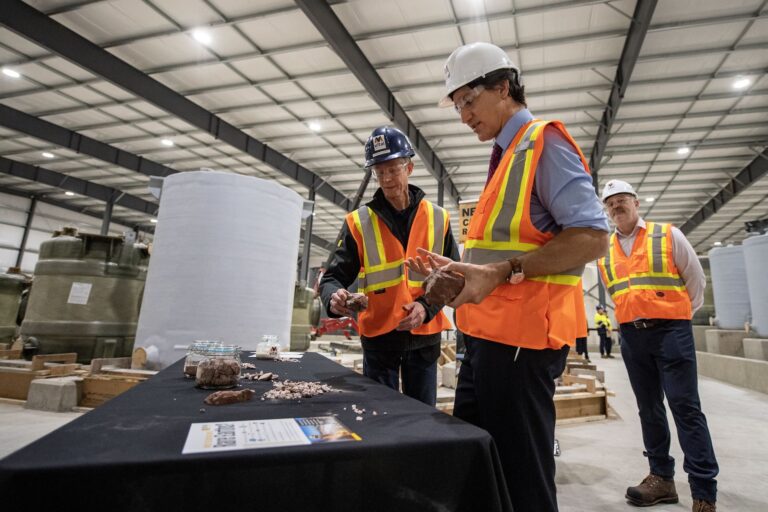
Three men including Prime Minister Justin Trudeau wear construction vests, hard hats and safety glasses indoors in a processing plant. Justin Trudeau holds a rock and appears to be conversing with the man next to him, also holding a rock, about the various minerals on the table in front of them.

Why Trump is desperate to grab Canada’s critical minerals

By Anita Balakrishnan
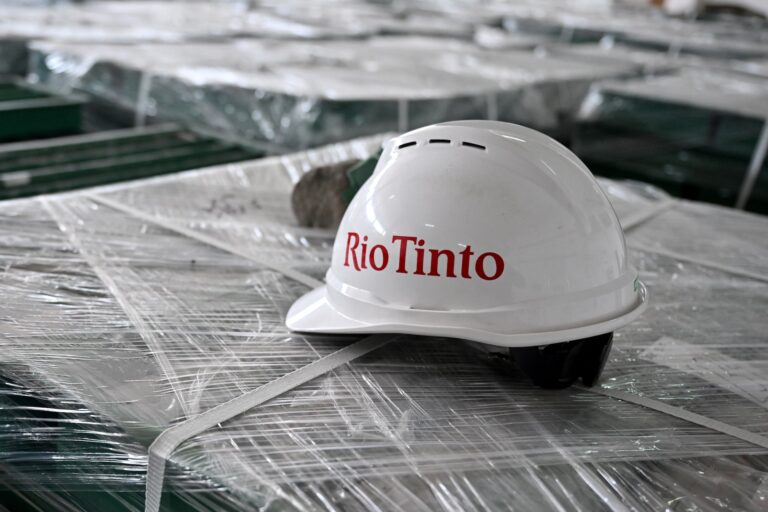
A white hardhat with the Rio Tinto logo in red letters sits on a large tray that is shrink-wrapped with plastic. A grey ore sample is partially visible behind the hardhat.

Rio Tinto’s $6.7B deal would unlock a major Quebec lithium hub

By Anita Balakrishnan

Over the past few years, AI research hubs in Canada like the Creative Destruction Lab, the Vector Institute and Mila have started working with mining companies to apply AI. Their interest speaks to the edge the technology can give companies in a viciously competitive sector, where entrepreneurs are under constant pressure to lower costs and speed up production. It also reflects the country’s singular status as a place where mining financiers and AI luminaries co-exist at a critical mass. “There’s no place better set up,” said de Jong. 

The opportunities are easier to see than the minerals themselves. EV batteries and electrical grid upgrades are expected to drive a sixfold increase in demand for critical minerals like copper, cobalt and nickel by 2040. But companies combing the earth for them face the twin pressures of money and punishing timelines. It takes nearly 16 years on average to take a mine from discovery to production. Yet funding comes and goes with the volatile ups and downs of commodity prices. 

The hope is that AI will help small exploration companies narrow down high-value deposits and give investors information that would be costly to obtain by manual drilling alone.

Christopher Pennimpede, CEO of Canterra Minerals Corporation, is working with Vrify on a Newfoundland critical minerals and gold project where prospecting dates back to the 1920s. He’s hoping a century of well-preserved data will be a treasure trove to feed the AI algorithm, which will help the company pinpoint rich deposits.

Over decades, de Jong said, existing mines have uncovered critical minerals that were previously considered waste but are now hot commodities for use in microchips or high-tech motors. Tools like Vrify might be able to supercharge that work, searching historical data from, say, a gold mine for traces of gallium that could be harvested without setting up new mining sites. 

AI models have also opened geologists’ minds to “biases” they may unwittingly hold, Pennimpede said. Canterra’s target area in Newfoundland is a case in point. Previous attempts to mine it focused on the northern part of the property, for which the company had much more historical data showing potential deposits. But the AI model identified a few promising areas on the southern end, prompting Pennimpede to dive into the data. There, he found that prospectors in the 1920s had arbitrarily chosen to start their search on the north end of the claim, stopping to mine as soon as they struck pay dirt and leaving other areas untapped. 

The result? A new opportunity for Canterra to get critical minerals to market. Coming soon, perhaps, to a battery near you. 

Read Shift—The Logic’s authoritative weekly newsletter on automotive technology industry news—for more; and if you know someone who should be reading it, they can sign up here.
#artificial intelligence #climate #critical minerals #economy #electric vehicles #Kobold #markets #Tech #The Logic's Shift #Vrify Technologies

Loading...

Thanks for sharing!

You have shared 5 articles this month and reached the maximum amount of shares available.

Close
This account has reached its share limit.

If you would like to purchase a sharing license please contact The Logic support at [email protected].

Close
Want to share this article?

Upgrade to all-access now

Close
Gift the full article!

You have gifted 0 article(s) this month and have 5 remaining.

Copy link and gift
Copy Link
Email to a friend
Send Email
Gift on Social Media

Recipients will be able to read the full text of the article after submitting their email address. They will not have access to other articles or subscriber benefits.

A monitor screen shows a rendering of a topographical map with pink and purple spikes on a black background. Behind the monitor is a backdrop of a stone wall.

Photo: Handout/Vrify

Most Popular This Week

A yellow ambulance is pictured outside of a hospital in Montreal. A red sign in the foreground reads, “Urgence / Emergency.”
Commentary: Quebec Ink

Quebec just found out what not having digital sovereignty really means

By Martin Patriquin
News

Tech leaders welcome new AI funding but warn against government overreach

By Catherine McIntyre
An image of Mark Carney standing in front of a red podium with the words "AI for All / L'IA pour tous." He is wearing a suit and tie. In the background, people wearing scrubs and white coats are visible.
Special Report

Canada’s new AI strategy sets lofty goals for adoption and growth

By Murad Hemmadi and Laura Osman
Exclusive

Canada’s new AI strategy includes $500M fund to back key firms

By Murad Hemmadi and Catherine McIntyre

In-depth, agenda-setting reporting

Great journalism delivered straight to your inbox.

A close-up of the TikTok logo on the side of a concrete structure.
News

Big Tech says it will work with Ottawa on plan to ban kids from social media

By Martin Patriquin and Laura Osman

Briefing

Grok-generated sexual deepfakes violate Canadian law, privacy commissioner finds

By Laura Osman   |   Jun 11, 2026 | 3:58 PM ET

Climate standards-setter unveils more lenient rules for companies

By Catherine McIntyre   |   Jun 11, 2026 | 3:17 PM ET

HOOPP CEO says investors may be more exposed to AI than they realize

By Chaimae Chouiekh   |   Jun 11, 2026 | 3:13 PM ET

Best business newsletter in Canada

Get up to speed in minutes with insights and analysis on the most important stories of the day, every weekday.

Exclusive events

See the bigger picture with reporters and industry experts in subscriber-exclusive events.

Membership in The Logic Council

Membership provides access to our popular Slack channel, participation in subscriber surveys and invitations to exclusive events with our journalists and special guests.

Recent Popular Stories

Commentary: Quebec Ink

Quebec just found out what not having digital sovereignty really means

By Martin Patriquin   |   Jun 8, 2026
A yellow ambulance is pictured outside of a hospital in Montreal. A red sign in the foreground reads, “Urgence / Emergency.”
Exclusive

Canada’s new AI strategy includes $500M fund to back key firms

By Murad Hemmadi and Catherine McIntyre   |   Jun 3, 2026
News

Canada’s surprise plan to buy Saab command jets leaves competitors seeking answers

By David Reevely   |   May 29, 2026
A closeup of a scale model of a jet covered in pixellated camouflage, with sensor equipment attached to the top of its fuselage. There are civilians and uniformed military personnel milling in the background.
The Big Read

We found every data centre in Canada

By Murad Hemmadi, David Reevely, Aleksandra Sagan, Chaimae Chouiekh, Martin Patriquin and Catherine McIntyre   |   Apr 8, 2026
Four vertical slices of aerial view photos. From left, a building in downtown Toronto housing several data centres, a picture of the Albertan wilderness where the proposed Wonder Valley data centre would go, a lit-up QScale data centre in Quebec, and a data centre at a Hydro-Quebec dam.
The Big Read

ApplyBoard faces a reckoning as Canada’s immigration boom turns into a bust

By Claire Brownell and David Reevely   |   May 27, 2026
News

A Canadian leader in nuclear fusion comes home—with big plans to make power

By David Reevely   |   Jun 4, 2026
A selfie taken by Spencer Pitcher inside a nuclear fusion facility. He is wearing a blue hardhat with the ITER logo on it, and is standing in front of a cavernous chamber full of fusion reactor equipment.

Canada's most influential executives and policymakers are reading The Logic

  • CPP Investments
  • Sun Life Financial
  • C100
  • Amazon
  • Telus
  • Mastercard
  • bdc
  • Shopify
  • Rogers
  • RBC
  • General Motors
  • MaRS
  • Government of Canada
  • Uber
  • Loblaw Companies Limited
logic-logo

Canada's Business and Tech Newsroom

100% human-crafted journalism

Newsroom

  • News Tips
  • AI Policy
  • Editorial Disclosures
  • Story Pitches

Company

  • About Us
  • Terms of Service
  • Privacy Statement
  • Corporate Information

Contact

  • Contact Us
  • Advertise
  • FAQs
  • Work at The Logic

© 2026 The Logic Inc. All Rights Reserved.

Trusted by leaders

Error

Account creation failed.

Please email us at [email protected].

Create Account

[wppb-register form_name=”cozmo-registration-form-for-modal”]

I do have an account
Login
or

[wppb-login]

I don’t have an account