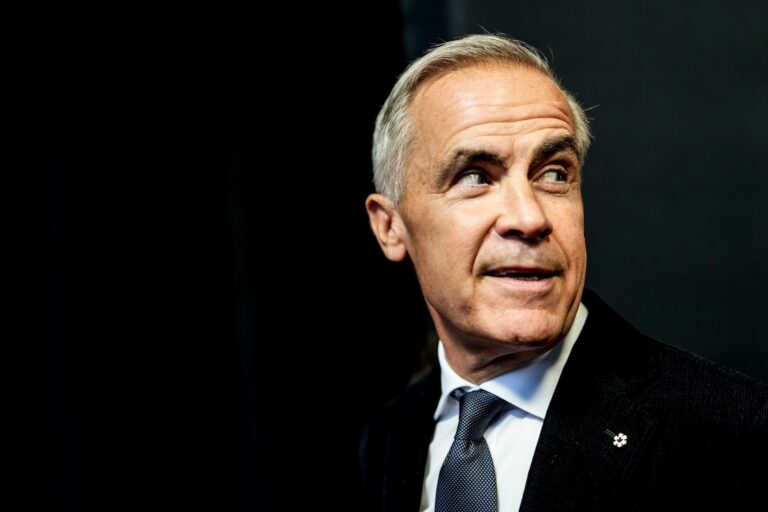
Over the past three days, 25,000 people from 125 countries descended on Toronto for the Collision Conference, one of the largest tech-focused events in North America.
The Logic team camped out at the Enercare Centre for every minute of it, moderating panels, interviewing CEOs and drinking way too much coffee.
Here are 14 key takeaways from the floor of the conference.
You can also listen to an audio recording of Thursday’s conference call breaking down the best of the week at Collision on The Logic’s subscriber-only Slack channel.
1. The sellout narrative is alive and well. On opening night, Prime Minister Justin Trudeau told the audience that Canadians sell too soon. “One of the really big challenges in Canada is getting from that $10 million- to $100 million-size of company,” he said. “There’s such a tendency now—and not just in Canada, but around the world—to reach that particular moment and then sell out to a much bigger company and retire.” But five Canadian companies raised $100-million venture funding rounds in 2018 alone—up from three in 2017. That suggests companies are building in Canada, as well as selling out of it. – Murad
2. Ottawa’s new principles don’t worry the tech sector—yet. Innovation Minister Navdeep Bains released the details of the government’s digital charter a few blocks away from the venue on Tuesday. He also said the government plans to overhaul Canada’s main consumer privacy law—a prospect that didn’t trouble the executives with whom I spoke. Most said their companies are already compliant with the European Union’s General Data Protection Regulation, so any new Canadian rules flowing from the charter should be manageable. – Murad
3. The feds fire at the provincial government for innovation funding cuts. I asked Innovation Minister Navdeep Bains for his reaction to the Ontario government’s cuts to the Vector Institute and the Canadian Institute For Advanced Research (CIFAR), which totalled $24 million. Bains called the decision “wrongheaded.” He did not answer directly whether the government was talking to the research hubs to step in with funding, saying, “We’ve already made significant investments with Communitech, MaRS and Invest Ottawa recently, and we’ll continue on a case-by-case basis to look at where we can get the best return on investments.” The Canadian tech community, meanwhile, seemed to agree with Bains. Ontario Premier Doug Ford was booed by the audience when he took the stage at Collision on Tuesday. – Jessica
4. The Canadian talent arbitrage opportunity is shrinking. AppDirect, a San Francisco-headquartered software-as-a-service (SaaS) company, has had a Canadian presence since 2012. “Initially, it was a hypothesis that maybe we could get a better talent cost in Canada, and you had the advantage of the [U.S. versus Canadian] dollar,” Daniel Saks, co-founder and co-CEO, told The Logic, following his Thursday talk on the SaaS stage. But today, the dollar advantage of hiring in Canada “has shrunk” because of growing competition for tech talent. “The prices have risen, but the talent levels are still just as strong, and that has us continuing to commit to Canada.” said Saks. – Murad
5. Shopify doesn’t consider itself a part of tech, says its CEO. “We build technology so that non-technical people can enter the global digital economy,” said Tobi Lütke during a panel discussion at the Centre Stage on Wednesday. Big Tech didn’t come in for much criticism from the stage at the conference, but Lütke weighed in on the social media-regulation debate. “There’s systematic things around this, which the platforms have to take the ownership of controlling, and I think they are committed to that, and I think they will,” he said. Shopify itself has faced criticism for the content it hosts—in 2017, some of its employees called for it to stop hosting the e-store of Breitbart News, the right-wing media outlet. While the company announced an Acceptable Use Policy to ban products “intended to harm” in August 2018, The Logic found that Shopify was still hosting stores from hate or extremist groups two months later. – Hanna
6. Global investors are preparing for the recession they don’t think will come. Speaking on a panel with me on Tuesday, investors from Amsterdam, Tel Aviv and New York City said they don’t think an economic downturn is coming anytime soon, but that they are all stress-testing their companies for when the markets do go south. Another VC admitted to me privately that he’s forced two of his portfolio companies recently to “trim the fat” in anticipation. – David
7. Pension funds are looking to invest significant cash. Key players from the Ontario Municipal Employees Retirement System (OMERS), the Canada Pension Plan Investment Board (CPPIB), the Ontario Teachers’ Pension Plan (OTPP) and the Caisse de dépôt et placement du Québec (CDPQ) were around all week. Multiple people in and around the conference told me Damien Steel (OMERS), Delaney Brown (CPPIB), Tanya Carmichael (OTPP) and Tom Birch (CDPQ) in particular were spotted in a number of meetings with growth-stage startups. All four funds are stepping up their investments in the tech space. – Zane
8. OMERS’ new Silicon Valley head isn’t just investing in Silicon Valley startups. Michael Yang joined OMERS Ventures in January, heading up its first office outside of Canada. But the investor told The Logic that doesn’t mean he’s just looking at Valley startups. Yang said the investment staff has been divided into teams by specialty—such as cybersecurity or autonomous vehicles—and partners will look at deals based on their expertise rather than geography. “We’re just really attacking those sectors on a proactive basis and kind of developing our investment thesis, and we’re saying we’re stage-agnostic and geographic-agnostic,” said Yang. The Silicon Valley team—whose principal, Michelle Killoran, relocated from Toronto to Silicon Valley in January—hasn’t yet made any investments. – Jessica
9. Collision’s Toronto iteration set a record for women’s representation. Almost 46 per cent of the conference’s attendees were women, according to Collision’s own numbers. When Collision’s sister conference Web Summit launched in 2014, just 26 per cent of attendees were women. Paddy Cosgrave, co-founder and CEO of the Web Summit conference network, said it achieved this year’s stat partially thanks to a lottery system that sold 6,000 tickets to women at one-tenth the market rate. “The interesting outcome of [the] program is it actually lifts the overall number of women attending the event, buying tickets,” Cosgrave told me. “So if you’re just about your bottom line, it still makes sense.” Beyond general attendance, women represented 33 per cent of panelists and 31 per cent of investor attendees at the conference. Collision also hosted mentor hours, and included a lounge area and a networking space for women entrepreneurs to meet potential investors. – Catherine
10. The conference wasn’t just a chance to pitch your startup—it was a chance to pitch your city. Calgary, Edmonton and Ontario’s York Region had some of the most impressive booths, with Calgary in particular literally flying its banners outside the venue. Invest in Canada had the largest booth, which included a stage for the 25,000 attendees to learn more about the advantages of moving to Canadian cities. It’s anyone’s guess whether the outreach will work, but the free beer certainly got conference-goers’ attention. Instead of a booth, the City of Toronto—which hosted the conference—took over the international media room. – David
11. Sidewalk Labs’ Master Innovation and Development Plan is set to come out in June. This is the first time the company has said definitely what month the plan will be submitted to Waterfront Toronto. Sidewalk Labs CEO Dan Doctoroff confirmed the timing during his Collision session on Wednesday, where he also addressed criticisms around the company’s lack of transparency. He said they were “100 per cent unfair,” and that the company has held dozens—“maybe hundreds”—of meetings, engaging with over 20,000 residents. He also said the project has been more transparent than any other he’d ever seen. But he acknowledged that “planning out in the open is really hard,” and that the company has learned some “occasionally painful lessons about cultural differences, about what’s acceptable and what’s not.” – Amanda
12. If Waterfront Toronto approves Sidewalk Labs’ plan, the city needs to be “supportive,” says the mayor. When I interviewed Toronto Mayor John Tory on Tuesday, he said the early tensions reported in the media between Doctoroff and Stephen Diamond, Waterfront Toronto board chair, were to be expected in such a complex business deal. Tory said Diamond had indicated to him in a conversation the previous weekend that the discussions were “proceeding along.” When asked about the city’s position, if and when Waterfront Toronto approves the plan, Tory said it was important to back what the agency agrees to: “The Waterfront corporation will have negotiated a deal that is done on our behalf, as well as on behalf of the other two governments, and I think our job will be to support that.” – Amanda
13. The panel interview that received the most global media attention: Ev Wiliams, Twitter co-founder. Now CEO of Medium—the popular blogging platform he co-founded in 2012—Williams told Recode co-founder Kara Swisher in an interview at Collisions’s Centre Stage on Tuesday that he thinks there is a better version of social media yet to be invented. “I don’t know if that will happen incrementally—because there’s lots of smart people trying to evolve these systems at these massive companies—or if it will happen with just completely new paradigms and new ideas that come along,” he said. Williams said he remains “very optimistic” about the state of media. He also said it’s still too soon to say whether Medium will go public. He told Cheddar on Tuesday that making Medium a profitable business wasn’t an immediate concern. – Amanda
14. For Generation Z, technology is both tormentor and therapist. During my panel on Collision’s Venture stage on Thursday, I spoke with three venture partners about how the habits of Generation Z—those born between 1997 and 2012, according to the Pew Research Center—are influencing the next wave of startups. Cheryl Cheng, general partner at BlueRun Ventures, explained how the fund’s portfolio company Blue Fever—which texts users videos based on their mood—isn’t as simple as an entertainment platform. “At the core of it, it’s an empathetic AI engine,” she said. She added that, having grown up on social media, this generation feels more mental and emotional pressure than any generation before. “The idea is that this is a generation that grew up on mobile, so we can’t expect them to break that, but how do we use that as a platform to express other things that they’re feeling?” she said. “This is a generation that medicates on media.” – Jessica