Tanner Kohara and his wife Erin learned firsthand how difficult fertility treatments can be. After it took them four years to conceive their second child, Kohara quit his finance job and with “nothing but a slide deck and a dream,” he and two co-founders who shared his vision for a better patient experience opened the first Twig Fertility clinic and lab in midtown Toronto.
The founders put their own money into last year’s launch, with investment from friends, family and $250,000 in seed money from Well Health Technologies. But to make Twig a Canada-wide chain, they needed more. After conversations with more conventional would-be backers—institutional investors, family offices and the like—Twig found a match in an unexpected place: venture capital.
Talking Points
- Venture-capital firms are increasingly investing in fertility technology—and even in fertility clinics
- Canadian femtech firms, which include fertility services, raised a record $21.5 million in 2021, according to PitchBook
In June, it announced an $8-million Series A led by Vancouver-based Rhino Ventures. In a portfolio made up of the likes of direct-to-consumer houseware retailer Article and software maker Klue, Twig stands out.
“It’s an area, frankly, that our universal health care has largely failed Canadians,” said Rhino partner Jay Rhind.
Rhino is just one of several venture investors pouring dollars into fertility services. Investment in fertility-focused technology peaked in 2022 at US$854.5 million globally, according to PitchBook. In Canada, investment in femtech, which includes fertility services, reached a high in 2021 when 11 deals raised a total $21.5 million. So far this year, Pitchbook has tracked three deals worth a combined $5.1 million.
Rhind started exploring investment opportunities in the world of fertility treatment after hearing several friends talk about their frustrating family-planning journeys.
He learned that one in six people globally experience infertility, and that Canada has a dearth of clinics and doctors specializing in the field. Treatment is expensive, and often not covered by provincial and territorial health-care plans, while the odds of success can be dishearteningly low.
Kohara and his partners at Twig found Rhino was faster than other potential investors to understand their vision. While not a tech firm, Twig plans to incorporate new technology to increase the odds of patients bringing home babies.
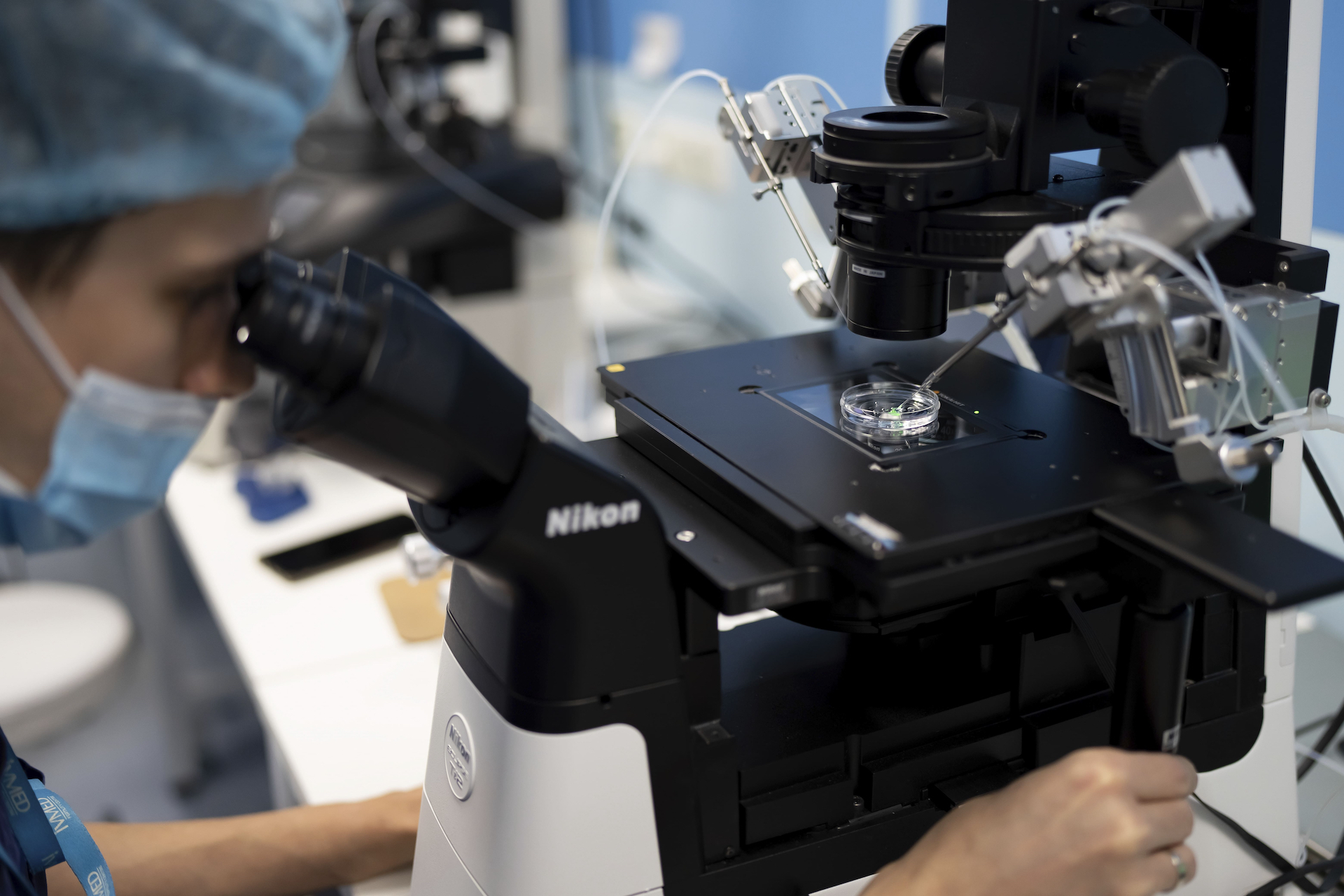
It lets patients book appointments online—which Kohara appreciates doesn’t sound revolutionary, but is atypical in the fertility world. In Twig’s lab, where much of a patient’s success is determined, it has invested in high-tech offerings including time-lapse technology. In a traditional in-vitro fertilization lab, an embryo is placed in an incubator and an embryologist has to remove it to see its development and quality, said Kohara. Twig’s incubator takes a photo every couple of minutes, meaning an embryologist can track an embryo’s development more closely and without risking damage to it.
Rhino looked at potential investments in both fertility tech firms and the clinics themselves before landing on Twig. “The clinic is going to be the place where all the technology is deployed,” said Rhind—so Rhino’s stake gives it a front-row seat to assess developments in fertility tech, which could lead it to future investments.
Toronto-based Whitecap Venture Partners is another VC firm that’s recently added a fertility play to its portfolio. The firm tracked the work of a reproductive endocrinologist and entrepreneur through his clinic, said Whitecap partner Shayn Diamond, and saw demand for treatment growing as more women push back motherhood and as the COVID-19 pandemic led people to postpone having babies.
“What we found was the industry on the bricks-and-mortar side is growing rapidly,” said Diamond, “and the most amazing part was the technology and the use of AI in the fertility clinics was almost zero.”
That led Whitecap to invest in the endocrinologist’s fertility tech company. Dr. Dan Nayot co-founded Future Fertility in 2017. It uses artificial intelligence to help evaluate the quality of eggs, a key piece of information clinics use in fertility treatments. When the company raised a US$6 million Series A at the end of 2021, Whitecap was among the backers.
Future Fertility, said Diamond, is applying technology to something for which it hasn’t historically been used. “I think we’re in like, the first inning or two of the use of technology and artificial intelligence in this space,” he said.
Embryologists have long been able to grade the quality of embryos created in a lab by retrieving eggs from ovaries and fertilizing them with sperm, said Christy Prada, Future Fertility’s CEO. It hadn’t been possible for eggs alone. “It’s not visible to the human eye,” she said. Future Fertility’s technology makes it so. The company has two products in use at clinics in Canada, Latin America and Europe, with more coming in India and the United Arab Emirates. It is also building a new product to help measure endometrial receptivity, or how likely it is for the lining of a uterus to support an embryo implanting.
Future Fertility is fundraising to expand—though Prada declined to share the target amount—and has been helped in the task by the buzz around AI that’s been driving VC dealmaking, she said.
Rhino is “absolutely” looking for its next fertility investment, Rhind said, though to date he’s found the existing fertility-specific technology “somewhat underwhelming.” The firm has created a market map and believes it’s “very early innings” for the change technology will inevitably bring to the fertility world. Just as Twig was able to set itself apart with an innovation seemingly as simple as online appointment booking, Rhind is interested in how clinics can embrace other proven customer service technologies such as buy-now-pay-later or operational software.
For Whitecap’s Diamond, meanwhile, the success of Future Fertility has “definitely driven a thesis.” He sees opportunities both in fertility technology and in access to it, especially as businesses have started to offer better fertility-treatment benefits.
“We always say if you can replace pen and paper, that’s a huge advantage in any industry,” he said, “and there’s a lot of pen and paper being used in the fertility industry.”