WonderFi agreed to be acquired by U.S. trading firm Robinhood Markets despite internal strife and interest from multiple other companies, including Toronto online brokerage Questrade, The Logic has learned.
Skip to content


Exclusive
WonderFi turmoil deepens as Robinhood takeover looms
Competing bids, hefty fees and seven-figure payouts to dissenting investors raise concerns about the board’s process and governance
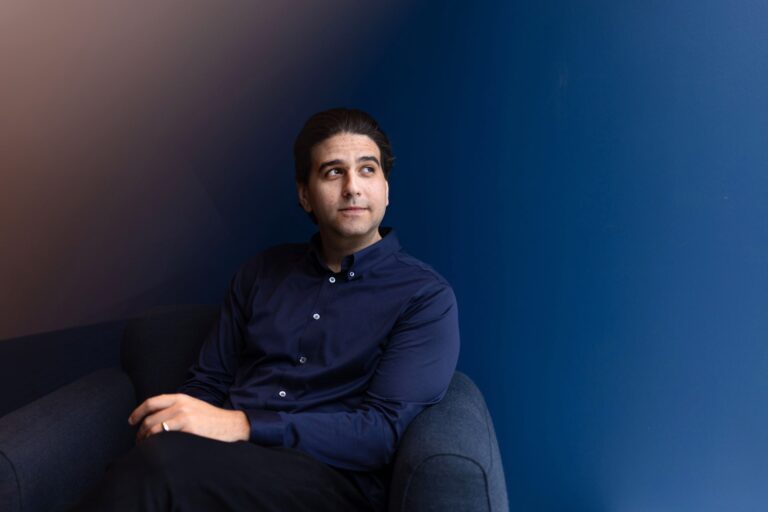
Dean Skurka, CEO of WonderFi, at Consensus 2025 in Toronto, Thursday, May 15, 2025. Photo: Cole Burston for The Logic
WonderFi agreed to be acquired by U.S. trading firm Robinhood Markets despite internal strife and interest from multiple other companies, including Toronto online brokerage Questrade, The Logic has learned.
A strategic review that culminated in the $250 million Robinhood deal, which shareholders will put to a vote on Thursday, was mired in conflict, filings show. Proxy advisory firm Glass Lewis, called the process “clearly suboptimal” in a report, although it ultimately recommended shareholders vote in favour of the deal.
The process involved multiple seven-figure fees, compensation packages and other payments, including a $6-million settlement with an activist investor who threatened to make unspecified allegations of poor governance public and an unusual arrangement in which the chair of the board will also receive a $1.8-million fee for acting like an investment banker.
Talking Points
- Before agreeing to be acquired by U.S. trading firm Robinhood Markets, WonderFi was embroiled in a conflict with activist investor Adam Arviv, settling with him for $6 million after he threatened to go public with unspecified governance concerns.
- The settlement is just one of multiple seven-figure fees, compensation arrangements and other payments WonderFi agreed to in the process of negotiating the $250 million deal, to the frustration of some shareholders.
- Toronto-based digital brokerage Questrade is among the companies that considered acquiring WonderFi, The Logic has learned.
Three WonderFi shareholders, who asked not to be identified out of concern for damaging their relationships with the parties involved, said they support the final deal with Robinhood. “I do feel sincerely that the deal is the best outcome for shareholders, and it is a very proud outcome,” one said. But they also said they’re frustrated with the company’s pattern of engaging in expensive, distracting conflicts that eat into returns.
In an email, WonderFi spokesperson Riyaz Lalani said “robust governance measures were in place throughout” the strategic review process. He noted a special committee of the board, which did not include chair Bobby Halpern or CEO Dean Skurka—the latter of which will stay on as a member of management if the Robinhood deal closes—determined the Robinhood sale is in the best interest of the company.
WonderFi owns the crypto-trading platforms Coinsquare and Bitbuy and holds about $2 billion in client assets under custody. It brands itself as the blue-chip, stable, regulated option for Canadian crypto trading, with Coinsquare holding a coveted licence as the first fully regulated investment dealer and marketplace with the Canadian Investment Regulatory Organization.
Related Articles

The company also has a history of drama and infighting. WonderFi is the result of a 2023 merger between three Canadian crypto firms that were struggling to stay afloat during a prolonged market downturn, which has required the company’s leadership to manage big personalities and conflicting interests.
The spat with activist investor Adam Arviv has its roots in a proxy fight he led at the company last year. Arviv, whose Miami-based hedge fund Kaos Capital owns about one per cent of WonderFi, according to the Glass Lewis report, earned the right to nominate two directors after teaming up with Mogo, WonderFi’s largest shareholder, to publicly call for an overhaul of the crypto firm’s board. Arviv, who declined to comment, argued the company’s stock was underperforming because of its “entrenched and disorganized board,” “haphazard integration” of companies it acquired and “weak leadership.”
Arviv raised additional governance concerns with WonderFi’s board in January after extended talks with a company he introduced it to in 2024 didn’t result in a business deal to offer a new financial product, according to the circular. Arviv and “certain nominee directors” sent letters to the board threatening to go public with “governance related claims in respect of the company.” The circular does not elaborate on what those claims were and does not name Arviv, although his identity is clear from details about his involvement in last year’s activist campaign and his board nomination rights.
Independent director Paul Pathak and an outside law firm determined the claims were unfounded, but WonderFi decided to settle with Arviv in the interest of stability and keeping the matter out of the public eye, according to the circular. As part of the settlement, WonderFi secured the right to eliminate Arviv’s two board seats.
WonderFi also paid Mogo $4 million in a deal that saw the fintech agree to the settlement with Arviv, and reduce the size of the board to avoid replacing Rob Godfrey and Igor Gimelshtein, his nominee directors who stepped down in February. Spokesperson Lalani said WonderFi’s special committee and board sought independent financial and legal advice, and the board after careful deliberation decided the settlements were the best way to move forward “without further distractions.”
At that point, WonderFi and Robinhood had been in talks for months, signing a confidentiality agreement in December. An advisory firm hired by WonderFi contacted 15 companies to gauge their interest in a possible transaction, entering into additional confidentiality agreements with four of them, according to a report by proxy advisory services firm Institutional Shareholder Services (ISS) that also ultimately recommended the deal.
The report shows Robinhood submitted an offer to buy WonderFi for 31 cents a share on Feb. 20, entering into an exclusivity agreement with the company. WonderFi then received unsolicited offers from two companies—one for 35 cents a share and the other for 39 to 42 cents a share—and asked Robinhood to increase its bid. The companies eventually settled on a price of 36 cents per share, and announced the deal on May 13.
Questrade mulled making an offer for WonderFi after the Robinhood announcement, according to documents viewed by The Logic. No offers came in after the companies announced the deal. Questrade declined to comment, while Robinhood did not respond to a request for comment. Lalani did not respond when asked about Questrade’s interest in the company.
A WonderFi board member objected to the fact that WonderFi entered into an exclusivity agreement with Robinhood at a price “meaningfully below” the two offers it later received, but ultimately came around to supporting the deal, according to the Glass Lewis report. Lalani said the special committee didn’t want to breach its exclusivity agreement with Robinhood and noted the other offers were conditional on a due diligence process, which could have ultimately resulted in a lower bid.
The deal also stands to enrich the chair of WonderFi’s board. Bobby Halpern, who also made $1.2 million for acting in an investment banker-like role in a previous WonderFi merger, will earn $1.8 million if the Robinhood sale closes, thanks to a deal he has with the firm that entitles him to 0.75 per cent of the market value of any merger or other initiative he “sources, assists with, negotiates for, [or] performs diligence on.”
The ISS report notes “concerns have been raised” about the $10.7 million in termination fees embedded in the deal accounting for 4.5 per cent of the value of the transaction, which it said “appears elevated” compared to the market standard of 3.5 per cent.
Lorne Switzer, a finance professor at Concordia University who studies governance and small-cap equities, said the arrangement pushes the boundaries of what’s acceptable under Canadian law and good governance standards. A board chair still holds influence over the other directors even if he recuses himself from a deal he stands to gain from, he said. When you have conflicts of interest like this, “the fear is that the executives can use the companies as their private piggy bank.”
Lalani said Halpern has acted as a “performance-based advisor” to WonderFi since the company bought Bitbuy in 2022. The fee he stands to earn was agreed on “well in advance” of the talks with Robinhood and would be payable to him regardless of who buys the company, which means he “was incentivized to derive the highest price possible for shareholders.”
One shareholder said the drama and infighting at WonderFi is counterintuitively what ultimately made the Robinhood deal possible.
“The reason that it’s the best deal for the company is because shareholders were not aligned. The company had to sell, or would have ended up dying at some point,” the shareholder said. “To sell for $250 million versus the thing going to zero is a hell of an outcome, I’d say.”
Editor’s note: This story has been updated to clarify that the firm Arviv introduced WonderFi to did not propose terms for a business deal, according to a filing.



Loading...
Thanks for sharing!
You have shared 5 articles this month and reached the maximum amount of shares available.
CloseThis account has reached its share limit.
If you would like to purchase a sharing license please contact The Logic support at [email protected].
CloseGift the full article!
You have gifted 0 article(s) this month and have 5 remaining.
Recipients will be able to read the full text of the article after submitting their email address. They will not have access to other articles or subscriber benefits.
Photo: Cole Burston for The Logic
Most Popular This Week




In-depth, agenda-setting reporting
Great journalism delivered straight to your inbox.
News
Panel decries Canada’s chaotic way of funding world-class science
Briefing
Trump administration faces lawsuit over 50% tariffs on Canadian goods
Canada-U.S. trade war to reduce real GDP by 1.4% over 2024 levels after five years: PBO
RBC weighs blocking Meta’s AI agent from accessing customer accounts
Best business newsletter in Canada
Get up to speed in minutes with insights and analysis on the most important stories of the day, every weekday.
Exclusive events
See the bigger picture with reporters and industry experts in subscriber-exclusive events.
Membership in The Logic Council
Membership provides access to our popular Slack channel, participation in subscriber surveys and invitations to exclusive events with our journalists and special guests.





