The federal government intends to re-up a large investment tax break rather than let it expire, according to two people familiar with Finance Minister Chrystia Freeland’s plans for Monday’s fall economic statement.
Skip to content


Exclusive
Ottawa to renew $14B tax break on business investment
Prospect of Trump tax cuts prompts Liberals to extend program in push for economic growth
Parliament Hill in Ottawa in Dec. 2023. Photo: The Canadian Press/Sean Kilpatrick
The federal government intends to re-up a large investment tax break rather than let it expire, according to two people familiar with Finance Minister Chrystia Freeland’s plans for Monday’s fall economic statement.
Donald Trump’s tariff threats have received most of the attention since he won the U.S. presidential election in November. But his pledge to lower taxes also represents a threat to Canada’s ability to sell itself as a competitive base of operations for companies seeking access to North America.
The same thing happened during Trump’s first presidency. Canada had long enjoyed a competitive advantage over the U.S. on statutory corporate income tax rates. Trump erased that differential with his 2017 tax overhaul, changing the math on which country offered the best returns on investment.
Recognizing the danger, Bill Morneau, the finance minister at the time, used the 2018 fall economic statement to introduce accelerated investment incentives—temporary tax changes that let companies write off the value of investments immediately, rather than over a number of years. Morneau attached a value of $14 billion in foregone revenue to the measures.
Related Articles
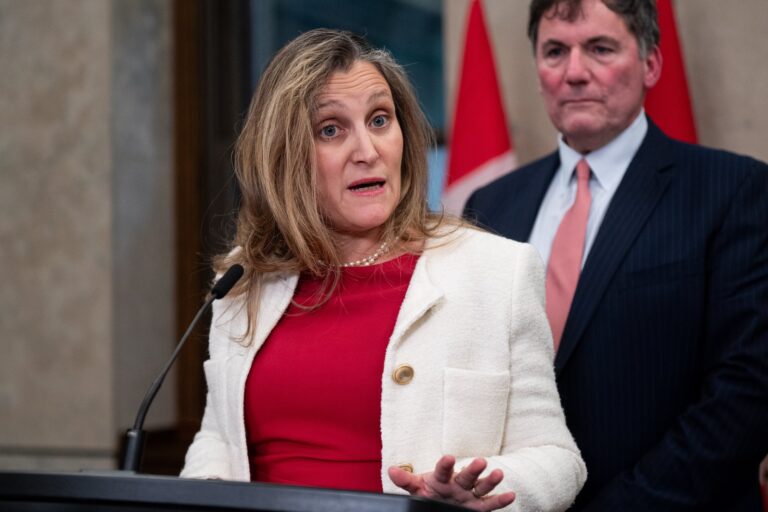

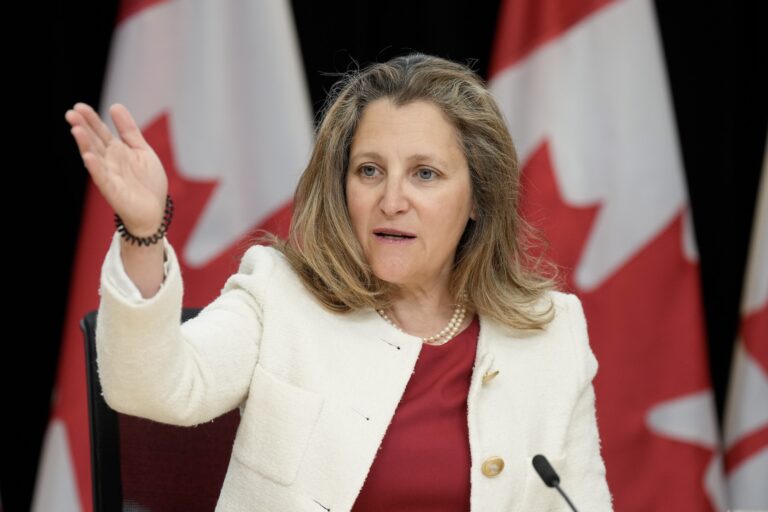
There is a debate as to whether targeted tax measures are as effective as broad-based tax cuts. Finance said at the time that the new investment incentives would help make Canada’s marginal effective tax rate on new investments the lowest in the G7. It continues to be, according to Finance Canada, with a 14.5 per cent tax treatment for new business investment that is “significantly lower” than the U.S.’s 19.7 per cent.
Money is most valuable in the present, so anything that lowers the risk of making longer-term bets increases the odds that companies will use their excess profits to make capital investments rather than to collect interest—or seek better opportunities elsewhere. Trump said during his campaign that he intends to lower corporate income tax rates even more, fueling a post-election rally in U.S. stock markets.
That would pose a significant challenge to Canadian competitiveness, as the federal government’s decision earlier this year to raise capital gains taxes had already caused considerable upset among entrepreneurs and investors competing with American firms.
Adding to the angst over business taxes: the accelerated investment incentives from 2018 were in their final year, and were scheduled to be phased out entirely by 2027.
Writing earlier this year for The Hub, a public affairs website, University of Calgary economist Trevor Tombe said the elimination of the incentives would be a bigger blow to the economy than the capital gains changes, which were getting most of the attention.
“A significant increase in taxes on new business investment throughout the Canadian economy is most concerning of all,” Tombe wrote in May. “It is likely the largest tax increase you’ve never heard of. And it will lower investment and productivity at a time when we need more of both.”
The renewal of the investment incentives would mimic the original policy, said the sources who spoke with The Logic. The break would apply to assets purchased on or after Jan. 1, 2025 and put to use before 2030, when the new three-year phaseout would begin. They said the renewal of the program could cost the federal treasury roughly $15 billion, although they said a tax cut of that type could more than pay for itself by generating economic growth.
Alex Lawrence, a spokesperson for Freeland, declined to comment on the information.
The prospect of a major tax break on business investment marks a shift in priorities for Freeland, who focused mostly on wealth redistribution in her spring budget, using proceeds from the capital gains increase to help fund a multi-billion-dollar housing program.
On Friday, the minister announced separate $1-billion funds to encourage investment in mid-sized companies and pledged to make a number of regulatory changes to encourage pension funds to invest more in Canada. She also overhauled the country’s flagship Scientific Research & Economic Development program, making more companies eligible for research tax credits and increasing thresholds on how much companies can claim.
“We are living in challenging times,” Freeland said at a press conference Friday. “We are living at a time of very great economic nationalism. We are living at a time when the competition for capital, the competition for investment, is more fierce today than ever.”
Freeland added: “Canada cannot stand idly by. We need to be there and we need to be fighting for that capital, fighting for that investment.”



Loading...
Thanks for sharing!
You have shared 5 articles this month and reached the maximum amount of shares available.
CloseThis account has reached its share limit.
If you would like to purchase a sharing license please contact The Logic support at [email protected].
CloseGift the full article!
You have gifted 0 article(s) this month and have 5 remaining.
Recipients will be able to read the full text of the article after submitting their email address. They will not have access to other articles or subscriber benefits.
Photo: The Canadian Press/Sean Kilpatrick
Most Popular This Week




In-depth, agenda-setting reporting
Great journalism delivered straight to your inbox.
The Big Read
Beacon is building an AI empire by fixing Main Street’s software
Briefing
Inovia raises US$200M for new VC fund as it eyes AI’s impact
43% of eligible Albertans voted ahead of Monday’s referendum
AI chip company Tenstorrent raises US$1.5B, valuing it at US$6.2B
Best business newsletter in Canada
Get up to speed in minutes with insights and analysis on the most important stories of the day, every weekday.
Exclusive events
See the bigger picture with reporters and industry experts in subscriber-exclusive events.
Membership in The Logic Council
Membership provides access to our popular Slack channel, participation in subscriber surveys and invitations to exclusive events with our journalists and special guests.







