Skip to content

Canada's Business and Tech Newsroom

  • Professional Subscription
  • Partnerships & Advertising
  • Licensing & Syndication
Log In Subscribe
Welcome,
  • My Account
  • Log Out
  • Business
  • Tech
  • National
  • The Big Read
  • Briefings
  • Commentary
Search
Log In Subscribe
Welcome,
  • My Account
  • Log Out
Exclusive

Federal government to announce $7 million in funding to fight disinformation online ahead of 2019 election

The federal government will announce $7 million in funding on Wednesday to fight the spread of disinformation and “fake news” online, The Logic has learned.

Sources with knowledge of the program said grants will be awarded to mount public-awareness campaigns that will combat the spread of disinformation and misinformation online and increase digital literacy in the lead-up to the fall federal election.

This is the first federal funding of its kind to counter online disinformation and misinformation in Canada and comes five days after Prime Minister Justin Trudeau publicly criticized technology giants at an event in Quebec City.

Exclusive

Federal government to announce $7 million in funding to fight disinformation online ahead of 2019 election

By Murad Hemmadi
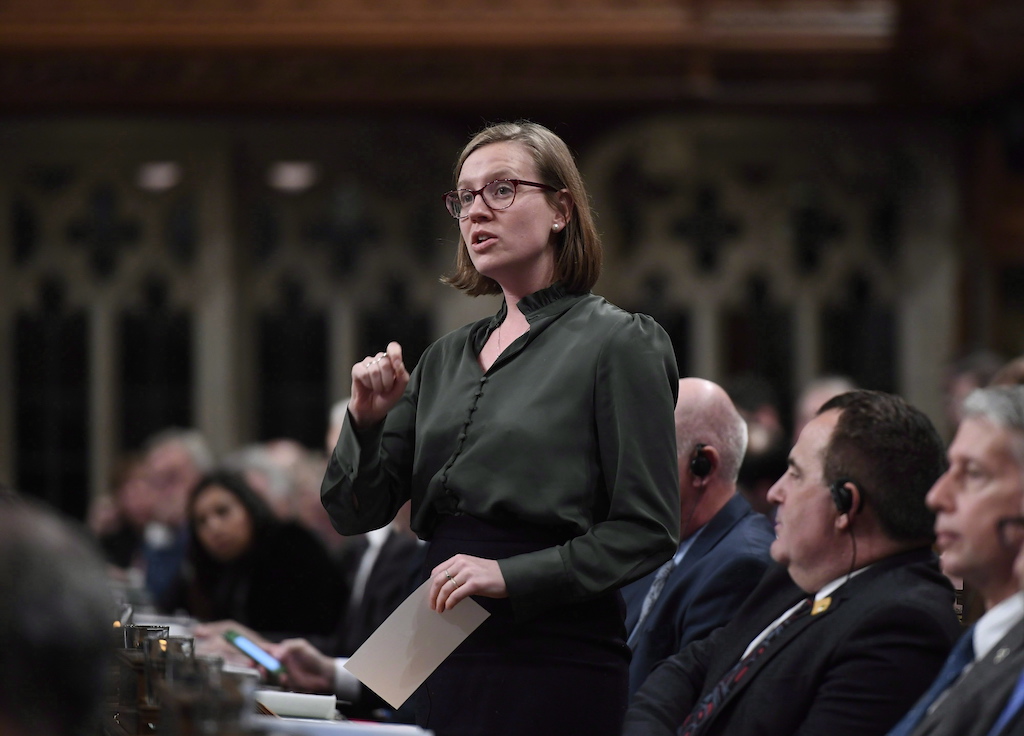
Minister of Democratic Institutions Karina Gould rises during Question Period in the House of Commons on Parliament Hill in Ottawa on Monday, Nov. 26, 2018. THE CANADIAN PRESS/Justin Tang
Jan 29, 2019
A A
A Small A Medium A Large
Share

Gift

Share

The federal government will announce $7 million in funding on Wednesday to fight the spread of disinformation and “fake news” online, The Logic has learned.

Sources with knowledge of the program said grants will be awarded to mount public-awareness campaigns that will combat the spread of disinformation and misinformation online and increase digital literacy in the lead-up to the fall federal election.

This is the first federal funding of its kind to counter online disinformation and misinformation in Canada and comes five days after Prime Minister Justin Trudeau publicly criticized technology giants at an event in Quebec City.

“The Facebooks and Googles of this world … have started to recognize, very belatedly, their responsibilities toward our democratic space and the conversations that we have as a society,” said Trudeau during a question-and-answer session with industry association Chambre de commerce et d’industrie de Québec in Quebec City on Friday. “This is going much too slowly on their part, in terms of coming to this realization and taking responsibility.”

Disinformation is false information spread deliberately to deceive. Misinformation is false information spread unintentionally.

The announcement follows reports of significant electoral interference and foreign influence efforts on online platforms in presidential elections in the U.S. and France, as well as the referendum over Britain’s membership in the European Union.

The money will be split between organizations conducting digital-literacy programs to help voters assess online information better and groups running specific campaigns to increase understanding of disinformation and misinformation.

Talking Point

The federal government will award $7 million in grants to organizations for public-awareness campaigns to combat the spread of disinformation and misinformation online, and increase digital literacy in the lead-up to the fall federal election. This is the first federal funding of its kind and comes days after Prime Minister Justin Trudeau criticized Facebook and Google at an event in Quebec City.

Karina Gould, the minister of democratic institutions, will announce the program on Wednesday. The funding is expected to be drawn from the Canada Periodical Fund and the Canadian History Fund, both of which are managed by Canadian Heritage. Funding recipients will be selected via an open request for proposals, although the sources said the process will be short, possibly less than two weeks.

“By understanding common online deceptive tactics like phishing or trolling, Canadians can be less susceptible to online manipulation,” Gould said in a statement to The Logic. She added that while platforms’ acknowledgement of the risks of disinformation and misinformation is “an important first step,” the government expects “social media platforms to take concrete actions to increase transparency, authenticity and integrity on their systems to help safeguard our election.”

A government source—speaking on background as the information was not yet public—confirmed the details of Wednesday’s announcement.

The other sources said that a number of non-profits, academic institutions and foundations were asked to submit proposals for grants for similar programming last fall, but the government ultimately did not make any awards.

Other countries have made similar funding commitments. The U.S. Department of State allocated US$120 million over two years starting in 2016 to counter foreign election interference attempts and disinformation, particularly from Russia, although it did not end up using most of the money. And, last month, the European Union increased its budget for detecting disinformation from $2.56 million to $7.57 million. But those figures are tiny compared to the reported resources of the fake news merchants they’re fighting—Andrus Ansip, vice-president of the European Commission, said the Russian government was spending over $1.7 billion annually to “spread lies.”

The Canadian government has funded similar anti-fake news efforts abroad. In December 2018, it committed $2.5 million to “countering disinformation” from Russia in the Ukraine, ahead of the latter’s March presidential election.

The government had previously determined that it could not directly combat misinformation or rebut fake news, because its intervention could backfire, according to briefing notes prepared for then-Heritage Minister Mélanie Joly in November 2017 and reported by The Canadian Press in February 2018. But Wednesday’s announcement differs from the department’s suggested alternative—it concluded that partnerships between social media platforms and media literacy groups were a better way to address the issue.

Facebook and Google have each backed digital education initiatives in Canada. In September 2017, Google announced it was giving $500,000 to the Canadian Journalism Foundation and youth civic engagement charity Civix to create a program that would teach students to spot fake news online. Facebook launched its Canadian Election Integrity Initiative, which included a two-year public campaign with the Ottawa-based non-profit MediaSmarts the following month.

Wednesday’s announcement follows last month’s calls from the House of Commons Standing Committee on Ethics, Access to Information and Privacy for the government to fund research into the impacts of disinformation and misinformation, as well as digital literacy campaigns on the subject.
#Facebook #federal government #Google #Karina Gould

Loading...

Thanks for sharing!

You have shared 5 articles this month and reached the maximum amount of shares available.

Close
This account has reached its share limit.

If you would like to purchase a sharing license please contact The Logic support at [email protected].

Close
Want to share this article?

Upgrade to all-access now

Close
Gift the full article!

You have gifted 0 article(s) this month and have 5 remaining.

Copy link and gift
Copy Link
Email to a friend
Send Email
Gift on Social Media

Recipients will be able to read the full text of the article after submitting their email address. They will not have access to other articles or subscriber benefits.

Photo:

Most Popular This Week

News

Citi sees Canada heating up in global capital shift

By Chaimae Chouiekh
A shot of Catherine Saine and Sam Ramadori seated at a table in front of screen with LawZero's logo on it.
The Big Read

The small team in Montreal trying to save the world from AI

By Martin Patriquin
Icons of AI-powered apps, including Bing, Gemini, ChatGPT and Copilot, are displayed on a smartphone in this photo illustration.

News

The world’s leading AI models may be more Canadian than American, study finds

By Catherine McIntyre
A shot of a sign bearing the Pfizer logo, with a lowrise office building in the background.
News

So far, foreign-owned firms have dominated Buy Canadian contracts

By Laura Osman

In-depth, agenda-setting reporting

Great journalism delivered straight to your inbox.

Aerial view of four large buildings with hundreds of small stacks lining their roofs. There are some brown fields and lightly trafficked roads in teh background, along with other warehouses and industrial buildings.
News

Big Tech’s AI buildout is upending Canada’s bond market

By Anita Balakrishnan

Briefing

Trump pushed Carney on wildfires at World Cup, resurrecting tariff threats

By Anita Balakrishnan   |   Jul 20, 2026

Angel investor Jesse Wiebe receives conditional discharge after pleading guilty to indecent act

By Catherine McIntyre   |   Jul 20, 2026

Ford to invest US$900M in Ontario plants in new Unifor deal

By Anita Balakrishnan   |   Jul 20, 2026

Best business newsletter in Canada

Get up to speed in minutes with insights and analysis on the most important stories of the day, every weekday.

Exclusive events

See the bigger picture with reporters and industry experts in subscriber-exclusive events.

Membership in The Logic Council

Membership provides access to our popular Slack channel, participation in subscriber surveys and invitations to exclusive events with our journalists and special guests.

Recent Popular Stories

News

So far, foreign-owned firms have dominated Buy Canadian contracts

By Laura Osman   |   Jul 14, 2026
A shot of a sign bearing the Pfizer logo, with a lowrise office building in the background.
News

Citi sees Canada heating up in global capital shift

By Chaimae Chouiekh   |   Jul 16, 2026
The Big Read

The small team in Montreal trying to save the world from AI

By Martin Patriquin   |   Jul 15, 2026
A shot of Catherine Saine and Sam Ramadori seated at a table in front of screen with LawZero's logo on it.
News

The Canadian companies trying to break Palantir’s grip on intelligence software

By David Reevely   |   Jul 20, 2026
A shot of Sam Witherspoon in front of his laptop, looking pensively over the screen. He's wearing an olive-green hoodie.
News

The world’s leading AI models may be more Canadian than American, study finds

By Catherine McIntyre   |   Jul 14, 2026
Icons of AI-powered apps, including Bing, Gemini, ChatGPT and Copilot, are displayed on a smartphone in this photo illustration.

News

Trump renews trade attack on Canada, slapping 50% tariffs on a slew of exports

By David Reevely and Laura Osman   |   Jul 20, 2026 | 6:15 PM ET
A row of trucks pulling white freight trailers lined up on a bridge. The Canadian and U.S. flags stand on the river shore below the bridge, and the prow of a ship is visible on the right side of the frame.

Canada's most influential executives and policymakers are reading The Logic

  • CPP Investments
  • Sun Life Financial
  • C100
  • Amazon
  • Telus
  • Mastercard
  • bdc
  • Shopify
  • Rogers
  • RBC
  • General Motors
  • MaRS
  • Government of Canada
  • Uber
  • Loblaw Companies Limited
logic-logo

Canada's Business and Tech Newsroom

100% human-crafted journalism

Newsroom

  • News Tips
  • AI Policy
  • Editorial Disclosures
  • Story Pitches

Company

  • About Us
  • Terms of Service
  • Privacy Statement
  • Corporate Information

Contact

  • Contact Us
  • Advertise
  • FAQs
  • Work at The Logic

© 2026 The Logic Inc. All Rights Reserved.

Trusted by leaders

Error

Account creation failed.

Please email us at [email protected].

Create Account

[wppb-register form_name=”cozmo-registration-form-for-modal”]

I do have an account
Login
or

[wppb-login]

I don’t have an account