OTTAWA — Last week’s announcement that a Volkswagen subsidiary will open a battery plant in St. Thomas, Ont., came with big promises from Prime Minister Justin Trudeau about the economic benefits. Economists are skeptical.
Skip to content


News
Economists skeptical of claims about VW battery plant’s $200B in benefits
Promises of spinoffs likely from one-sided, simplistic model, critics say
Prime Minister Justin Trudeau makes a Volkswagen electric battery plant announcement at the Elgin County Railway Museum in St. Thomas, Ont. on April 21, 2023. Photo: The Canadian Press/Tara Walton
OTTAWA — Last week’s announcement that a Volkswagen subsidiary will open a battery plant in St. Thomas, Ont., came with big promises from Prime Minister Justin Trudeau about the economic benefits. Economists are skeptical.
Subsidy: VW is getting $8 billion to $13.2 billion from the federal government. The Ontario government is giving VW $500 million in direct incentives and promising “hundreds of millions” more in infrastructure and service improvements for St. Thomas and the surrounding area.
Talking Points
- Prime Minister Justin Trudeau said last week that a new Volkswagen battery plant in Ontario will create 33,000 direct and indirect jobs and produce $200 billion in economic spinoffs
- Those tallies, from models the government hasn’t shared, likely don’t include subtractions for what those workers would otherwise be doing or the other uses that up to $13.7 billion in public money could be put to
Promise: Trudeau said the plant will create up to 3,000 direct jobs and 30,000 indirect ones and generate about $200 billion in value for the Canadian economy.
Problems: Kent Fellows, an assistant economics professor at the University of Calgary, said the politicians’ language suggests the figures are from an “input-output model,” a particular type of analysis.
“They’re very, very data-rich, and there’s a lot of equations in them. But they’re all really simple equations,” Fellows said. You can get one off the shelf from Statistics Canada. They’re not suited to the economic effects of what’s promised to be the biggest factory in Canada, Fellows said.
The math is one-sided, said Thomas Gunton, director of the resource and environmental planning program at Simon Fraser University and a former deputy minister of finance in British Columbia.
Related Articles

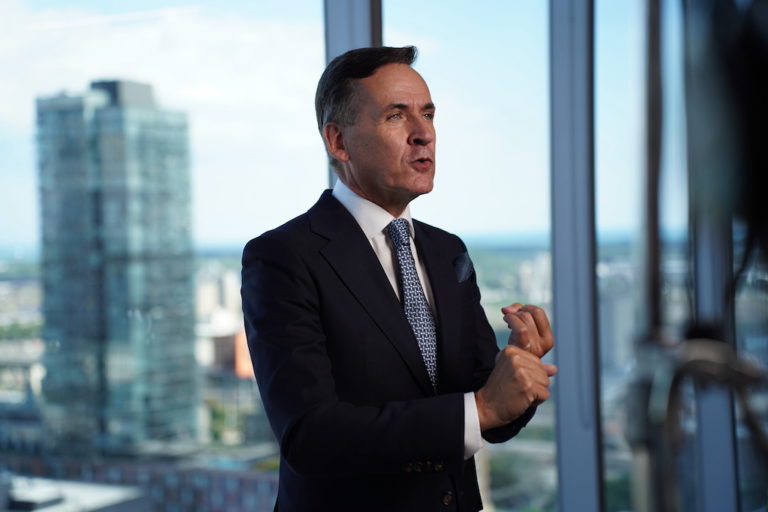
“The numbers take a very, very inaccurate assessment and just add up the gains of investment in this particular project without looking at what you have given up by not having that money available to invest in other projects,” he said.
Better models: A different kind of evaluation, a benefit-cost analysis, does consider those effects.
“Generally, politicians do not like to use these other methods, like benefit-cost, because they show much lower net benefits,” Gunton said.
An even better tool is a computational general equilibrium model, said Fellows. He compared that to an F1 car.
“You’ve got to retool it and put different tires on it for different races, whereas the input-output model is kind of a pickup truck—you just throw whatever you want in the box and you’re good to go,” Fellows said.
Also curious: If a $13.2-billion subsidy leads to 3,000 jobs, that’s $4.4 million per job. “I can’t think of another case where a job has cost this much in terms of a subsidy,” Gunton said.
The ratio of 10 indirect jobs for each directly created job is also unusual, Gunton said: “That’s the highest multiplier I’ve ever seen. Most multipliers are in the range of two to three at the most.”
Response: A spokesperson for Innovation Minister François-Philippe Champagne said the government is confident in its economic models but she could not release them.



Loading...
Thanks for sharing!
You have shared 5 articles this month and reached the maximum amount of shares available.
CloseThis account has reached its share limit.
If you would like to purchase a sharing license please contact The Logic support at [email protected].
CloseGift the full article!
You have gifted 0 article(s) this month and have 5 remaining.
Recipients will be able to read the full text of the article after submitting their email address. They will not have access to other articles or subscriber benefits.
Photo: The Canadian Press/Tara Walton
Most Popular This Week




In-depth, agenda-setting reporting
Great journalism delivered straight to your inbox.
The Big Read
Alberta’s referendum is just the start of the turmoil
Briefing
EverWind plans $10B data centre and wind development in Nova Scotia
Canada ready to force Stelco to sell its Canadian operations, Joly says
Feds plan a 60 MW defence-oriented data centre for Ottawa
Best business newsletter in Canada
Get up to speed in minutes with insights and analysis on the most important stories of the day, every weekday.
Exclusive events
See the bigger picture with reporters and industry experts in subscriber-exclusive events.
Membership in The Logic Council
Membership provides access to our popular Slack channel, participation in subscriber surveys and invitations to exclusive events with our journalists and special guests.






