Skip to content

Canada's Business and Tech Newsroom

  • Professional Subscription
  • Partnerships & Advertising
  • Licensing & Syndication
Log In Subscribe
Welcome,
  • My Account
  • Log Out
  • Business
  • Tech
  • National
  • The Big Read
  • Briefings
  • Commentary
Search
Log In Subscribe
Welcome,
  • My Account
  • Log Out
News

Investors eye deep-tech deals as AI eats away at software startups

Listen Now
0:00
News

Investors eye deep-tech deals as AI eats away at software startups

AI is pushing more software-focused venture capitalists into sectors long viewed as too expensive and too technical for the mainstream

By Catherine McIntyre
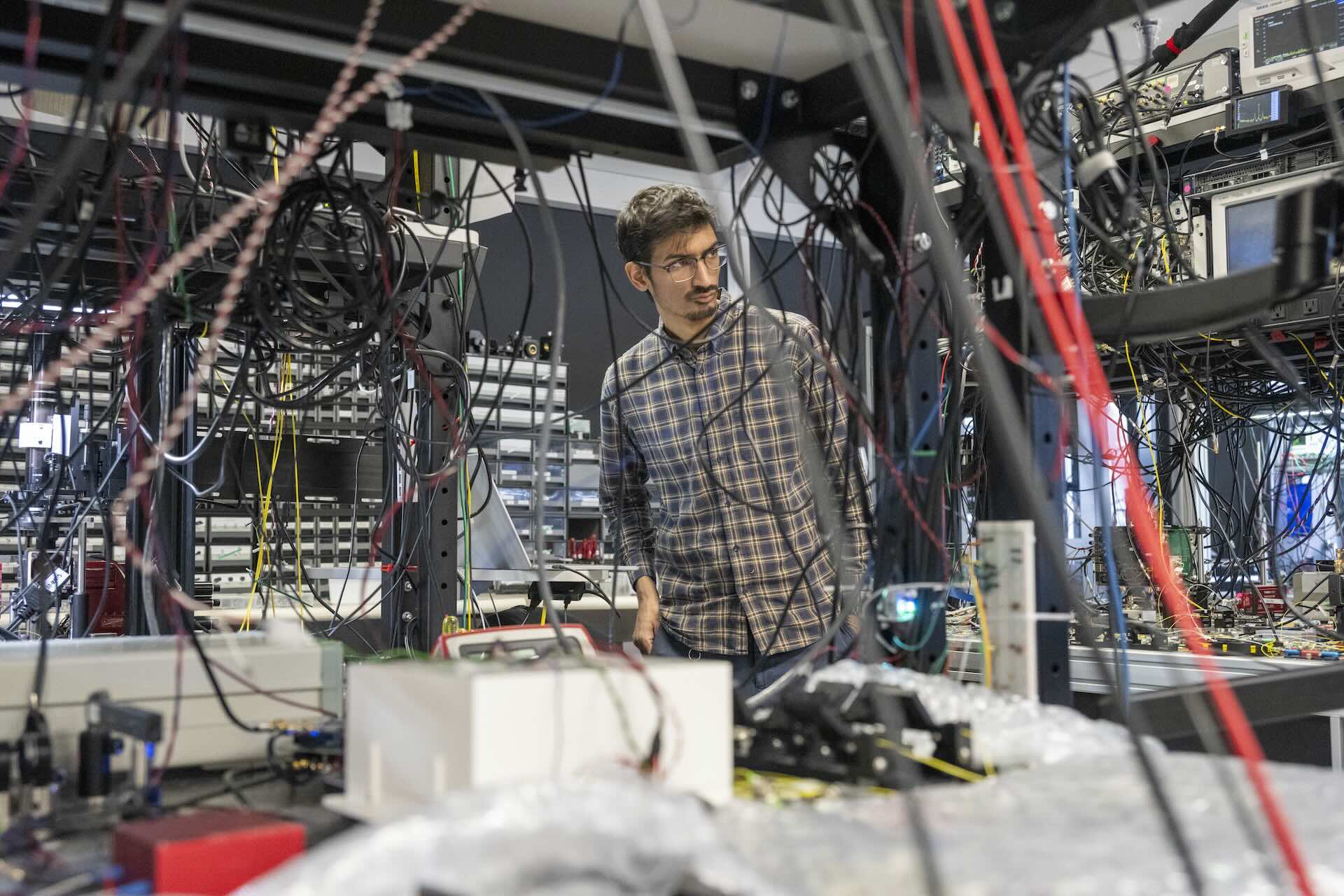
A man in a plaid button-down shirt and glasses is visible through a nest of wires in a room with shelves laden with servers, computer monitors and other equipment.
Toronto-based quantum computing firm Xanadu recently went public on both the Nasdaq and Toronto Stock Exchange Photo: Eduardo Lima/The Canadian Press
May 11, 2026
A A
A Small A Medium A Large
Share

Gift

Share

Listen Now
0:00

TORONTO — As AI upends the software business model, some investors are looking to deep tech as a hedge against mounting uncertainty. 

“Every software VC is now all of a sudden also investing in deep tech,” said Jenny Yang, a Vancouver-based partner at early-stage deep-tech firm Risc Capital. The sector, overshadowed by software startups, is suddenly garnering lots of attention despite concerns about its speed, cost and uncertainty.

Talking Points

  • As AI upends the economics of some traditional software businesses, some venture investors are shifting capital toward deep-tech sectors such as robotics, chips and advanced manufacturing
  • Deep-tech investors say the sector is more resilient, but warn that many software-focused VCs underestimate the expertise, timelines and technical risk involved in backing hard-tech companies

The growing interest comes as venture investors grapple with how AI is upending many of the software companies that dominate their portfolios. Software firms have traditionally derived their value from engineering talent and code. Recurring subscription revenue made cash flow stable and growth easier to forecast. New AI coding tools are eating away at some of those advantages by making it dramatically faster and cheaper to write software, with customers also less willing to pay for it.

That has pushed investors toward businesses they believe will be harder for AI to replicate. In deep tech, those advantages can come from manufacturing expertise, patent-protected scientific breakthroughs or proprietary data.

Related Articles

A man on the floor of the New York Stock Exchange holds a tablet

Amid the AI boom, some VCs see signs of a startup apocalypse

By Catherine McIntyre
Three submarines docked side by side, crew in orange suits atop them. A helicopter hovers above, a Canadian flag visible. Coastal view of Halifax in the background.

The defence-tech gold rush is testing the limits of venture capital

By Catherine McIntyre

Neil Peet, partner at Toronto-based GreenSky Ventures, said his team is rethinking its portfolio to focus more on deep tech. The firm, which was founded in 2010 and is currently raising its seventh fund, has typically invested about 50 per cent of its capital in software and 50 per cent in deep tech. Now, it’s putting 60 per cent behind deep tech and 40 per cent on software.

Peet said GreenSky is also re-evaluating what kinds of software companies it backs, moving away from those that rely on the traditional software-as-as-service (SaaS) subscription model. Instead, the firm is placing more emphasis on whether a company’s technology is novel, difficult to reproduce and likely to retain value through intellectual property, for example, even if the company itself fails. 

“What we’re trying to do is to say this technology is actually really innovative,” Peet said.

Yang started to get uneasy about software startups in 2024 when it became clear how quickly AI was improving. Soon after, she joined Risc Capital, where she’s fully focused on deep tech. In her current role, she gets lots of calls from software investors seeking advice on how to approach deep-tech deals. “A lot of them are trying to figure out how they play in an area that has a bit more defensibility,” Yang said. 

She added that advances in AI have also made it more attractive to invest in breakthrough technologies, by helping speed up research and reducing the costs associated with it. Still, she said, it’s not easy to move from software to deep-tech deal making.

Investors entering the world of deep tech need to adjust their expectations around risk and return timelines, Yang said. Unlike software startups, which can quickly test and tweak products and change direction with relative ease, deep-tech companies often spend years developing physical technologies before generating meaningful revenue. Due diligence requires investors to have specific expertise in the sector they’re backing, Yang added, so they can assess technical feasibility, manufacturing constraints and customer demand long before the business has proven itself commercially. 

Not everyone is convinced that deep tech will provide a safe haven for investors looking for certainty amidst the AI chaos. Allen Lau, co-founder of Toronto-based deep-tech venture firm Two Small Fish, laughed at the idea of deep tech as a safe haven from the software downturn. “These sectors are hard to build,” he said. Plenty of software investors, he said, are inquiring about deals in the area, which includes robotics, quantum and medical devices, but few are piling in. 

The Canadian Robotics Council (CRC), a Toronto-headquartered non-profit that advocates for the robotics industry, is trying to make it easier to invest in a slice of the deep-tech market. In April, the council launched a capital committee to help venture firms better understand how to evaluate hardware-heavy businesses, with the goal to channel more money into robotics startups.

Gift the full article

Ryan Gariepy, co-founder of Clearpath Robotics and CRC chair, said the group is hoping to capitalize on the growing interest in robotics and physical AI, which, he said, didn’t exist when he was building Clearpath in 2009. 

Despite the innate challenge of building and funding deep-tech companies, Yang said it’s an area Canada should lean into. The country has a strong record of producing top-tier scientific research and talent through its universities, she added, giving it an edge in the sector. “We never had any strategic advantage in software,” she said. “But deep tech, we actually have this asset.”


#artificial intelligence #quantum computing #robotics #startups #Tech #venture capital

Loading...

Thanks for sharing!

You have shared 5 articles this month and reached the maximum amount of shares available.

Close
This account has reached its share limit.

If you would like to purchase a sharing license please contact The Logic support at [email protected].

Close
Want to share this article?

Upgrade to all-access now

Close
Gift the full article!

You have gifted 0 article(s) this month and have 5 remaining.

Copy link and gift
Copy Link
Email to a friend
Send Email
Gift on Social Media

Recipients will be able to read the full text of the article after submitting their email address. They will not have access to other articles or subscriber benefits.

A man in a plaid button-down shirt and glasses is visible through a nest of wires in a room with shelves laden with servers, computer monitors and other equipment.

Photo: Eduardo Lima/The Canadian Press

Most Popular This Week

A head-on shot of James Neufeld seated with others at a round table in a meeting room. Eleanor Olszewski is seated to his left. There's a laptop open in front of Neufeld.
News

For this Alberta tech firm, ‘Buy Canadian’ isn’t working as advertised

By David Reevely
Evan Solomon speaks in front of a blurred multi-coloured background
News

Solomon says new laws will address Canada’s AI trust deficit

By Laura Osman
News

Everything you need to know about the debate over stablecoin yields

By Claire Brownell
In this photo illustration, the Manulife company logo is seen displayed on a smartphone screen.
News

Manulife and Intact buck a global trend by reporting AI returns

By Anita Balakrishnan

In-depth, agenda-setting reporting

Great journalism delivered straight to your inbox.

Exclusive

Ssense has laid off photo and make-up teams and says AI will do much of their work

By Catherine McIntyre

Briefing

VCs are pouring billions of dollars into defence tech

By Catherine McIntyre   |   Jun 22, 2026 | 3:25 PM ET

Union head says ‘it’s too risky to wait’ for CUSMA review to start labour talks with Ford Motor

By Joanna Smith   |   Jun 22, 2026 | 2:48 PM ET

New federal nuclear energy strategy focuses on Candu reactors at home and abroad

By David Reevely   |   Jun 22, 2026 | 12:39 PM ET

Best business newsletter in Canada

Get up to speed in minutes with insights and analysis on the most important stories of the day, every weekday.

Exclusive events

See the bigger picture with reporters and industry experts in subscriber-exclusive events.

Membership in The Logic Council

Membership provides access to our popular Slack channel, participation in subscriber surveys and invitations to exclusive events with our journalists and special guests.

Recent Popular Stories

News

Manulife and Intact buck a global trend by reporting AI returns

By Anita Balakrishnan   |   Jun 16, 2026
In this photo illustration, the Manulife company logo is seen displayed on a smartphone screen.
Commentary: Quebec Ink

Quebec just found out what not having digital sovereignty really means

By Martin Patriquin   |   Jun 8, 2026
A yellow ambulance is pictured outside of a hospital in Montreal. A red sign in the foreground reads, “Urgence / Emergency.”
News

Canada’s surprise plan to buy Saab command jets leaves competitors seeking answers

By David Reevely   |   May 29, 2026
A closeup of a scale model of a jet covered in pixellated camouflage, with sensor equipment attached to the top of its fuselage. There are civilians and uniformed military personnel milling in the background.
The Big Read

Mining the moon. Selling nuclear reactors. For this Canadian, it’s all part of the plan

By David Reevely   |   Jun 12, 2026
A photo of Daniel Sax shot through a circular piece of ironwork on a stairway balustrade. He's looking off-camera, and is wearing a dark blue jacket bearing his company's logo.
News

Canadians could demand firms delete their personal data under new privacy bill

By Laura Osman   |   Jun 15, 2026
Evan Solomon in a suit and tie, gesturing with his left hand as he speaks, Several people sit and stand behind him looking in other directions. There's an orange curtain behind him lit from above.
The Big Read

We found every data centre in Canada

By Murad Hemmadi, David Reevely, Aleksandra Sagan, Chaimae Chouiekh, Martin Patriquin and Catherine McIntyre   |   Apr 8, 2026
Four vertical slices of aerial view photos. From left, a building in downtown Toronto housing several data centres, a picture of the Albertan wilderness where the proposed Wonder Valley data centre would go, a lit-up QScale data centre in Quebec, and a data centre at a Hydro-Quebec dam.

Canada's most influential executives and policymakers are reading The Logic

  • CPP Investments
  • Sun Life Financial
  • C100
  • Amazon
  • Telus
  • Mastercard
  • bdc
  • Shopify
  • Rogers
  • RBC
  • General Motors
  • MaRS
  • Government of Canada
  • Uber
  • Loblaw Companies Limited
logic-logo

Canada's Business and Tech Newsroom

100% human-crafted journalism

Newsroom

  • News Tips
  • AI Policy
  • Editorial Disclosures
  • Story Pitches

Company

  • About Us
  • Terms of Service
  • Privacy Statement
  • Corporate Information

Contact

  • Contact Us
  • Advertise
  • FAQs
  • Work at The Logic

© 2026 The Logic Inc. All Rights Reserved.

Trusted by leaders

Error

Account creation failed.

Please email us at [email protected].

Create Account

[wppb-register form_name=”cozmo-registration-form-for-modal”]

I do have an account
Login
or

[wppb-login]

I don’t have an account